X

Securitize Case Study: How Securitize Turned RWA Tokenization Into a $4B Institutional Business

A CoinGape Research case study on how Securitize built compliant tokenization infrastructure, scaled $4B in RWAs, and turned tokenization into a sustainable institutional business.

Published February 2, 2026

Updated April 15, 2026

Key Highlights

  • Securitize has achieved over $4 billion worth of assets, with 59% of the demand arising from US treasury-backed instruments, becoming a leading provider for institutional RWA capital.
  • It is forecasted that Securitize will see a revenue growth from $19 million in 2024 to $69 million in 2026, fueled by the increasing tokenization of RWAs.
  • Its platform shortens onboarding times from weeks to days, with faster near-real-time settlements that result in 40% - 60% cost savings.
  • Securitize is making the connection between traditional finance and blockchain, realizing profitability, with its first-in-first-serve regulatory framework and SEC-registered infrastructure.

Tokenization has spent years stuck between proof of concept and production. By 2025, global regulators, including the SEC and FCA, acknowledged its potential.

TradFi giants like BlackRock and JPMorgan showed interest. Yet most attempts stalled at pilots, demos, or announcements that never moved real capital.

This CoinGape Research case study examines what happens when a platform actually builds the compliant infrastructure to close that gap. 

Securitize, led by Carlos Domingo, moved from early-stage deployments to operating a regulated exchange and issuance layer for digital securities, processing over $4 billion in tokenized assets.

Securitize AUM Chart
Source: CoinGape Case Study

Along the way, it onboarded institutional investors, bridged TradFi with DeFi, and proved that RWA tokenization can function as a sustainable business, not just a thesis.

The study particularly shifts the question from “Can assets be tokenized?” to “What does it take to make tokenization work at an institutional scale?

What Challenges Did Tokenization Face?

Before platforms like Securitize gained traction, RWA tokenization faced structural barriers that kept institutional capital on the sidelines.

Limited Liquidity in Private Markets

Private equity, real estate, and credit markets have long suffered from thin secondary trading. 
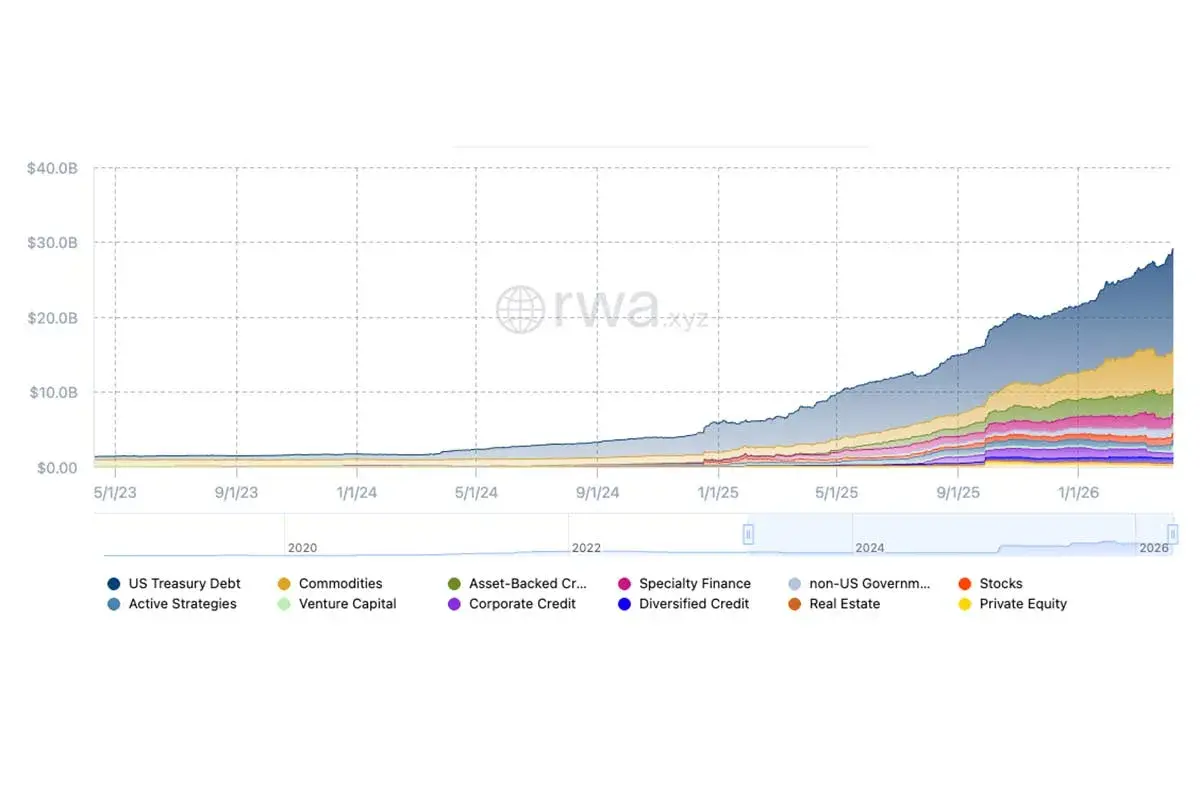
Total RWA Chart
Source: RWA[.]xyz
Tokenizing an asset meant little if holders had no regulated venue to trade it. Most early tokenization projects created tokens with nowhere to go, reinforcing the very illiquidity problem they claimed to solve.

Regulatory Uncertainty

Institutions need legal certainty on who can hold an asset, how transfers are approved, and how records are maintained. Without clear frameworks from bodies like the SEC or equivalent EU regulators, compliance teams treated security tokens as unacceptable risk. That kept firms like BlackRock and JPMorgan in observation mode for years.

Fragmented Infrastructure

Early tokenization efforts lacked end-to-end systems. Issuance, KYC/AML, transfer restrictions, custody, and reporting were handled by separate providers with no unified compliance layer. That fragmentation made institutional adoption impractical.

Crypto-Native Perception

Many tokenization platforms inherited the speculative reputation of broader crypto markets. For institutional investors managing billions in private-market liquidity, that association created a credibility gap that no whitepaper could bridge.

For a broader look at how platforms are addressing these issues, see CoinGape’s ranking of the Best RWA Tokenization Platforms.

How Securitize Built Institutional-Grade Tokenization

Rather than treating compliance as an afterthought, Securitize designed its entire asset tokenization platform around regulated market structures. Here is what that looks like in practice:

Regulation-First Architecture

Securitize operates as a FINRA-registered broker-dealer in the United States and holds MiFID authorization in the EU. Its further certifications across jurisdictions give it a further competitive advantage. The platform integrates securities law directly into code, embedding investor eligibility, transfer restrictions, and reporting into the token layer itself.

End-to-End Issuance and Lifecycle Management

The platform handles the full lifecycle of a tokenized security:

  • Issuance and primary distribution
  • KYC/AML and investor accreditation
  • Automated ownership updates and cap-table management
  • On-chain transfer restrictions enforced at the smart-contract level
  • Secondary trading through its regulated exchange

Institutional Asset Focus

While tokenization of equities dominates headlines, Securitize’s growth tells a different story. The majority of activity on the platform comes from low-risk, institutional-grade assets.
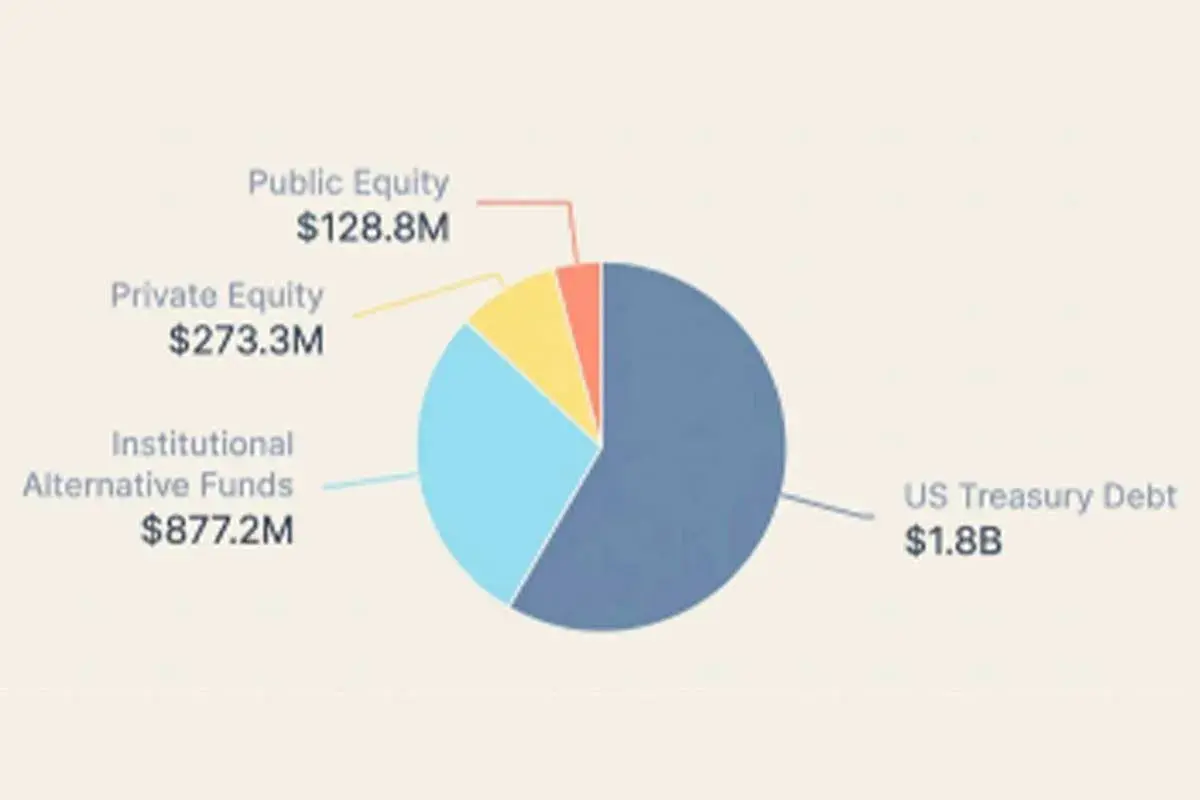
Split of Tokenized Assets by Category Chart
Source: CoinGape Case Study

US Treasury-backed products form the core demand at 59%. Tokenized private equity remains a niche category where Securitize is still an early entrant.

Bridging TradFi and DeFi

Securitize has quietly built connectivity between traditional financial infrastructure and decentralized protocols, allowing institutional users to access DeFi yields and composability without abandoning compliance requirements.

For platforms supporting secondary trading of tokenized assets, see CoinGape’s list of Top Exchanges to Trade RWA Tokens.

Impact: Revenue Growth and Regulatory Positioning

The case study uses Securitize’s AUM trajectory to show that growth has been driven by institutional participation rather than speculative retail demand.

  • $4B+ in tokenized real-world assets under management, anchored by compliant infrastructure
  • $55.6 million in revenue reported for the first nine months of 2025 (per SEC filings), with projections reaching $110 million annually
  • Recurring revenue model built on issuance fees, platform services, and secondary market activity rather than one-off token sales
  • 59% of platform demand concentrated in US Treasury-backed products, signaling conservative, institutional capital allocation
  • Multi-jurisdictional regulatory coverage, including FINRA (US) and MiFID (EU), reducing legal friction for cross-border issuers

Notably, rather than disclosing every revenue driver, the study focuses on the structural factors, recurring fee layers, regulatory moats, and institutional lock-in that make sustained revenue generation possible.

For the latest data on the broader tokenized assets market, see CoinGape’s RWA tokenized assets market data.

Conclusion: Key Takeaways

This case study does not argue tokenization versus TradFi. It documents a compliant tokenization infrastructure that, when built properly, can revolutionize how private markets operate.

  • Securitize proves institutional adoption follows regulatory clarity, not hype cycles.
  • A recurring revenue model is achievable when tokenization infrastructure handles issuance, compliance, and secondary trading end-to-end.
  • Regulatory alignment across jurisdictions (e.g., FINRA, MiFID) serves as a moat, not a bottleneck.
  • Demand is concentrated in low-risk, Treasury-backed products.
  • Once embedded, these infrastructure shifts tend to stick. Private markets are getting bigger, and the pressure to modernize is increasing.

The full CoinGape Research case study explores the data, platform architecture, and execution path in detail. 

For funding activity across the broader crypto ecosystem, visit the Crypto Funding Explorer.
Seeking Comprehensive Intelligence On Crypto Markets?

Talk to Expert
Why trust CoinGape: CoinGape has covered the cryptocurrency industry since 2017, aiming to provide informative insights to our readers. Our journalists and analysts bring years of experience in market analysis and blockchain technology to ensure factual accuracy and balanced reporting. By following our Editorial Policy, our writers verify every source, fact-check each story, rely on reputable sources, and attribute quotes and media correctly. We also follow a rigorous Review Methodology when evaluating exchanges and tools. From emerging blockchain projects and coin launches to industry events and technical developments, we cover all facets of the digital asset space with unwavering commitment to timely, relevant information.
Investment disclaimer: The content reflects the author’s personal views and current market conditions. Please conduct your own research before investing in cryptocurrencies, as neither the author nor the publication is responsible for any financial losses.
Ad Disclosure: This site may feature sponsored content and affiliate links. All advertisements are clearly labeled, and ad partners have no influence over our editorial content.

April 15, 2026

Download the complete report for free.

About Author

Sneha Agrawal
With over four years of experience in covering and tracking the financial markets, Sneha Agrawal is a dedicated Crypto Journalist and Editor with passion for researching and writing the crypto pieces. She is currently leading the Block of Fame, here at CoinGape. She likes to keep track of political, legal and financial happenings all around the world - without which she deems her day incomplete. Apart from her Journalistic endeavours, she is a solo traveler, museum goer, and a keen reader of books.
Want your project featured in a data-driven report or case study? Contact us at [email protected]

CoinGape is a burgeoning blockchain and crypto media company. It was recently awarded as the Best Crypto Media Company 2024 at Global Blockchain Show, Dubai. Our goal is to keep industry professionals up to date on the most recent news and developments. We are a team of experts who take great pride in offering unbiased and well researched information to help our readers make informed decisions. Read our Editorial Policy

©2026 All rights reserved