
ByCoinGape



Fusaka:- Ethereum has officially activated its newest major upgrade, Fusaka, arriving barely seven months after May’s Pectra release. The update introduces a wave of improvements aimed at sharpening user experience, enhancing scalability, and easing validator workloads.
Fusaka expands the network’s data throughput, gives Layer-2 rollups more room to grow. More importantly, it signals Ethereum’s transition into a faster, more predictable upgrade cycle – embracing a “twice-a-year” hard-fork cadence.
It represents one of the most consequential milestones in Ethereum’s long-term rollup-focused vision.
According to James Smith, Head of Ecosystem Development at the Ethereum Foundation, the importance of Fusaka lies in its subtlety. While users may not see any flashy changes on the surface, the upgrade fundamentally transforms what Ethereum can handle under the hood.
“Fusaka is the upgrade that makes Ethereum feel bigger without looking different. It gives Ethereum more bandwidth, stronger defenses, and better wallets all in one shot,” he explains.
This combination reflects Ethereum’s core priority – scaling through Layer-2 rollups while keeping the base layer lean, secure and decentralized.
Fusaka adds precisely the kind of capacity and data-availability improvements L2s need. This all is “without bloating the main chain or pushing validator requirements upward.”
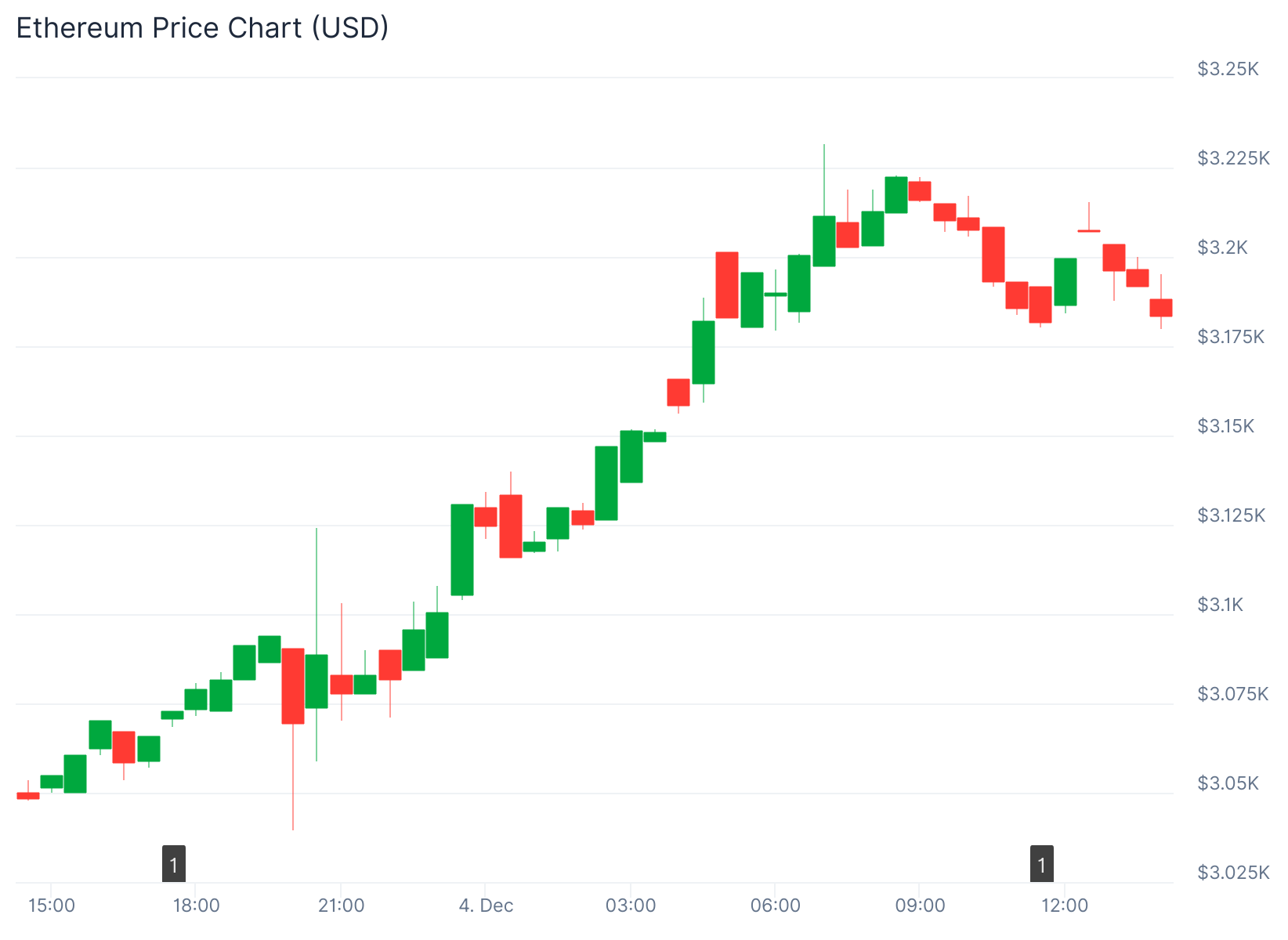
The change is also reflected in market. In the hours after Fusaka went live, Ethereum’s price has seen an uptick. It is trading between roughly US $3,185 – $3,195 with a 5% rally in the last 24 hrs as shown below:
Also Read: Ethereum Price Reclaims $3,200
At the heart of Fusaka is PeerDAS (Peer Data Availability Sampling) – a new way for the network to verify L2 data. Instead of requiring every validator to download full “blob” data posted by rollups, PeerDAS allows them to sample small portions from peers.
“For L2s, Fusaka is more oxygen: cheaper, more predictable blob space so they can keep fees low even when mainnet is busy,” Smith notes.
PeerDAS reduces bandwidth requirements dramatically while still ensuring security. The result is that Ethereum can now support much higher blob throughput, meaning rollups have more space to publish their data without facing congestion or cost spikes.
This comes as over the next two years, Ethereum researchers aim to refine PeerDAS. James informs that they will “gradually increase its scale, and turn its capabilities inward to expand both L2 throughput and eventually L1 gas capacity.”
“For validators, it’s higher capacity with seatbelts on: caps, pricing fixes, and lighter history that actually make the job easier, not harder,” James adds.
This ensures Ethereum’s decentralization doesn’t erode as the network scales. Home stakers remain viable, which has always been one of Ethereum’s non-negotiable principles.
Also Read: BNB Chain BD Head on Next Growth Wave
Fusaka is also notable because it is Ethereum’s second major upgrade in the same year, following Pectra in May 2025. This is the first time that the ecosystem is undergoing two upgrades in the same year since the Merge of 2022.
For Smith, this moment signals Ethereum’s transition into a new era. “Shipping Pectra and Fusaka in the same year shows Ethereum has finally grown from ‘research lab’ to ‘reliable infrastructure,’” he says.
The reason, he explains, is the modular roadmap – upgrades are now broken into smaller, well-scoped improvements. That allows client teams, researchers, and L2 builders to coordinate more efficiently – and ship faster – while preserving network stability.
Smith believes the real magic begins now – not at the upgrade itself, but in what developers build on top of it.
“Next is turning these primitives into user magic: passkey wallets that feel like Apple Pay UX, L1 pre-confirmations that feel instant, and rollups that can scale.”
Think tap-to-sign wallets, near-instant confirmation experiences, and rollups that can support mainstream-scale volumes. Fusaka lays the groundwork. The next wave is all about user experience.
Also Read: Grayscale Research Head on Launching Solana ETF
Fusaka represents a quiet revolution – not a visual overhaul. It is a foundational upgrade that expands Ethereum’s capacity and resilience just as the institutional interest and Wall Street bets on web3 are at its peak.
In Smith’s words, Ethereum is finally operating like the reliable infrastructure it has long aimed to become. Faster upgrades, stronger L2 economics, easier validation, and the building blocks for Apple-like wallet UX all point to a chain preparing for mass-scale applications.
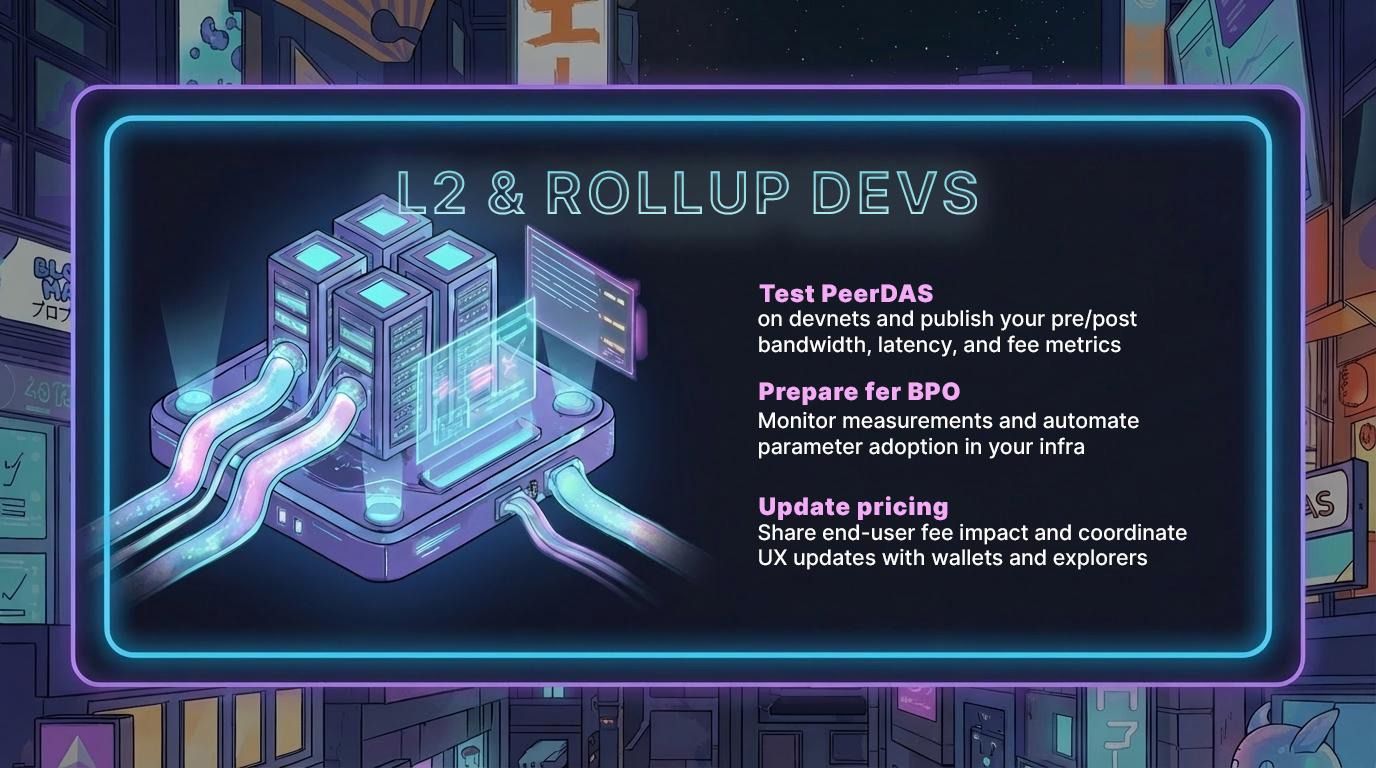
And this isn’t the end of Ethereum’s upgrade cycle for the year. Following Fusaka, the network is already preparing for the next stage with BOP (Blob Oversubscription Pricing).
Two BPO forks are scheduled to go live in quick succession: the first on December 9, which will raise the blob target from 6 to 10. The second is on January 7, increasing it further from 10 to 14. These incremental adjustments are designed to steadily expand data capacity and further reduce L2 fees.
But from James, it is very much clear that Fusaka may not shout, but its impact will be felt across every corner of the Ethereum ecosystem in the months ahead.
Friendly reminder:
Fusaka isn't the final upgrade going live for Ethereum this year – on Dec 9th, a BPO fork will activate & the blob target will increase from 6 to 10.
Then, on January 7th, another BPO fork will activate and the blob target will go from 10 to 14.
Accelerate!
— sassal.eth/acc 🦇🔊 (@sassal0x) December 3, 2025

 Sneha Agrawal
 More Stories
|
Newsletter
Subscribe to our newsletter for new updates

By signing-up you agree to our Terms & Conditions and Privacy Policy.




Share