Key Highlights
It is not the order of the day for payments infrastructure to attract attention the way token prices or market speculation do. However, the success of any stablecoin wallet in the real world or beyond early adoption depends on it.
We can see a clear example in this Transak case study of what actually happens when that infrastructure is done right, and in the case of MiniPay, Opera’s mobile stablecoin wallet, gross transaction volume increased ten times between May 2025 and February 2026. Conversion rates also improved 2.5x, and achieved an all-time high GTV for eight months consecutively.
So, how did MiniPay reach such an important milestone?
The growth came as a result of Transak’s integration of fiat on-ramp infrastructure, and a combination of compliance operations, localized payment access, in-app onboarding, and expanded US regulatory coverage.
A seamless fiat on-ramp is only part of the user journey. Equally important is providing reliable off-ramp solutions that allow users to cash out quickly and securely.
Also Read: Best Crypto Off-Ramps Service Platforms
This Transak MiniPay case study begins by examining the operational challenges MiniPay faced before integrating Transak.
MiniPay is a mobile-first stablecoin wallet built by Opera, to make digital dollar payments simple and accessible across both emerging and mainstream markets.
But scaling was not obvious for the wallet. There was a need to first address various operational barriers, most of which had little to do with blockchain technology itself.
One of the biggest challenges was the onboarding experience, which affected conversion. Users were being redirected to external platforms to complete transactions, a process that was complicated, leading to many drop-offs.
What happens in consumer finance is that, the moment users leave an environment they are familiar with, trust tends to weaken. This is especially in users visiting the platforms for the first time and are new to crypto products.
The second challenge was regulatory access. As this area expanded in the United States, the country became the largest market by transaction volume for MiniPay. However, covering the entire nation became difficult to achieve independently, given the fragmented licensing requirements by the state.
The mobile-first stablecoin wallet would have required substantial compliance resources, capital and time in order to build the infrastructure internally.
Also Read: Crypto Market Review Q2 2026
Lastly, there was an issue with compliance operations. Relying on internal development and maintenance of AML and KYC stream may result in a delay in product launch, and in turn increase operational overhead.
Even for consumer wallets processing relatively small transaction sizes, minor onboarding challenges have an equal impact on conversion. According to Ondato reports, the primary reason user often abandon the onboarding process is when verification takes longer than ten minutes.
Transak offers most wallets the stablecoin and crypto payment infrastructure, regulatory and compliance system that they would have found difficult to build themselves. Transak’s best crypto onboarding solution for MiniPay focused on four key areas affecting conversion and growth of users.
As this Transak case study shows, solving onboarding and compliance challenges together proved more effective than addressing either issue independently.
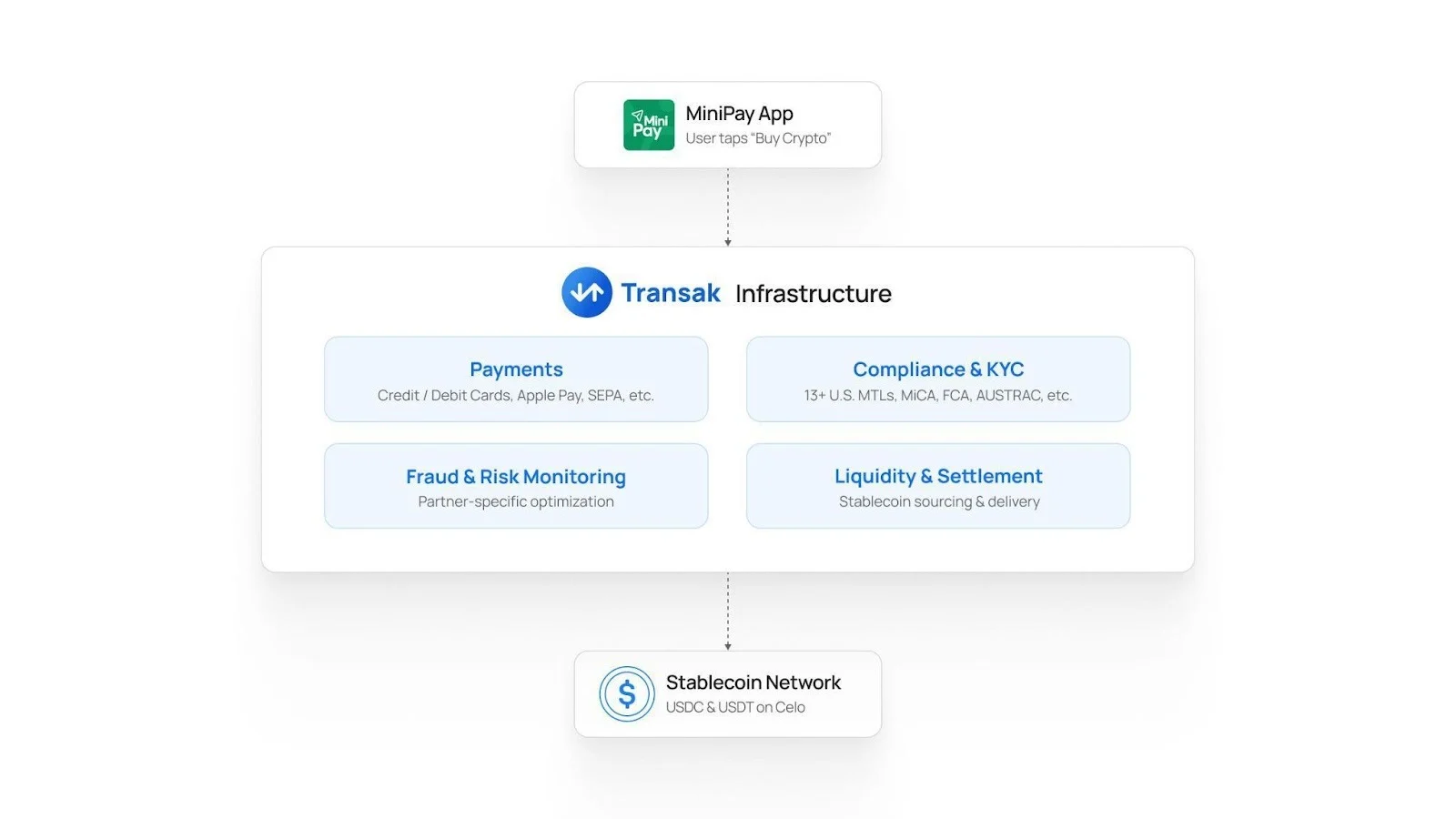
The first crucial area was onboarding. MiniPay integrated Transak’s embedded on-ramp, and kept the flow of the entire purchase inside the app. The no-redirect onboarding model allowed users to buy USDC and USDT without being redirected to an exchange or third-party website.
As a result, friction is reduced at the point where first-time users are most likely to abandon the process.
The regulatory coverage of MiniPay, which existed in the United States, was addressed by Transak. By combining over 13 Money Transmitter Licenses (MTL) (at the time of integration, which have since increased to over 20) and partner network per state and footprint, MiniPay was able to access markets that were almost impossible to serve.
The US would later become the wallet’s largest market by transaction volume, thanks to Transak as the best fiat on-ramp provider for Web3 apps to come to MiniPay’s aid.
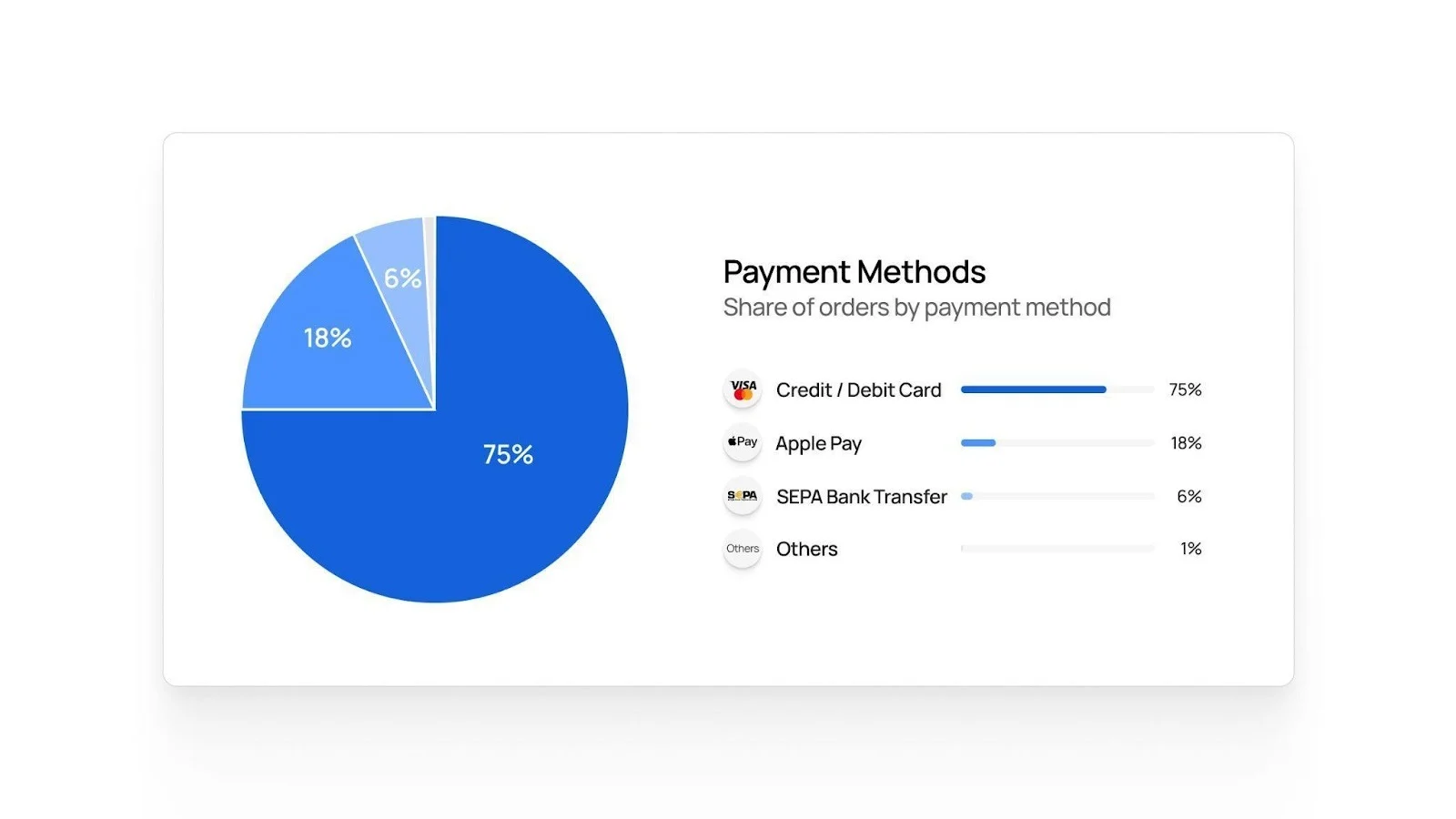
MiniPay gained access to a wide range of payment options with Transak’s single integration. Users across more than 100 countries could now transact via FedNow, RTP, ACH, SEPA transfers, Google Play, and Apple Pay.
They were also able to use the local payment methods they are familiar with, instead of being forced into a standardized payment experience. Practical cards dominated the MiniPay transactions by 75%, with apple tagging along at 18%. SEPA bank transfers enabled the adoption of the wallet in Spain, Poland, France and Poland.
Transak also managed the crypto KYC solution and workflow of AML. It handled user onboarding, screening, fraud monitoring, and ongoing operations on behalf of MiniPay.
Its multi-level KYC and KYC Reliance infrastructure reduced unnecessary repeat verification by twice as much. At the same time, risk and compliance controls were configured specifically for MiniPay’s user profile and target markets.
The next section of this Transak MiniPay case study looks at the measurable business outcomes following the integration
The impact showed up across transaction volume, conversion, and user retention. Over a nine-month period, MiniPay recorded sustained growth.
These results suggest that improvements in onboarding, payment accessibility, and regulatory coverage translated into meaningful gains in user adoption.
| Metric | Result | Period |
| Gross Transaction Volume Growth | 10x increase | May 2025 – Feb 2026 |
| Consecutive Months of Record-High GTV | 8 months | Jul 2025 – Feb 2026 |
| Conversion Rate Improvement | 2.5x increase | May 2025 – Feb 2026 |
| Repeat Transaction Rate | 59% of first-time buyers returned | Post-first purchase |
| Largest Market by Volume | United States | Following US coverage expansion |
| Leading Payment Methods | Cards 75%, Apple Pay 18%, SEPA 6% | Full period |
| Stablecoin Activity | USDC and USDT in roughly equal share | Full period |
Source: Transak x MiniPay Case Study
59% of users who completed a first transaction went on to transact again. This is a very important figure in this case study. In many cases, volumes of transactions increase rapidly as a result of promotional activity or market conditions. However, this is not the case for MiniPay. Users made repeated transactions because they had found enough value in the product.
We can also notice the rise of the United States as MiniPay’s largest market. This growth was not driven by new products; instead, expanded regulatory coverage played a greater role.
In this case, licensing infrastructure directly influenced market access, which in turn translated into transaction volume.
Also visit: Crypto.com Case Study: Why the Crypto.com Card Is Winning the Crypto Card Race
One of the clearest findings from the MiniPay case is that nearly all transaction activity flowed through USDC and USDT. This suggests that users were primarily searching for access to dollar-denominated value rather than speculative crypto exposure.
As adoption continues to grow, choosing secure storage has become equally important, making the best USDT wallets a key consideration for both new and experienced stablecoin users.
This trend goes beyond just a single application. The wallet experienced increased stablecoin transaction volume of more than $1.78 trillion in February 2026. Total market capitalization followed suit, growing to over $270 billion by mid-2025, from the initial $130 billion in early 2024.
Future outlook projects that the stablecoin market could reach $1.2 trillion by 2028.
The opportunity is no longer limited by demand when it comes to wallets, fintech platforms, and payment providers. It is becoming more and more dependent on the infrastructure that allows users to access it.
A combination of liquidity access, compliance workflows, payment method availability, and regulatory coverage plays a direct role in conversion, retention, and geographic expansion.
When adoption begins growing, these operational capabilities become just as important as the underlying asset itself.
The MiniPay case illustrates this dynamic clearly. Demand for stablecoins isn’t the main factor of growth. The infrastructure played a major role, allowing users to access those assets through payment methods they are most familiar with. It also smoothened the onboarding process, enabling compliant market access.
The Transak MiniPay case study also highlights how infrastructure improvements can influence user adoption as much as the underlying blockchain technology.
As stablecoins become more widely used for payments, the companies providing the infrastructure behind them are likely to play an increasingly important role in how digital financial services are built and delivered.
Also read: How to Accept Altcoin & Stablecoin Payments: Business Guide 2026
While this Transak case study focuses on MiniPay, it also provides a useful benchmark when comparing fiat on-ramp providers.
For teams like fintech platforms, exchanges, and wallets evaluating the best fiat on-ramp provider alternatives, key decisions are based on integration speed, the ability to maintain control over the user experience, customization, stablecoin support, wider crypto payment rail, and regulatory coverage.
| Capability | Transak | MoonPay | Ramp Network |
| Integration Time | Hours via widget or days via API | Days to weeks | Days to weeks |
| Institutional Settlement | Available through Fireblocks Network | Not available | Not available |
| Conversion Support | Dedicated account management and funnel optimization | Not offered | Not offered |
| White-Label Experience | Fully embedded, no redirects | Partial white-label | Partial white-label |
| Stablecoin Support | USDC, USDT, RLUSD, EURC, USDG, USDe, PYUSD, FDUSD | USDC, USDT, and selected others | Primarily USDC and USDT |
| US Coverage | 20+ MTLs and serviceability across all 50 states | Extensive, retail-focused | More limited coverage |
| KYC / AML | Fully managed and partner-configurable | Managed, standardized | Managed, standardized |
| Integration Time | Hours via widget or days via API | Days to weeks | Days to weeks |
The main difference among providers is the onboarding experience. While some support a no-redirect model, which sets in the best white label crypto on ramp, other solutions rely on redirecting users to external platforms to complete transactions.
For consumer products, this difference can have a measurable impact on conversion rates, user trust, and onboarding performance.
This Transak MiniPay case study reinforces that payments infrastructure has become a competitive advantage for wallets and fintech platforms.
Transak’s approach as a global crypto/stablecoin payment enabler will continue expanding into new markets while improving conversion performance through ongoing product and payment optimization.
The MiniPay case also reflects a broader change in how stablecoins are being used. They are going beyond just trading and slowly expanding to a practical way for users to move and hold dollar-denominated value in everyday crypto payments for apps.
As the market goes through such an experience, the main challenges faced by fintech products and wallets are shifting. It is no longer mainly about the infrastructure of blockchain itself. Instead, the current focus is more on access, payment methods, and how smooth the onboarding experience is.
The most critical step is ensuring users make their first successful transaction after sign-up.
In this setup, Transak operates directly within the payment flow. It provides stablecoin onboarding infrastructure and regulatory coverage so that teams do not have to build these systems from scratch. The results achieved by MiniPay make this approach clear.
Overall, the Transak case study shows that combining compliance, payments, and onboarding into a single solution can significantly improve user growth.
Once U.S. licensing coverage was in place, a major market opened up. No-redirect model that kept users inside the app reduced drop-offs. Additionally, local payment options improved completion rates across regions, while stablecoin support aligned with how users actually preferred to transact.
Looking ahead, demand for this type of infrastructure is expected to grow as stablecoins become more widely used in everyday financial products. As this Transak MiniPay case study illustrates, the ability for platforms to combine compliance, payments, and onboarding in one system will play a larger role in shaping how digital finance evolves.
Frequently Asked Questions
What is Transak?
How did MiniPay scale stablecoin transactions using Transak?
What is a fiat on-ramp
What makes Transak different?
Is Transak a regulated crypto payments provider?
What stablecoins does Transak support?
How long does it take to integrate Transak?
Download the complete report for free.

 Jane Lubale





Share