Every stock, every bond, every fund, every asset can be tokenized. If they are, it will revolutionize investing.
– Larry Fink, Chairman & CEO, BlackRock
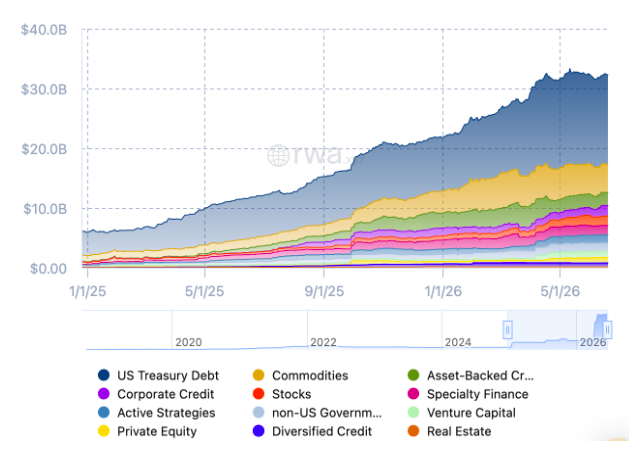
That line from BlackRock’s Larry Fink is why asset tokenization suddenly has everyone’s attention. By mid-2026 there was already over $32 billion of real-world assets sitting on-chain, spread across more than 929,000 investors.
And it’s not just crypto startups doing it. Banks are in, so are property funds and big asset managers. So if you’re thinking about putting your first tokenised asset out there, it helps to know what tokenization of assets actually involves before you start.
Looking for new opportunities? Check out Top Tokenized Real-World Assets Tokens
Real-World Asset tokenization (RWA) is simpler than it sounds. You take a real asset, such as a building, some bonds, a slice of a fund, or gold, and put it on a blockchain as a digital token. Think of that token as proof of ownership, recorded on a public ledger that anyone can verify.
The practical difference is speed and access. Transfers that once took days now clear in seconds. And because one asset can be split into thousands of tokens, investors don’t need to buy the whole thing, but can own a fraction of it for whatever amount they can afford.
The simple answer is that traditional markets are slow and expensive. Settlement takes days. Geography limits who can invest. Paperwork piles up. Tokenized assets cut through most of that by trading around the clock, across borders, without the usual friction.
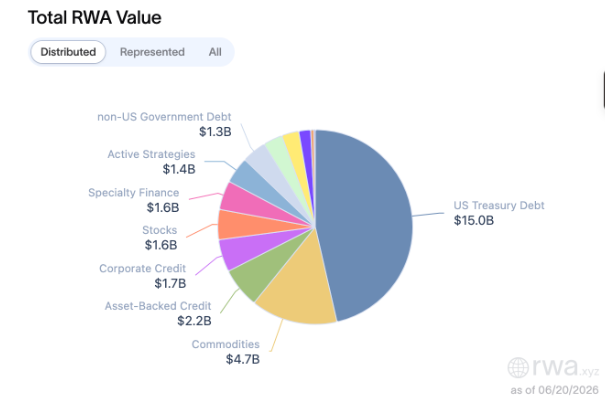
The numbers back it up. Tokenized US Treasuries are already at roughly $15 billion. Tokenized gold is around $4.7 billion. Citi’s Tokenization 2030 report puts the total sector at $5.5 trillion by the end of the decade, up to $8 trillion in a bull market.
Smart contracts handle the admin automatically including compliance checks, interest payments, dividend distributions, without anyone having to manually process them. For businesses holding assets that are hard to sell, that’s a meaningful way to free up capital and open the door to a wider pool of buyers
Also Read: Crypto Market Report Q1 2026: BTC, ETH, Stablecoins, RWAs, AI and Institutional Trends
Most first-time issuers exploring asset tokenization fall into four categories, and each has different goals.
Real estate developers and property funds
This is where a lot of the early activity is happening. Instead of selling a whole building to one buyer, real estate tokenization allows developers to carve it into smaller digital shares that regular investors can actually afford. Commercial real estate tokenization is already live, and some real estate tokenization projects can allow you to buy in for as little as $50.
These projects run on a digital securities issuance software layer that handles compliance and investor records automatically, which is what makes the small-ticket entry possible.
Some issuers also use a white label tokenization platform to bring their product to market faster without building the tech from scratch.
Asset management firms
Fund managers are taking a different route, using asset tokenization to move entire funds onto a blockchain. So the boring parts of the job, like onboarding investors and sending out payouts, happen on their own through a tokenized fund platform.
The investment fund tokenization software behind it handles everything from KYC to distributions, while blockchain onboarding for asset management removes the manual steps that slow everything down. Less manual work, lower costsLess manual work, lower costs.
Banks and financial institutions
Banks want the same efficiency but none of the risk. They’re looking for a tokenization platform for financial institutions to integrate into the systems they already run, while still maintaining strict regulatory compliance, secure custody, and the controls expected in regulated financial markets. That usually means core banking tokenization integration, by plugging into existing systems rather than replacing them.
Looking for new opportunities? Check out 10Best RWA Tokenization Platforms in 2026: In-Depth Reviews
Tokenization startups
And then there’s the group building the tools everyone else uses. Rather than coding a smart contract from zero every time, these startups rely on an asset tokenization infrastructure API or an enterprise tokenization platform so they can launch faster. Together with the tokenization engine for startups, they get the infrastructure without the build time.
When done right, asset tokenization can turn something slow and buried in paperwork and turn it into an asset people can actually buy and sell. The legal wrapper, the custody setup, and the asset tokenization smart contracts all need to be solid before you mint a single token. Once you get all those three things right, everything else tends to fall into place.
Want to know how to carry out asset tokenization step by step? Check the full Guide to Launching Your First Tokenised Asset.
Also Read to Learn More: Top Real World Asset (RWA) Issuers of 2026
Frequently Asked Questions
How to tokenize real estate on blockchain?
How much does it cost to tokenize real estate?
Which blockchain is best for real estate tokenization?
How to tokenize an investment fund?
How to tokenize private credit assets?
How can asset managers tokenize investment products?
What infrastructure do banks need for tokenization?
What is the best enterprise blockchain for banks?
What is the best tokenization platform for financial institutions?
How to build an asset tokenization platform?
What legal structure is needed for a tokenization startup?
How to launch a tokenization startup?
What APIs are needed for asset tokenization?
How do smart contracts support asset tokenization?
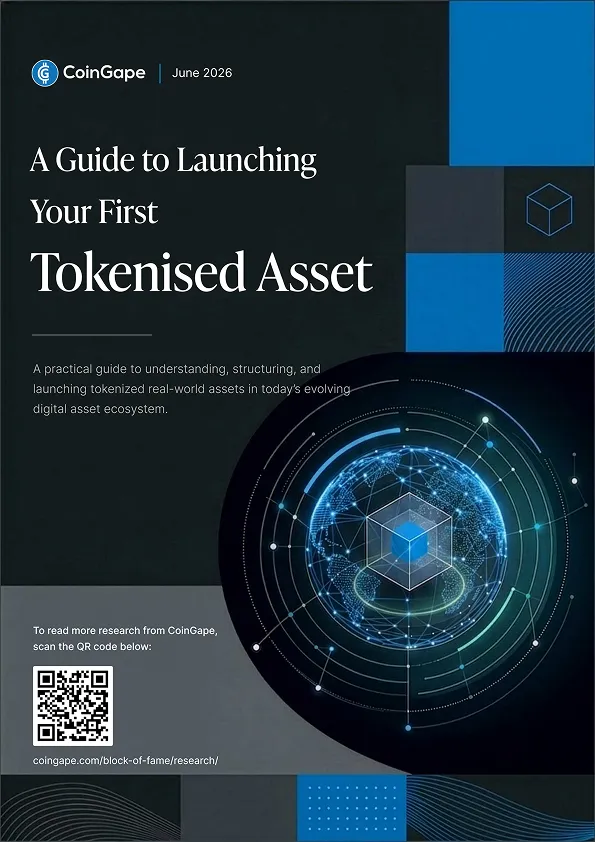
Download the complete report for free.

 Jane Lubale



Share