
ByCoinGape
Key Highlights
For years, getting into a promising private company before it went public was something only a small group of investors could do. By the time companies like SpaceX or OpenAI list on public markets, most of the early gains have already gone. Venture capital firms and big institutional investors got there first. It was never that ordinary people weren’t interested. They just couldn’t get in. The regulations make sure of that.
Most markets allow only accredited investors into private market investing. It is the official term for investors who meet certain income or net worth requirements. Usually, it is a small group. Even then, the minimum amount needed to participate often runs into six figures. The paperwork alone usually needs a lawyer to make sense of it.
In the US, accreditation rules alone leave about 87% of people unable to invest in many of these opportunities. And even those who do qualify aren’t getting an easy deal. They pay management fees. They also give up carried interest, where a percentage of profits is paid to the fund managers. Their money could even stay locked up for years with no way to withdraw it early.
Also Read: Crypto Market Review Q2 2026
Bitget IPO Prime is built to change that. The platform combines private market investing with digital asset infrastructure onto a crypto exchange. It is designed to broaden access for eligible users through a crypto-native structure, subject to applicable eligibility requirements and jurisdiction restrictions. As Bitget CEO Gracy Chen put it, “We are shifting from banking the unbanked to brokering the unbrokered.”
Here’s how simple it is in practice. Users can join with as little as 100 USDT, and pay in USDT or USDGO. After allocations are confirmed, they are free to trade their tokens directly on Bitget’s spot market. They are not required to pay a management fee, give up carried interest, or incur a custody charge. The subscription process is integrated into the Bitget platform, reducing much of the operational complexity associated with traditional private-market participation.
The first two IPO Prime launches, preSPAX and preOPAI, gave a clear read on how much appetite there is for tokenized private markets and tokenized pre-IPO investing. Between the two, nearly 20,000 people took part, committing close to $300 million.
And the interest didn’t just stagnate, but continued to grow. preSPAX was oversubscribed 2.9x. preOPAI came in at 5.7x, even with fewer allocations on offer. The average amount each participant put in also increased, from approximately $12,300 to more than $22,000.
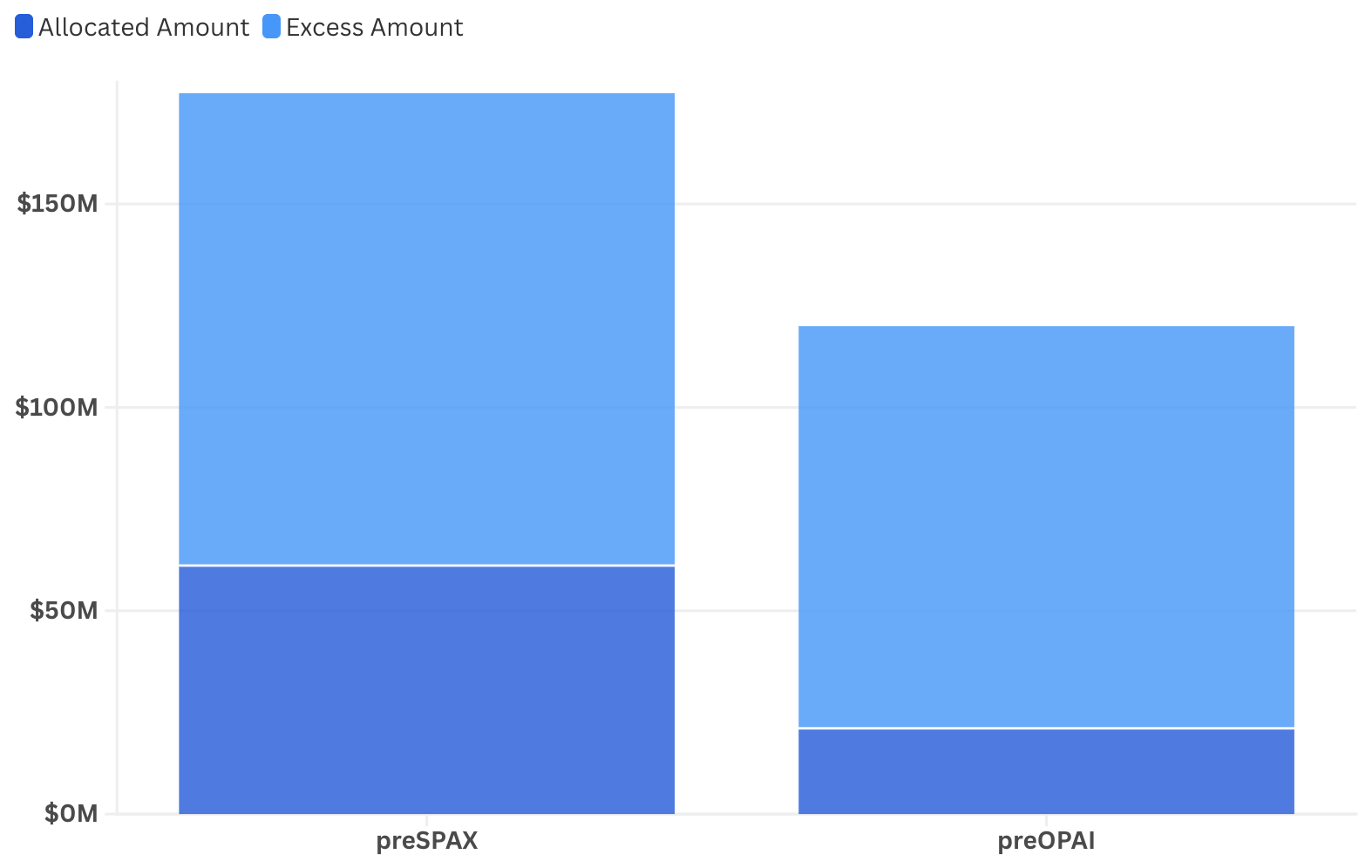
That’s not about more people showing up. It’s investors putting in more money per person, which says something about how confident they were, the second time around.
Both offerings traded above their subscription prices after listing. preSPAX generated gains of nearly 45%, and preOPAI climbed more than 42%.
But the bigger picture here isn’t just the price gains, but what happens right after. Once the subscription process ends, participants can trade their allocations straight on Bitget’s spot market. Unlike many traditional private-market structures, IPO Prime allows participants to trade their allocations on Bitget following distribution, providing earlier liquidity. That’s a much faster way out than most pre-IPO investment platforms or private secondary marketplaces can offer.
The two offerings didn’t just move money into private-market allocations, but onto Bitget itself. Before the offerings opened, users deposited nearly $88 million into their Bitget accounts. And a lot of that activity didn’t stop once the offerings closed.
Following participation, users generated approximately $3.47 billion in Spot trading volume, $19.26 billion in crypto futures trading volume, $2.20 billion in stock trading volume, and $20.40 billion in CFD trading volume. This post-subscription trading activity also generated approximately $4.46 million in trading fees, highlighting IPO Prime’s contribution to broader platform activity beyond the initial subscription period.
IPO Prime Capital Inflows and Wallet Funding
| Metrics | Amount |
| Total net deposits before the offerings | $88.23M |
| Total net withdrawals after the offerings | $40.34M |
| Net deposit amount per capita | $10,493 |
| Net withdrawal per capita | $4,940 |
There was a user growth angle too. Of the 19,846 participants across both offerings, approximately 10% were new to Bitget, while close to 15% of users participated in both IPO Prime campaigns. Following participation, 16,707 users continued trading on Bitget after the subscription period, indicating sustained engagement beyond the initial allocation process.
IPO Prime runs on Solana through a partnership between Bitget and Republic. Users don’t buy actual shares in these companies. Instead, they receive a tokenized instrument that tracks the performance of the underlying private investment.
Unlike traditional tokenized equity or tokenized stocks, IPO Prime gives users economic exposure rather than direct ownership of company shares.
But there’s a catch. You don’t get voting rights or dividends, and you’re not holding real equity in the legal sense. What you get is exposure to the value of that asset, plus the ability to trade it on Bitget whenever you want.
Like any private market investing, IPO Prime comes with risks. Valuations can fluctuate, and liquidity depends on how active trading is in the secondary market.
Regulation around tokenized securities is also still being figured out. That means the rules governing these products may change as time goes on. It is important to remember that tokenized exposure isn’t the same thing as owning company shares. It shouldn’t be treated like it is.
Most pre-IPO platforms still work through private secondary markets. That means slow transactions and thin liquidity. You’re waiting on the right buyer or seller to show up. Some crypto platforms have tried tokenized products or perpetual contracts tied to private companies, creating a growing market for tokenized securities. But those products often sit outside the main trading experience.
IPO Prime closes that gap by keeping everything on one platform. Once users receive their allocation, they can start trading without leaving Bitget. The combination of tokenized exposure, exchange-native liquidity, stablecoin settlement and an existing global trading ecosystem differentiates IPO Prime from many traditional private-market platforms.
This kind of opportunity isn’t shrinking any time soon. As per Pre IPO Intel Market Report, the pre IPO market is expected to grow from $67B in 2026 to $210.5B by 2034. Private companies keep getting bigger and more valuable, but the pace of IPOs hasn’t caught up.
As of April 2026, there were more than 1,700 unicorn companies worldwide, collectively valued at $8.6 trillion. Only around 40 of them actually went public in 2025. New unicorns are being created faster than the existing ones go public.
Blockchain provides the infrastructure, while stablecoins enable settlement and continuous trading. RWA tokenization continues to grow across private markets, which could see products like IPO Prime become an important part of the next phase of private equity tokenization.
This trend could further be fueled by the continued expansion of institutional adoption of tokenized real-world assets.
Also visit: Coinbase Case Study: Why Coinbase Agentic Wallets Are Winning the AI Payments Race
What the first two offerings show is pretty simple: when you lower the barriers and give people liquidity from day one, demand for tokenized private market exposure is there. Whether that holds up long-term is still an open question. It will come down to how regulation develops and how much traction tokenized real-world assets get more broadly. But for now, IPO Prime is a good example that shows how digital asset infrastructure can broaden access to private-market opportunities while bringing greater liquidity a
Frequently Asked Questions
How does Bitget IPO Prime work?
What is tokenized pre-IPO investing?
What is the minimum investment for Bitget IPO Prime?
What are the risks of tokenized pre-IPO investing?
Which crypto exchanges offer pre-IPO investing?
Download the complete report for free.

 Jane Lubale
GUIDE
Jane Lubale
GUIDE



Share