


Agentic Payments:- If there is one trend in crypto that has quietly emerged as one of the industry’s fastest-growing sectors over the past year, it is the rise of agentic commerce. AI agents are increasingly paying for data, inference, research, infrastructure, and other digital services without human intervention.
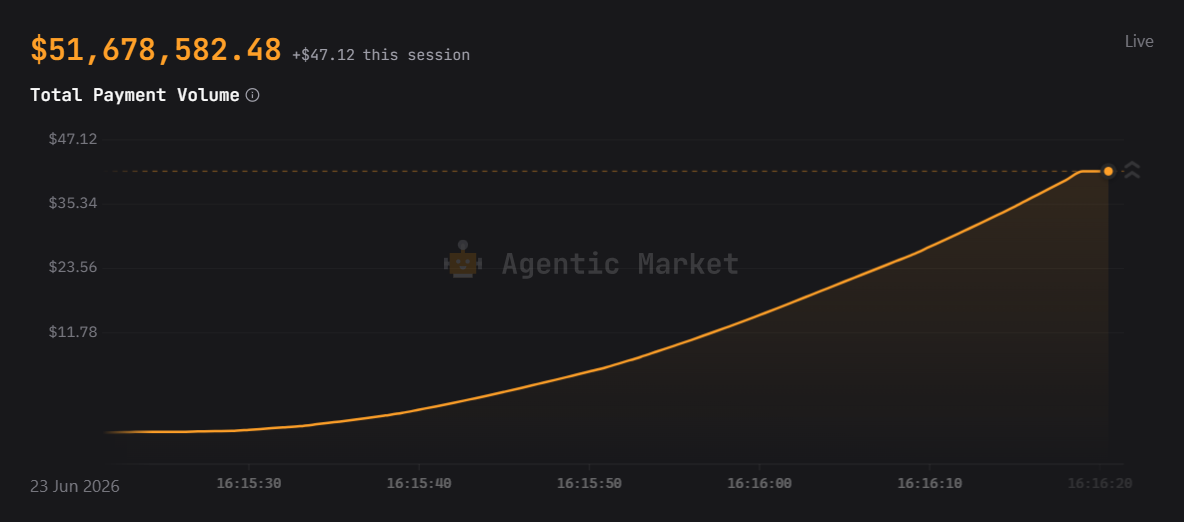
The growth has been rapid. According to Chainalysis, agentic payment activity on Base has already surpassed 100 million transactions in less than a year. The broader x402 ecosystem has processed more than 165 million transactions and over $50 million in payment volume. The network now supports tens of thousands of active AI agents.
Yet until recently, there still remains limitations around agentic payments. Most of these, agentic payments no matter the number, were micropayments.
AI agents are spending, however, the transaction values are just fractions of a dollar. In fact, much of the activity flowing through x402 and other agentic payment rails was concentrated in transactions worth just a few cents or less.
But a new data from Chainalysis challenges the fact.
How much of Agentic Payments Are Above $1
According to Chainalysis report, transactions worth more than $1 now account for 95% of value transferred through x402 on Base.This is an increasse from just 49% in early 2025.
Over the same period, transactions between $0.10 and $1 collapsed from 46% of value transferred to only 4%. The protocol still processes large numbers of tiny payments, but the economic weight has shifted decisively toward larger-value transfers.
This is something that Tools for Humanity’s Chief Enginner Paolo D’ had said in an op-ed, “Agentic payments wont stay small for too long.”

The report further reveals that over the past six months, the tester-to-payer conversion rate has also improved 4x. This indicaes that users are increasingly moving from experimentation to actual spending. Weekly retention rates have also continued to rise, suggesting agentic payments are becoming part of recurring workflows rather than one-off tests.
It also comes as companies are launching separate agentic wallets such as Metamask unveiled its Agentic Wallet.
But Where Is the Agentic Money Going?
One of the biggest misconceptions around agentic payments is that AI agents are primarily paying for simple API calls. In reality, the ecosystem is rapidly expanding across multiple categories.
While category-level payment volumes remain undisclosed, available data suggests that agent spending is becoming increasingly concentrated around data services, infrastructure tools, search, trading, and agent-to-agent workflows.
Galaxy Research in its earlier report had noted that data-as-a-service and infrastructure utilities have accounted for an increasingly large share of x402 activity. That’s though since the protocol’s early speculative phase,
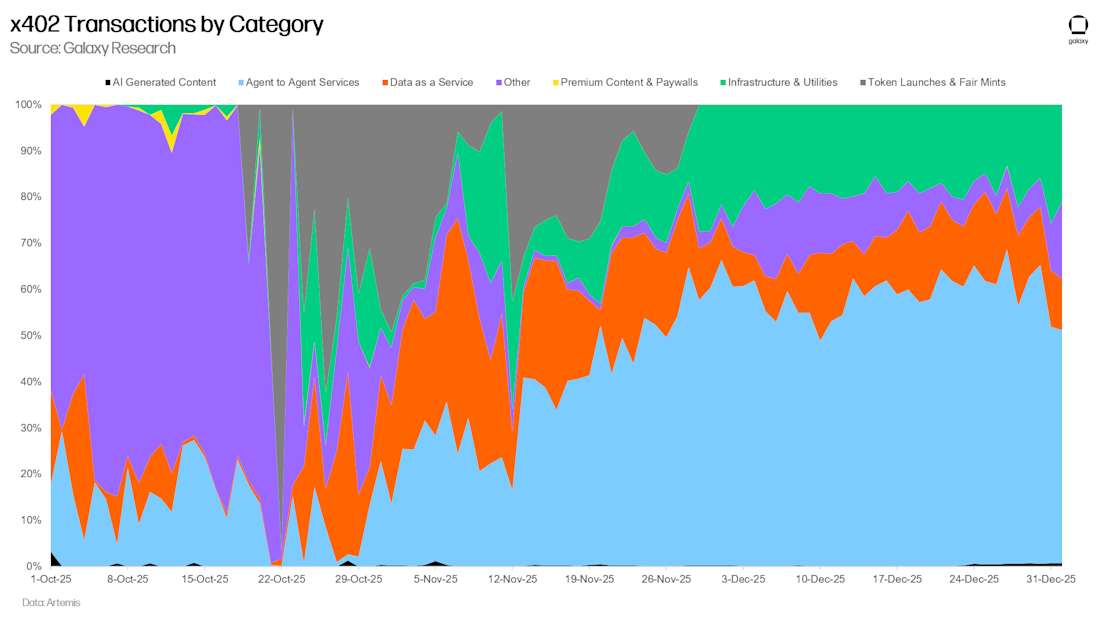
Coinbase’s Agentic.Market is also focusing on the largest categories for agent-driven spending. These currently include Inference, Data, Infrastructure, Trading, Search, Media, and Social services.
Inference remains one of the largest categories on Agentic.Market. Rather than paying monthly subscriptions, agents are purchasing compute and intelligence on demand through USDC-based transactions.
Other Articles...


Data has emerged as another major spending category. The marketplace currently supports around 69,000 active AI agents that have processed more than 165 million transactions. It has reached over $50 million in payment volume through x402. About 85% of all x402 activity now settles on Base.
Thus, taken together, the data suggests that agentic payments and users are growing and evolving rapidly among different categories.

 Sneha Agrawal

Share