


Since last month, a cluster of announcements from major crypto exchanges suggests an emerging strategic pivot: rather than building global payment rails from scratch, leading exchanges are increasingly integrating with incumbent banks and payment networks.
Over the past weeks, Kraken added PayPal funding for U.S. users, Coinbase struck a bank-and-card tie-up with JPMorgan Chase, and Binance rolled out instant withdraws to Mastercard in Europe.
However, what exactly does this common move signifies and why are the industry’s leading players following it. Here’s it:
Crypto Exchanges Partnering with PayFi Giants
To begin with, take few examples.
1. JPMorgan Chase and Coinbase have announced a multi-stage integration: starting in fall 2025, Chase credit-card customers will be able to use their cards to fund purchases on Coinbase. Further, from next year, Chase cardholders will also be able to redeem Chase Ultimate Rewards for USDC and link accounts directly to Coinbase. This came as a bank-grade onramp to crypto for 80 million Chase customers.
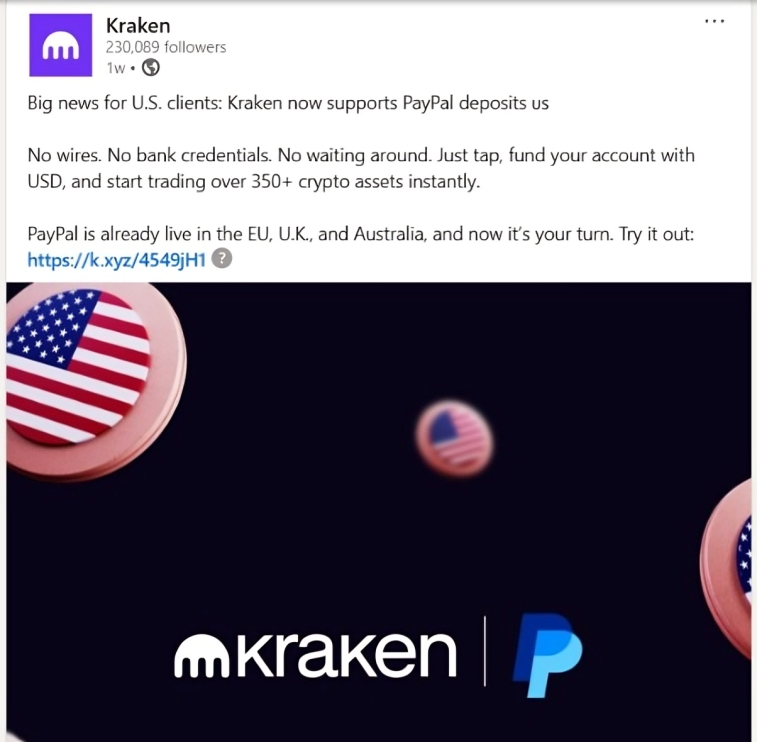
2. Kraken launched PayPal as a funding option for U.S. users in early August 2025. With this, its users will be able to make near-instant USD deposits via PayPal balance, linked bank or card without traditional wires or bank logins.
3. Another crypto exchange, Simon McLoughlin-led Uphold also announced support to PayPal as a payment method in US.
This came in as PayPal launched its “Pay with Crypto” feature allowing U.S. businesses to accept payments in 100+ cryptocurrencies. With this, the merchants can receive settlement in PYUSD (PayPal’s stablecoin) with promotional low fees.
4. On August 7, leading crypto exchange Binance announced payments-rail integration with Mastercard. As part of it, it launched Sell-to-Card and Withdraw-to-Card flows that let users convert crypto to fiat and push fiat directly to their Mastercard debit/credit cards. It has initially rolled out the service to users in the EEA & UK, with EUR payouts supported.
Also Read: Another Kraken Lawyer Departs the Exchange
Behind the Move
The strategy behind the move isn’t too tough to guess. Onramps and offramps are the biggest adoption bottleneck in crypto adoption and bringing users into web3. These card and banking integrations collapse the time-to-first-trade. It allows consumers to use familiar rails (cards, PayPal, bank links) rather than forcing an entirely new payments habit.
Thus, these crypto exchanges by tying exchange rails to established payments and banking networks are aiming to reduce this onboarding friction in web3. This can accelerate user onboarding, reduces settlement friction, and make crypto as a utility for everyday commerce.
With this, exchanges get scale and mainstream distribution; banks and card networks get exposure to a fast-growing asset class and new product flows.
Also Read: Former Netflix and Meta Engineers Launch Blockchain

 Sneha Agrawal


Share