Key Highlights
Banks are becoming more involved in digital assets. But adding crypto to a bank’s existing operations is not straightforward. Blockchain transactions run 24/7, while digital assets require new ways to handle custody, wallets, transfers, and trading. Banks also need to meet the regulatory requirements that come with these activities. This is where digital asset infrastructure comes in. BitGo provides technology that helps banks manage these functions without building the entire system themselves.
Most banking systems were designed for traditional financial products and established ways of moving money. Digital assets bring a different set of requirements.
A blockchain does not operate on banking hours. Transactions can take place at any time, and access to digital assets depends on secure private keys. Banks therefore need systems for custody, wallet management, and transaction controls. They also need technology that can work across different blockchain networks.
Holding assets is only one part of the picture. Banks may also want to trade digital assets, settle transactions, manage collateral, offer staking services and work with stablecoins. Each activity comes with its own operational and compliance requirements.
This is where digital asset infrastructure for banks can help. Banks do not necessarily have to build a new technology stack from the ground up. They can add institutional digital asset infrastructure to the systems they already use.
Also Read: Crypto Market Review Q2 2026
Custody is one of the main requirements for banks working with digital assets. These assets cannot simply be placed in a traditional custody account. Banks need technology that protects private keys and controls who can move assets.
BitGo uses several layers of security in its custody infrastructure. These include multi-party computation, multi-signature technology, hardware security modules and cold storage. The platform also supports segregated and bankruptcy-remote accounts, transaction approvals, spending limits and address whitelisting.
These controls are important because institutional custody involves more than protecting assets. Banks also need to control who can approve a transaction, where assets can be sent and how much can be moved.
This is what separates digital asset custody solutions from a basic wallet. Digital asset custody for banks needs to work with the institution’s existing security, governance and risk controls.
Custody is only one part of a bank’s digital asset operations. Banks may also need to execute trades, move assets between accounts and manage collateral.
BitGo’s APIs connect trading and settlement activity with multiple venues. Banks can use the APIs to move assets and settle transactions with fewer manual steps.
BitGo also helps banks connect blockchain activity with the systems they already use. This means banks can add digital asset capabilities without having to rebuild their existing technology from scratch.
The same approach applies to Crypto-as-a-Service. Banks can use BitGo’s fully managed service or choose the Bring Your Own License (BYOL) model. With BYOL, the bank keeps control of its own licences and compliance processes while BitGo provides the technology behind its digital asset operations.
This gives banks flexibility in how they run these services. They can rely on BitGo to manage more of the infrastructure, or keep more of the operational and regulatory responsibilities in-house.
Stablecoins are adding another layer to what banks need from digital asset technology.
A bank that issues or supports a stablecoin has to manage issuance and redemption, reserves, reporting and transactions. These activities require more than a connection to a blockchain.
BitGo’s Stablecoin-as-a-Service business generated $38.8 million in Q2 2026. That was 148% higher than in Q2 2025.
The growth also shows why stablecoin infrastructure for banks is becoming more important. As banks use stablecoins for payments and settlement, they need technology that can connect these assets with their existing banking systems.
Banks cannot simply replace their existing governance systems when they start working with digital assets.
They still need approval processes, compliance checks, transaction monitoring and access controls. Digital asset infrastructure needs to work with these processes and fit into the systems banks already have.
BitGo includes governance and compliance controls within its platform and operates in several regulated markets. Its regulatory coverage includes an OCC national trust bank charter in the United States, as well as approvals and registrations in Europe, Singapore and the UAE.
This can be important for banks operating across borders. Digital asset rules vary between countries, which can make expansion more complicated. Working with a provider that understands multiple regulatory environments can help reduce some of that operational burden.
The demand for this type of infrastructure is reflected in BitGo’s growing institutional client base and assets under custody.
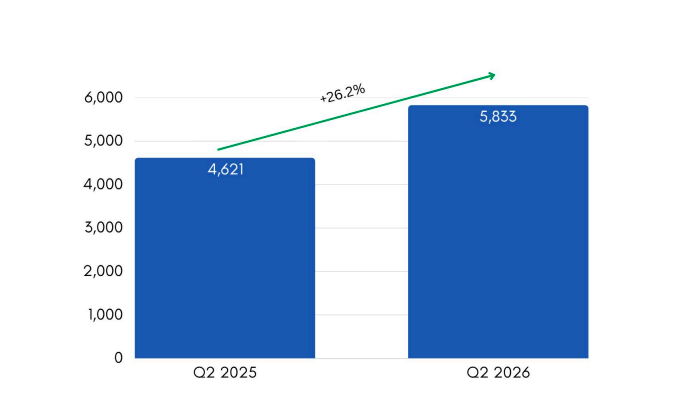
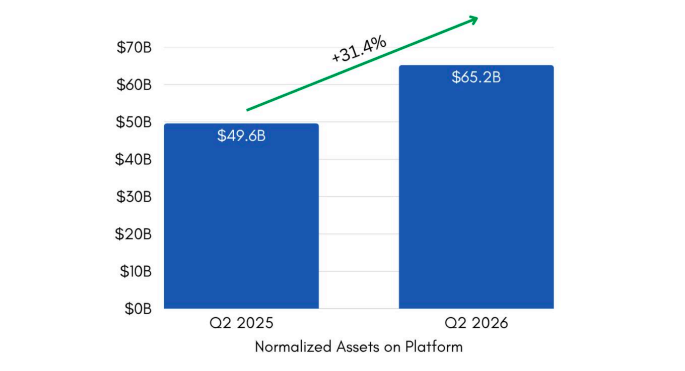
By the end of Q2 2026, BitGo had 5,833 active institutional clients. That was a 26.2% increase from 4,621 a year earlier. Normalized assets also grew from $49.6 billion to $65.2 billion over the same period. Custodial staking assets rose from $8.7 billion to $11.9 billion.
The growth suggests that institutions are doing more than simply gaining exposure to crypto. They are looking for ways to hold, trade, settle and use digital assets within their broader financial operations.
This helps explain the growing interest in crypto infrastructure for banks. For many institutions, the question is no longer whether blockchain has a role in financial services. The bigger challenge is putting the right systems in place without adding unnecessary operational complexity.
Recommended Read: Kalshi Case Study: Why Financial Institutions Are Paying Attention to Institutional Prediction Markets
There is no single platform that will work for every bank. Institutions need to look at custody, security, trading, settlement, stablecoins, compliance, and connectivity. They also need to decide how much control they want over their digital asset operations.
The best digital asset infrastructure for banks is the one that meets these needs without requiring banks to replace their existing technology.
BitGo brings several of these services together. Its platform covers custody, trading and settlement, staking, Crypto-as-a-Service, stablecoins and compliance. Banks can also choose how much of the operation they want to manage themselves.
This wider range of services can be useful for institutions comparing the best crypto custody solutions for institutions or evaluating broader institutional blockchain solutions. Using a single platform for multiple functions can also reduce the number of providers a bank has to manage.
Digital assets are becoming part of the financial system, but banks still need the technology behind them to meet institutional requirements. BitGo digital asset infrastructure helps banks add blockchain services to existing systems. Their current controls and governance can remain in place.
Also visit: Bitget Case Study: How Bitget IPO Prime Is Bridging Private Markets and Digital Assets
Frequently Asked Questions
What is digital asset infrastructure for banks?
Why do banks need digital asset custody solutions?
What are the best digital asset infrastructure options for banks?
How can banks use institutional blockchain solutions?
How does BitGo support digital asset infrastructure for banks?
Download the complete report for free.

 Jane Lubale




Share