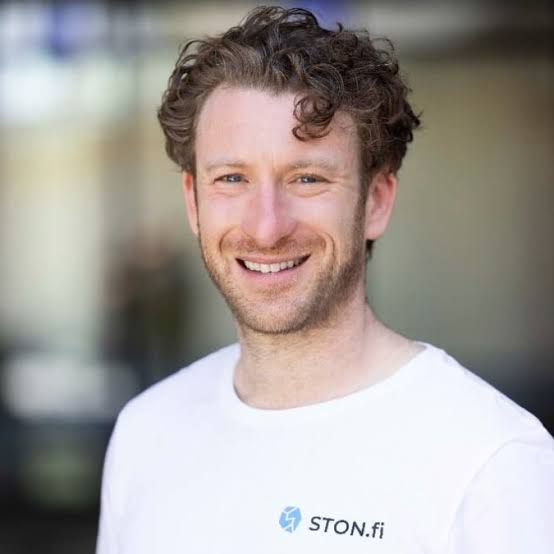
Director of Strategic Partnerships, ChangeNOW
Crypto partnerships have changed considerably since the industry’s early days. What was once often little more than a joint announcement has become a more practical exercise. Now companies looking for ways to improve products, reach users and solve specific problems.
For ChangeNOW, which has expanded beyond its original crypto-swapping service into a crypto super app offering broader suite of financial products, partnerships are an important part of that process.
In an exclusive interview with CoinGape, Martin Messer, Director of Strategic Partnerships at ChangeNOW, discusses what makes a partnership work and why companies need to define success before signing a deal. He also offers unique perspectives on how traditional finance and crypto are increasingly coming together and what it means for web3.
There are a couple of things going on. Obviously, the industry is more institutional than ever. We’re seeing shirts and suits, and crypto has definitely moved on from where it was when ChangeNOW started in 2017.
Back then, it was about swapping. Now, the whole industry is changing and maturing, and there are more products available. If I had told you five or six years ago that you could earn on your Bitcoin, you might not have expected the range of products we have today.
ChangeNOW started as a swap service, but now there is a broader suite of products, covering both B2B and B2C. The industry is changing, and I’m really excited to be part of it.
I’m not going to pick favourites. I’m going to be like a mum and dad and say they’re all really good.
When I joined ChangeNOW, I was amazed by how many people had already used its products. People like the speed and the ease of cross-chain transactions. I’ve also heard from people who find features such as address checking through the API really useful.
We’re seeing a lot of integrations because companies don’t necessarily want to build the technology themselves. They’d rather plug into the API. They value speed and reliability.
I’m particularly excited about the fact that so much is available in one place. It’s not necessarily one product that stands out; it’s the whole suite. I’d rather have everything in one place than have to go to five different places.
You can see the appeal of that model in services such as Uber, Grab and Revolut. People like being able to do things in one place, and they feel more comfortable with the user experience. That’s what excites me.
I don’t know if you remember when partnerships were being signed back in 2017. Often, it wasn’t really a partnership. It was just, “We’re partnered,” but it didn’t necessarily mean anything.
We’ve now got a lot wiser. We’ve come a lot further in understanding what a partnership actually is.
When I speak to a potential partner, I need to understand what success looks like for them and what their pain points are. I look at where ChangeNOW could plug in and help their users. It could be deeper liquidity, cross-chain capabilities or access to a chain they don’t currently support.
For example, I spoke to a potential partner that needed BTC cross-chain capabilities that its existing solution didn’t offer. We started looking at how we could integrate that, so its users could access the functionality.
The thing I want to stress is that I don’t like the point of doing a partnership for the sake of a partnership.
A bit of a red flag is when people talk about “synergies” but can’t explain what they mean. I want to know what success looks like, and I want to tell them what I think success looks like, so we’re both on the same page.
The worst thing in a partnership is when one side thinks the other is doing much more, or when both sides have different expectations.
I think there’s a lot of planning that needs to happen before you can have a successful partnership. It’s about agreeing on what is actually going ahead.
What are you looking to get out of this partnership? If you’re expecting one, two and three, but you’re getting five, six and seven, you might still turn around and say you’re not getting what you wanted. And the other side might say, “Well, I didn’t realise that.”
So, first, we need to be aligned on exactly what success means. Are you looking for this? Are you looking for that? Then we can clearly explain what we’re delivering.
I also like to check in after an integration. If we’re not getting the volume or activity we expected, I’ll ask whether there’s a reason. Sometimes it’s something minor, like a technical error or a feature that hasn’t been switched on. The partner might say, “Thank you for telling us,” because they hadn’t realised it.
Too often in our industry, it’s, “Thanks very much, I’ll see you. Bye-bye.” We do the press release and then we’re off.
I want to keep working with partners. ChangeNOW has a broad suite of products, so ideally, a partner might start with one product and then explore two or three. I’m there to guide them through that process and help them communicate what they’re building, including through content and media.
It depends on the client. Some deals can move very quickly. I could have a conversation on Monday and have the integration completed and the documents signed by Friday. Another company of a similar size might have a completely different compliance process, and we could still be signing an NDA two months later.
So, there isn’t really a one-size-fits-all approach to B2B partnerships.
B2B can be a great way to expand because, instead of reaching one individual user at a time, you’re working with a business that already has multiple users.
But you still need to be aligned on goals. One of the first questions I ask on a call is, “What do you define as success? What are you looking to get out of this?”
It tells you a lot when someone says, “That’s a good question. We’ve never really thought about that.” In that case, you need to work through it together, or they may need to go back and discuss it internally.
The most successful partnerships are the ones where both sides are clear about what they want. Otherwise, you can spend a long time discussing whether you need swaps, custody or earn products without getting anywhere. Things move more quickly when the objectives are defined from the start.
A lot of the time, we discover that there is a user need that isn’t being met. Perhaps a particular chain isn’t supported, and users have to take a complicated or expensive route to move their assets.
If a business can integrate a solution that addresses that problem, it can tell its users, “You’ve been coming to us with this pain point, and we’ve now solved it.”
That can turn a frustrating experience into a positive one. Users might come back because they can finally use the product in the way they wanted, and it could also open up opportunities to serve more users.
It’s not necessarily just about the user interface. It’s about the product being offered. If a business can plug in a solution rather than spend a long time building, integrating and testing it itself, it can make that product available much sooner.
The user doesn’t see all the technical work happening behind the scenes. But if they can get access to something they’ve been asking for, they feel listened to, and that product is more likely to be used.
I’ve seen that throughout my career, from banking to the work I’m doing at ChangeNOW.
We’ve noticed that more institutions are open to crypto and understand it much better. Stablecoins, for example, are increasingly being considered as part of their broader strategies.
We get more enquiries from companies asking how they can involve ChangeNOW in those plans and offer new services to their users. Wallets and apps are important areas because they want to provide instant swaps directly within their products.
We’re also seeing traditional players enter the space and look for more options. At the same time, crypto companies are becoming more traditional in how they operate.
If you look at the market, there is more consolidation, and we’re seeing traditional finance thinking come into the industry through hiring and business processes. It also works the other way: people with crypto experience are moving into traditional finance and helping institutions understand the technology.
Ten years ago, when I spoke to banks, it was difficult to get them to understand crypto. Some associated Bitcoin with illicit activity and struggled to see how stablecoins could work.
We’re now seeing these worlds come together. With institutional players showing more interest, we’re moving beyond proof-of-concept projects towards products that people can actually use. Traditional banking is opening up more possibilities for users.
We might get our brain drain back from AI, because everyone seems to have moved over to AI at the moment. Maybe they’ll come back!
I think we’ll also see more consolidation. We’re already seeing examples of traditional financial companies getting involved in crypto infrastructure. It’ll be interesting to see how far that goes, whether traditional finance employees become more involved in crypto operations, and whether infrastructure teams merge.
I think there will be more movement in both directions.
Looking further ahead, I think the technology will increasingly work behind the scenes. I used to work in FX for banks, and I saw how long back-office processes, middle-office operations and transactions could take.
If this technology can improve settlement, speed up processes and prevent money from being held up, those benefits will matter. People may use products powered by this technology in their everyday lives without even knowing what technology sits behind them.
It’s a bit like your router: you use it, but you don’t necessarily know how it works.
I’m excited by the possibility that the things we thought crypto could solve 10 or 15 years ago will actually happen, while the complexity becomes less visible to users. And we can still give people freedom.
I think you just need to make it clear what you’re reaching out for. Even one sentence is enough to start: we want to work with you because of this, this and this, and this is what success looks like.
You want to make people’s lives easier, make things faster, make them better, and, if you can, add a little bit of fun.
Those are the key things. I’m always open to a conversation. The energy here is really good. It feels like we’re starting to come back into the bull market, which is really exciting.

 Sneha Agrawal







Share