CoinGape has been covering cryptocurrency and blockchain markets since 2017. Our editorial team evaluates projects and platforms using structured review frameworks focused on transparency, utility, and risk assessment. You can explore our review methodologies to see how we assess and rate different categories. We maintain clear editorial standards and disclose advertising or affiliate relationships where applicable.
Decentralized futures exchanges are platforms that let you trade perpetual contracts with on-chain settlements, non-custodial margins and transparent liquidations. In some terms, these platforms give you CEX-level trading without you giving up control of your keys.
In 2026, most crypto traders are using decentralized futures exchanges more frequently than they did in 2025, and on-chain data supports this trend. DefiLama reports nearly $10 billion in 24-hour perps volume across platforms like Aster and Hyperliquid.
For most traders, using DEXs for perpetual futures trading eliminates the risks associated with custody and centralization. Trades are transparently settled on-chain. Right now, futures DEXs are seeing liquidity levels that’ll almost match what we seen on CEXs.
Key Takeaways
| DEX Name | 24h Trading Volume | 24h Open Interest | Fees | Chains | Liquidity Model Type | Max Leverage | Supported Assets | Security Audits | |
|---|---|---|---|---|---|---|---|---|---|
|
24h Trading Volume
$1.1B
|
24h Open Interest
$1.0B
|
Fees
Maker: 0.012% Taker 0.038%
|
Chains
ETH, BSC, ARB
|
Liquidity Model Type
CLOB
|
Max Leverage
100x
|
Supported Assets
176
|
Security Audits
SlowMist, PeckShield/5
|
||
|
24h Trading Volume
$1.8B
|
24h Open Interest
$5.4B
|
Fees
Maker: 0.015 Taker: $0.045 (Base rate)
|
Chains
HyperEVM
|
Liquidity Model Type
CLOB
|
Max Leverage
50X
|
Supported Assets
298
|
Security Audits
Zelic/5
|
||
|
24h Trading Volume
$398.0M
|
24h Open Interest
$311.1M
|
Fees
Maker: 0.000% Taker: 0.025%
|
Chains
Starknet
|
Liquidity Model Type
CLOB
|
Max Leverage
50x
|
Supported Assets
91
|
Security Audits
ChainSecurity/5
|
||
|
24h Trading Volume
$3.4M
|
24h Open Interest
$7.1M
|
Fees
Maker: 0.05% Taker: 0.08
|
Chains
Aevo Chain
|
Liquidity Model Type
Hybrid (Off-chain order book and on-chain settlement)
|
Max Leverage
20X
|
Supported Assets
143
|
Security Audits
Veridise, and Spearbit/5
|
||
|
24h Trading Volume
$29.0M
|
24h Open Interest
$110.8M
|
Fees
Maker: 0.03% Taker: 0.10%
|
Chains
ARB
|
Liquidity Model Type
Hybrid
|
Max Leverage
200X
|
Supported Assets
44
|
Security Audits
Zellic, Pashov/5
|
||
|
24h Trading Volume
$51.5M
|
24h Open Interest
$139.1M
|
Fees
Maker:0.0025% Taker:0.0350
|
Chains
SOL
|
Liquidity Model Type
Hybrid (Decentralized limit orderbook+ dynamic AMM)
|
Max Leverage
50X
|
Supported Assets
59
|
Security Audits
Trail of Bits/5
|
||
|
24h Trading Volume
$51.9M
|
24h Open Interest
$51.3M
|
Fees
Maker: 0.010% Taker: 0.050
|
Chains
Cosmos, ETH, ARB, AVAX, OP, POL, BASE
|
Liquidity Model Type
Hybrid (Off-chain order book, on-chain settlement)
|
Max Leverage
25x
|
Supported Assets
241
|
Security Audits
Informal SystemsInformal Systems/5
|
||
|
24h Trading Volume
$1.0B
|
24h Open Interest
$111.2M
|
Fees
Maker: 0,02% Taker: 0.05%
|
Chains
BNB, SOL, ETH, Agnostic (Via zkLink)
|
Liquidity Model Type
Elastic AMM (eAMM)
|
Max Leverage
100x
|
Supported Assets
313
|
Security Audits
Secure3/5
|
||
|
24h Trading Volume
$942.5M
|
24h Open Interest
$1.8B
|
Fees
Maker: 0.01% Taker: 0.035%
|
Chains
BNB, ARB, SOL, ETH
|
Liquidity Model Type
Hybrid
|
Max Leverage
200x
|
Supported Assets
297
|
Security Audits
Peckshield/5
|
||
|
24h Trading Volume
$1.4B
|
24h Open Interest
$734.7M
|
Fees
0% (retail)
|
Chains
ETH, ARB, BASE, AVAX
|
Liquidity Model Type
CLOB
|
Max Leverage
50X
|
Supported Assets
148
|
Security Audits
Nethermind/5
|
||
|
24h Trading Volume
$346.9M
|
24h Open Interest
$557.8M
|
Fees
0% (retail)
|
Chains
ETH, ARB, AVAX, BASE, SOL, BSC
|
Liquidity Model Type
Hybrid
|
Max Leverage
50X
|
Supported Assets
453
|
Security Audits
Cairo Security, Zelic/5
|
||
|
24h Trading Volume
$1.1B
|
24h Open Interest
$417.0M
|
Fees
Maker: 0.0001% Taker: 0.045%
|
Chains
ETH, ARB, BSC
|
Liquidity Model Type
Hybrid
|
Max Leverage
50X
|
Supported Assets
87
|
Security Audits
SpearbitDAO/5
|
Below is an in-depth coverage of the best decentralized futures exchange. We reviewed 25 perpetual futures exchanges and covered 12 in this guide based on CoinGape’s review methodology. Our deciding factors for the listed platforms are maximum leverage, supported assets, liquidity model, security, and overall popularity in 2026.

Best for scalpers and deep liquidity seekers
EdgeX is a layer-2 orderbook DEX designed for high-speed perpetual trading. Edgex stands out for its multichain support, covering 70+ blockchains. It also provides deep liquidity pools and a fast execution architecture. The platform reports a 24-hour trading volume of $6.6, with cumulative volume exceeding $515 billion, and over 191,000 active addresses. 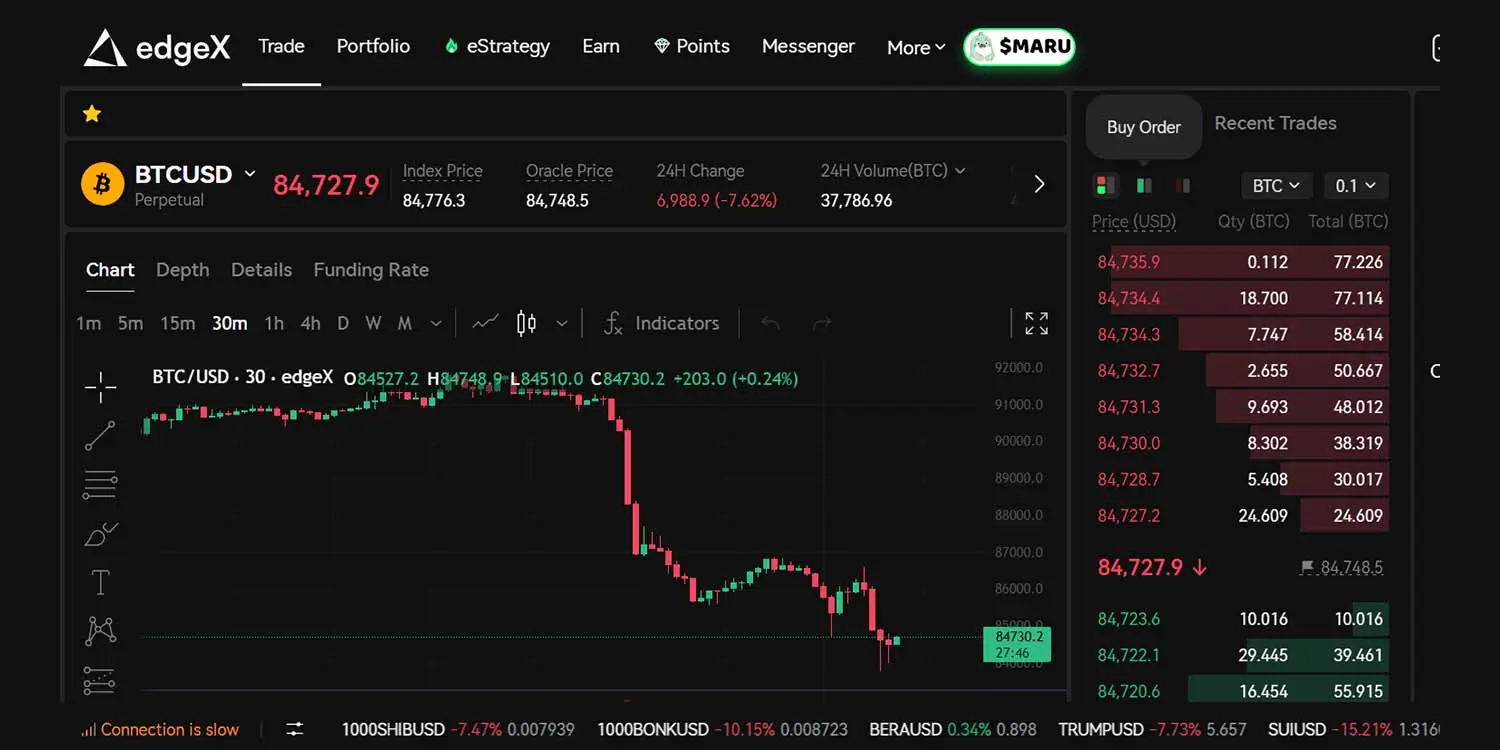
EdgeX also claims $10M+ liquidity within 1bs spread and the ability to fulfil 200,000 orders per second, positioning it close to CEX-level execution speed, while maintaining on-chain settlement and self-custody. In terms of leverage, Edgex supports up to 100x maximum leverage on BTC pairs. The platform offers solid security, mirrored by audits from PeckShield and SlowMist.
Also Read – How to Earn Points and Automatically Upgrade to Level 1 on EdgeX
| Factor | Details |
| Fee structure | Maker/Taker |
| Best Use Case | Scalpers and liquidity seekers |
| Supported Tokens | 177 |
| Liquidity Model | CLOB |
| Security Audits | Edgex Audit |
| Wallet Integrations | 500+, including WalletConnect, Trust Wallet, 1Inch Wallet, Binance Wallet, Ledger Wallet |
| Supported Blockchains | ETH, BSC, ARB |
| Maximum Leverage | 100X |
| Minimum Deposit | 10 USDT |
| Location Availability | 130+ countries |

Best for high-frequency traders, low-latency perpetual futures traders, and scalpers who need deep liquidity and fast execution
Hyperliquid is a CLOB-based perpetual futures exchange, offering low-slippage, high throughput and fast settlement. Unlike many chains that run on Ethereum or an L2, Hyperliquid operates on its own native chain called HyperEVM, which is highly optimized for high throughput and CEX-level execution.
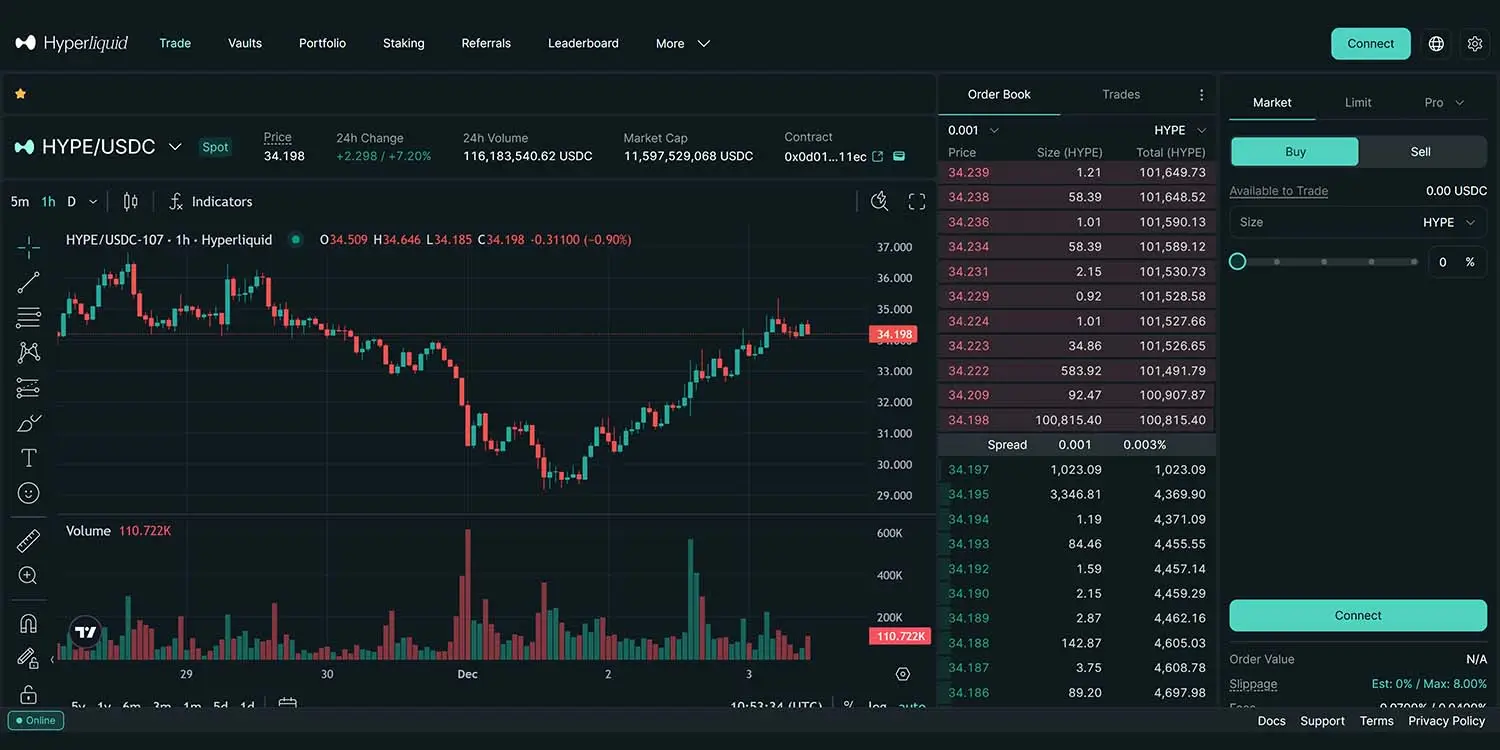
According to its stat page, Hyperliquid boasts a total trading volume of $3.35T, over $260+ billion in deposits, placing it as one of the highest-volume decentralized derivatives platforms last year. The platform stands out in 2026 thanks to its consistently deep liquidity across 130 markets, well-suited for institutional-scale trade and active retail scalpers.
Also Read – Hyperliquid Review
| Factors | Details |
| Fee structure | Tiered maker and taker |
| Best Use Case | High frequency traders, perpetual futures trading with low latency and deep liquidity, and scalpers, |
| Supported Tokens | 235, including BTC, XRP, SOL |
| Liquidity Model | CLOB |
| Security Audits | Zelic audit |
| Wallet Integrations | MetaMask, Coinbase, Wallet Conenct, and others |
| Supported Blockchains | Native HyperEVM, EVM compatible |
| Maximum Leverage | 40x |
| Minimum Deposit | Varies by asset. 0.05 ETH for Ethereum, $5 USDC on Arbitrum |
| Location Availability | 100+ countries |

Best for traders seeking a hybrid CEX-like experience
Extended is a DEX for perpetual futures built by a team of former Revoult fintech engineers. The goal for this DEX is fast, professional trading with self-custody, and the numbers currently prove that they are gaining significant market attention. Extended currently has a 24-hour volume of almost $1.5 billion, more than platforms like Drift, Ostium, and even dYdX.
What makes Extended different? It combines a hybrid CLOB model with on-chain settlement, providing a low-latency, MEV-free trading experience with gas-free execution and minimal slippage.
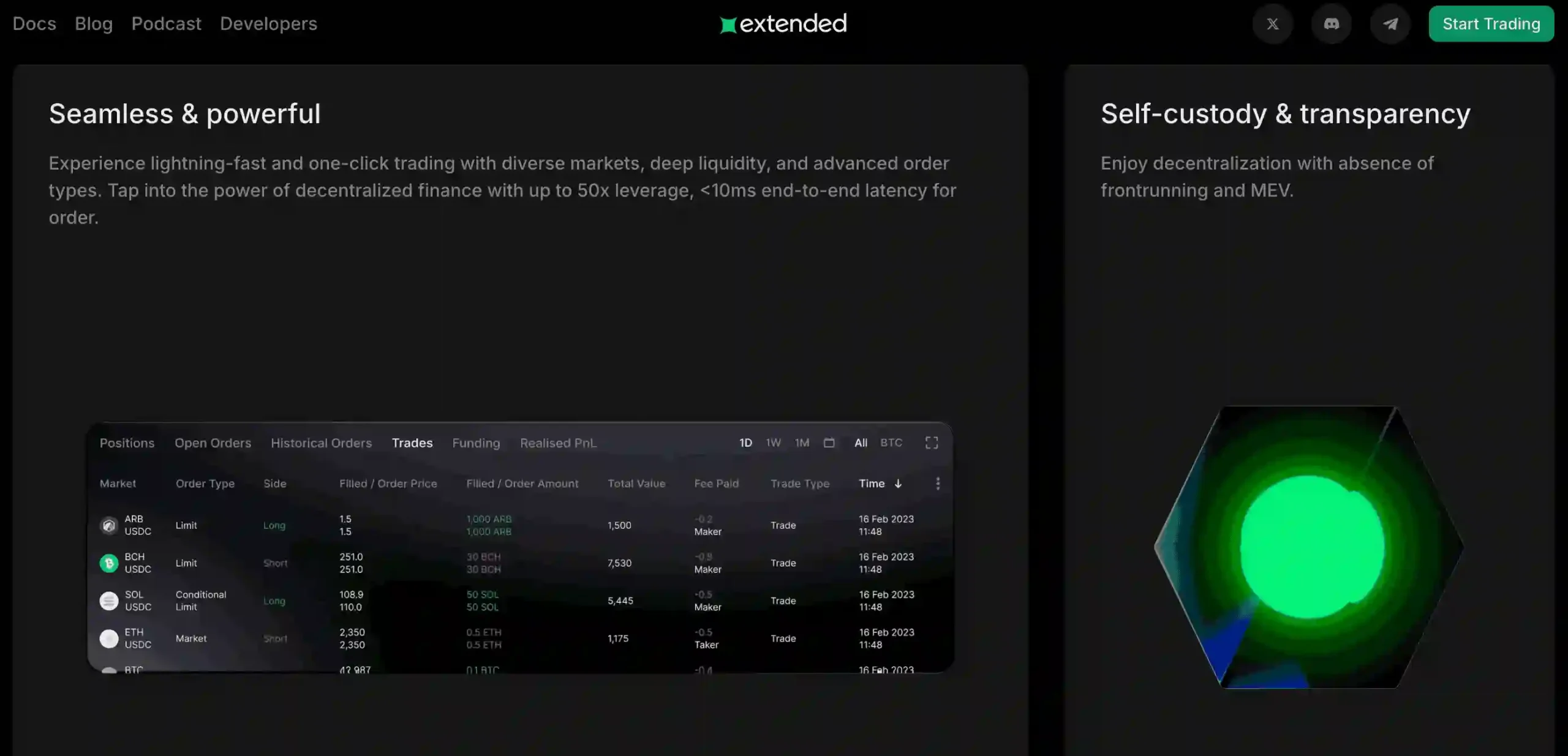
Traders can access both crypto and TradFi perpetuals, including BTC, ETH, SOL, XRP, and traditional indices, with leverage up to 50x. Extended also offers advanced order types, making it a good fit for active, intermediate-to-advanced traders. Traders can also access a maker rebate program for high-volume trades. The platform plans to enable fiat integration, which would support bank or card settlements.
| Factors | Details |
| Fee structure | Maker: 0.000%
Taker: 0.025% |
| Best Use Case | Multi-chain traders |
| Supported Tokens | DOGE, BNB, BTC, ETH SOL, and 50+ |
| Liquidity Model | CLOB |
| Security Audits | ChainSecure |
| Wallet Integrations | MetaMask, Coinbase Wallet, Rabby, Wallet Connect |
| Supported Blockchains | Starknet |
| Maximum Leverage | 50x |
| Minimum Deposit | Varies by asset |
| Location Availability | Not available to US users |

Best for multi-product traders who want a unified market across options, perpetual futures, and pre-launch markets in a single ecosystem
Aevo is a derivatives-focused DX built on an Optimistic rollup with an off-chain marching engine. The platform is designed to deliver CEX-level execution with on-chain settlement guarantees.
Aevo’s ecosystem includes yield vaults, options, perpetual futures, and structured products, all linked via a unified margin system. Thanks to this, traders can use a single unified collateral base across multiple derivative types. 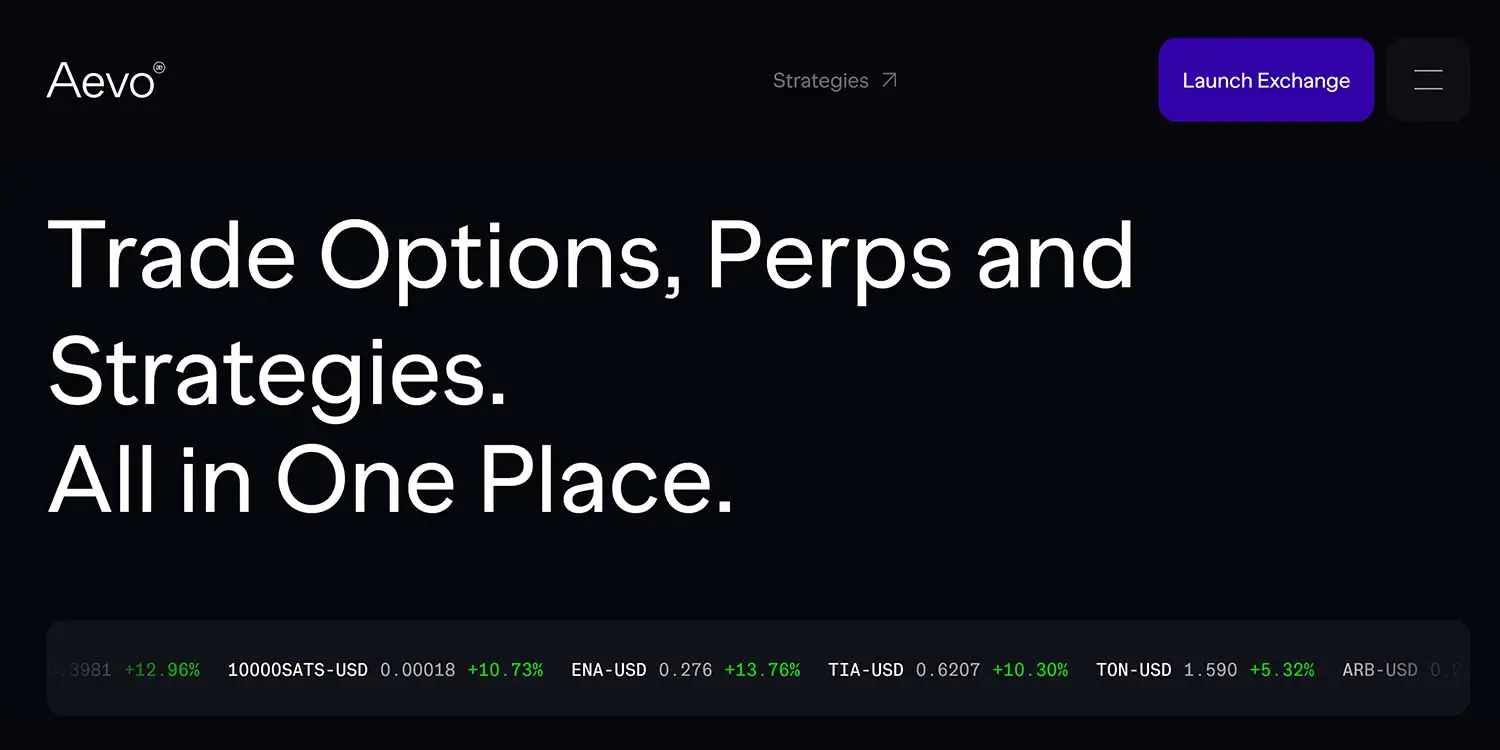
Aevo stands out for its gasless trading, unified margin systems. In terms of liquidity, Aevo claims to have a total traded volume of over $99 billion and, current open interest of $19.5 million. The platform boasts a marching engine TPS of 5,000. Overall, Aevo’s set-up facilitates low-slippage trades and efficient liquidation processes.
| Factor | Details |
| Fee structure | Maker: 0.05%
Taker: 0.08 |
| Best Use Case | Multi-products derivatives trading |
| Supported Tokens | BTC, ETH SOL, and 150+ |
| Liquidity Model | Off-chain order book and on-chain settlement |
| Security Audits | Veridise, and Spearbit |
| Wallet Integrations | MetaMask, Coinbase Wallet, Rabby, Wallet Connect |
| Supported Blockchains | Aevo Chain |
| Maximum Leverage | 20x |
| Minimum Deposit | Varies by chain |
| Location Availability | Global |

Best for beginners seeking to trade crypto and other real-world assets.
Ostium is a decentralized futures platform that supports both crypto and native assets like stocks and commodities via a single interface. In terms of crypto support, you can trade SOL, BTC, ADA, BNB, XRP, LINK, TRX, and ETH on Ostium. While this pales in comparison to other platforms like GMX, Ostium makes up for it with up to 200x leverage.

For crypto. Ostium uses a maker/taker fee model and a liquidity pool model. LPs receive a percentage of the opening fees. Overall, Ostium is ideal for beginners. The supported assets are good enough to begin with, and the fees are transparent. For more advanced users, platforms like Hyperliquid, Drift, and EdgeX have better offerings.
| Factors | Details |
| Fee structure | Maker: 0.03%
Taker: 0.10% |
| Best Use Case | High leverage perps on RWAs |
| Supported Tokens | BTC, ETH, SOL, BNB, TRX and 40+ |
| Liquidity Model | Hybrid |
| Security Audits | Zellic, Pashov |
| Wallet Integrations | MetaMask, Coinbase, Raby Wallet, and others |
| Supported Blockchains | Arbitrum |
| Maximum Leverage | 200x |
| Minimum Deposit | Varies |
| Location Availability | Not available in the US |

Best for advanced perpetual futures traders seeking high-speed, cross-margin trading on Solana
Drift Protocol is a Solana-based perpetual futures platform that uses a hybrid liquidity model, combining a decentralized limit order book, AMM, and JIT auctions, delivering sub-second finality with minimal slippage. Drift’s key features include up to 101x leverage on some pairs, cross-margin across perps and spot market, and on-chain insurance fund protection. Fees on the platform are tier-based.
In July 2025, the platform updated its fee structure. The new model emphasizes volume-based tiers, meaning your 30-day volume decides your fees. Users who stake DRIFT can earn up to 40% rebates on maker fees and extra discounts on taker fees.

| Factor | Details |
| Fee structure | 30-day tier-based maker/taker |
| Best Use Case | Advanced perpetual futures traders seeking high-speed, cross-margin trading on Solana |
| Supported Tokens | BTC, SOL, ETH, and 50+ |
| Liquidity Model | Just-In-Time auctions, Decentralized limit order book (DLOB), dynamic automated market maker (DAMM) |
| Security Audits | Trail of Bits |
| Wallet Integrations | Phantom Wallet, Trust Wallet, OneKey wallet, and others |
| Supported Blockchains | Solana |
| Maximum Leverage | 50x |
| Minimum Deposit | Varies |
| Location Availability | Global |
Best for active perpetual futures traders seeking deep liquidity
dYdx V4 stands out in 2026 for delivering decentralized perpetual futures trading with a high-performance off-chain futures orderbook and on-chain settlement. dYdX supports 100+ markets, including BTC, ETH, and XRP, with up to 25x leverage. dYdX also provides competitive maker and taker fees, deep liquidity sourced from global validators, and cross-chain accessibility across Ethereum, Base, Avalanche, Polygon, Optimism and Base.
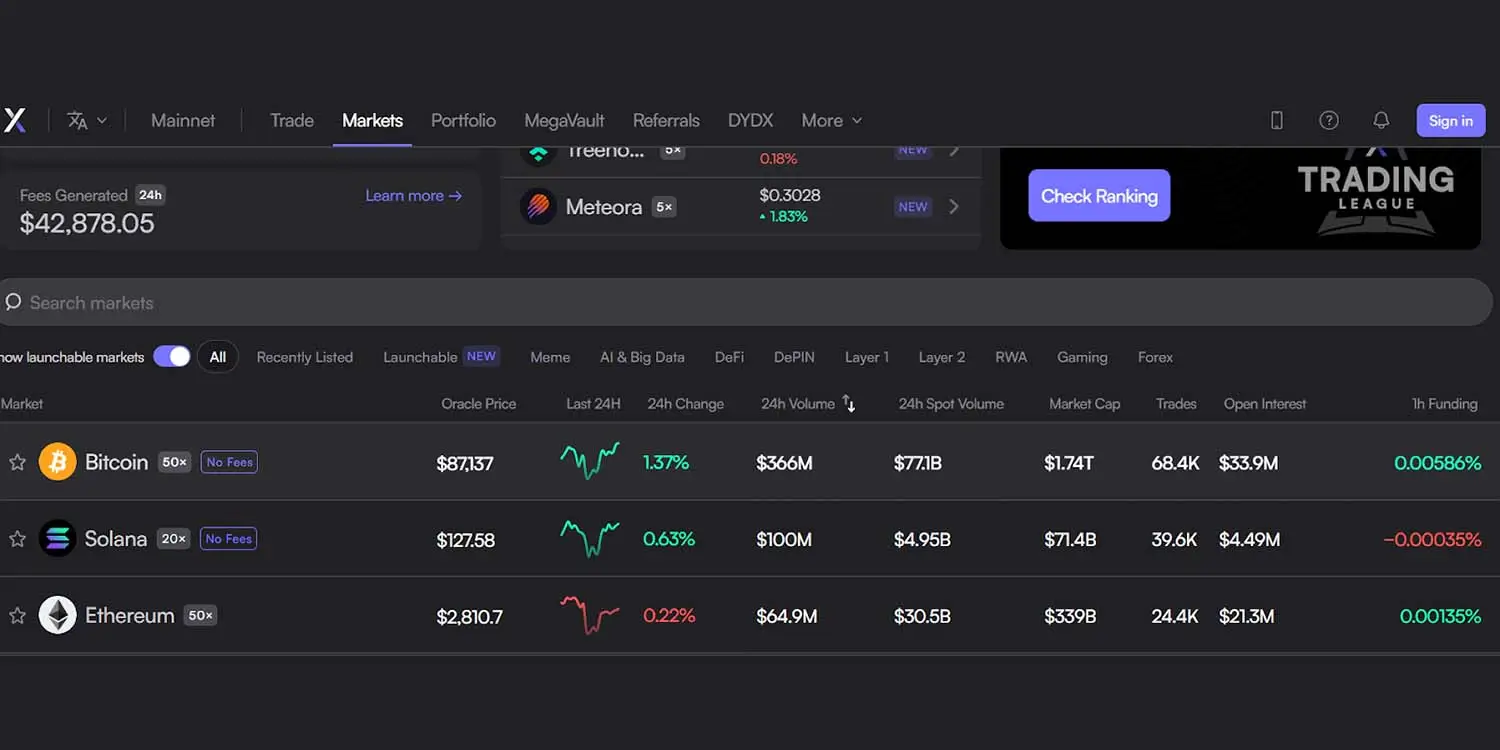
| Factors | Details |
| Fee structure | Maker: 0.010%
Taker: 0.050 |
| Best Use Case | Active altcoin traders |
| Supported Tokens | BTC, LINK, BNB, XRP, and 200+ |
| Liquidity Model | Off-chain order book and on-chain settlement |
| Security Audits | Informal Systems |
| Wallet Integrations | MetaMaso. Phantom, Kepler, WalletConnect, Coinbase Wallet and others |
| Supported Blockchains | Ethereum, Base, Avalanche, Optimism, Polygon and Arbitrum |
| Maximum Leverage | 25x |
| Minimum Deposit | Depends on the chain |
| Location Availability | Global |

Best for omni chain traders and no-KYC perpetual users
Apex Omni is a perpetual DEX for traders who want speed and high leverage. It focuses on permissionless derivatives trading, meaning there’s no KYC, centralized intermediary or custody of your funds. You trade directly from your wallet and maintain control over your funds at all times.

Why does it stand out? Apex Omni uses an omnichain structure, which is a word that means it aggregates liquidity across several chains like Ethereum, BNB, and Solana. How does this work?
The whole thing is made possible by zkLink, a layer 3 blockchain infrastructure that uses zero-knowledge proof to aggregate liquidity. Thanks to this structure, Apex Omni can trade with deep liquidity and not be tied to a single chain.
On Apex Omni, you can trade perpetual contracts on Bitcoin and Ethereum as well as real-world assets like U.S. equities. On the liquidity side, Apex uses an Elastic AMM (eAMM) merged with Protocol Controlled Value (PCV). This setup helps to adjust liquidity dynamically and reduce slippage during volatile markets. In terms of leverage, Apex offers up to 100x, which is good for traders with aggressive strategies.
| Factors | Details |
| Fee structure | Maker: 0.02%
Taker: 0.05% |
| Best Use Case | No KYC perpetual traders |
| Supported Tokens | BTC, XRP, SOL, ETH, and others |
| Liquidity Model | eAMM |
| Security Audits | Secure3 |
| Wallet Integrations | MetaMask, Trust Wallet, Bybit Web3 Wallet, and others |
| Supported Blockchains | Ethereum, BNB, Solana, |
| Maximum Leverage | 100x |
| Minimum Deposit | Varies |
| Location Availability | Globally available |

Best for high leverage multi-chain trading
Aster stands out for multi-chain, bridge-free trading, cross-market liquidity, hidden limit orders, and unique 1001x on-chain leverage. Aster’s core features include an orderbook engine, Pro and 1001x trading modes, US stocks, synthetic trading and $ATER fee discounts. Fees are also low at 0.01% maker and 0.035% taker.
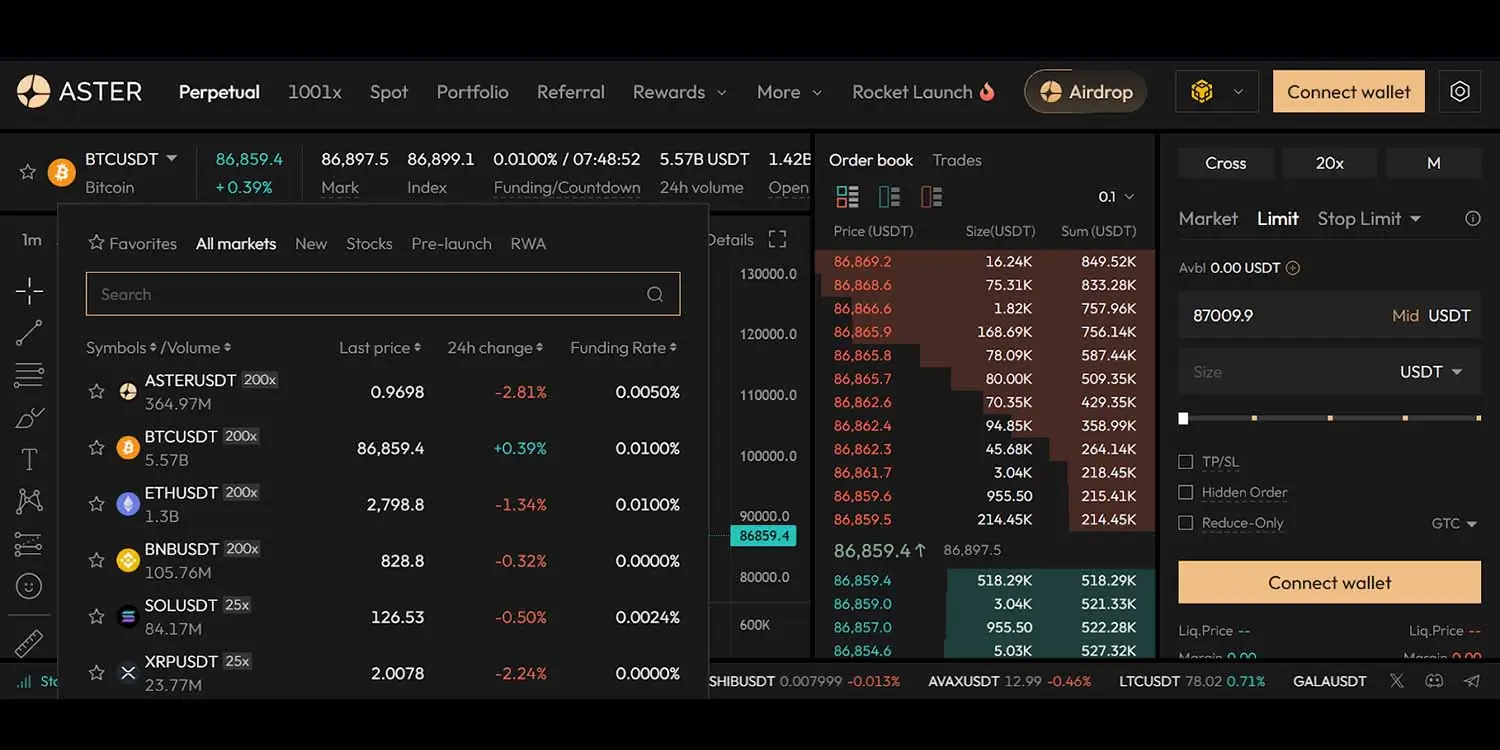
| Factors | Details |
| Fee structure | Maker: 0;01%
Taker: 0.035% |
| Best Use Case | Scalpers, high-leverage directional traders |
| Supported Tokens | BTC, SOL, USDT, BNB and 150+ assets |
| Liquidity Model | Cross-chain liquidity aggregation, interest-bearing collateral and on-chain orderbook |
| Security Audits | Salus Security, Peckshield |
| Wallet Integrations | Wallet Connect, Binance |
| Supported Blockchains | BNB, Arbitrum, Solana, Ethereum |
| Maximum Leverage | 200x |
| Minimum Deposit | Depends on platform |
| Location Availability | Global |

Best for low-Latency Perps Trading
Lighter is one of the fastest perps DEX, offering zero-fee DEX trading on Ethereum (zk-rollup. Traders can get up to 50x leverage on Lighter with fully verifiable on-chain order matching and liquidations.
Lighter offers fee-free trading for retail accounts, while premium users enjoy sub-150ms latency and volume-based incentives. Lighter also provides features such as peer-to-peer funding, public liquidity pools and sub accounts. Overall, Lighter is a good perps DEX for scalpers and active traders. 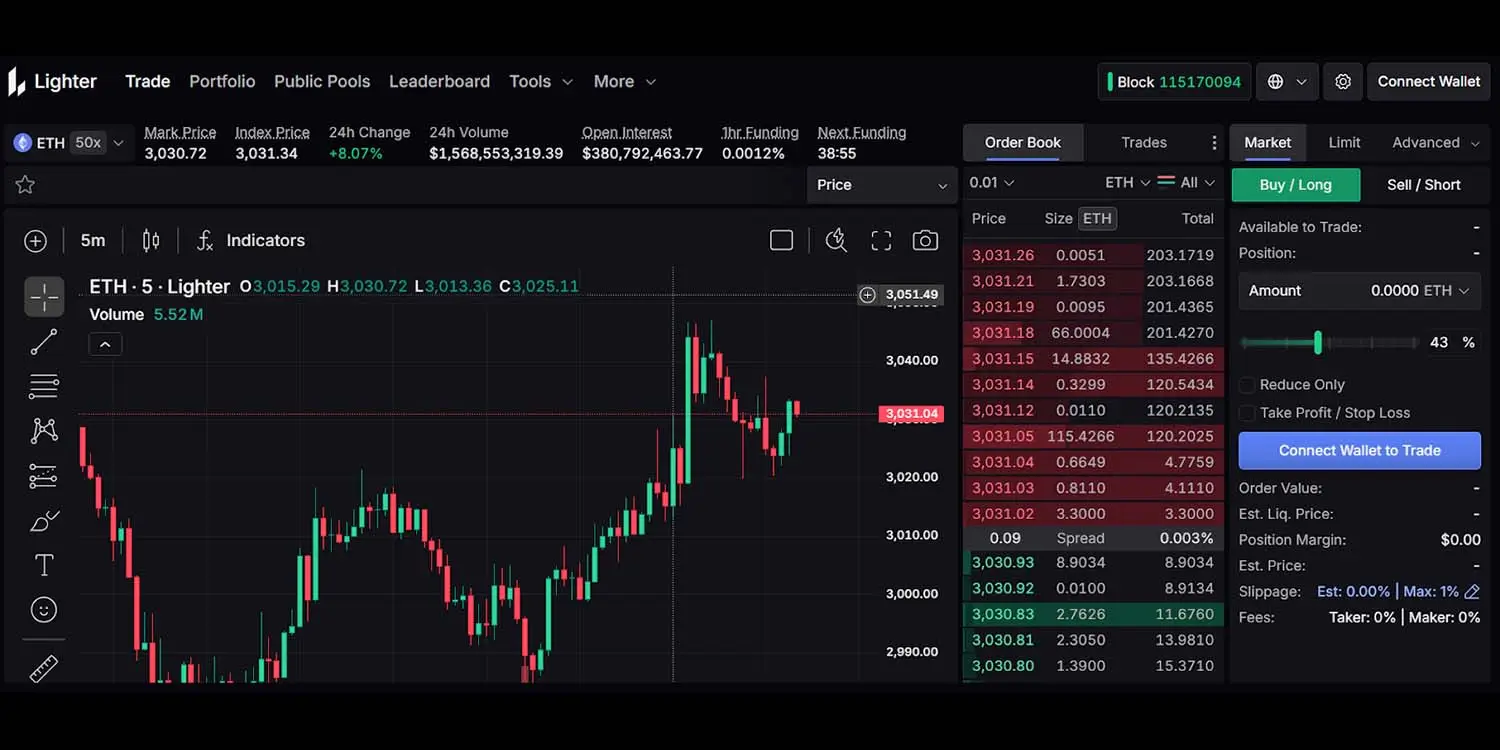
| Factors | Details |
| Fee structure | Retail: 0% maker/taker |
| Best Use Case | Retail/ advanced perps traders |
| Supported Tokens | BTC, ETH, 100+ |
| Liquidity Model | CLOB |
| Security Audits | Neathermind |
| Wallet Integrations | MetaMask, Coinbase, Wallet Connect and EVM-compatible wallets |
| Supported Blockchains | ARB, AVAX, Base and ETH |
| Maximum Leverage | 50X |
| Minimum Deposit | Unconfirmed |
| Location Availability | Not available in China, UK, US, Canada |

Best for zero-fee on-chain futures
Paradex offers a zero-fee perps options experience running on its own Paradex Chain, which is a Starknet-built L2. Paradex stands out as a top perps DEX for its unified margin across spot, perps, and options. Traders can access up to 50x leverage, encrypted accounts for privacy and multi-chain deposits from over 18 networks. Overall, Paradex delivers one of the most complete on-chain trading experiences in 2026.
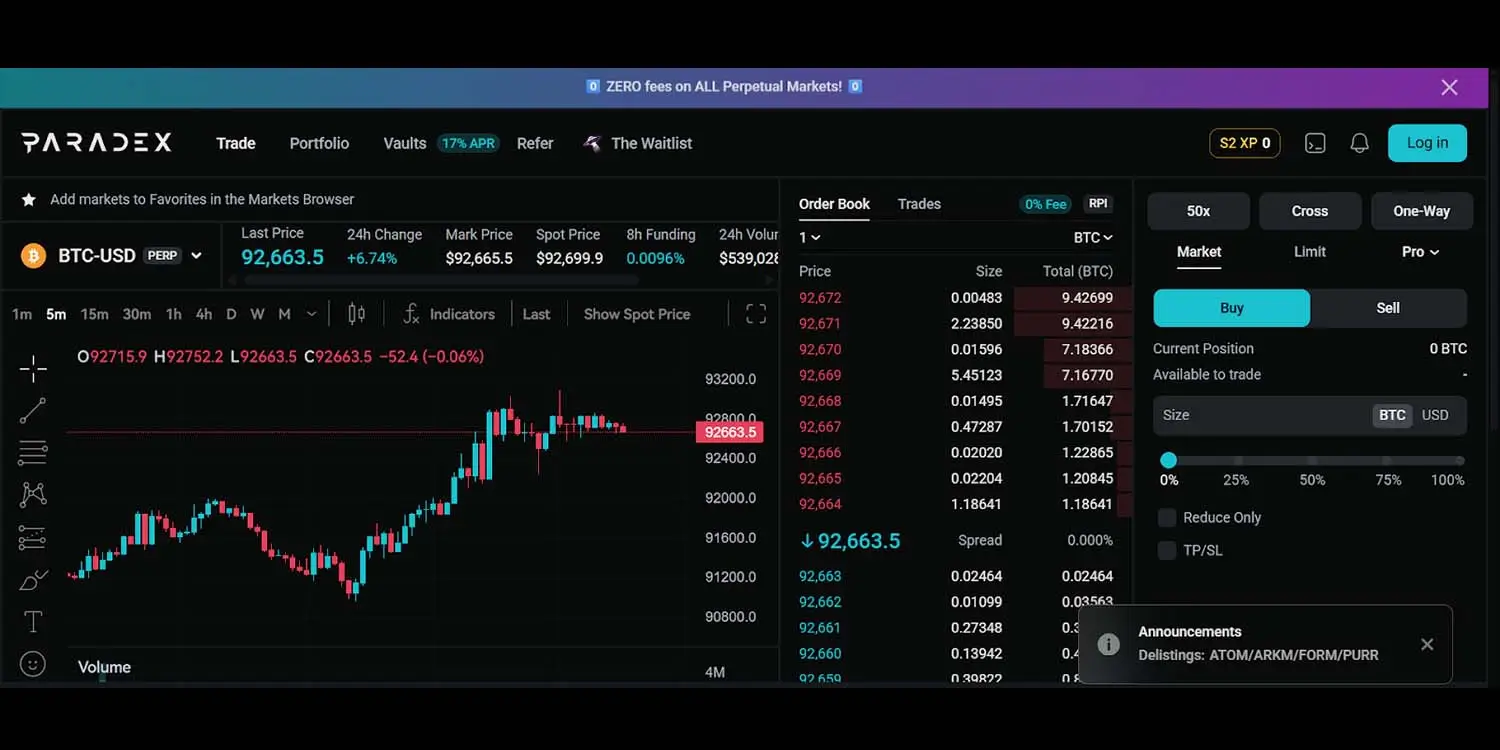
| Factors | Details |
| Fee structure | 0% for retailers |
| Best Use Case | Multi-chain perp trading |
| Supported Tokens | SOL, BTC, 600+ |
| Liquidity Model | Hybrid |
| Security Audits | Cairo Security, Zelic |
| Wallet Integrations | MetaMask, Rabby, Wallet Connect, Coinbase Wallet, and others |
| Supported Blockchains | ETH, ARB, AVAX, Base, SOL |
| Maximum Leverage | 50X |
| Minimum Deposit | $100 deposit for Paradex vault |
| Location Availability | Not available in the US and Canada |

Best for elite strategies and fast perps
GRVT is a hybrid, hyperchain perps DEX, available on ETHm, ARB and BSC. Traders can get up to 50x leverage. GRVT uses a tiered fee model where makers at the base level pay around 0.0001% and takers pay 0.045%. GRVT’s biggest appeal is its speed.
Trades execute at sub-millisecond speed. In terms of market support, GRVT supports 75+ markets and offers curated pro strategies, as well as liquidity earning programs. In terms of suitability, GRVT is a good perp DEX for high-frequency traders, privacy-focused perp traders.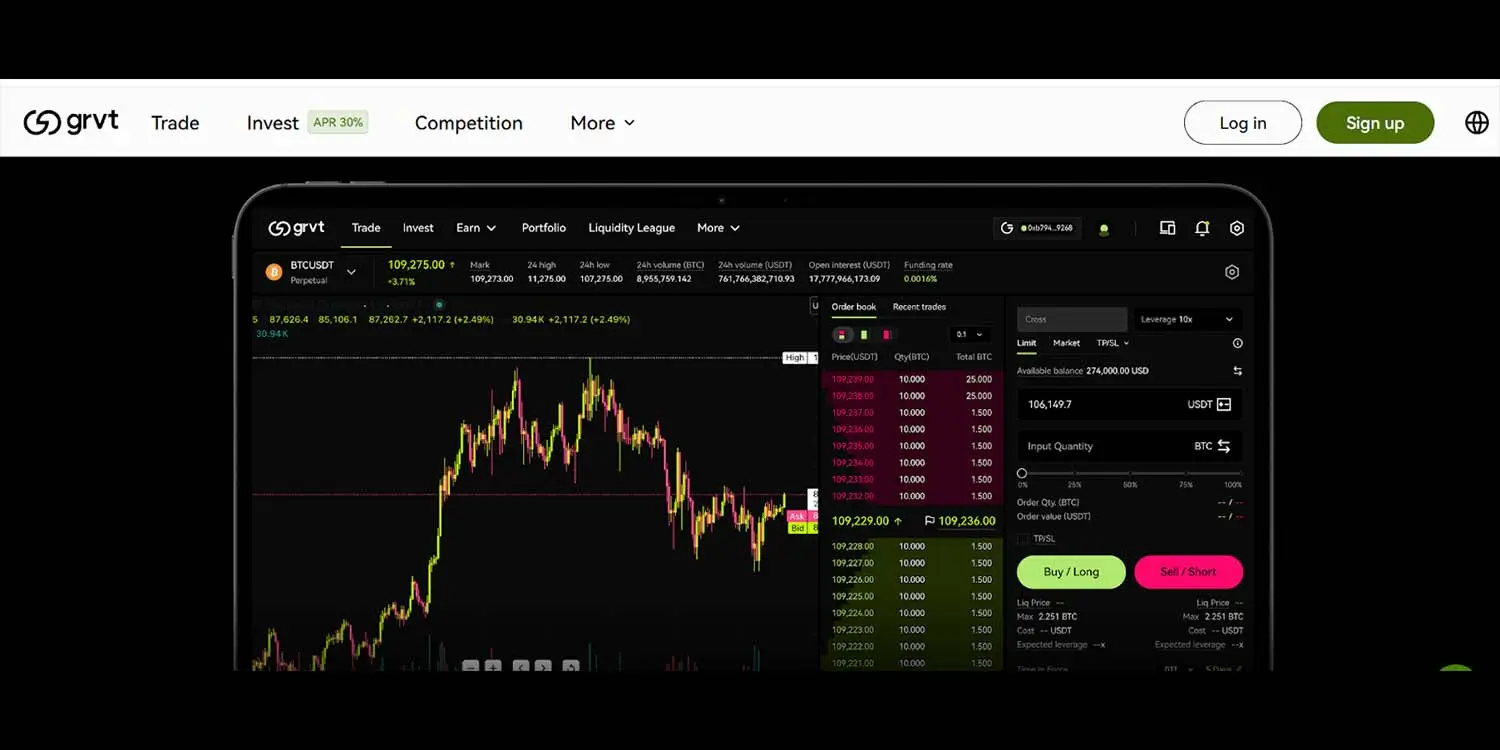
| Factors | Details |
| Fee structure | Maker: 0.0001%Taker: 0.045% |
| Best Use Case | Ultra-fast perps trading |
| Supported Tokens | ETH, BTC, USDT, 70+ |
| Liquidity Model | Hybrid |
| Security Audits | Spearbit |
| Wallet Integrations | EVM-compatible wallets |
| Supported Blockchains | ETH, ARB, BSC |
| Maximum Leverage | 50X |
| Minimum Deposit | Not explicitly stated |
| Location Availability | Global except restricted regions like the United States |
A decentralized futures exchange (perpetual DEX) is a trading platform where users trade perpetual futures contracts directly on-chain, without losing custody of their assets to a centralized exchange. Rather than your funds being with a CEX or middleman, smart contracts manage collateral, funding rates and liquidations. The whole process is transparent.
Now, perpetual futures on DEX work almost the same as CEX futures in terms of long and short positions, leverage and funding rates; the core difference is the backend. DEX perps rely largely on oracles like Chainlink for pricing, on-chain liquidation engines, and either AMM-based liquidity pools (like GMX) or orderbook systems (Hyperliquid and dYdX).
This set-up takes out the need for a middleman, is more transparent than CEXs, and does not leave you exposed to custody risks. However, it requires strong risk management and quality Oracle feeds.
Also Read: How Perpetual Swaps Work on DEX?
Decentralized futures exchanges are not all the same. They come in different design styles, adopt different models, which affect liquidity, slippage and execution speed. Understanding the different types of decentralized exchanges will help you choose the best perpetual DEX for your strategy.
These platforms use liquidity pools rather than an order book. Traders get to open long/short positions against a multi-asset pool funded by liquidity providers.
Best for: Deep liquidity on majors, predictable pricing and low slippage
Example: GMX and Gains Network
The AMM-based perpetual DEX design powers some of the best decentralized crypto futures exchanges because it perfectly handles large trades
These platforms are similar to CEXs, with a full matching engine and limit others. The difference is that their settlement takes place on-chain.
Best for: scalpers, high-frequency traders, and advanced execution tools.
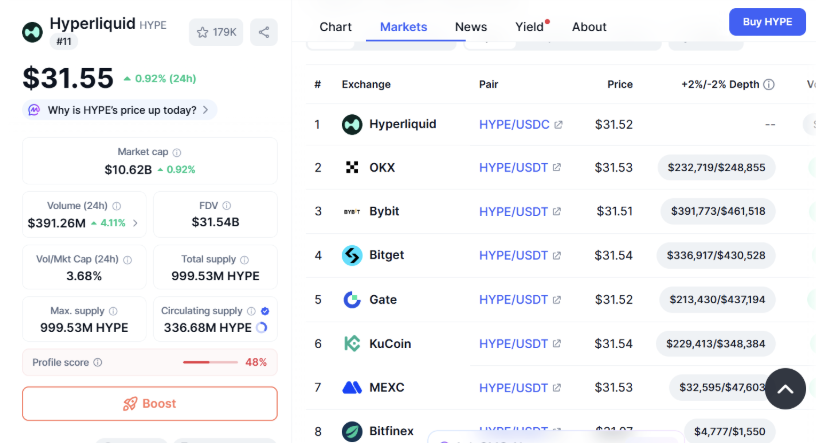
Examples: Hyperliquid and dydX. Both platforms currently rank among the best DEXs for futures trading thanks to tight spreads and fast fills. Hyperliquid has seen major expansion in recent months. The project’s $HYPE token recently listed on OKX, leading to questions if it will reach $50, propelled by the listing.
In this model, spot, perp, and structured products all share the same liquidity layer. This model is best for traders interested in deeper liquidity across all markets and reduced fragmentation. With this model, users enjoy more pairs with better depth. Platforms with this design are contenders for the best decentralized futures exchanges in 2026. A good example here is Aster.
These are platforms that offer synthetic assets rather than trading real order flow. These synthetic assets are powered by virtual price feeds or liquidity. This model is best for trading non-crypto markets like stocks, forex and commodities on-chain. It opens up assets that are not traditionally available in crypto derivatives platforms.
Also Read – Difference between Order Book vs. AMM vs. Peer-to-Pool
Trading on any of the top decentralized futures exchanges in 2026 becomes super easy once you understand the smart strategies that actually work on-chain. Below are some of the most common perps trading methods, explained so simply for you to adopt the most relatable approach.
Regular traders on CEXs leverage the best low-fee crypto exchanges as part of their strategy. Similarly, smart perp traders thrive on chains like Solana, Arbitrum, and Hyperliquid. These are the platforms with low fees and fast execution.
For example, a trader might scalp SOL-PERP with a quick 0.2-0.5% move on Drift or Hyperliquid without worrying about gas fees splitting profits. Generally, platforms with low taker fees are usually the best DEXs for futures trading if you’re scalping.
Here’s another good strategy. Farmers, spot traders and validators use DEX perpetual futures to protect their portfolios. For example, a trader holding 20 ETH long-term can hedge by shorting ETH-PERP on GMX or Aevo during periods of high volatility. This way, they lock in value without having to sell their actual tokens.
This strategy flips positions based on who is paying for funding. Say a BTC-PERP has +0.03% funding every 8 hours on Aevo, traders go short to earn the funding payment. Now, if the funding flips negative, they go long instead. This method works best on platforms with transparent funding systems like Hyperliquid and dYdX.
There’s always a price difference between perp DEXs, almost all the time. For example, SOL-PERP can trade at $98 on Drift but trade $99.30 on Hyperliquid. A trader can go long on Drift and short on Hyperliquid to lock in the spread risk-free. It’s almost easier to arbitrage thanks to faster, and smarter oracles and deeper liquidity across the top perp DEXs.
With perpetual futures, you can easily leverage long or short positions on crypto without an expiry date. The process is straightforward. You simply select the direction you think the price will go, you select your leverage (up to 100x on some platforms), set your stop loss and take profit orders. For beginners, here’s an article detailing the difference between margin trading and futures trading.
Here’s a breakdown on how to trade perpetual futures:
1. Pick a reliable perps DEX: Select any platform from our list of the best perpetual DEX platforms. Starters can use Hyperliquid, Aster, EdgeX, etc. Check their fees, security, max leverage, and supported assets
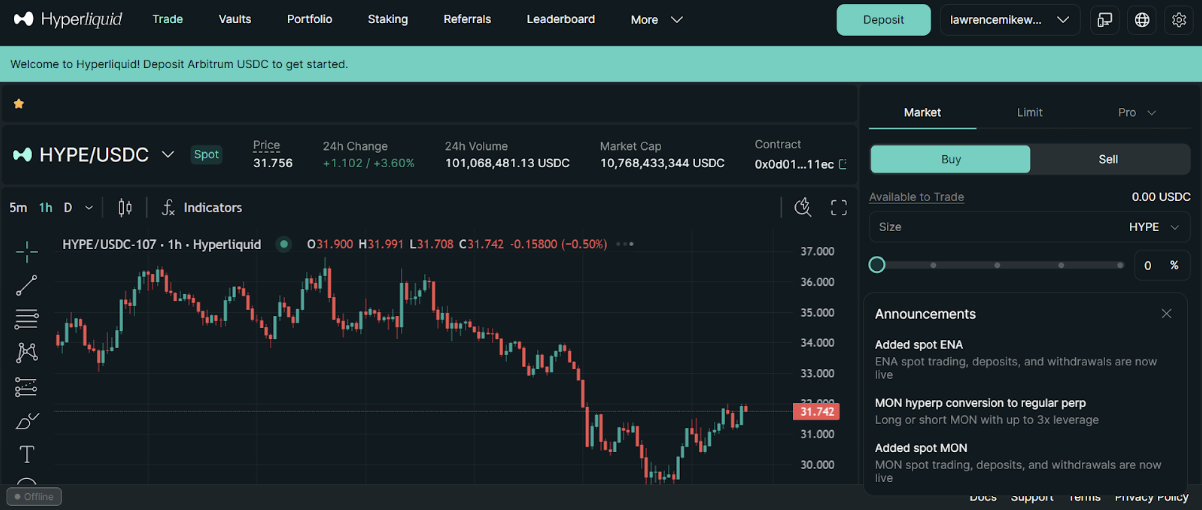
2. Connect your wallet: Head to the “Connect Wallet” section of the platform and select your preferred wallet. 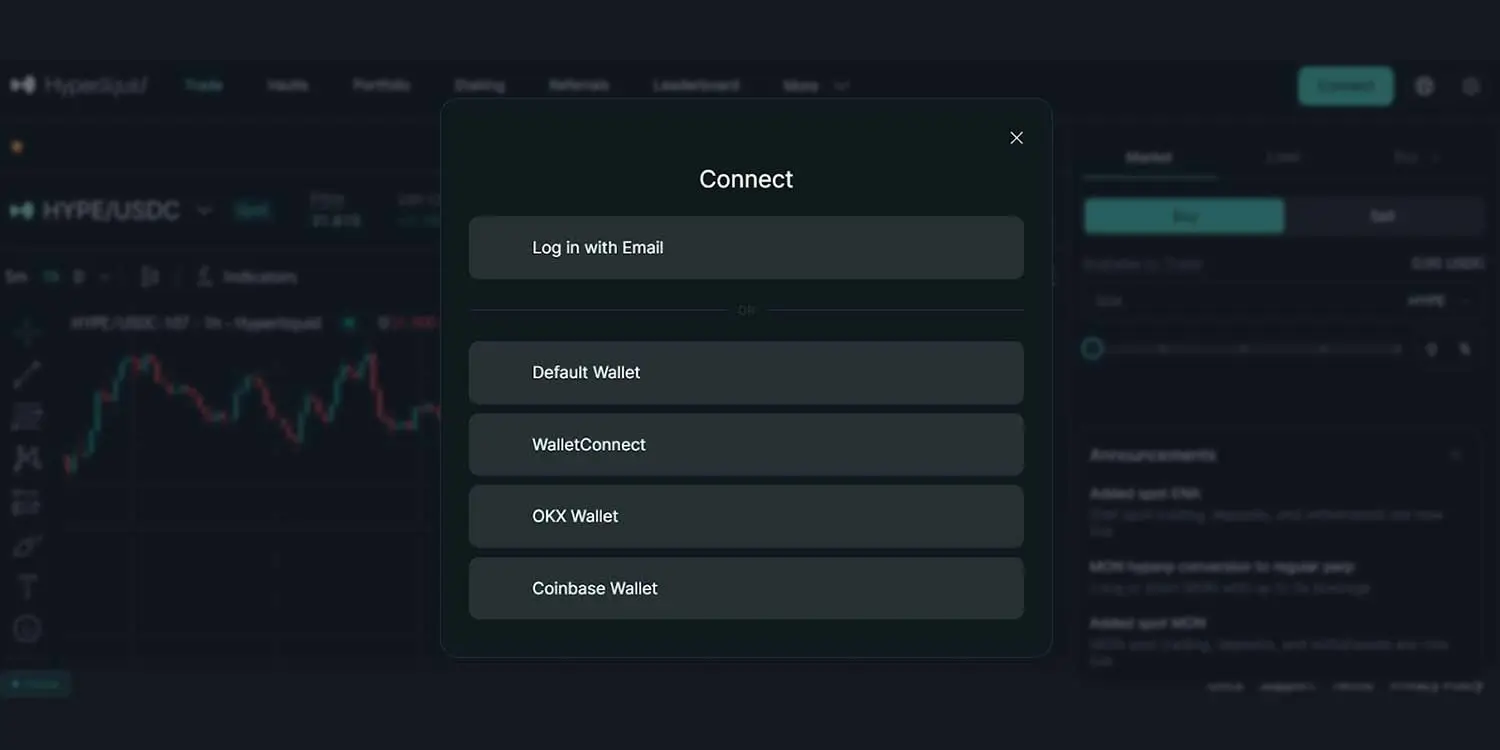
3. Make a deposit or transfer collateral: Move USDT/USDC or supported collateral into the perp account. Confirm the minimum deposit and any bridge steps
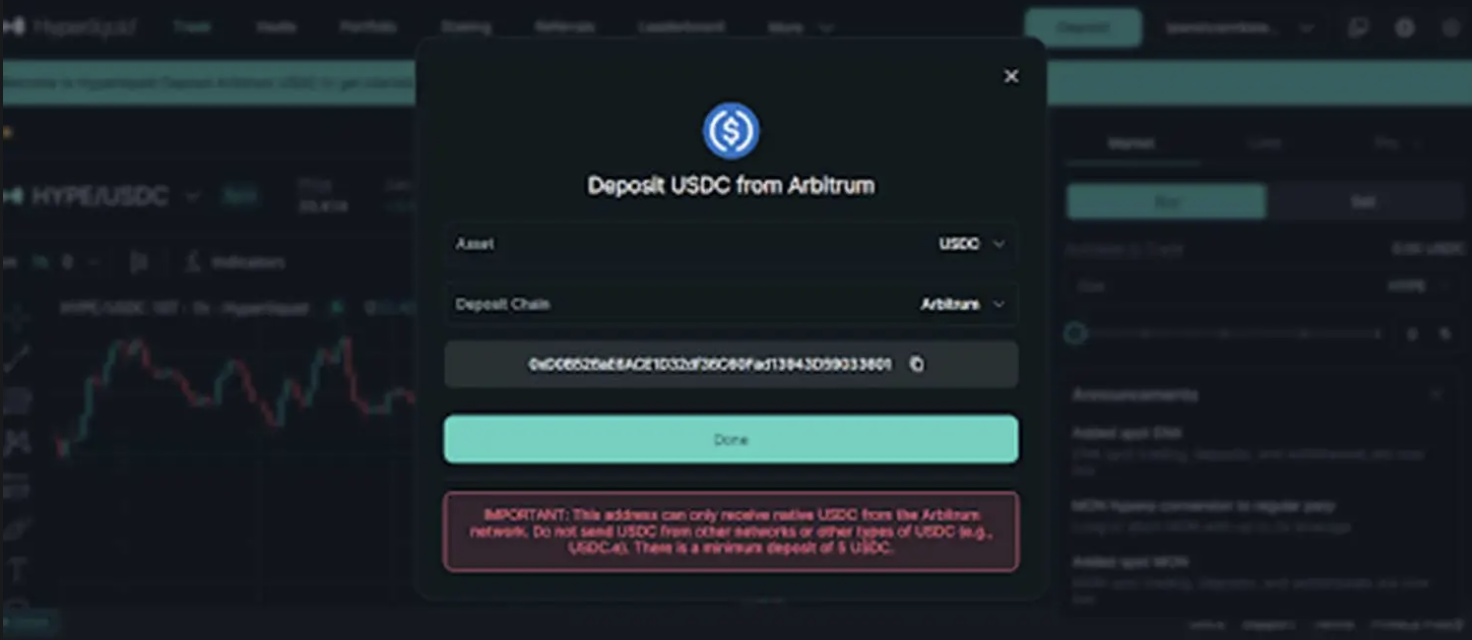
4. Choose market and time your trade: Select the perp pair, like BTC-PERP, ETH-PERP. Check 24-hour volume, open interest and recent funding rates.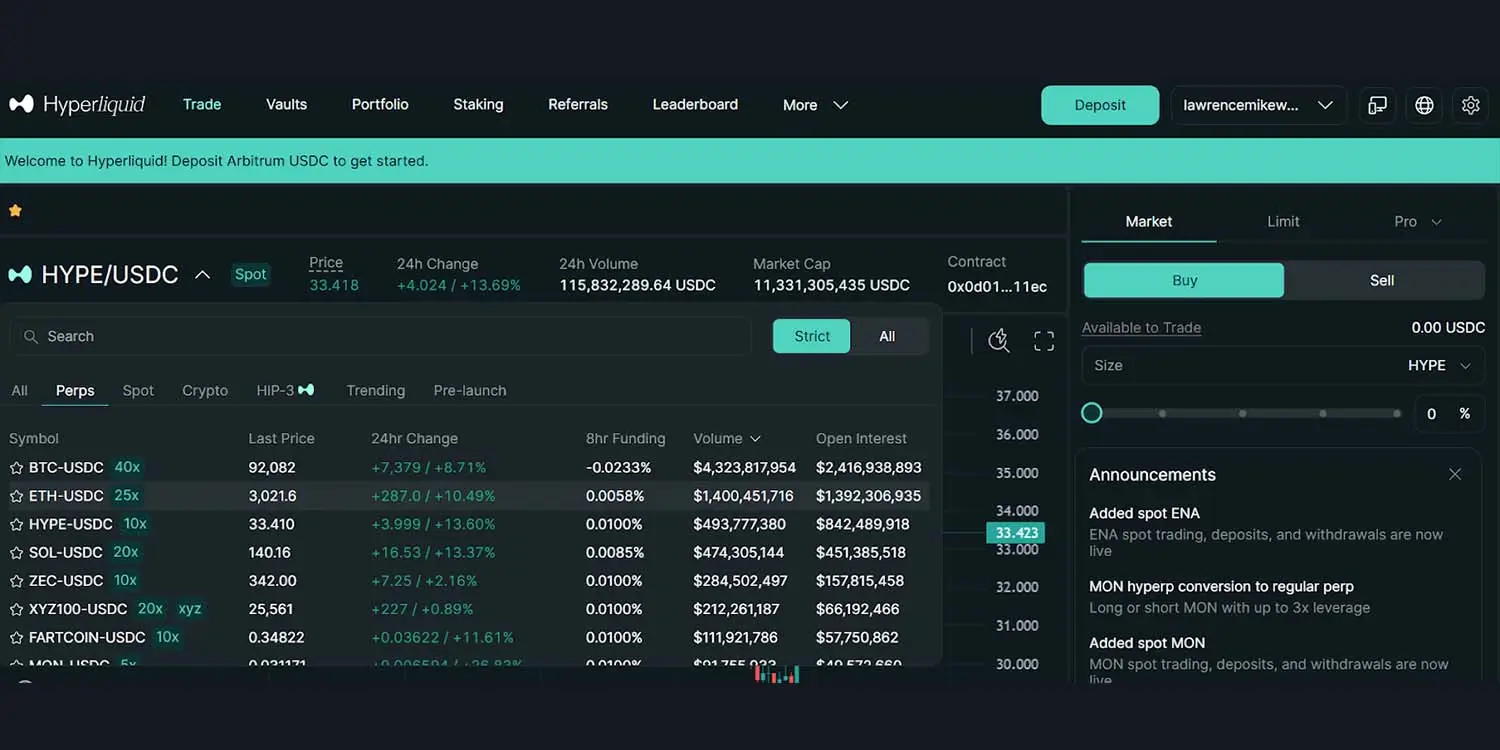
5. Check market health and oracles: Verify Oracle provider (Chainlink, Pyth). Avoid trading in an unstable market.
6. Select order type and size: Choose market order for immediate fill; limit/hidden order to control execution and reduce MEV/front-running. Also, set position size based on risk.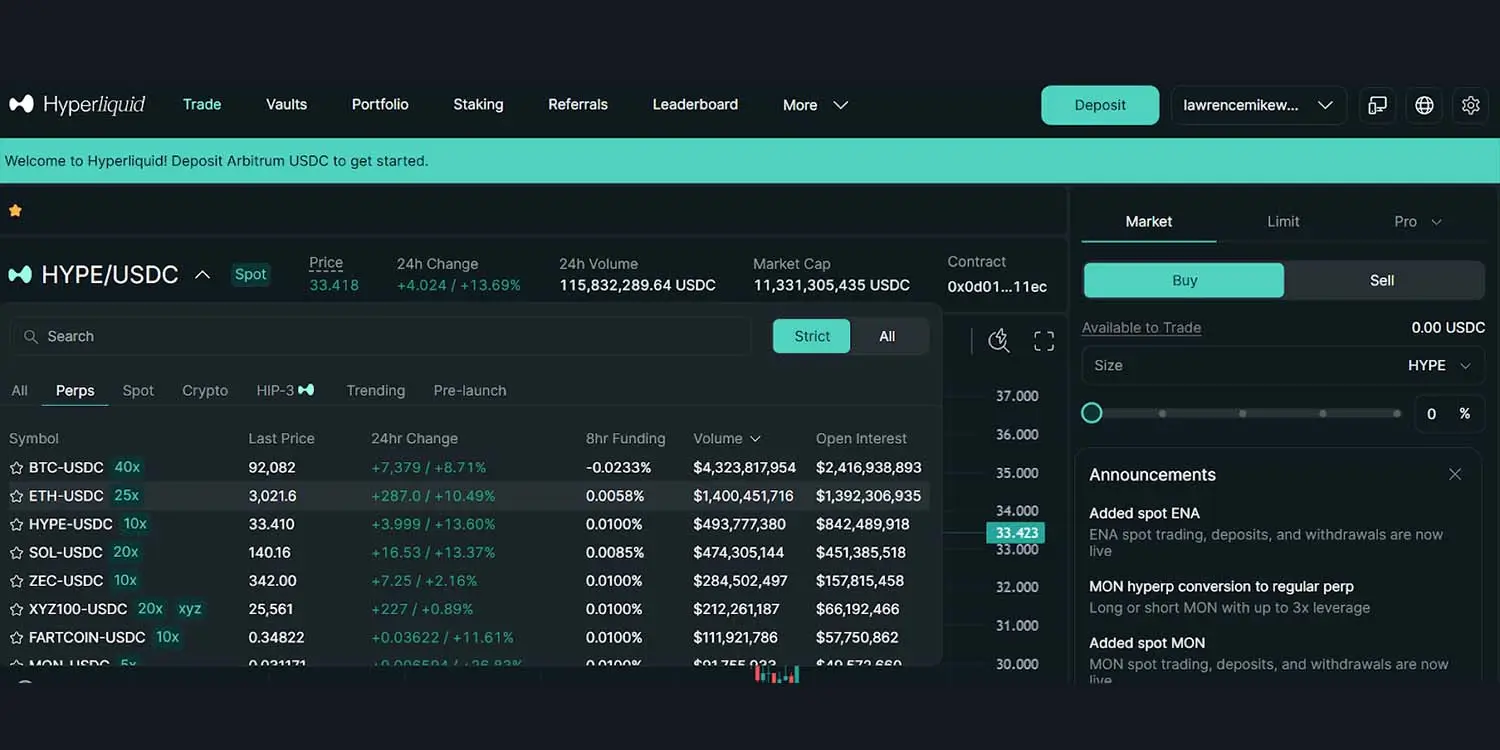
7. Select leverage and margin mode: Choose a cross or an isolated margin. Set leverage at 5x or 20x, depending on your risk exposure and tolerance.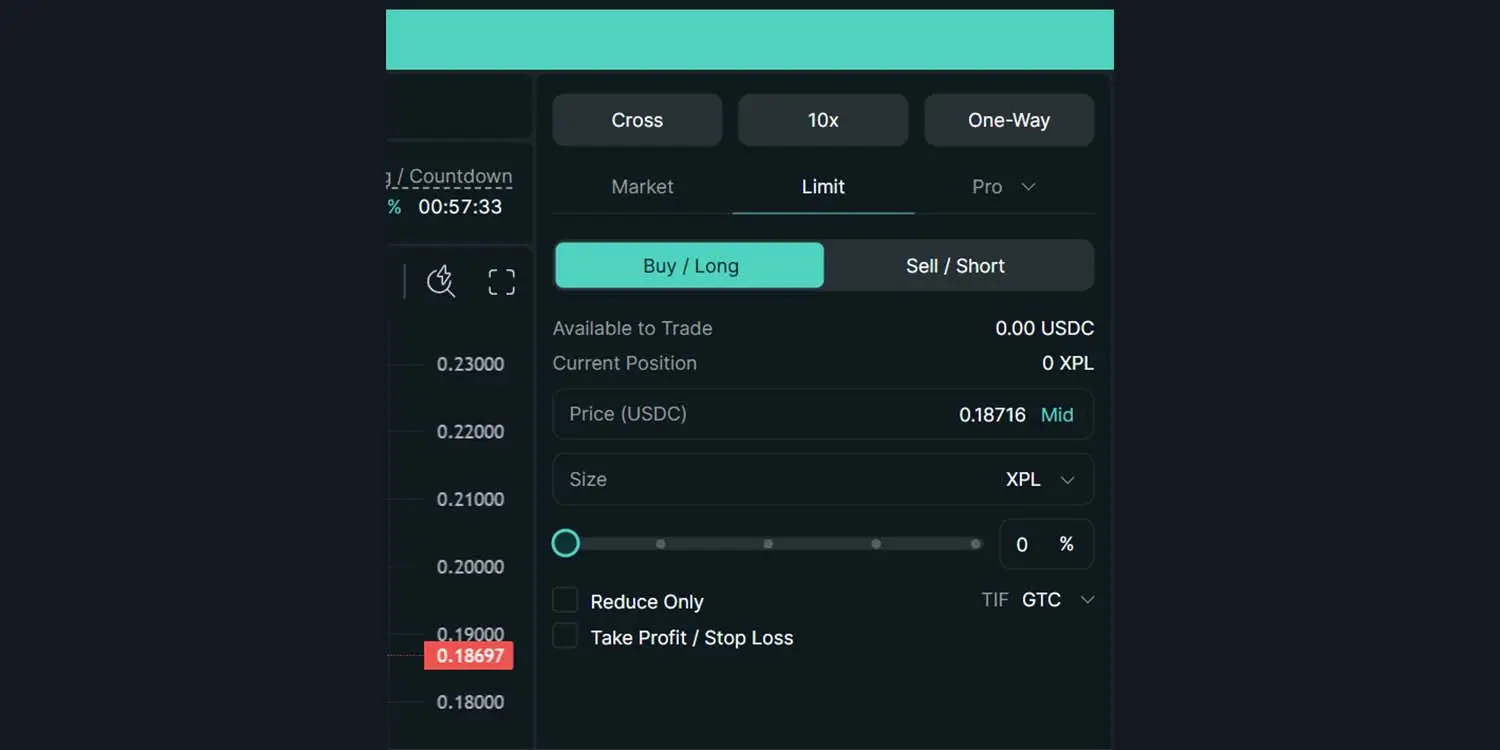
8. Review fees and funding: Check open/close fees and expected funding directions (long or short pays)]
9. Place the order and monitor the position.
10. Actively manage risk: Reduce leverage, add collateral or close position if the margin ratio gets too tight.
11. Close the trade via market/limit order. Withdraw leftover collateral to your wallet.
There are several reasons to consider trading on a DEX in 2026 over a CEX, including lower fees in many markets, increased transparency, and global access with fewer restrictions. Below is a list of some of the reasons most traders prefer trading on a DEX over a CEX
Below is a breakdown of the main fees traders pay on a decentralized futures platform.
Most DEX perps charge a small percentage fee for opening or closing a position, usually within the 0.02%-0.10% range, depending on the futures DEX. AMM DEXs like GMX typically have fixed open/close fees, while CLOBs adjust the rate to match liquidity or market depth.
Perpetual futures use funding rates to keep the contract price around the spot price. So,
Rates get updates from a few minutes to every hour, depending on the DEX. Overall, AMM-style DEXs have lower funding, while order books get high during volatile markets.
Orderbook DEXs like dYdX, Hyperliquid and Paradex use the traditional maker/taker fee model. Now
These DEXs are often the cheapest decentralised exchanges for futures when users trade high volume with market orders.
For beginners, here’s an article to help you understand the difference between Maker vs Taker fees.
Execution costs depend on the chain:
Some DEXs bundle transactions. As a result, users rarely pay for gas. A good example is DEXs with off-chain orderbooks with on-chain settlement. Overall, crypto exchange fees are important, and understanding them can help you keep more of your profit and decide what platform works best for you. Here’s an article showing you some of the hidden crypto exchange fees you probably missed.
Here’s a comparison table showing you the cheapest exchanges
| DEX | Model | Fees (maker/taker) | Funding Rates | Gas Costs | Ideal For |
| Hyperliquid | CLOB | 0.015%- 0.045% | Dynamic (high-frequency optimized) | Zero gas (HyperEVM) | High-volume traders |
| dYdX Chain | Hybrid | 0.010%- 0.050% | Market-driven | Zero gas (Cosmos) | Fast fills |
| GMX | AMM (Multi-asset liquidity pool) | Fixed 0.04%- 0.06% | Asset-specific | Low | Altcoin perps |
| EdgeX | CLOB | 0.012%-0.038% | Dynamic | Low (EVM) | Low-fee CLOB trading |
| Aevo Perps | Hybrid (Off-chain book + on-chain settlement) | 0.05%- 0.08% | Standard | Low | Options + perps |
| Drift Protocol | Hybrid (CLOB+ AMM) | 0.0025%-0.035% | Dynamic | Zero gas (Solana) | Solana traders |
| Aster | Hybrid | 0.01%- 0.035% | Dynamic | Low | High leverage traders |
| Lighter DEX | CLOB | 0% (retail) | Dynamic | Low | Zero-fee trading |
| Paradex | Hybrid | 0$ (retail) | Dynamic | Low | Gasless ZK-powered trading |
| GRVT | Hybrid | 0.0001%- 0.045% | Dynamic | Low | Ultra-low maker fees and fast trading |
If we were to classify them by their categories, it would be:
1. Orderbook-based DEX – Hyperliquid and dYdX
2. AMM hybrid models – GMX
Also Read – Crypto Exchange Fees Guide
Trading on DEX futures is much safer than it was in previous years. Despite the improved security, some risks are still present, and you have to be aware of them. Below is a breakdown of the main security concerns and how modern platforms protect traders
Some DEXs rely on price feeds, leaving them vulnerable if the oracle updates slowly or malfunctions with sudden price swings. Such situations can result in unfair liquidations or heavy spikes in funding rates. Most top DEXs currently rely on fast oracles. Others use multi-source price feeds and TWAP protection to combat manipulation.
Every DEX runs on smart contracts, leaving them open to bugs as a major concern. Smart contract exploits can drain liquidity pools or freeze user funds. As a result, the safest DEXs use multiple audits, formal verification and real-time monitoring tools to watch for irregular contract behaviour
AMM-based perpetual DEXs rely on liquidity pools. Now, in moments of volatility spikes, LPs and sometimes traders may face slippage, liquidity gaps. To resolve this, some DEXs use multi-asset liquidity, hedging engines and models that protect both traders and LPs.
The top DEXs often publish
A platform being audited doesn’t make it safe, but it shows transparency.
The majority of trusted DEXs use a mix of protections, including
Overall. DEXs are safer in 2026, but not risk-free. The safest platforms are DEXs that show commitment to transparency, undergo constant audits and use strong oracles.
To rank the top decentralized futures exchanges for 2026, we evaluated each platform using a weighted scoring system. This system helps you understand why we ranked some DEXs higher and what factors matter the most when trading perps on-chain.
1. Security and Audits (20%)
Security is a serious consideration when trading on a DEX. We evaluated smart contract audits, looked out for past exploits (if any), bug bounty programs and real-time monitoring systems. We gave higher scores to platforms with transparent security practices.
2. Liquidity Depths and Slippage (15%)
The top perp DEXs can handle large position sizes without blowing up your entry price. We compared AMM liquidity, orderbook depth and whether a DEX leverages cross-chain or unified liquidity
3. Supported Assets and Market (10%)
Some DEXs have limited assets, restricted only to BTC and ETH. Others offer a good mix of altcoins, forex synthetics, and commodities. We gave higher scores to platforms with broader market access.
4. Maximum Leverage (10%)
Most DEXs offer between 20x -50x leverage, while some take it up to 100x. We ranked platforms based on flexibility and their safety in managing leverage.
5. Fees and Funding Rates (15%)
Fees can alter your trading strategy. We compared maker/taker fees, open/closing fees, funding rate volatility and the platforms that offer the cheapest fees.
6. Oracle Reliability (10%)
Perps function by accurate pricing. We evaluated the quality of oracles used by each DEX. We checked if each platform uses Chainlink, Pyth, custom oracles, dual feeds or fallback systems.
7. Network Performance and Gas (10%)
We scored chains based on their fees and speed, including Arbitrum, Blast, Optimism, Solana and custom appchains. Platforms on high-throughput chains ranked higher.
8. User Experience (5%)
A good DEX should be easy to move around. We evaluated mobile support, order types, chart quality and overall onboarding flow.
9. Regulatory Accessibility (5%)
Some DEXs are globally accessible, while others are restricted in the US, EU, or Asia. We ranked platforms based on accessibility and if they provide no-KYC access.
More DEXs are open to letting traders use LRTs like Ether.fi assets as margin, resulting in capital efficiency and traders earning staking rewards while trading perps
More platforms are using AI as a risk prediction tool. Some rely on AI to reduce bad liquidations and improve stability, making on-chain trading closer to institutional-grade execution.
Most perp DEXs now run on modular setups (custom appchain, high-speed rollups, and separate data layers) rather than a monolithic chain. This improves throughput and reduces costs
ZK tech is improving perps trading, making it more private and faster. It offers CEX-level speed with trustless settlement.
DEXs are now merging liquidity across Ethereum L2s, appchains and Solan, reducing slippage and allowing smaller DEXs to enjoy deeper markets.
The best decentralized futures exchange depends largely on your trading style. For beginners, platforms like GMX or Aevo are easier to navigate. Both offer simple dashboards and good risk control tools.
For active traders in need of deep liquidity and CEX-level execution, Hyperliquid or dYdX are good options thanks to their CLOB models and lower slippage. Similarly, high-leverage traders would prefer platforms like EdgeX and Aster. Both DEXs offer good maximum leverage.
For low-fee hunters, platforms like Drift, Hyperliquid or GMX offer the best value, depending on the asset. Altcoin futures traders will enjoy platforms with good market exposure like dYdX, EdgeX and Aster. For multi-chain traders in need of flexibility, GMX and Aster offer good cross-chain support.
Overall, the best DEX is the one that matches your trading style, liquidity, fees and gives you

Recommended Articles


 2M+ Monthly Readers
 50k+ Articles


 Claim Bonus