The crypto prop trading industry has grown in terms of sophistication and intensity due to various factors in the marketplace.
In the context of cryptocurrency proprietary trading, it sometimes becomes more important to consider the model of choice in the evaluation process than the split of profits or the actual amount of funding. Traders appear to be preoccupied with securing funding as quickly as possible or obtaining a substantial allocation of funding. It never becomes more evident in actuality that the structure of evaluation itself plays a crucial role in determining whether a trader survives long enough to gain actual funding. Evaluation structures directly influence trader behavior by shaping risk tolerance, time pressure, and drawdown management. A misaligned evaluation model often leads to rule breaches rather than strategy failure.
In this article, we will discuss the different models in detail. We will compare the models based on important factors that will enable us to help you choose the ideal model that suits your trading style.
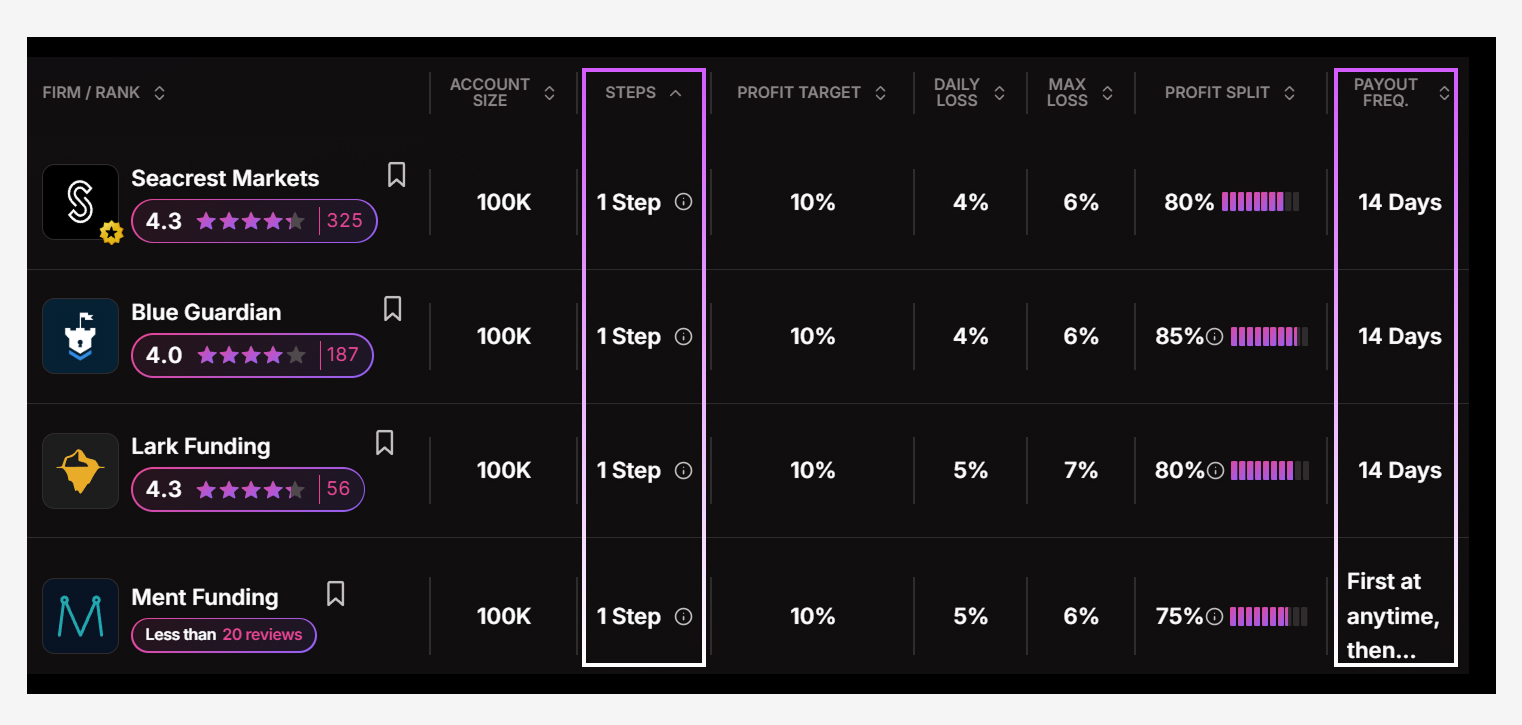
A one-step assessment is a one-step analysis, and as the name suggests, it is a one-step assessment that traders are required to complete to be funded. After the trader hits the profit target without violating risk regulations, one switches immediately to a funded account.
The stages have no preliminary stages, no resets in between phases, and no second chances. Everything is based on performance at this one phase.This structure concentrates all performance and psychological risk into a single trading window, magnifying the consequences of any drawdown breach.
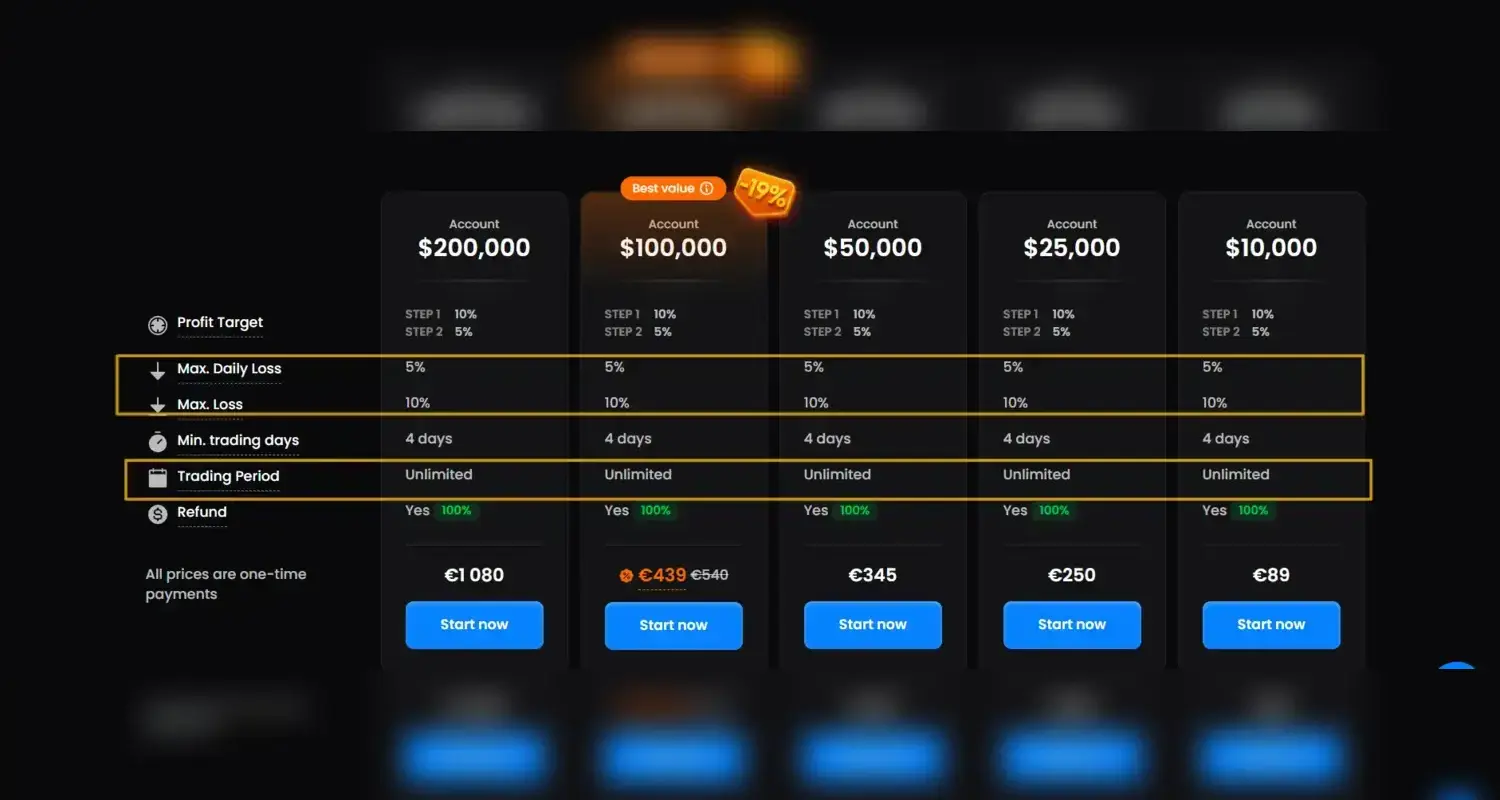
Typical Rules
One-step evaluations typically contain the following:
Although this depends on the firm:
Because drawdowns are often static or tightly trailing, risk tolerance effectively shrinks as equity fluctuates, leaving little margin for recovery after early losses.Due to the unidirectional execution of everything, such regulations tend to be more stringent to safeguard the company against a swift burst.
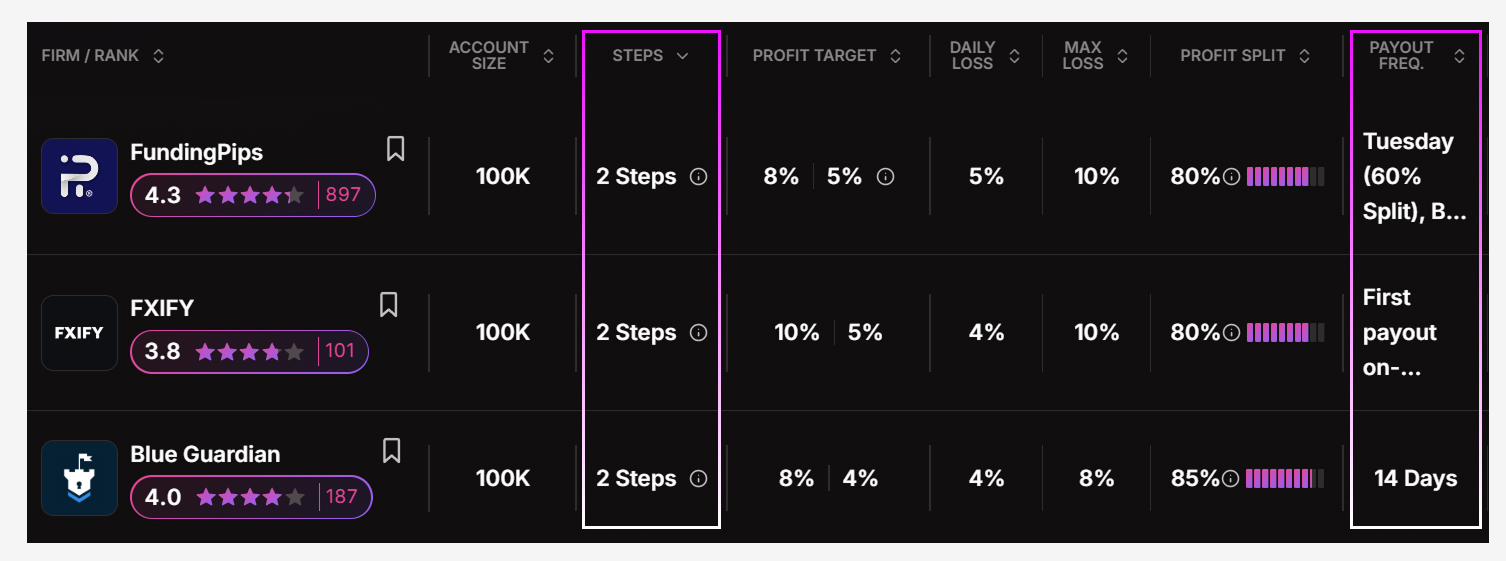
The qualification process can be further broken down into two stages with the help of a two-step evaluation. Before being funded, traders have to pass Step 1 and then Step 2.
The second stage generally has fewer profit targets and is meant to ensure continuity as opposed to a boom in growth.The second phase is designed to filter behavioral consistency rather than raw profitability.
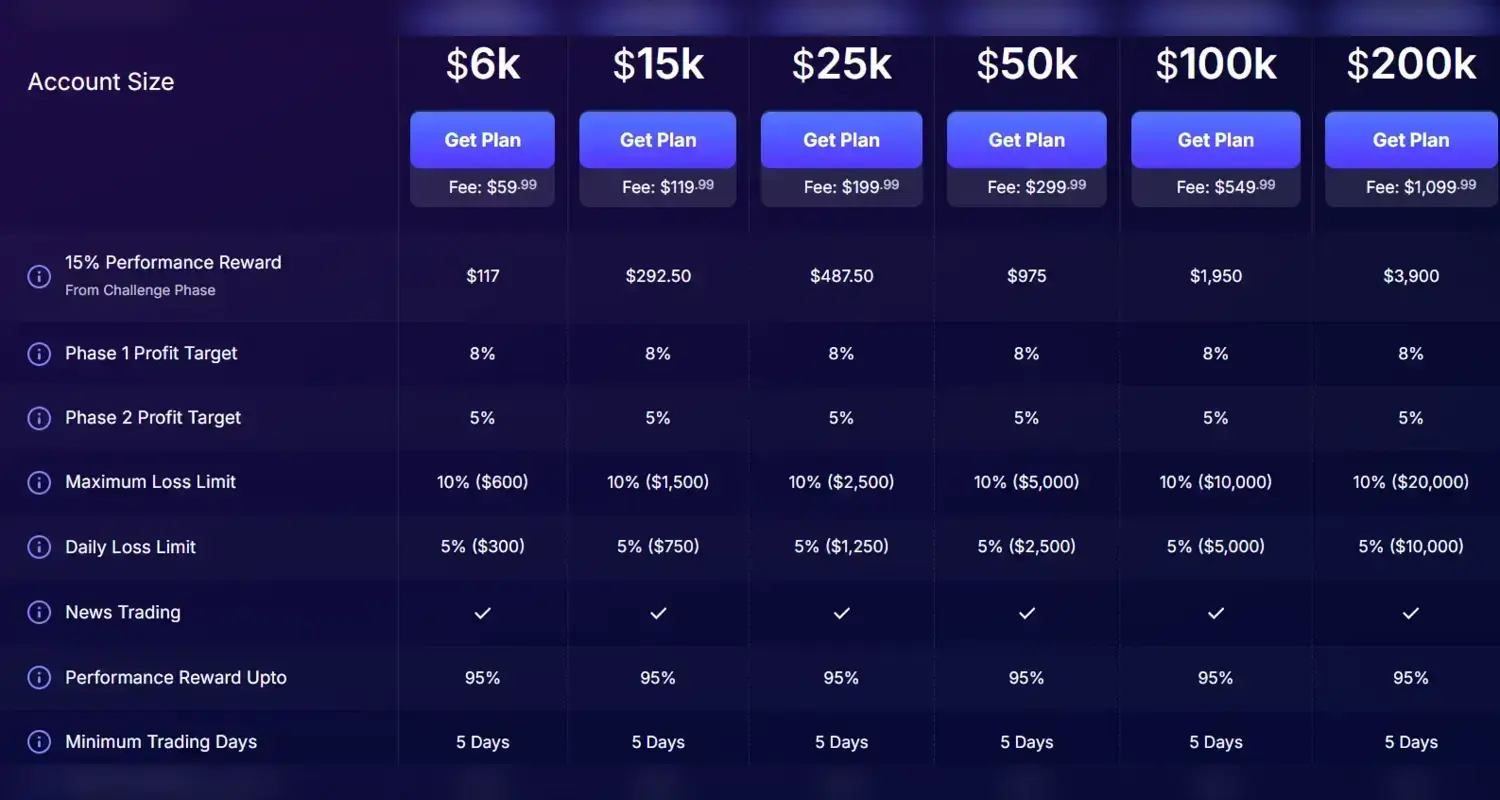
Step-1 vs Step-2 Differences
Step-2:
Time generally resets in between phases, with traders getting a psychological clean slate.This reset reduces recency bias and allows traders to recalibrate risk behavior after the stress of the initial phase.
Why Firms Use Two Phases
On the part of the firm, two-step appraisals:
From a risk governance perspective, this mirrors institutional portfolio management, where consistency and capital preservation outweigh short-term gains.It is not as much a matter of proving whether a trader can profit once, but whether he/she can profit again and responsibly.
| Criteria | One-Step Evaluation | Two-Step Evaluation |
| Cost & fees | Usually lower overall | Higher due to two phases |
| Time to get funded | Faster if successful | Slower but steadier |
| Profit targets | Higher in a single phase | Split across two phases |
| Drawdown strictness | Often tighter | More balanced |
| Risk of failure | High due to one chance | Lower per phase |
| Psychological pressure | Intense | Distributed |
| Best suited trader type | Experienced, confident traders | Developing, consistency-focused traders |
The selection of the appropriate evaluation model will not be determined in any way by your preferred speed of getting funded, but rather by how you trade.Key determinants include risk-per-trade tolerance, ability to manage drawdown fluctuations, and emotional stability under time pressure.
Beginners
Beginners are normally more favorable to two-step evaluations. They offer organization, strengthen risk management behavior, and make the situation less emotional. The reduced speed and the feedback loop between phases are more obvious to the beginners.
Conservative Traders
Two-step models will tend to be more comfortable for traders who are more focused on capital preservation and stable growth. The decreased pressure of Step-2 is in line with the conservative risk frameworks.
Aggressive Traders
One-step evaluations may be favored by aggressive traders who have a high degree of risk control. These traders usually do not like to spend much time on evaluation and believe in their capability to act when the pressure is high.
High-Frequency Traders
One-step models are popular with high-frequency traders, as they can trade frequently as per the drawdown rules. Expansive appraisal windows are applicable with quick execution plans.
Swing Traders
Two-step evaluations can see swing traders come out as winners, particularly where a time constraint is not very strict. The length of the holding periods demands flexibility and patience, which are not always possible with a one-step challenge.
Despite what evaluation model is used, traders keep falling into the same traps.
Rushing Profit Targets
The excessive pursuit of the profit objective causes poor entries, overtrading, and emotional decisions. Discipline and not speed is rewarded in evaluations.
Over-Leveraging Early
Most traders put on too many positions too soon during the assessment period, thinking that they will get the opportunity to regain them later. This tends to cause an early breach of the drawdown.Early over-leveraging compresses remaining risk capacity, leaving insufficient margin for normal strategy variance.
Ignoring Drawdown Rules
There is no profit goal worth upholding when there is rule-breaking on drawdown. Numerous unsuccessful assessments are done when the account is profitable but exceeds the level of risk.
Making Evaluations Demo Accounts
Practice accounts are not evaluation accounts. Casually treating them results in a lack of consistency in performance and a violation of rules. Companies are evaluating behavior rather than profitability.
There does not exist any universally “best” model to evaluate crypto prop firms.In prop trading, survivability within evaluation constraints is a stronger predictor of funding success than win rate or trade frequency
One-step evaluation will reward you for confidence, accuracy, and emotional toughness. A Two-step evaluation will reward you for patience, consistency, and managed risk. It is better to select an approach that fits your trading personality rather than trying to change who you are to trade successfully. Some firms offer both options for trading, such as FundNext, FTMO, and others.
“Longevity trumps speed” as a credo in crypto prop trading, so alignment trumps ambition. The assessment format you use should help you support the trader you already are or help you become the trader you’re consciously working to become.”


 2M+ Monthly Readers
 50k+ Articles


 Claim Bonus