Ezra Icy, the creative wizard from Arizona, specializes in crafting magnetic content for Web3 brands. In the digital realm, she doesn't just connect users; she orchestrates a symphony of community and human bonds. Connect with Ezra in transforming pixels into unforgettable moments and turning the virtual landscape into a warm, welcoming oasis of connection only at [email protected]
CoinGape has covered the cryptocurrency industry since 2017, aiming to provide informative insights to our readers.
Our journalists and analysts bring years of experience in market analysis and blockchain technology to ensure factual accuracy and balanced reporting. You can read more about our review methodology to get more information on the ratings below. In order to provide our readers with accurate and unfiltered information, we work hard to uphold the highest standards for our editorial policy.
2 Million+ Readers
Verified Sources
Unbiased Editorial Team
Investment disclaimer: The content reflects the author’s personal views and current market conditions. Please conduct your own research before investing in cryptocurrencies, as neither the author nor the publication is responsible for any financial losses.
Ad Disclosure: This site may feature sponsored content and affiliate links, To get more information on the partner link placements visit our affiliate policy page . All advertisements are clearly labeled, and ad partners have no influence over our editorial content.
The cryptocurrency payment industry has matured significantly, and businesses seeking to offer crypto payment capabilities now have a strategic shortcut: white label crypto payment gateways. Instead of building complex payment infrastructure from scratch, a process that can cost upwards of $250,000 and take over a year, companies can deploy fully-branded crypto payment solutions in weeks.
This comprehensive guide examines everything you need to know about white label crypto payment gateways: how they work, what features matter most, implementation considerations, security requirements, and how to evaluate providers for your specific use case.
What is a White Label Crypto Payment Gateway?
A white label crypto payment gateway is a pre-built cryptocurrency processing infrastructure that businesses can rebrand and deploy under their own name. The underlying technology, security systems, and regulatory compliance frameworks are developed and maintained by a specialised provider, while the purchasing business presents it to the customers as their own proprietary solution.
Think of it as the difference between manufacturing your own smartphone versus designing a custom case for an existing device. The core functionality remains the same, but the customer-facing experience reflects your brand identity.
Core Components
A typical white label crypto payment gateway includes:
Payment Processing Engine: the core system that handles cryptocurrency transactions, wallet management, and blockchain interactions
Merchant Dashboard: administrative interface for monitoring transactions, managing settings, and accessing analytics
Customer-facing Interfaces: checkout pages, payment widgets, and invoicing systems that display your branding
API Infrastructure: integration tools allowing connection to existing websites, applications, and business systems
Security Layer: encryption, fraud detection, and compliance monitoring systems
Settlement System: mechanisms for converting crypto to fiat currency and managing payouts
White Label vs. Custom Development vs. Third-party Integration
Understanding the alternatives helps clarify when white label makes sense:
Approach
Development Time
Cost Range
Customization
Maintenance
Custom Development
6-18 months
$200,000-$500,000+
Complete
Your responsibility
White Label Solution
2-12 weeks
$5,000-$50,000+ setup
High (branding, UX)
Provider handles
Third-Party Integration
Days-weeks
Transaction fees only
Limited
Provider handles
White label solutions occupy the middle ground. They offer substantial customization and brand ownership without the resource requirements of building from scratch.
How White Label Crypto Payment Gateways Work
Understanding the technical architecture helps businesses evaluate providers and plan integrations effectively.
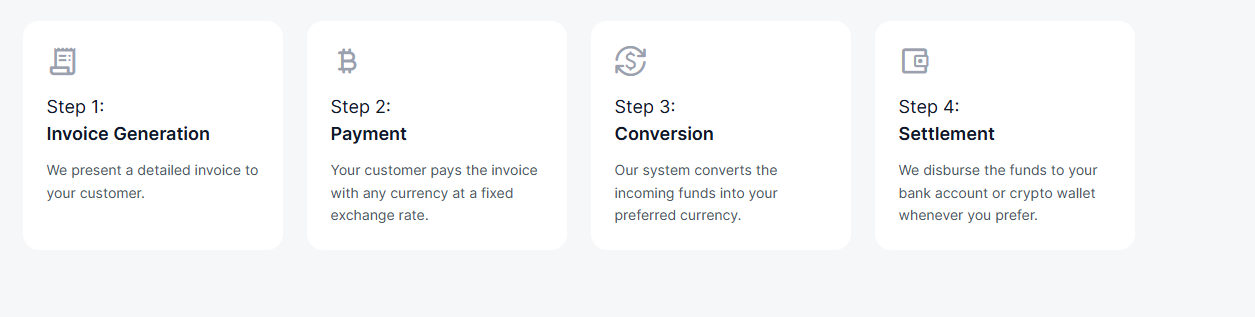
Transaction Flow
When a customer initiates a cryptocurrency payment through a white label gateway:
Payment Initiation: Customer selects crypto payment at checkout on your branded interface.
Address Generation: System generates a unique wallet address for the transaction.
Blockchain Monitoring: Gateway monitors the relevant blockchain for incoming transactions
Confirmation Tracking: System tracks required confirmations (varies by cryptocurrency).
Settlement Processing: Upon confirmation, funds are credited to the merchant account.
Conversion (optional): If enabled, crypto is automatically converted to fiat currency.
Payout Execution: Funds are transferred to the merchant’s bank account or crypto wallet.
Integration Methods
White label providers typically offer multiple integration approaches:
API Integration
The most flexible option, API integration allows direct communication between your systems and the payment gateway. Developers use REST APIs or WebSocket connections to:
create payment request programmatically
receive real-time transaction notifications
access transaction history and reporting data
manage cryptocurrency wallets and balances
Payment Widgets
Pre-built, embeddable components that can be added to websites with minimal coding:
Fully-managed checkout pages hosted by the provider but displaying your branding. Customers are redirected to these pages to complete payment, then returned to your site upon completion.
E-commerce Plugins
Ready-made integrations for popular platforms such as WooCommerce, Shopify, Magento, PrestaShop, OpenCart
Key Benefits for Businesses
1. Accelerated Time-to-Market
Building cryptocurrency payment infrastructure from scratch requires expertise in:
blockchain technology and multiple protocol implementations
cryptographic security systems
regulatory compliance across jurisdictions
high-availability infrastructure design
real-time transaction monitoring
White label solutions compress this timeline from 12-18 months to as little as 2-4 weeks for basic deployment, with full customization achievable in 2-3 months.
2. Significant Cost Reduction
The financial comparison is stark:
Custom Development Costs:
Initial development: $200,000-$250,000
Security audits: $20,000-$50,00
Compliance setup: $30,000-$100,000
Annual maintenance: 15-20% initial cost
Infrastructure: $5,000-$20,000/month
White Label Costs:
Setup fees: $5,000-$50,000 (varies by provider)
Monthly fees: $500-$5,000
Transaction fees: 0.5-2% per transaction
No infrastructure management required
3. Brand Ownership and Control
Unlike simple payment processor integrations where customers see the provider’s branding, white label solutions allow:
custom domains and SSL certificates
branded email notifications
customized checkout interfaces
your logo and color scheme throughout
custom terms of service and privacy policies
4. Access to Enterprise-Grade Security
White label providers invest millions in security infrastructure that individual businesses couldn’t justify:
SOC 2 Type II compliance
ISO 27001 certification
regular penetration testing
24/7 security monitoring
dedicated security teams
5. Regulatory Compliance Support
Cryptocurrency regulations vary significantly by jurisdiction and continue evolving. White label providers typically:
Maintain required licenses (MTL, Virtual Asset Service Provider registrations)
Implement AML/KYC procedures
File required regulatory reports
Update systems as regulations change
Provide compliance documentation for your auditors
6. Multi-currency Support Without Complexity
Supporting multiple cryptocurrencies requires understanding different blockchain protocols, confirmation requirements, transaction formats, and wallet structures.
White label solutions abstract this complexity, allowing businesses to accept 50-300+ cryptocurrencies without managing the underlying technical differences.
Essential Features to Look For
When evaluating white label crypto payment gateway providers, prioritize the following capabilities:
Cryptocurrency Support
Must-have currencies: Bitcoin (BTC), Ethereum (ETH), Tether (USDT) – both ERC-20 and TRC-20, USD Coin (USDC), Bitcoin (LTC)
Valuable additions: major altcoins (XRP, BNB, Solana, etc), stablecoins across multiple networks, Layer 2 solutions (Lightning Network, Polygon)
Fiat Conversion and Settlement
The ability to instantly convert cryptocurrency payments to fiat currency protects merchants from volatility.
Key considerations:
Conversion speed: instant vs. daily batch processing
Supported fiat currencies: USD, EUR, GBP, and regional currencies
Settlement methods: bank wire, ACH, SEPA, crypto payout options
Settlement timeframes: same-day, next-day, or weekly
Security Infrastructure
Non-negotiable security features include:
Feature
Purpose
Cold Storage
Majority of funds stored offline, inaccessible to hackers
Multi-Signature Wallets
Multiple approvals required for large transactions
Two-Factor Authentication
Additional verification for account access
Encryption (AES-256)
Protection of data in transit and at rest
DDoS Protection
Defense against denial-of-service attacks
Rate Limiting
Prevention of automated attack attempts
Compliance Tools
KYC/KYB integration capabilities
Transaction monitoring and suspicious activity reporting
Sanctions screening
Audit trail generation
Regulatory reporting automation
Developer Experience
For technical teams, evaluate:
API Documentation Quality: clear, comprehensive, with code examples
SDK Availability: libraries for popular programming languages
Sandbox Environment: test environment for development
Webhook Support: real-time notifications for transaction events
Rate Limits: adequate for your expected transaction volume
Reporting and Analytics
Essential reporting capabilities include
real-time transaction monitoring
historical transaction data export
revenue and fee reporting
customer payment analytics
settlement reconciliation reports
Security and Compliance Requirements
Regulatory Landscape
Cryptocurrency payment processing operates within an evolving regulatory framework:
United States:
Money Transmitter Licenses (state-level)
FinCEN registration
Bank Secrecy Act compliance
OFAC sanctions screening
European Union:
Markets in Crypto-Assets (MiCA) regulation
Anti-Money Laundering Directive (AMLD)
Electronic Money Institution licensing
Asia-Pacific:
Payment Services Act (Singapore)
Virtual Asset Service Provider registration (various jurisdictions)
Country-specific licensing requirements
AML/KYC Implementation
KYC and AML requirements cannot be circumvented. Your white label solution should support:
KYB for Merchants:
business registration verification
beneficial owner identification
ongoing monitoring of business activities
KYC for End Customers:
identity document verification
address verification
sanctions and PEP screening
risk-based verification levels
Security Best Practices
Beyond provider-side security, organizations can implement these measures:
Access Control: Limit dashboard access to necessary personnel only.
IP Whitelisting: Restrict API access to known IP addresses.
Crypto payments increasingly integrated into banking applications, investment platforms, social media payment features, and IoT device payments.
Regulatory Clarity
Markets in Crypto-Assets (MiCA) in Europe and developing frameworks globally should provide clear
Conclusion
White label crypto payment gateways represent the most practical path for businesses seeking to offer cryptocurrency payment capabilities without the massive investment required for custom development. By leveraging established infrastructure, companies can focus on their core business while still providing customers with the payment flexibility they increasingly demand.
The key to success lies in careful provider selection, thorough integration planning, and ongoing attention to the evolving regulatory landscape. Businesses that implement these solutions thoughtfully position themselves to benefit from the continued growth of cryptocurrency adoption while managing the associated risks effectively.
As the cryptocurrency payment infrastructure matures and regulations provide clearer frameworks, white label solutions will likely become the standard approach for businesses of all sizes seeking to participate in the digital currency economy.
Frequently Asked Questions (FAQs)
1. What is a white label crypto payment gateway?
A white label crypto payment gateway is pre-built cryptocurrency payment infrastructure that businesses can customize with their own branding and deploy as their proprietary solution. The underlying technology is developed and maintained by a specialized provider, while the business presents it to customers under their own brand identity.
2. How much does a white label crypto payment gateway cost?
Costs vary significantly based on provider and requirements. Expect setup fees ranging from $0-$50,000, monthly fees of $500-$5,000, and transaction fees of 0.5-2.5%. Compare this to custom development costs of $200,000-$500,000 plus ongoing maintenance.
3. How long does implementation of white label crypto payment gateway take?
Basic implementations using e-commerce plugins can be completed in 1-2 weeks. Standard API integrations typically require 4-8 weeks. Full enterprise deployments with extensive customization may take 3-6 months.
4. What cryptocurrencies should a payment gateway support?
At minimum, support Bitcoin (BTC), Ethereum (ETH), and major stablecoins (USDT, USDC). Broader cryptocurrency support (50-300+ coins) accommodate diverse customers preferences but may add complexity.
5. Is KYC required for crypto payment gateways?
Yes, legitimate providers implement KYC and AML procedures to comply with financial regulations. The level of verification required varied based on transaction volumes and jurisdictions served.
6. Can crypto payments be converted to fiat currency automatically?
Most white label providers offer instant or near-instant fiat conversion, protecting merchants from cryptocurrency price volatility. Settlement to bank accounts typically occurs within 1-3 business days.
7. What security certifications should providers have?
Look for SOC 2 Type II compliance, ISO 27001 certification, PCI DSS compliance (for card-related functions), and evidence of regular third-party security audits.
8. How do refunds work with crypto payments?
Refunds are typically processed as new payments from merchant to customer. Most providers support refunds in either the original cryptocurrency or fiat equivalent. Due to price volatility, refund policies should be clearly communicated to customers.
Ezra Icy, the creative wizard from Arizona, specializes in crafting magnetic content for Web3 brands. In the digital realm, she doesn't just connect users; she orchestrates a symphony of community and human bonds. Connect with Ezra in transforming pixels into unforgettable moments and turning the virtual landscape into a warm, welcoming oasis of connection only at [email protected]
Disclaimer: The presented content may include the personal opinion of the author and is
subject to market condition. Do your market research before investing in cryptocurrencies. The author or the
publication does not hold any responsibility for your personal financial loss.




 5M+ Monthly Page Views
 50k+ Articles


 Claim Bonus