
 Claim Bonus
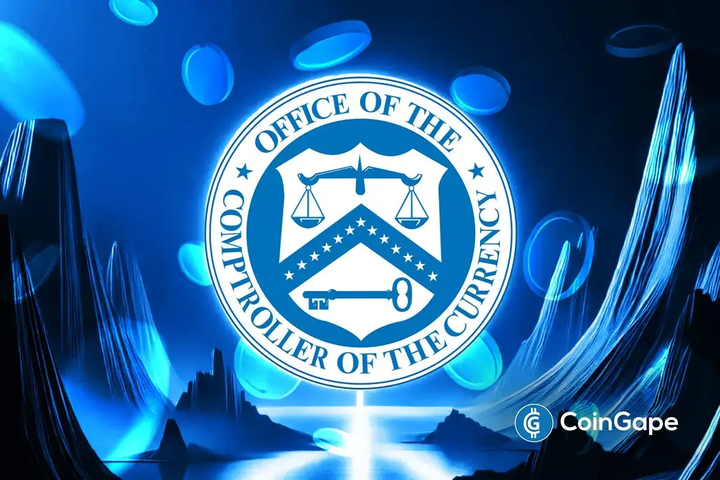
OCC Confirms That Banks Can Facilitate No-Risk Crypto Transactions


Highlights
- The OCC has authorized banks to trade crypto among the customers.
- This allows banks to play the role of secure, regulated intermediaries without holding any crypto asset.
- It is a significant move to ensure mainstream crypto use via trusted banks.
U.S. national banks have been passed by the Office of the Comptroller of the Currency (OCC) to enable their customers perform instant crypto trades with no risk. This decision has cleared a significant obstacle in the way of banks that desire to be part of the expanding digital assets market.
Banks Receive Clarity on Crypto Trading Authority
Interpretive Letter 1188 states that a bank can be an intermediary in crypto transactions without having digital assets in its possession. The OCC clarified that one client may sell a crypto asset to one bank and that bank will sell the asset to the other client at the same time.
Since the two trades take place virtually at the same time the bank does not have an exposure to the market. The license provides banks with a regulated structure to provide crypto trading services. This is in line with preceding actions like enabling banks to hold major crypto assets.
Another explanation that OCC provides is that the role of the bank is not to trade digital assets. Instead, the only responsibility of the bank is linking the sellers and the buyers.
OCC Reinforces Bank’s Crypto Oversight
The regulator mentioned that such transactions carry a limited amount of settlement risk. The decision is an update of a previous guidance that permitted crypto custody and some stablecoin transactions.
The latest clarification strengthens the same allowances but indicates continued regulation of responsible crypto services in the banking space. With this, the banks are now enabled to provide customers with a secure means of accessing digital assets in compliance with federal regulations.
The OCC stressed that institutions need to continue having robust risk controls, such as cybersecurity controls and compliance programs. Hence, all their operations can be safe and in line with current rules.
How Institutions Might Respond To OCC’s Crypto Guidance
The decision generated multiple responses from industry analysts. According to one of them who identifies as VanQish, the decision is a big change for banks to venture into digital assets markets.
VanQish stated that this explanation would make it easier for institutions to provide a pathway for crypto transactions. This move follows an earlier shift when the OCC opened industry entry to crypto bank Erebor, backed by billionaire Peter Thiel.
Another point raised by VanQish is that the OCC considers crypto brokerage as equal to the well-established banking operations. He also stated that the description of the settlement risk in the letter is similar to derivatives and forex.

Why Trust CoinGape
CoinGape has covered the cryptocurrency industry since 2017, aiming to provide informative insights Read more… to our readers. Our journal analysts bring years of experience in market analysis and blockchain technology to ensure factual accuracy and balanced reporting. By following our Editorial Policy, our writers verify every source, fact-check each story, rely on reputable sources, and attribute quotes and media correctly. We also follow a rigorous Review Methodology when evaluating exchanges and tools. From emerging blockchain projects and coin launches to industry events and technical developments, we cover all facets of the digital asset space with unwavering commitment to timely, relevant information.



Delivered every day.
- Insights that move markets
- 100,000 active subscribers
Related Articles




- Bhutan Gov. Dumps More Bitcoin Amid $410M Institutional Sell-Off in BTC ETFs
- Crypto Market in Panic Mode Ahead of Bitcoin, ETH, XRP, SOL Options Expiry & US CPI Today
- Digital Assets Are Fixed In The Future Of Traditional Finance
- U.S. CFTC Committee Appoint Ripple, Coinbase, Robinhood CEOs to Boost Crypto Regulation
- What Will Spark the Next Bitcoin Bull Market? Bitwise CIO Names 4 Factors
- XRP and Ethereum Price Prediction as Trump Seeks to Lower Key Tariffs
- Solana Price Prediction as $2.6 Trillion Citi Expands Tokenized Products to SOL
- Bitcoin Price Could Fall to $50,000, Standard Chartered Says — Is a Crash Coming?
- Cardano Price Prediction Ahead of Midnight Mainnet Launch
- Pi Network Price Prediction as Mainnet Upgrade Deadline Nears on Feb 15
- XRP Price Outlook Amid XRP Community Day 2026