 Newsletter
Seed Funding Vs Series A – Key Differences Explained


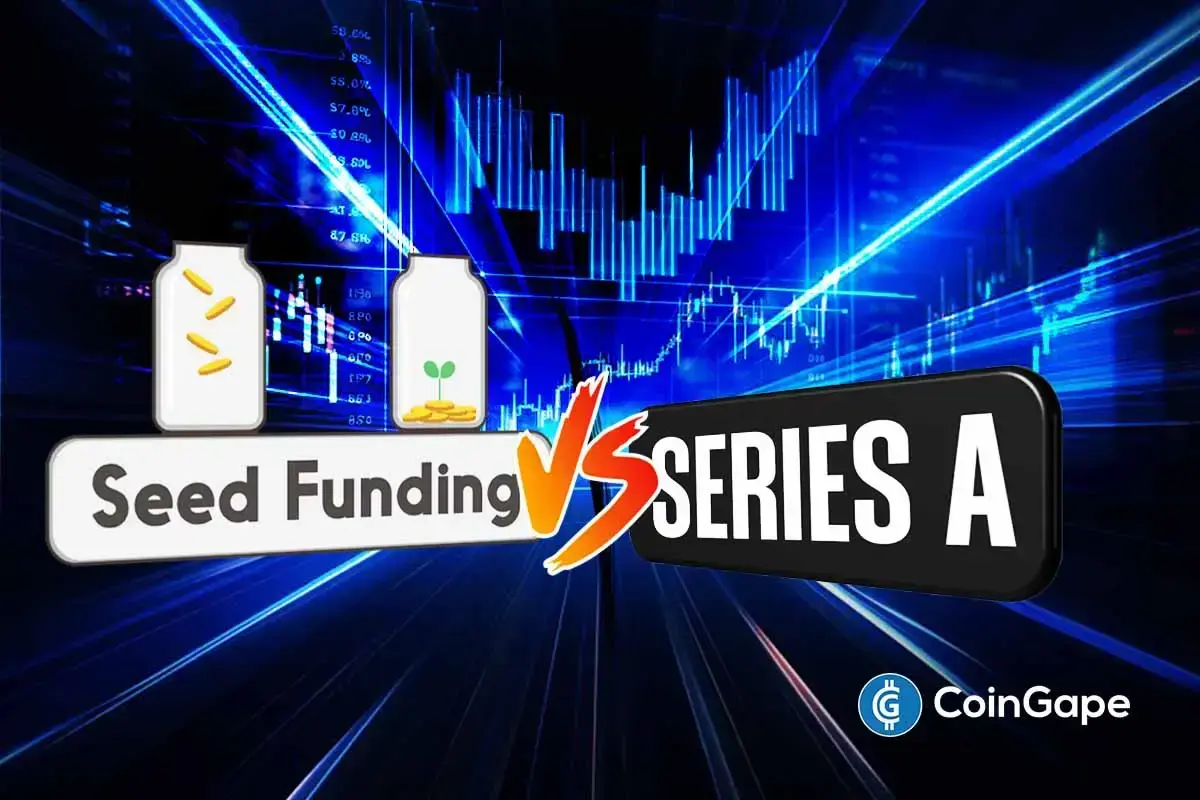
Raising money in crypto and Web3 is quite different from traditional startups. With token models, on-chain milestones, and unique business models, the rules change fast. Understanding Seed Funding vs Series A, crypto fundraising matters if you want to know how much to raise, what investors expect, and how traction works on-chain.
This guide breaks down valuations, capital goals, stage expectations, and how the funding process works, so you can see the full picture. In this article, we explain the difference between Seed and Series A in crypto, how to avoid common mistakes, and give you a clear idea of what founders, investors, and contributors should expect at each stage.
Key Takeaway
- Seed funding is your first step to test your idea, build an MVP, and start growing a small community.
- Series A is about scaling your project, expanding the team, growing users, and refining token economics.
- Valuations in crypto depend on token supply, circulating market cap, community engagement, on-chain activity, and product traction.\
Overview of Crypto Fundraising Stages
In crypto fundraising, the stages are similar to traditional startups but work in more innovative ways. In a regular startup, you raise money by selling equity, which means giving investors a part of your company. In crypto-native models, you can raise money by selling tokens instead of shares.
This changes valuations and how rounds are structured, as token price and total supply matter more than ownership percentage. Early-stage rounds start with Pre-seed, where you test your idea. Afterward is the Seed, where you get the first big support.
Next is Series A, which focuses on growth and traction. In crypto, some projects include Token Generation Events (TGE) to distribute tokens to investors and the community. These series funding rounds show how far a project has come and what stage it is ready for.
What is Seed Funding in Crypto?
Seed funding is the first money you raise to test your idea, build a simple version of your product (MVP), and start growing a small community. The goal is to prove your idea works and show people your project has potential before a full launch.
Seed rounds in crypto usually range from $500,000 to $5 million, depending on your story, tech complexity, and team strength. Recent examples include L1 and L2 infrastructure projects, DeFi protocols, gaming platforms, and RWA platforms startups raising seed rounds in this range. For instance, Turtle, a Web3 liquidity protocol, raised $5.5 million, and Ryder closed a $3.2 million seed round.
Valuations for seed rounds vary, too. Token-based rounds often have fully diluted valuations (FDV) of $10 million to $30 million, while equity-only rounds are lower. Factors that influence valuation often include team, narrative strength, tech difficulty, market timing, and token design.
Investors in seed rounds include angel investors, crypto-native venture capital firms, incubators like Binance Labs or Outlier Ventures, and DAO grant programs. They also include strategic investors who see long-term value in your project. At this stage, they expect a working MVP or demo, a strong founding team with complementary skills, early proof of concept and community traction, and a clear token model, even if it’s not launched yet.
What is Series A Funding in Crypto?
Series A funding in crypto is the stage where your project moves from building a basic product to scaling it. A good example is Camp Network, which secured $30 million in its Series A to scale its Layer-1 blockchain and improve token utility. Another example is Tempo, which raised $500 million to expand its DeFi and payment solutions.
Series A rounds raise between $8 million and $30 million or more, depending on whether the project is in infrastructure, DeFi, gaming, or other areas. Valuations usually range from $50 million to over $150 million. It can be higher for Layer‑1/Layer‑2 chains, AI-crypto projects, or real-world-asset platforms because of bigger technical risk and market potential.
Investors at this stage include large institutional VCs like Paradigm and Pantera, corporate venture arms such as Coinbase Ventures and Circle Venture, and even traditional funds entering Web3. When investing in early-stage startups, these investors expect strong user traction, clear product-market fit, and solid security compliance. They also look for early revenue or a clear revenue model, a scalable architecture, a clear roadmap, and defined token utility and unlock schedules.
Key Differences Between Seed and Series A in Crypto
Aspect |
Seed Funding |
Series A Funding |
| Funding purpose | Get your idea off the ground and build a prototype or early product | Scale the product, grow users, expand the team, and increase market reach |
| Team maturity | Founders and a small core team, roles may overlap | More structured team with specialists, defined roles, and leadership in place |
| Token design stage | Early concept or testnet stage | Tokenomics refined, mainnet ready, with planned use cases and distribution strategy |
| Community size & engagement | Small early supporters, test users, early adopters | Large, active, and engaged community showing real interest and adoption |
| Fundraising instruments | SAFEs, SAFTs, early token pre-sales | Token warrants, structured SAFTs, equity with more detailed investor terms |
How Crypto Startups Use Seed vs Series A Funds?
When a crypto startup raises Seed money, it usually spends it on building the product, running security audits, growing the community, writing documentation, and sometimes providing early liquidity. For example, Neptune Protocol raised about $3.9 million in a seed round to develop its USDN stablecoin, run audits, and expand its team.
At the Series A stage, funds go to partnerships, multi-chain deployment, liquidity provisioning, compliance, marketing, and business operations. Rarible raised $14.2 million in Series A to expand its team, launch on Flow, and grow its NFT marketplace. In the startup financing cycle, seed sets the foundation, and Series A pushes growth.
Valuations in Crypto – How They’re Calculated Across Startup Funding Stages?
Valuation in crypto means figuring out what a project is worth at any point. The two main numbers are the circulating market cap and FDV. Circulating market cap is the token price multiplied by the number of tokens already trading. FDV is the price multiplied by the total supply, even for tokens that are locked. FDV often looks bigger, which might be confusing if you don’t check how many tokens are unlocked.
Liquidity also affects value. If a project has low trading volume or a thin market, one big sell can move the price fast. Token unlock schedules matter too because future unlocks increase supply and can pull the price down.
Valuations are also shaped by metrics. On-chain data like active wallets, transactions, and TVL show real usage. Off-chain signs like partnerships or product updates show future growth. Community traction is a big signal because a project with strong engagement often attracts demand. In hype seasons, valuations jump as everyone rushes in. A clear example was the Hyperliquid HYPE token, which gained 300% and pushed its FDV to $41.05 billion while the actual market cap was much lower. However, in bear seasons, they drop as demand weakens and unlocks add pressure.
Milestones Crypto Startups Should Hit Before Raising
At the Seed stage, you want to show that your idea works in a basic form. You need a simple prototype or MVP (Minimum Viable Product), a clear whitepaper or litepaper, and a rough token model that explains how your token will work. You also need some early users or testnet activity, even if small, to prove people care about what you’re building.
A short technical roadmap and a plan for future security audits help investors see that you know where the project is going. For instance, liquid staking projects like aPriori raised $8million in seed funding after showing strong testnet progress and a clear token model, and BounceBit, which secured its seed round while still on testnet with a solid dual-token design and roadmap.
At the Series A stage, investors expect much more. Your product should be live on mainnet, with real users each month who return because they get value from the product. You should have clear revenue or usage metrics that show your project is growing. Your audits should be complete, your partnerships active, and your token model finished, with a clear plan for your TGE. Many Series A teams reach this level only after showing strong user traction, working on mainnet products, and proof that the project can scale.
Alternatives to Seed and Series A Funding
-
Token Presale or Private Sale
This is when you sell your tokens to a small group of investors before the public. It gives you quick funds and helps you bring in strong partners. Magic Square used a private and public sale mix and saw huge demand, with over $20M pledged during its early sale phase.
-
Initial Exchange Offering (IEO)
With an IEO, a centralized exchange hosts your token sale. The exchange handles the sale, screens buyers, and gives your project more trust.
-
Grants and Quadratic Funding
Grants give you funding without giving up tokens or equity. Gitcoin has given out over $20M to Web3 teams through community voting and matching pools. The Avalanche Foundation also runs grant programs to support early builders.
-
DAO-Based Funding
Some teams raise money through a DAO. The community pools funds and decides which projects to support. This is suitable for Web3 projects that seek community ownership from day one.
-
Initial Staking Pool Offering (ISPO)
Here, users stake their tokens in a pool. Instead of giving you cash, they delegate their stake, and you earn the rewards to fund development. Cardano-based projects helped make this model popular. In return, supporters earn your project’s token.
Conclusion
This guide has shown that Seed and Series A funding in crypto defines the path of your project, from testing ideas to scaling products and communities. This will help you plan your fundraising, understand what investors expect, and hit the right milestones at each stage. Remember to research legal rules, token distribution details, and long-term strategy before raising. Without this knowledge, even a strong product and community can face delays, loss of credibility, or failed funding rounds.

Why Trust CoinGape
CoinGape has covered the cryptocurrency industry since 2017, aiming to provide informative insights Read more… to our readers. Our journal analysts bring years of experience in market analysis and blockchain technology to ensure factual accuracy and balanced reporting. By following our Editorial Policy, our writers verify every source, fact-check each story, rely on reputable sources, and attribute quotes and media correctly. We also follow a rigorous Review Methodology when evaluating exchanges and tools. From emerging blockchain projects and coin launches to industry events and technical developments, we cover all facets of the digital asset space with unwavering commitment to timely, relevant information.
Premium Partners






Delivered every day.
- Insights that move markets
- 100,000 active subscribers
Related Articles

- Breaking: U.S. PCE Inflation Rises To 2.8%, Bitcoin Climbs
- Michael Saylor Opposes Zcash-Style Privacy for Bitcoin, Citing Shutdown Risk
- Crypto Exchange Bitget Unveils Major GetAgent AI Overhaul With Faster Insights
- 8 Best Crypto Exchanges in Kenya for Investors and Traders in 2025
- Crypto Exchange HashKey Set to Open Investor Orders for $200M IPO, Eyes December Listing
- Chainlink Price Prediction as Reserves Pass 1M LINK – Is $20 Next?
- Ethereum Price Breaks Out of Falling Wedge: Next Target Now Set at $5K
- Is ZCash Price Set for a Bigger Rally After Its 10% Surge on the Bitget Listing?
- Aster Price Outlook as Buyback Wallet Burns 77.86M ASTER Worth $79.81M
- What’s Next for Dogecoin Price After Whales Scoop 480M DOGE?
- Can Solana Price Bounce Back to $200 by End of 2025?