
 Claim Bonus
The Growing Computation Ceiling Affecting Machine Learning Models Globally; and How to Fix It



Machine learning is an exciting industry that will ultimately pave the way for global automation. However, it is also an expensive process due to the growing computational cost affecting this industry vertical. Therefore, finding solutions to that pressing problem remains paramount in 2022 and beyond.
The Growing Cost of Machine Learning
It is appealing to think of machine learning – and artificial intelligence – as processes that do not involve humans. But unfortunately, that is not entirely accurate. Building a machine learning algorithm requires tremendous input and computing power. Those aspects have to be taken care of by humans who “feed” these algorithms new data so they can become smarter, better, and more advanced.
As an algorithm becomes smarter, it will require more powerful hardware. Having access to petabytes of data is intriguing, but that information needs to be stored somewhere. Moreover, it needs to be accessible, requiring robust hardware with multiple redundancies. It is a very cost-intensive aspect of automating business workflow, although costs will come down eventually.
Combined with the cost of integrating AI and machine learning for specific business models, the costs currently do not outweigh the benefits for most companies. Technology giants like Google, NVIDIA, Meta, and others can find ways to keep their overall costs down. However, a smaller company or new business will not have that option right away, delaying their integration of these exciting technologies.
Solving this issue of “diminishing returns” requires a very different approach altogether. No one questions the potential of machine learning and AI; improving performance requires more data points and better hardware. Bringing down the overall costs is mandatory to make this business model sustainable.
A Decentralized Approach Is A Solution
Acquiring more computational power for machine learning or AI development is a painstaking process. More often than not, researchers have to rely on conglomerates providing the necessary hardware, inflating overall costs, and introducing potential restrictions. Moreover, using large third-party providers introduces a layer of centralization, which acts as a point of failure.
Decentralizing access to vast amounts of computing power can provide much-needed relief. However, it is easier said than done, even though there is tremendous computing power in the hands of everyday consumers, small businesses, and so forth. Advances in technology make smartphones more powerful than home computers, yet there needs to be an incentive for device owners to share their spare resources.
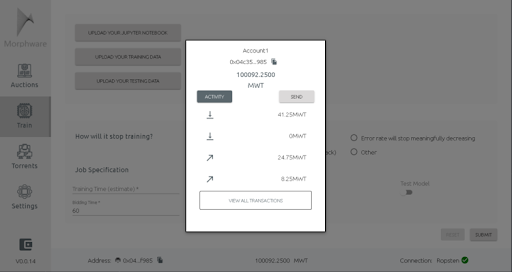
A peer-to-peer network, such as provided by Morphware, may be the catalyst to make computational power more accessible. Video game players often have the latest and most expensive hardware in their machines. Moreover, these are the people who often possess idle processing capacity, which they can monetize through Morphware. Gamers can use idle power to train models, enhance machine learning, and much more.
As a two-sided marketplace, Morphware can serve the needs of data scientists. These scientists can access remote computing power shared by owners of computers – similar to AWS – but at much more democratic prices and through a better user interface. Moreover, owners of excess computing power can sell their excess capacity at a preferred price and reap the rewards accordingly.
Closing Thoughts
There is much computing power in the world that doesn’t see much use during most hours of the day. Gaming enthusiasts build incredibly powerful rigs yet struggle to monetize their idle power. Morphware creates an abridge between users looking to make some money and researchers needing democratically-priced hardware. Furthermore, the remote hardware approach foregoes setting up data centers and ensures geographical decentralization.
Peer-to-peer interaction applies to many business models, including the distribution of computing power. It is a big step forward to reducing overall machine learning and AI development costs. Additionally, it enables other high-intensity computational tasks to be “outsourced” through financial incentives without a hefty price tag.

Why Trust CoinGape
CoinGape has covered the cryptocurrency industry since 2017, aiming to provide informative insights Read more… to our readers. Our journal analysts bring years of experience in market analysis and blockchain technology to ensure factual accuracy and balanced reporting. By following our Editorial Policy, our writers verify every source, fact-check each story, rely on reputable sources, and attribute quotes and media correctly. We also follow a rigorous Review Methodology when evaluating exchanges and tools. From emerging blockchain projects and coin launches to industry events and technical developments, we cover all facets of the digital asset space with unwavering commitment to timely, relevant information.



Delivered every day.
- Insights that move markets
- 100,000 active subscribers
Related Articles






- Breaking: Supreme Court Delays Ruling on Trump Tariffs; May Decide January 16
- Senators Make Amendments To CLARITY Act On Yield and DeFi Ahead Of Crypto Bill’s Markup
- Breaking: U.S. November PPI Inflation Rises To 3%, Bitcoin Climbs Above $95k
- Universal Exchange Bitget Taps Football Culture to Promote a One-Stop Crypto Trading Experience
- Aster DEX Review – Is It Safe and Legitimate?
- Ethereum Price Prediction as Network Activity Hits ATH Ahead of CLARITY Markup
- Robinhood Stock Price Prediction: How High Could HOOD Go Technically in 2026?
- Cardano Price Prediction as Germany’s DZ Bank Gets MiCAR Approval for Cardano Trading
- Meme Coins Price Prediction: What’s Next for Pepe Coin, Dogecoin, and Shiba Inu Amid Market Rally?
- Standard Chartered Predicts Ethereum Price could reach $40,000 by 2030
- Bitcoin Price Eyes $100k as Core US Inflation Slips Ahead of CLARITY Act Markup