 Claim Bonus
Belarus President Signs Law Allowing Cryptobanks to Integrate Tokens Into Banking


Highlights
- Belarusian President Alexander Lukashenko signed Decree No. 19, which centers around crypto banks.
- These crypto banks will be able to integrate digital tokens into traditional banking.
- The country had legalized cryptocurrencies as far back as 2017.
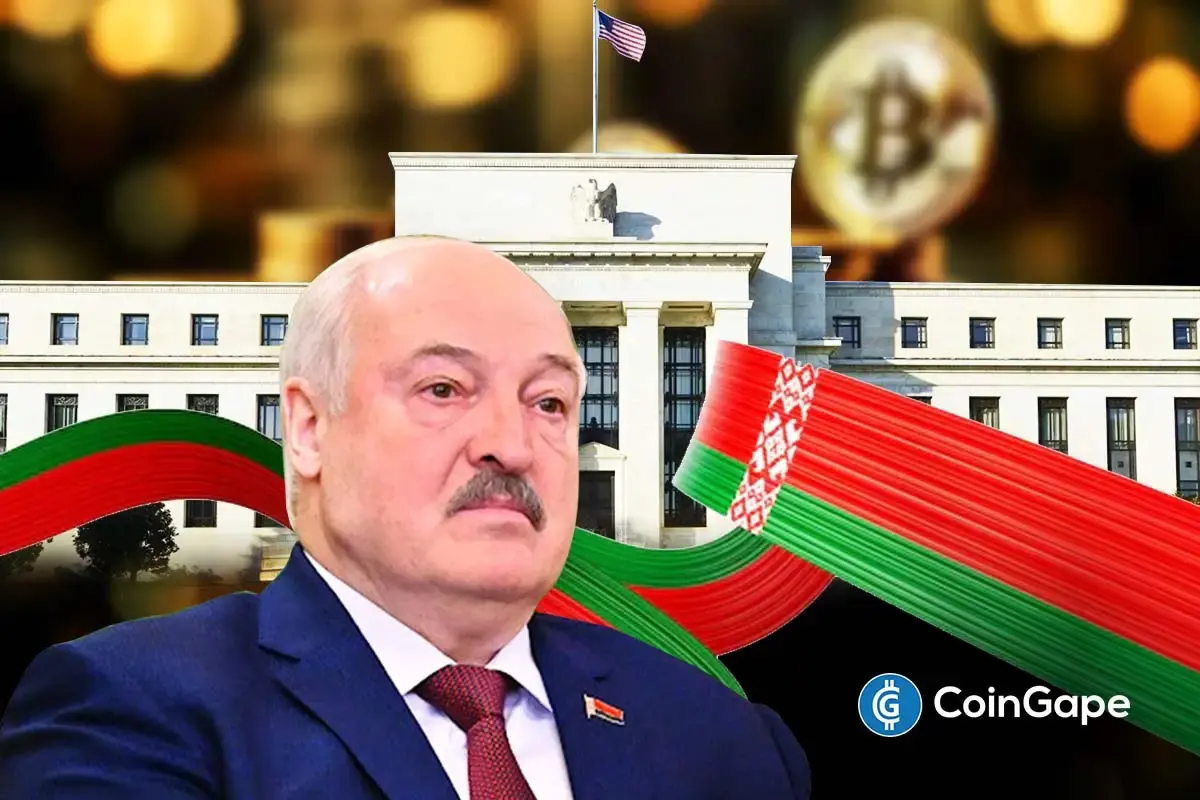
Belarusian President Alexander Lukashenko has signed a decree that will further boost crypto adoption in the country. The decree centers around crypto banks, which will be able to integrate crypto assets into traditional finance (TradFi).
Belarus Introduces Crypto Banks That Combine Tokens and Banking
According to a release from the presidency, Belarusian President Alexander Lukashenko signed Decree No. 19 “on cryptobanks and certain issues of control in the field of digital signs (tokens).” The release noted that the move aims to strengthen the country’s image as a leader in financial IT technologies and stipulate the conditions for operating crypto banks in the country.
The Belarus Decree defines a cryptobank as a joint-stock company that has approval to grant the right to combine activities using digital tokens with banking, payment, and other related financial transactions. Notably, the country has crypto ties, as the president signed a decree in December 2017 that legalized digital assets.
More recently, Lukashenko urged the country’s minister of energy to look into how Belarus could start mining crypto. This came as he alluded to how more countries were turning to digital assets, including the U.S., which is working on establishing a strategic Bitcoin reserve.
“Look at this mining. More and more people are turning to me. If it is profitable for us, let’s do it. We have excess electricity. Let them make this cryptocurrency and so on,” he said. The Belarusian president also believes there will be demand for these crypto assets, given that even the world’s largest economy (the U.S.) is interested in digital assets.
It is worth mentioning that Belarus’s close ally, Russia, is also opening up to crypto. As CoinGape reported, the Bank of Russia is planning to allow investors to buy Bitcoin and other crypto assets legally as part of a new regulatory regime.
How The Crypto Banks Will Operate
The Belarus decree stated that crypto banks seeking admission to the market must have resident status in the High-Tech Park. They must also have gained registration with the crypto banks of the National Bank.
Furthermore, these crypto banks will be obligated to comply with the requirements of the legislation applicable to non-bank credit and financial institutions. They will also have to implement the decisions of the Supervisory Board of the High-Tech Park.
The dual regulation will enable these Belarus crypto banks to offer clients “innovative financial products that combine the benefits of traditional banking with the technological advances, speed, and convenience of digital token transactions.” It is worth noting that some of the top crypto exchanges in Europe already operate in the country.
Meanwhile, the country recently blocked residents’ access to crypto exchanges Bybit, Bitget, and OKX. This move was reportedly in accordance with the Mass Media Act.

Why Trust CoinGape
CoinGape has covered the cryptocurrency industry since 2017, aiming to provide informative insights Read more… to our readers. Our journal analysts bring years of experience in market analysis and blockchain technology to ensure factual accuracy and balanced reporting. By following our Editorial Policy, our writers verify every source, fact-check each story, rely on reputable sources, and attribute quotes and media correctly. We also follow a rigorous Review Methodology when evaluating exchanges and tools. From emerging blockchain projects and coin launches to industry events and technical developments, we cover all facets of the digital asset space with unwavering commitment to timely, relevant information.



Delivered every day.
- Insights that move markets
- 100,000 active subscribers
Related Articles



- OpenAI Introduces Smart Contract Benchmark for AI Agents as AI and Crypto Converge
- Goldman Sachs CEO Discloses Bitcoin Stake, Backs Regulatory Push Amid Industry Standoff
- FOMC Minutes Signal Fed Largely Divided Over Rate Cuts, Bitcoin Falls
- BitMine Adds 20,000 ETH As Staked Ethereum Surpasses Half Of Total Supply
- Wells Fargo Predicts Bitcoin Rally on $150 Billion ‘YOLO Trade’ Inflow
- BMNR Stock Outlook: BitMine Price Eyes Rebound Amid ARK Invest, BlackRock, Morgan Stanley Buying
- Why Shiba Inu Price Is Not Rising?
- How XRP Price Will React as Franklin Templeton’s XRPZ ETF Gains Momentum
- Will Sui Price Rally Ahead of Grayscale’s $GSUI ETF Launch Tomorrow?
- Why Pi Network Price Could Skyrocket to $0.20 This Week
- Pi Network Price Beats Bitcoin, Ethereum, XRP as Upgrades and Potential CEX Listing Fuels Demand