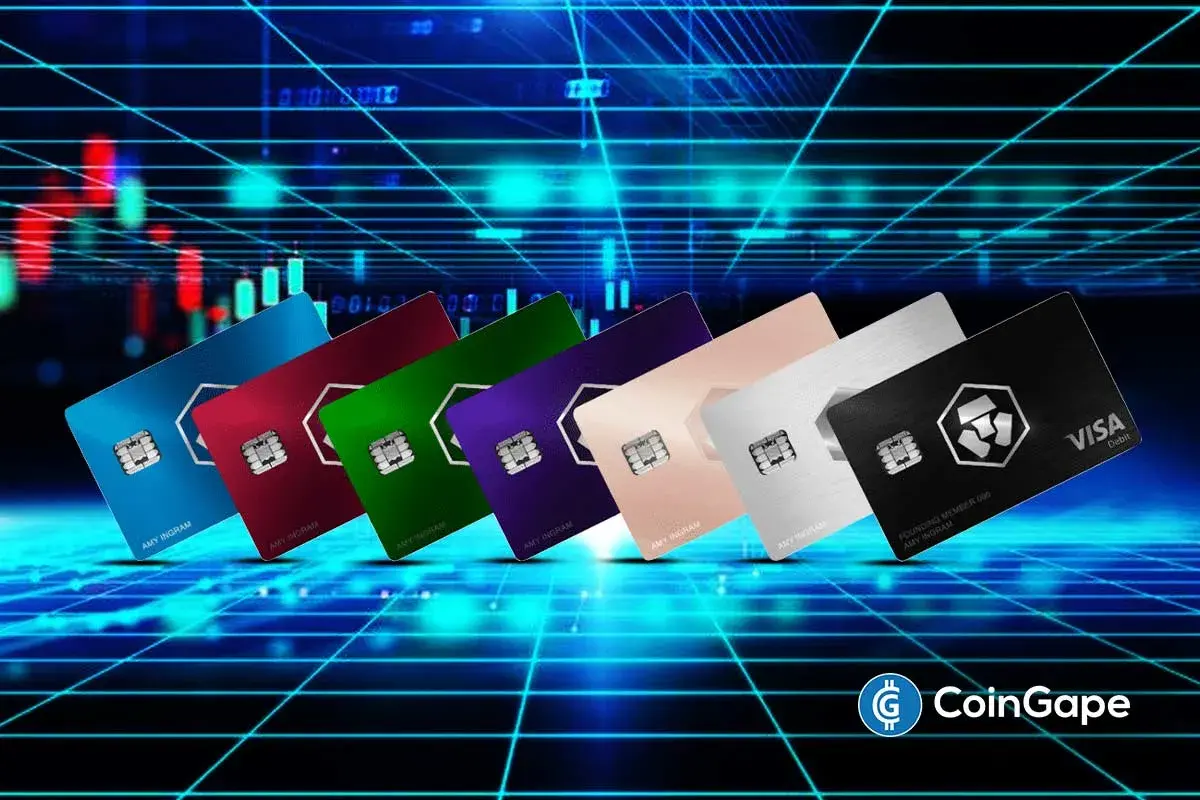
Best Crypto Cards (Credit, Debit & Prepaid) in 2025

Updated: December 4, 2025
Written by Neeti Ash
Fact-Checked By Coingapestaff
Fact Checked
best crypto cards

The article breaks down the best crypto credit, debit, and prepaid cards for 2025. This comprehensive list contains all active crypto cards that are popular, reputable, and user-friendly. As the advent of crypto cards is evolving, the good card isn’t defined by hefty rewards or simply an entry card for Web3. Users now seek low FX and conversion fees, reliable solvency, transparent limits, flexible custody options, and smooth payment procedures.

Keeping all these requirements in mind, I have curated a ranking criterion wherein I have taken into account factors such as staking requirements, FX spreads, conversion fees, solvency, ATM limits, custody structure, reward liquidity, and overall user experience. Overall, this article has an expert-driven analysis that will help users understand the top crypto cards better.

You can view the full evaluation framework below.

Why trust CoinGape

  • Verified Crypto Cards
  • Supported Cryptocurrencies
  • Transaction Fees Rewards

CoinGape has covered the cryptocurrency industry since 2017, aiming to provide informative insights to our readers. Our journalists and analysts bring years of experience in market analysis and blockchain technology to ensure factual accuracy and balanced reporting. You can read more about our review methodology to get more information on the ratings below. In order to provide our readers with accurate and unfiltered information, we work hard to uphold the highest standards for our editorial policy.

Investment disclaimer
The content reflects the author’s personal views and current market conditions. Please conduct your own research before investing in cryptocurrencies, as neither the author nor the publication is responsible for any financial losses.
Ad Disclosure
The content reflects the author’s personal views and current market conditions. Please conduct your own research before investing in cryptocurrencies, as neither the author nor the publication is responsible for any financial losses.

Cryptocurrency Credit and Debit Cards List

Use filters or compare projects to choose the best Credit and Debit Cards for you.

gemini card
★ ★ ★ ★
CoinGape Ratings: 4.6
CoinGape's ratings are determined by our editorial team. The scoring formula incorporates coverage options, customer experience, customizability, cost and more.

Gemini

Best for most spenders
Mastercard
Annual Fee None APR 17.24 - 29.24% Welcome Bonus

$200

    • Instant crypto rewards paid directly into Gemini account
    • No annual or foreign transaction fees worldwide
    • Earn up to 4% back in crypto daily
etherfi cash card
★ ★ ★ ★
CoinGape Ratings: 4.3
CoinGape's ratings are determined by our editorial team. The scoring formula incorporates coverage options, customer experience, customizability, cost and more.

EtherFi Cash Card

Best for DeFi users
Visa
Annual Fee 1% (FX fees) APR 7.2% -9.8% Welcome Bonus

No Signup bonus

    • DeFi-native card with non-custodial wallet architecture
    • Earn up to 3% crypto cashback by tier
    • Exclusive crypto lounges and premium VIP perks
Crypto.com Visa card
★ ★ ★ ★
CoinGape Ratings: 4.4
CoinGape's ratings are determined by our editorial team. The scoring formula incorporates coverage options, customer experience, customizability, cost and more.

Crypto.com Visa Card

Best for Travellers & Staking
Visa
Annual Fee 0.2% - 2% (FX fees based on region) APR - Welcome Bonus

$100 - $2,500 (tier based)

    • Earn up to 5% CRO cashback by staking
    • Subscription rebates and Priority Pass lounge access
    • Supports 100+ cryptocurrencies with global Visa acceptance
Nexo card
★ ★ ★ ★
CoinGape Ratings: 4
CoinGape's ratings are determined by our editorial team. The scoring formula incorporates coverage options, customer experience, customizability, cost and more.

Nexo card

Best for No-Stake cashback
Mastercard
Annual Fee 0.2% - 2% APR 0% Welcome Bonus

No Signup bonus

    • Earn crypto cashback without staking any tokens
    • No annual, monthly, or inactivity fees ever
    • Strong app controls with virtual and metal cards
BitPay card
★ ★ ★
CoinGape Ratings: 3.7
CoinGape's ratings are determined by our editorial team. The scoring formula incorporates coverage options, customer experience, customizability, cost and more.

BitPay Card

Best for Crypto-Fiat Spending
Mastercard
Annual Fee 1% deposit fee & 3% Fx APR - Welcome Bonus

No Signup Bonus

    • Spend crypto instantly with automatic fiat conversion
    • Supports many cryptocurrencies with simple wallet funding
    • No annual fee, clean and easy app
Coinbase Card
★ ★ ★ ★
CoinGape Ratings: 4.1
CoinGape's ratings are determined by our editorial team. The scoring formula incorporates coverage options, customer experience, customizability, cost and more.

Coinbase Visa card

Best for BTC Rewards
Visa
Annual Fee 2.49% Conversion fees APR - Welcome Bonus

Up to 4% back on purchases (U.S. only)

    • Up to 4% Bitcoin rewards for active users
    • Deep integration with Coinbase wallet and exchange
    • Instant BTC rewards with optional Coinbase One upgrades
binance card
★ ★ ★
CoinGape Ratings: 3.9
CoinGape's ratings are determined by our editorial team. The scoring formula incorporates coverage options, customer experience, customizability, cost and more.

Binance Card

Best for BNB Spenders
Visa
Annual Fee 1-2% Fx APR - Welcome Bonus

$100 in voucher

    • Earn up to 8% cashback in BNB
    • Seamless integration with Binance app and wallet
    • No annual fee, global Visa acceptance
wirex card
★ ★ ★
CoinGape Ratings: 3.8
CoinGape's ratings are determined by our editorial team. The scoring formula incorporates coverage options, customer experience, customizability, cost and more.

Wirex card

Best for Multi-Currency Users
Mastercard
Annual Fee €9.99 - €29.99/ month APR - Welcome Bonus

€300

    • Earn up to 8% Cryptoback in WXT
    • Unified app for fiat and crypto wallets
    • No FX fees with contactless worldwide spending
Gnosis Pay Card
★ ★ ★ ★
CoinGape Ratings: 4.0
CoinGape's ratings are determined by our editorial team. The scoring formula incorporates coverage options, customer experience, customizability, cost and more.

Gnosis Pay card

Visa
Annual Fee 2% (ATM fees beyond the limit) APR - Welcome Bonus

No Signup Offer

    • Fully self-custodial card with Safe wallet control
    • Zero FX fees and zero conversion spreads
    • Earn up to 5% cashback in GNO
Zypto card
★ ★ ★
CoinGape Ratings: 3.8
CoinGape's ratings are determined by our editorial team. The scoring formula incorporates coverage options, customer experience, customizability, cost and more.

Zypto Card

Visa
Annual Fee 1.75% (Fx fees) APR - Welcome Bonus

No Signup Offer

    • Spend 100+ cryptocurrencies anywhere Visa is accepted
    • High monthly limits for heavy crypto spenders
    • Physical and virtual cards with instant conversion
kast card
★ ★ ★
CoinGape Ratings: 3.6
CoinGape's ratings are determined by our editorial team. The scoring formula incorporates coverage options, customer experience, customizability, cost and more.

KAST card

Visa
Annual Fee $20 APR - Welcome Bonus

$25 - $50

    • Spend USDC and USDT globally via Visa
    • Earn up to 12% cashback with SOL staking
    • Multi-chain support across Solana and Ethereum
ByBit Card
★ ★ ★
CoinGape Ratings: 3.9
CoinGape's ratings are determined by our editorial team. The scoring formula incorporates coverage options, customer experience, customizability, cost and more.

Bybit Mastercard Card

Mastercard
Annual Fee 0.9% (crypto conversion fees) APR - Welcome Bonus

$10

    • Instant crypto-to-fiat spending via One-Click Sell
    • Works with Apple Pay and Google Pay worldwide
    • Works with Apple Pay and Google Pay worldwide

Top Crypto Cards Reviewed In Detail

gemini-card

Gemini

The Gemini Card is a crypto credit card globally available and was introduced by Gemini Trust Company in 2021. It specializes in no-stakes rewards that are instantly transferred to the Gemini account of a user. The card is compatible with over 70 currencies, including such significant assets as BTC, ETH, and USDT. To be eligible, one must have standard KYC verification with a government ID, and the card is accepted in 60+ countries, such as the U.S. and Europe.

Being a Mastercard, it has wide merchant acceptance. The card does not have an annual fee, and some ATM and FX fees could be charged based on the area, though the structure is usually simple. Security is also provided with 2FA, instant freeze, and conventional Mastercard fraud protection. The card supports Apple Pay and Google Pay, and allows users to create virtual cards within the app, as well as get access to a lounge with specific tiers, high-end card design, and the ability to track expenses inside the app. Gemini Card is the most appropriate option, as it offers users a simple, no-stakes crypto rewards card with a broad asset coverage and high international utility.

Author Note

In my review, I discovered that Gemini has very low fees: no annual or foreign transaction fees, which is unusual for a cryptocurrency rewards card.

The advantages are significant, particularly in high-usage categories such as gas, transportation, and dining, and the 50 or more crypto options provide excellent flexibility. During my research, I discovered that this card is outstanding in terms of security because the number is not printed on the physical card; instead, you can access it via the app/web, which is a smart idea. On the downside, the APR on carry balances is higher and thus better suited to those who pay it off at all times. Overall, this is a simple, straightforward crypto rewards card.

Fee Details

Annual Fee

None

Foreign transaction fee

None

Cash advance fee

$10 or 3%, whichever is greater

Late payment fee

Up to $8

Returned payment fee

Up to $35

Magnum Standard purchase APR

18.99%-34.99% (depends on creditworthiness)

Pros
CONS
  • Instant crypto rewards into the Gemini account
  • No annual or foreign transaction fee
  • Extremely broad crypto reward options
  • Strong security (no card number on the card)
  • Good for U.S./EU daily spenders
  • There are no lounge or travel perks
  • Monthly limits on top reward categories

Rewards

etherfi-cash-card

EtherFi Cash Card

Best for DeFi users

This DeFi-native credit card was released in 2024, aimed at users who are interested in on-chain benefits and crypto payouts with low friction. The card also seems to serve ETH, wETH, BTC, wBTC, and a wider range of crypto assets, but the number varies depending on the region. The sheet indicates extensive global access, and the eligibility is standard KYC. The card is based on the Visa network and is focused on rapid crypto-native settlement with the integration of Apple Pay, Google Pay, and virtual card tools. Some of these fees include conversion and issuance fees and may be regional and need to be checked since some of the sheet entries seem to be placebos.

EtherFi focuses on non-custodial or DeFi-related functionality, better app controls, and premium experiences for the highest-level users, including an option for a metal card. Although more intensive rewards are not achieved via staking, the card gives significant emphasis to Ethereum ecosystem engagement and high-payout payouts.

Author Note

In my research, I discovered EtherFi card is unique in the sense that it has a DeFi-native design: non-custodial wallet architecture, non-stop borrowing at a low interest rate, and tiered cashback without necessarily locking tons of tokens. The FX and ATM charges are quite fair as a globally usable card, particularly taking into consideration the DeFi value. The lounge entry is not simply a free airport lounge but more boutique (cryptocurrency events; not all lounges covered by DragonPass are entirely free), hence that is more a high-end feature than a minimum one. This card is the best choice for the crypto user to connect the DeFi income and expenditure, not sacrificing flexibility.

Fee Details

Foreign exchange (FX) fee:

1% on non-USD transactions

ATM withdrawal fee:

2% on all ATM withdrawals

Additional virtual card fee (beyond free allocation):

$0.20 each for additional virtual cards

Additional physical card fee (beyond free tier):

$20 per extra physical card

Interest on borrowing (if applicable):

4% APY (continuously compounding) for borrowed funds

Pros
CONS
  • DeFi-focused architecture, non-custodial elements
  • Low on-chain APY borrowing model
  • Good tier-based rewards (up to 3%)
  • Crypto lounge/event perks
  • Strong ETH ecosystem integration
  • FX and ATM fees are at a moderate level
  • There may be variations of tier perks in different regions
  • Not being a DeFi beginner, it's not suitable for those who have no idea

Rewards

Nexo-card

Nexo card

Nexo Card is a crypto-secured debit card that was launched in 2022 and is based on the Mastercard network. It is accessible to a great extent throughout the European market and does not require any staking to receive immediate crypto rewards. The card supports the main assets, including BTC, ETH, USDC, and others, although the number of actively supported ones depends on the area. Basic KYC and identity checks are mandatory. The card does not require any annual fee, although conversion or ATM charges may incur some charges depending on the type of transaction. Account tier and collateral settings within the Nexo ecosystem are the determinants of spending limits.

With the Nexo app, users can use powerful settings, such as instant freeze, virtual cards, spend analytics, and security features, such as 2FA. The card is made in a metal version, which gives it an upscale look. Nexo Card is perfect when one requires simple instant rewards, automated fiat settlement at the point of payment, and powerful financial controls via the app.

Author’s note

About Nexo card, it offers a highly transparent rewards-to-fee ratio, particularly to users in Europe. In my research, I discovered that the Nexo card does not charge a recurring fee (monthly or yearly), which is also advantageous, and ATM withdrawal limits based on user status help to reduce costs with frequent use. The FX charges are, however, high, particularly when spending outside the EEA, and the weekend charge increases the expense of cross-border usage. In addition, when you use crypto directly, the conversion spread may cannibalize your cashback. Essentially, it is ideal in instances where the user is interested in cash-type crypto rewards but most applicable in the case where the user spends mostly in the currency of their card or can remain within the free ATM limits.

Fee Details

Annual Fee:

No monthly, annual, or inactivity fee.

ATM withdrawals:

Free up to a monthly limit (based on loyalty tier), then 2% per withdrawal (minimum €1.99/£1.99).

FX (foreign exchange) fees:
  • 0.2% for EEA / UK / Switzerland currencies on weekdays.
  • 2% for non-EEA / UK / CH currencies on weekdays.
  • Additional +0.5% on weekends for all FX conversions.
Crypto conversion (when spending in crypto):

There’s a “spread” on conversion; not a fixed fee, which means you pay based on market prices.

Pros
CONS
  • There are no annual or inactivity fees
  • Cashback is available without staking
  • There is an option of a metal card
  • Great app controls and virtual cards
  • ATM limits are quite generous at higher loyalty tiers
  • FX fees are high outside the EEA
  • There is a weekend FX surcharge
  • Conversion spreads can decrease your rewards

Rewards

BitPay-card

BitPay Card

The card offered by BitPay is straightforward and practical: users can convert their crypto to fiat without obstacles and use it like any other Visa debit card. The fact that it is a debit-style card means there is no credit line; one simply spends the amount that they have loaded into a BitPay wallet. It has the strength of having wide token support that allows it to be flexible when funding the card with different cryptocurrencies. The BitPay application is operational and simple, with simple controls to freeze the card or check the balances. The card is expected to be used by those who would enjoy using their crypto in real life in a clean and no-frills experience, yet with the benefit of having a custodial experience.

Author's Note

BitPay Card is the easiest crypto debit card to use in daily life. It does not promote staking, levels of loyalty, or token-based rewards, as other crypto cards do. Rather, it is centered on easy conversion of crypto-to-fiat and cross-blockchain support. The cashback model is restricted to merchants, which is why the opportunity to receive rewards is less than with other cards as Gemini or Crypto.com. Nevertheless, to anyone who desires predictable charges, extensive crypto support, and convenient functionality, particularly U.S.-based users, BitPay remains a dependable and straightforward alternative.

Fee Details

Annual Fees:

No annual fee

Load Fees:

Load fees may apply depending on the funding source.

ATM Fees:

ATM fees vary by issuer/region.

FX Fees:

Upto 3% FX fees apply for foreign transactions. And the crypto conversion spread is applied when loading the file.

Pros
CONS
  • It's very simple to operate
  • Support for a wide range of tokens
  • There is no annual fee
  • Clean UX & simple app tools
  • There is no decent rewards program implemented
  • FX fees + spread could become quite large
  • No premium perks, no travel benefits

Rewards

Coinbase-Card

Coinbase Visa card

The Coinbase card experience is closely integrated with its exchange and wallet platform, which makes it very convenient in case you areae Coinbase user. The app gives a single dashboard to manage your crypto balances, your transaction history, and to control your card. They also have a more advanced level of Coinbase One, which provides additional services, although even at the entry level, the card is firmly integrated into the existing compliance and security system of Coinbase. Otherwise, user experience is usually easy, but the rewards system (which is also outside the scope of this paper) is closely tied to the level of crypto you have in your Coinbase account, making it more appealing to those who use the platform regularly.

Author's Note

While researching the Coinbase Card, I discovered that this card is ideal for users who have previously trusted and used Coinbase. The reward system of BTC-only is more attractive to long-term accumulators of Bitcoin, and the tiered reward system depends on the quantity of assets acquired makes them engage more with the platform. Used together with Coinbase One, users will have the option of unlocking enhanced rewards, discounts, and priority support, which makes it highly useful as a tool for active traders. Non-Coinbase users or users who do not want to keep a minimum in their portfolio might have a lower effective reward rate, though, compared to other options such as Gemini or Crypto.com. Nevertheless, the UX, security, and international brand image of the card make it one of the most reliable ones.

Fees Details

Annual Fee:

No annual fee for the standard card

Optional Subscription:

Coinbase One membership has a monthly subscription fee (optional)

FX Spreads:

FX spreads apply to some crypto conversions.

Regional ATM Fees:

ATM fees depend on the region

Staking:

No staking requirements for basic rewards; higher tiers unlocked by assets held.

Pros
CONS
  • BTC-only rewards, great for Bitcoin-focused users
  • Great UX and card management
  • Coinbase One further extends the rewards
  • Reward crediting is done instantly
  • If lower tiers are utilised, rewards will be minimal
  • FX spread is applicable
  • Rewards are very closely linked to platform usage and holdings

Rewards

binance-card

Binance Visa Card

The card offered by Binance fits the overall exchange ecosystem and is particularly appealing to holders of BNB. In the Binance app, it is easy to manage your card: you check the cashback received, limit it, freeze or unfreeze the card. Since the card is a component of the global infrastructure of Binance, it is accepted by most people and can be useful among those who already use Binance as a trading or staking platform. It is also, however, as with all exchange-linked cards, traded off, as, depending on Binance custody, you do not have self-custodial control of money locked in the card system.

Author's Note

Similar to Coinbase card, Binance Visa Card also gives extra benefit to loyal BNB user. Owning BNB allows you to earn cashback of up to 8%, but this requires a large BNB balance. The fact that there is no annual maintenance fee is very appealing, but the conversion fee of up to 0.9% on transactions will eat into your actual returns, especially at low cashback levels. As a result, the actual net reward of the card is heavily reliant on the amount of BNB you hold. For frequent spenders who already have capital in Binance, this is a very efficient card; for casual users or those who do not want to hold BNB, the value is less.

Fee Details

Annual Fee:

No Binance-charged annual / maintenance fee.

Conversion Fee:

Up to 1% crypto conversion fees.

Purchase Fee

Purchasing cryptocurrency with a credit or debit card incurs a 2% fee.

FX Fees

FX fees are 1-2%, depending on the region.

Pros
CONS
  • BTC-only rewards, great for Bitcoin-focused users
  • Great UX and card management
  • Coinbase One further extends the rewards
  • Reward crediting is done instantly
  • If lower tiers are utilized, rewards will be minimal.
  • FX spread is applicable.
  • Rewards are very closely linked to platform usage and holdings.

Rewards

wirex-card

Wirex card

Wirex card proposes a hybrid way of providing both traditional and crypto-native financial services in a format that is simple to use. Their app is highly developed and allows users to have a variety of fiat and crypto wallets, make virtual cards, and set spending limitations. Card payment allows contactless payment, and the system provides acceptable flexibility to use in various currencies. Wirex is a viable and well-developed option for users who desire a more mainstream crypto-card experience, but with certain staking-like benefits through its own native token. The levels of subscriptions are complex, but with substantial reward incentives for the active users.

Author's Note

According to the findings of my thorough research, Wirex is very adaptable and works well in the hands of users willing to stake WXT or pay a small subscription fee in exchange for more lucrative benefits. One of its highlights is the Cryptoback program, which provides real cryptocurrency rewards as well as an instant reward to your app (Wirex). To maximize rewards (8%), one may need to tie up a large amount of WXT, which is risky. The monthly subscription tiers complicate matters, and unless you spend enough money each month, the cost may not be justified by the benefits. It is ideal for power users who already use Wirex and would like to receive a second dip between receiving and spending.

Fees Details

Annual Fee:

No annual fee

Subscription Plans:

Standard (free), Premium (~€9.99), Elite (~€29.99), depending on plan.

ATM withdrawals:

free up to a certain monthly limit (e.g., up to $200)

FX Charges:

No foreign-exchange (FX) fee reported in Wirex’s terms for card usage.

Conversion Fees:

Crypto-to-fiat or conversion: depends on app/region, possible commission.

Pros
CONS
  • Up to 8% Cryptoback with WXT staking
  • Excellent worldwide use
  • Free ATM up to a certain monthly limit
  • Good integration of fiat and crypto wallets
  • Subscription tiers could be difficult to understand
  • For high rewards, WXT needs to be locked up
  • Conversion fees depend on the region

Rewards

Gnosis-Pay-Card

Gnosis Pay Card

Gnosis Pay is among the self-sovereign crypto cards that are available in the market: it is attached to a self-custodial Safe, which means that you have control over your crypto until you choose to spend it. It is perfect in the case of users of Web3-native, where security and on-chain autonomy are considered paramount. The card is embedded into the Gnosis ecosystem, allowing the usage of the card both virtually and physically. It does not have the immediate plug-and-play of custodial cards, but because of its philosophical compatibility with decentralization, it is a strong one. It is especially suitable when one wants a high level of power, is a member of a DAO, or just wants to have access to their private keys and not entrust them to an exchange.

Author's Note

Gnosis Pay is among the most imaginative crypto cards in this group, self-custodial with zero conversion or FX fees and rewards that are paid out in GNO. Any person who cares about security and has the desire to maintain the possession of their crypto (as opposed to having a centralized platform holding it), this card is a highly competitive alternative. The cashback levels are fair, and the OG NFT boost is a new “loyal user” feature. At that, the necessity to possess GNO might be an obstacle to certain people, and the issuance fee is not a trifle (however, it is usually waived). Moreover, since you spend out of a self-custodial wallet, there is a burden on the user of gas and top-ups. Perfect with Web3 natives, less than ideal with someone new or in need of a purely fiat-converted spend card.

Fees Details

Annual Fee:

No recurring monthly or annual fee.

Issuance Fee:

One-time issuance fee: €30.23, but often waived via referral/promotions.

FX Fees:

No markup on currency conversion

ATM withdrawal Fees:

Free up to €200 (or 5 withdrawals) / month; beyond that: 2% fee.

Crypto-to-fiat conversion:

0% commission/spread when spending (self-custodial model).

Pros
CONS
  • Completely self-custodial (assets are still in your Safe)
  • Without FX markup
  • No conversion spread
  • Up to 5% cashback
  • Weekly rewards and strongly decentralised ethos
  • For high rewards, only GNO
  • Issuance fee for new card.
  • Gas/top-up inconvenience for non-technical users.

Rewards

Zypto-card

Zypto Card

Zypto card is a crypto-to-fiat spending card that accepts over 100 cryptocurrencies. The card is available in both physical and virtual formats, allowing global users to take advantage of the benefits anywhere Visa and Mastercard are accepted. It has aimed to assist users with higher spending ratios by providing a higher spending limit and easy funding from external wallets, all while providing a seamless app experience. Card users can monitor balances, freeze/unfreeze cards, and manage multiple virtual cards. It has globally accepted method to use crypto in real-world payments without relying on centralized exchanges.

Author's Note

After reviewing the details of the Zypto card, I discovered that it has a high spending limit, making it suitable for both power and regular users. The option of physical or virtual cards adds value to Zypto cards. However, the 3% conversion fee appears high, but when compared to other benefits such as global acceptance, flexible funding options, and others, it is a strong contender for the best cryptocurrency cards. Rewards segments require more attention, and some are in the development stage.

Fees Details

Annual Fees:

No monthly or annual fees.

Physical card issuance charges:

$50 (activation and shipping included).

FX Charges:

Up to 1.75% on foreign transactions as FX fees.

Card transaction fees:

$0.30 per POS/ online transaction. Virtual cards have lower fees depending on type (single load – reloadable).

Pros
CONS
  • Over $175,000 to 1 million monthly spending limit is ideal for high spenders.
  • Multiple options from physical, virtual reloadable, virtual single load are available.
  • Instant crypto-to-fiat conversion is available.
  • Compatible with Apple and Google Pay.
  • 3% conversion fees is higher than competitors.
  • Rewards are comparatively less than other.
  • 1.75% fx fees on non-USD transactions can add up for international users.

Rewards

Crypto.com-Visa-card

Crypto.com Visa Card

Crypto.com Visa Card was released in 2018 and is still standing as the most popular crypto card. The card is issued through regional banking partners and works on the Visa network. It also supports 100+ cryptocurrencies, such as BTC, ETH, and USDC. To be eligible, one needs to undergo complete KYC, and the card is offered in various regions across the world.

The card has no annual fee, but fees such as issuance, ATM usage, FX, and crypto conversion vary by region and by card tier. Users who are interested in higher card benefits are required to stake CRO tokens. The official website also states that rewards and rebates differ significantly depending on the staked amount.

The card integrates with Apple Pay and Google Pay, supports virtual cards, and provides subscription rebates and various merchant perks for higher tiers. The security features include 2FA, real-time freezing, insurance cover, and robust control in the form of apps. On the whole, the Crypto.com Visa Card is the most suitable option for users who are ready to invest in CRO and earn the most benefits and high-quality services.

Author's Note

In my research, Visa Card One is among the most functional crypto cards in the market, Crypto.com Visa card continues to be preferred by users who will deposit the CRO. The CRO cashback rates are high, and the fee system, especially the ATM and foreign exchange fees, are at the lower levels, which adds value to frequent travelers unless controlled. The lounge is an actual privilege, and it is tiered and invitation-only, meaning that it is not accessible everywhere.

The annual inactivity fee should also be a cause for concern. Some users have complained about being charged despite receiving occasional benefits such as access to a lounge through the use of the card. Benefits power users who can maximize stake and gains; not so great for casual spenders.

Fee Details

Debit load fee:

Credit load using a debit card: 1% fee.

Credit load fee:

Card load using a credit card: 2.99%.

ATM withdrawal fee:

2% on amounts above the monthly free ATM limit.

Foreign transaction fees (non-EUR / GBP):

0.2% for transactions within the EU & UK.

2.0% for transactions outside the EU & UK.

Inactivity fee:

$4.95 per month after 12 months of no card transactions.

Pros
CONS
  • Extremely high rewards for staked tiers.
  • Access to the lounge (Priority Pass).
  • Subscription rebates (Netflix/Spotify).
  • Worldwide coverage, great UX.
  • Many crypto assets are supported.
  • High tiers need a significant CRO stake.
  • After 12 months, an inactivity fee is charged.
  • Rewards vary heavily depending on the region.

Rewards

kast-card

KAST Card

The KAST crypto-first prepaid card (Visa) is an issuance of KAST that enables people to use stablecoins such as USDC and USDT to spend all over the world. It accommodates virtual and physical cards, and there are leveled K Card and Solana Card, which provide the flexibility for any type of user. The design of the card heavily motivates the stakeholders of SOL through the validator of KAST itself, and obtaining bonus cashback and points. It has KYC requirements, and its card supports on-chain flows, but operates on a custodial wallet model. This application embraces in-app controls, 2FA, and one-second creation of cards, and allows users to deposit using various blockchains such as Solana and Ethereum. Both stablecoin spending and staking-based benefits will be available to cardholders, which is why both active crypto users and SOL stakers will be attracted. On the transparency pages prepared by KAST itself, it is stated that there are no pay-in-the-dark interest fees, since the purchases do not charge an APR, since it is not a credit product.

Author's Note

According to my scrupulous research, the KAST Card is one of the solutions that can be useful to crypto-savvy users, particularly those with SOL. It has a highly generous rewards structure at the higher levels, and the staking aspect provides it with a rare advantage. Nevertheless, premium/metal cards are very expensive, which makes them only appropriate for those users who will spend a lot of money or bet heavily. The custodial setup and that the rewards are issued in points (which can be converted into tokens) are somewhat risky and complex. It is very attractive to the stablecoin spenders and SOL stakers, and the easier lower tiers are likely to be more convenient among the casual users.

Fees

Annual fee:

The Standard card is free (or up to about $20 by region), while Premium or metal tiers start at $1,000 and can go as high as $10,000 for top-tier cards.

ATM withdrawal:

$3 + 2% per withdrawal (USD), non-USD ATMs incur $3 + 2% + FX markup.

Foreign Exchange fee:

2% FX fee on non-USD transactions.

Declined transaction fee:

Up to $0.50 per declined payment.

Low-amount fee (for non-USD transactions below $25):

$0.20

Pros
CONS
  • Very high potential cashback (4–12%).
  • Staking SOL increases the reward multipliers.
  • The multi-chain function (Solana and Ethereum) is supported.
  • Good for stablecoin spending.
  • One premium tier may cost $1,000–$10,000.
  • Rewards are given in points, not ​‍​‌‍​‍‌​‍​‌‍​‍‌tokens.

Rewards

ByBit-Card

Bybit Mastercard Card

The crypto card is a prepaid Mastercard that works directly with a Bybit exchange and will enable owners to spend an enormous number of cryptocurrencies (such as USDT, USDC, BTC, ETH, XRP) by converting them on the fly to fiat. The card requires a Bybit account and KYC (standard identity verification) in order to be used; after it is approved, the card may be used in both physical and online transactions. Apple Pay and Google Pay are supported on the card, and there are no differences in the amount one can spend with the physical or virtual card. To the crypto users already on Bybit, this card will make spending easier, since it builds on the Bybit One-Click Sell feature, which allows the immediate conversion of crypto into the required fiat automatically at the point of purchase. It is accessible internationally in most locations (but not all), and it particularly resonates well with Bybit clients who desire to use their crypto assets to pay in real life without necessarily selling the assets manually.

Author's Note

According to my findings, the Bybit Card is a good choice for those who are already active Bybit users because it uses Bybit liquidity and One-Click Sell functionality, making the process of spending cryptocurrency less stressful. The returns are good (up to 10% in terms of points), but conversion and foreign exchange costs will deplete this value unless careful decisions are made. It is extremely useful for frequent spenders who want to use USDT/USDC without having to worry about conversion on demand. However, for a less serious user or a non-target customer in Bybit’s primary markets, the fee structure and redemption mechanisms must be reviewed. The lack of an annual fee (in many areas) is a significant advantage, but potential users should simulate spending patterns to estimate net rewards after charges.

Fees Details

Crypto Conversion Fee:

~0.9% on non-fiat-funding transactions (i.e., when spending using crypto from the Bybit wallet).

Foreign Exchange / FX Fee:

Varies by region — e.g., 0.5% on top of Mastercard’s FX rate in EEA/CH.

ATM Withdrawal Fee:

2% on withdrawals exceeding a threshold (in EEA, after first €100/month)

Card Issuance / Replacement Fee:

Virtual card issuance is free; physical card costs (e.g., €5–€10 for replacement, depending on region).

Chargeback Investigation Fee:

~US$50 (or equivalent in local currency) per investigation.

Pros
CONS
  • Up to 10% promotional rewards.
  • One-click sell and smooth conversion.
  • Strong compatibility with Apple pay/Google pay.
  • Requires Bybit ecosystem.
  • Rewards are point based.

Rewards

How Crypto Cards Work

Cryptocards operate as ordinary Visa or Mastercards (debit or credit). You spend your crypto instantly, converting it into fiat at the exchange rate, and when you purchase an eligible item, you receive crypto rewards in the form of tokens or stablecoins. The entire action resembles the interaction with a conventional card, except for the crypto in the background.

1. Load crypto to the card wallet

It transfers Bitcoin, Ethereum, USDT, or any other supported cryptocurrencies to your funding wallet on your card via an exchange or app.

2. Auto-conversion to fiat at purchase

The issuer then immediately turns the necessary amount of crypto into USD, EUR, or other local currency by tapping or swiping the card.

3. Earn crypto rewards

Most of the cards offer cashback in crypto, whether in a fixed token (CRO or BTC) or in a token of the user.

4. Manage everything in the app

The transactions can be followed, the card can be frozen or unfrozen, reward tokens can be changed, and the crypto balance can be replenished via the corresponding platform.

Valuation Framework: Key Factors We Consider

We base our evaluation system on 12 factors, organised under three pillars, which are rated individually using a weighted model. These enable us to be sensitised to volatility exposure, liquidity friction, or custodial trade-offs that would be unmeasurable by simpler models.

1. Rewards & Fees (Weight: 45%)

1. Reward Quality & Net Effective Rate

Checks the actual cashback, post-spreads, FX markups, caps, staking conditions, reward token volatility, and regional charges are taken into consideration.

2. Reward Token Flexibility

Checks the ability of users to select their payout asset, diversify rewards, or leave them in a single token (e.g., BNB, CRO, BTC).

3. Cost of Rewards (Staking Burden & Lock-In Risk)

Evaluates staking, lock-ins or token balances needed to earn more rewards. Increased weight is punished because of user risk, opportunity cost and volatility of tokens.

4. FX & ATM Fee Friction Index

A compound rating on transparency, the level of markups, withdrawal restrictions, and the predictability of expenditure expenses in the cross-border.

5. Annual / Subscription Cost-to-Benefit Ratio

Represents the value of card fees (monthly, annually, metal appraisals) against the actual worth they provide in the real world.

2. Accessibility & Security (Weight: 30%)

6. Geographic Reach & Onboarding Barriers

Assesses the complexity of KYC, location coverage, acceptance of international travellers, and provision of services.

7. Asset Coverage & Spendability Score

Indicates token diversity (and stability), and the effectiveness of crypto-to-fiat settlement.

8. Custody Risk & User Asset Autonomy

Determines the self-custodial control, centralised risk or hybrid approach of the users.

9. Platform Solvency & Operational Trustworthiness

Ratings on regulative stance, transparency of solvency, past shutdown risks and safeguarding of its customers.

3. User Experience (Weight: 25%)

10. App Quality & Financial Controls

Reviews virtual cards, freeze tools, spend breakdowns, real-time alerts, and configurability.

11. Settlement & Reward Payout Latency

Instant (versus daily versus weekly) reward delivery has significant impacts on user perceived value.

12. Perks Ecosystem & Real-Life Usability

Values access to the lounge, concierge services, subscription rebates and merchant acceptance.

Rating Methodology Used for the Cards

Each card was rated against each of the 12 factors using the above weightings.

The final ratings have been normalised to a 5-point scale:

  • 5.0 – 4.6: Outstanding (high, best-in-class)
  • 4.5 – 4.0: Excellent (excellent to the majority of users)
  • 3.9 – 3.5: Good (good with certain limitations)
  • 3.4 – 3.0: Fair (works for niche users)
  • Below 3.0: Weak (not suggested to the majority of users)

How to Choose the Right Crypto Card

Many websites merely list features without providing any guidance to buyers. The following are practical, real-world tips for choosing the right card.

Key Factors To Consider

Region availability: Some cards are only shipped to the United States, the European Union, or Asia Pacific. Before applying, make sure the card works in your country.

Reward currency flexibility: Traders benefit from cards that allow them to choose their reward token.

Spending limits: The amount of money that can be spent and withdrawn on a debit card per day is typically less than the amount that can be withdrawn from a prepaid crypto card.

Supported crypto: Some cards can be used to spend stablecoins only. However, others offer options for multiple currencies, ensuring scalability.

Exchange integration: Another important aspect could be integration with a crypto exchange. This feature allows users to load funds easily and gives them the option to trade while keeping track of the rewards.

KYC/verification (of any kind): This fundamental function can provide authorization for absolute identity or bank-level checks.

Pro Tip: Cards like Crypto.com let you choose payout tokens, ideal for traders optimizing reward value.

Pros and Cons of Crypto Cards

Crypto cards are a combination of the flexibility of traditional payment cards and the advantage of crypto rewards, but with distinct trade-offs of volatility and regulation. The knowledge of the two will aid you in determining whether they will be suitable for your spending patterns.

Pros
CONS
  • Instant conversion from crypto to fiat
  • Global Visa/Mastercard acceptance
  • Crypto cashback on everyday spending
  • Easy app-based management
  • Works for travel without heavy FX fees (depending on issuer)
  • Market volatility affects spending value
  • Custodial wallets require trust in the issuer
  • Possible conversion, withdrawal, or network fees
  • Regulatory restrictions vary by region
  • Potential tax complexity depending on your country

Are Crypto Cards Safe to Use?

The use of crypto cards is typically secure in a controlled issuer, yet speakers have to be aware of custodial risks and compliance needs.

Custodial Wallets

Your cryptocurrency is stored in a hosted wallet under the control of the issuer or partner exchange. They protect private keys, conversion, and fund security with institutional-grade systems.

FDIC-Equivalent Disclaimers

Balances in cryptos are not covered by the FDIC. Nevertheless, licensed fiat may be covered by the FDIC in partnership with U.S.-licensed partners. Read the terms of protection of the issuer.

AML/KYC Compliance Overview

Identity verification is mandatory for most issuers to adhere to the anti-money-laundering laws. This would be safe regulation-wise, but it can restrict anonymous usage.

Tips to Minimize Risk

  • In the card wallet, keep the amount of crypto that you require to spend.
  • Turn on 2FA and biometric authentication.
  • Do not maintain big balances on custodial systems.
  • Get back the unused crypto in your self-custody wallet.

Who Should Not Use a Crypto Card

Crypto cards are not suitable for all people. You might wish to skip them in case you can fit in the following categories:

  • Individuals seeking stable and predictable APRs.
  • Users who do not like custodial wallets or wish to have complete access to private keys.
  • Individuals in the areas where there are high conversion or withdrawal costs.
  • Customers who are fond of old-fashioned cashback credit numbers.
  • Users are not willing to process crypto transactions in terms of tax reporting.

Alternatives to Crypto Cards

In case you do not need crypto cards, the following ones are also strong options:

  • Traditional cashback credit cards: Higher rewards and stable payouts.
  • Stablecoin yield accounts: Earn interest without spending crypto directly.
  • Spending via exchange apps: Pay directly from an exchange wallet when supported.
  • On-chain debit alternatives: Smart-contract-powered payment solutions.
  • Crypto payment processors: Ideal for merchants or freelancers accepting crypto.

Summary: Which Crypto Card Should You Choose?

Issuers are eager to expand their crypto card offerings as more issuers shift toward more open, regulation-friendly reward schemes, and many aggressive reward systems become unsustainable. Users benefit from this transition because it reduces FX spreads, makes cashback less uncertain, improves custody facilities, and reduces lock-in.

In​‍​‌‍​‍‌​‍​‌‍​‍‌ our comprehensive review, we found that it is not one single card that can be called the “best” universally. Each one is the best for a different area:

  • Gemini card is offering maximum rewards and brilliant cashbacks.
  • Whereas, Bybit is globally recognized and provides a crypto-to-spend feature.
  • And for the ones who travel a lot, Zypto offers quick crypto-to-fiat conversion.

However, before selecting a crypto card, I strongly advise you to always check fees, analyze rewards, check the regions where it is available, and consider other important features.

How We Keep This List Updated

The list is regularly updated by removing out-of-date information to ensure that the content is always relevant. My goal with this article is to provide accurate information. Any change in any feature, including fees and rewards, is made as soon as the official website verifies the information.

Frequently Asked Questions

1. What is the best crypto card for beginners?

An easy-to-use crypto card has easy onboarding, low charges, and good fiat integration. Find cards that have user-friendly apps, adaptable top-up, and support for stablecoins to prevent volatility. The pre-paid crypto cards are the popular choice among beginners because they do not require credit checks and have an estimated limit on spending.

2. Which crypto cards are available globally?

There are just a number of issuers operating globally. Licensing regulations restrict the number of crypto cards that can be used in different regions. The crypto debit cards issued by major exchanges with Visa/Mastercard are usually available in the US, EU, UK, and parts of Asia-Pacific. Always verify the regional availability map of the issuer before applying to prevent limitations or unsupported features.

3. How do crypto card rewards work?

Rewards work as cashback, but in crypto. You earn tokens or stablecoins from the issuer every time you make qualified purchases. There are those cards that come with fixed reward tokens, but there are also those cards where you can have a choice. In most instances, rewards are given immediately or monthly, as per the policy of the platform.

4. Do I pay taxes on crypto card rewards?

Tax rules vary by country. In most jurisdictions, crypto rewards have to be regarded as taxable income upon receipt. Besides, there are also capital gains events when spending crypto. To prevent unintended reporting, make sure to check your local tax laws or to seek the services of a professional.

5. Are there prepaid crypto cards without KYC?

The global AML regulations mandate most reputable issuers to have a minimum KYC. The low-limit prepaid cards can probably have minimal verification, but options will be limited. The fewer the supported tokens, the lower the limits, and the limited withdrawal options in case of low-KYC options.

6. What happens if the crypto price drops after spending?

The post-sale adjustments to prices do not have an impact on the purchase made. The transformation rate is fixed at the point when you tap or swipe the card. Nevertheless, volatility affects your remaining crypto holdings; thus, holding stablecoins as spending money can prevent the risk of volatility.

7. Can I withdraw cash from a crypto card at ATMs?

Yes, the majority of crypto cards can be used to withdraw money via ATMs on Visa or Mastercard. At the time of withdrawal, the issuer exchanges your crypto for fiat. Note the ATM fees, conversion spreads, and daily withdrawal limits, which may differ greatly among card providers.

8. Are crypto card rewards worth it vs cashback cards?

Cryptocurrency cards make sense when you appreciate crypto holdings or you would like to get exposure by spending. Traditional cashback credit card offers, however, tend to be more rewarding and consistent with fewer expenses. It is up to you whether you want to have a fixed amount of cash or a possible increase in crypto.

9. Do crypto cards charge conversion fees?

Certain crypto cards impose a small spread of conversion fees on the conversion of crypto to fiat. Some provide free conversions but impose fees at other points, such as withdrawal at ATMs or international transactions. Always contrast fee structures among cards so as to know the actual cost of expenditure.

10. Can you use a crypto card internationally?

Yes, crypto cards are accepted where Visa or Mastercard is accepted in the world. Only mind FX fees, which are different depending on the issuer. Topping up with stablecoins will prevent volatility during travel, and some cards even give low-cost international spending benefits.

11. What is the difference between crypto prepaid and crypto debit cards?

The prepaid crypto cards require you to be loaded in advance and also have predictable limits; hence are the best when it comes to budgeting. Giving you immediate access to your exchange wallet, crypto debit cards automatically convert crypto each time you buy something. Debit cards usually have a higher limit and are easily spendable experiences.
About Author
About Author
Neeti is a crypto content writer with over eight years of industry experience. She has been at the forefront of the blockchain revolution, covering everything from market trends and token launches to regulatory developments. In addition to helping numerous leading crypto platforms and startups grow, she most recently helped create certification programs for the reputable certification platform Blockchain Council. She has been a ghostwriter for Cryptonews - helping them communicate complex Web3 concepts to crypto enthusiasts across the globe. Her diverse portfolio includes technical analysis, listicles, education guides, and white papers—everything written with clarity, authority, and precision. She is a self-taught writer who has, over the years, earned reader credibility by consistency, deep commitment to quality, and research-based insights. Her writing pieces speak volumes of her mission to empower readers with accurate, actionable, and accessible information in the dynamic world of crypto and blockchain.
Disclaimer: The presented content may include the personal opinion of the author and is subject to market condition. Do your market research before investing in cryptocurrencies. The author or the publication does not hold any responsibility for your personal financial loss.