 Claim Bonus
Polkadot Ecosystem Showcases User Protection through Decentralization and DAOs


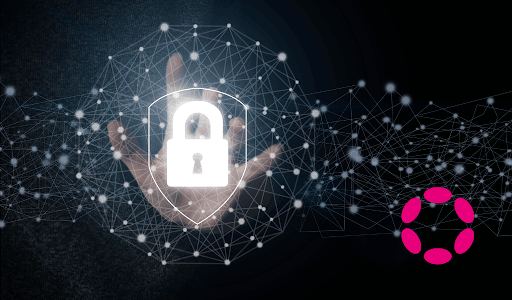
Decentralized autonomous organizations are similar in many ways to traditional organizations. They can be thought of as a group or a community of people, with a common interest, working towards a common goal.
The major difference between a DAO and a traditional organization is that the agreements and decisions they make are written in code rather than on paper. By replacing contracts with smart contracts that can be verified on the blockchain, there’s no longer any need for members of the organization to trust each other, and no requirement for a centralized entity to enforce that contract.
DAOs essentially allow all members of an organization to have a say in the future direction it takes, and on how it spends its internal capital. Decisions are taken by a community vote. Members are eligible to vote based on how many governance tokens they hold, and so the votes of those who hold more tokens carry a greater weight. Tokens bestow governance rights that also include the right to make proposals, which might be on something such as a smart contract upgrade, the launch of a new product or service, or treasury allocation.
In this way, DAO members are both investors and owners of a project, which means everyone shares the common goal of furthering the organization’s progress.
There are hundreds of DAOs in the crypto industry, with some of the most popular hosted on the Polkadot blockchain, which is a leading proponent of decentralization. Recent data from DeepDAO.io shows that Polkadot projects account for five of the top 10 DAOs as ranked by the number of governance token holders. Leading the way is Polkadot itself, which boasts more than 1.1 million DOT token holders who have voting rights, followed by Moonbeam with 385,000. The popular DeFi protocol Uniswap and metaverse platform Decentraland also figure in the rankings, with other Polkadot projects including Kusama with 263,000 token holders, Moonriver with 237,000 and Acala with 169,000.
Top 10 DAOs by Number of Governance Token Holders
Let’s take a look at top 10 Decentralized Autonomous Organizations (#DAO) by the current number of their governance token holders, according to @DeepDAO_io, in order to evaluate their adoption scale. pic.twitter.com/hW805bCaDZ
— TOP 7 ICO | #StandWithUkraine🇺🇦 (@top7ico) November 14, 2022
Polkadot’s DAO is notably one of the most progressive in the industry. Earlier this year, the project introduced a new DAO model that’s designed to give members more freedom in terms of creating governance proposals, while establishing a new committee to assist in the protocol’s governance. At the time, Polkadot founder Gavin Wood stressed the changes are all about improving the DAO model and making it more decentralized.
Wood’s advocacy of decentralization is not new – during a keynote speech at the 2021 Shanghai International Blockchain Week he spelled out his belief that decentralization and security are simply not optional if you’re going to create a truly scalable blockchain ecosystem.
The importance of DAOs cannot be overstated, as they lead to less bureaucracy, more transparency and greater trust. They help to reduce transaction costs and also lead to numerous possibilities in terms of the form an organization can take, enabling micro-communities of just a handful of people, all the way up to mega-organizations with millions of members who can each have a say in its future direction.
DAOs can be likened to cooperatives, which are an alternative to the traditional business model of a board of directors appointed by shareholders. Like cooperatives, DAOs make it possible to bring people together from across jurisdictions, enabled by an internet infrastructure that powers instant communication.
Perhaps the biggest advantage of DAOs is the protection they afford to users. The collapse of the highly centralized cryptocurrency exchange FTX has dominated the crypto headlines over the past week and it’s a powerful lesson about the merits of decentralization. FTX was a CEX that operated a centuries-old business model. It was all about making profit, and it had an economic incentive to under-collateralized and take risks with its user’s capital. The risks it took backfired and when it came to the crunch, FTX was unable to pay back what it owed to its users when they came calling. This only happened because user’s funds were held and controlled by a small group of people at FTX, led by its founder and CEO Sam Bankman-Fried.
Had FTX been led by a DAO, this crash would never have happened. The community of users would have overseen how their funds were invested and used by themselves – and through a democratic process, it’s highly unlikely they’d have taken the same kinds of risks. No one would have had the ability to misuse people’s money in the way that SBF did.
That much was made clear by Gavin Wood himself:
CZ on SBF:“No one can protect [from] a bad player, to be very frank, if a guy is very good at lying, and very good at just pretending to be what he’s not.” Not been paying attention? Protection comes thru decentralisation. That’s the point of web3 and trustless tech. @cz_binance
— Gavin Wood (@gavofyork) November 15, 2022
If FTX was fully decentralized and led by its community, it would never have gone under. That’s because DAOs are driven by values, not by profit, they take actions that are in the best interest of their community for the benefit of everyone.

Why Trust CoinGape
CoinGape has covered the cryptocurrency industry since 2017, aiming to provide informative insights Read more… to our readers. Our journal analysts bring years of experience in market analysis and blockchain technology to ensure factual accuracy and balanced reporting. By following our Editorial Policy, our writers verify every source, fact-check each story, rely on reputable sources, and attribute quotes and media correctly. We also follow a rigorous Review Methodology when evaluating exchanges and tools. From emerging blockchain projects and coin launches to industry events and technical developments, we cover all facets of the digital asset space with unwavering commitment to timely, relevant information.


Delivered every day.
- Insights that move markets
- 100,000 active subscribers
Related Articles
- OpenAI Introduces Smart Contract Benchmark for AI Agents as AI and Crypto Converge
- Goldman Sachs CEO Discloses Bitcoin Stake, Backs Regulatory Push Amid Industry Standoff
- FOMC Minutes Signal Fed Largely Divided Over Rate Cuts, Bitcoin Falls
- BitMine Adds 20,000 ETH As Staked Ethereum Surpasses Half Of Total Supply
- Wells Fargo Predicts Bitcoin Rally on $150 Billion ‘YOLO Trade’ Inflow
- BMNR Stock Outlook: BitMine Price Eyes Rebound Amid ARK Invest, BlackRock, Morgan Stanley Buying
- Why Shiba Inu Price Is Not Rising?
- How XRP Price Will React as Franklin Templeton’s XRPZ ETF Gains Momentum
- Will Sui Price Rally Ahead of Grayscale’s $GSUI ETF Launch Tomorrow?
- Why Pi Network Price Could Skyrocket to $0.20 This Week
- Pi Network Price Beats Bitcoin, Ethereum, XRP as Upgrades and Potential CEX Listing Fuels Demand