CoinGape has been covering cryptocurrency and blockchain markets since 2017. Our editorial team evaluates projects and platforms using structured review frameworks focused on transparency, utility, and risk assessment. You can explore our review methodologies to see how we assess and rate different categories. We maintain clear editorial standards and disclose advertising or affiliate relationships where applicable.
If you had suggested that a business should accept altcoin or stablecoin payments before 2020, most merchants would have dismissed the idea outright. Crypto was widely seen as a speculative asset – highly volatile and surrounded by scams and regulatory uncertainty.
During that period, the entire cryptocurrency market was worth roughly $190 billion, and there was little to no regulatory clarity from the U.S. government or other major economies. For businesses, especially those managing customer payments and cash flow, adopting assets without legal clarity or institutional support felt like an unnecessary risk.
Fast forward to today, and the global crypto market is now valued at approximately $3.2 trillion. Within this, stablecoins alone account for over $300 billion, offering price stability, faster settlements, and global accessibility.
The question is no longer about legitimacy. Instead, it is about how you, as a business owner, can leverage crypto settlements through the best stablecoins payment gateway in 2026.
The demand for crypto based payments apps and faster settlement options is growing rapidly across online services and digital goods platforms. As a result, this shift makes it essential for any online business to understand how altcoins and stablecoins work, and how they can be used effectively for payments and settlements.
An altcoin refers to any cryptocurrency other than Bitcoin. Bitcoin is the most well-known and widely trusted cryptocurrency, but it comes with several trade-offs. High transaction fees, slower settlement time, and limited scalability make it impractical for many day-to-day business payment operations.
To address these limitations, alternative cryptocurrencies were developed with specific improvements in mind. For business payments, networks such as Litecoin, Solana, XRP, and Ethereum layer two solutions offer faster transactions, lower fees, and better scalability.
The primary goal of integrating altcoin payments into business operations is to reduce costs and friction. Customers benefit from lower transaction fees, while businesses gain access to a globally accessible and efficient payment infrastructure.
As the name suggests, a stablecoin is a specifically designed cryptocurrency intended to maintain a stable price. The value of stablecoins is tied to real-world assets such as the U.S. dollar, gold, or silver, which gives them a predictable and relatively stable price range.
For example, if a stablecoin is pegged to the U.S. dollar, one unit of that stablecoin is designed to be equivalent to one U.S. dollar.
The primary objective of stablecoins is price stability. However, not all stablecoins rely solely on fiat currencies like the dollar as collateral. With that context, here are the four primary types of stablecoins.
Fiat-backed Stablecoins
Fiat-backed stablecoins are pegged to traditional fiat currencies such as the U.S. dollar, euro, or British pound. They are backed by reserves held by the issuing company, typically in cash, cash equivalents, or government securities.
These reserves are usually managed by regulated custodians, and independent audits or attestations are conducted periodically to verify that sufficient collateral exists to support the circulating supply.
Common fiat-backed stablecoins used for payment settlements include USDT, USDP, USDC, and PYUSD.
Commodity-backed (PAXG)
Commodity-backed stablecoins are digital tokens backed by real-world physical assets like gold, silver, and other commodities. Each token represents ownership or a claim on a specific quantity of the underlying commodity held in reserve.
PAXG (Pax Gold) is a leading example of gold backed crypto token, where each token represents ownership of one fine troy ounce of London Good Delivery gold stored in professional vaults.
Crypto-backed (DAI)
Crypto-backed stablecoins are cryptocurrencies backed by other digital assets instead of fiat or commodities. To manage volatility, they are typically overcollateralized, meaning more value is locked in crypto than each stablecoin issued.
These stablecoins rely on smart contracts instead of centralized issuers, making them more decentralized. A common example is DAI, which is backed by assets like ETH and tokenized securities.
Algorithmic stablecoins aim to maintain price stability through on-chain algorithms and supply adjustments rather than direct asset backing. These systems expand or contract the token supply based on market demand to keep the peg intact.
However, this model carries significant risk. The collapse of TerraUSD in 2022 demonstrated how algorithmic mechanisms can fail under market stress, leading to rapid loss of the peg and severe capital destruction.
Stablecoins solve both conventional issues like delayed and high transaction fees while providing the price stability required for business payment settlement.
Technically, they mirror the traditional fiat currencies like the U.S. dollar on the Blockchain network, which can be easily expandable and accessible for a worldwide customer base.
Crypto payments settle at internet speed. But the question still remains, what type of crypto to accept for payment settlement? Let’s find out!
Bitcoin laid the foundation for cryptocurrency and overhauled the conventional finance ecosystem. There’s no centralized or private entity control or influence over these true decentralized currencies.
This means BTC or ETH can fluctuate several percentage points within hours. A payment received through an Ethereum payment gateway may lose value before it is settled or converted to fiat.
Volatile cryptocurrencies can be fast, but come with peak-time network congestion and confirmation times, causing delays. Conversely, stablecoins specifically have mechanisms to keep the price stable and predictable.
A 2024 consumer research report by Cryptorefills Labs found that nearly 80% of crypto shoppers prefer using stablecoins over volatile cryptocurrencies like Bitcoin or Ethereum when paying for goods and services.
Lastly, it’s important to note that volatile crypto payments also create complex accounting. Stablecoins, on the other hand, simplify bookkeeping by maintaining a consistent value, making revenue reporting, tax calculations, and audits easier.
Below is the list of the top leading stablecoins that businesses can accept through any stablecoin payment gateway integration in 2025.
USDC, launched by Centre (a consortium including Circle & Coinbase) is widely regarded as one of the most trusted stablecoins due to its transparent reserve disclosures and strong regulatory alignment.

Tether’s USDT is the top-ranked stablecoin by market capitalization, with a significantly larger market cap size compared to other stablecoins.

Dai operates without any centralized issuer, providing businesses with a decentralized and autonomous payment option setup.

PYUSD leverages PayPal’s brand, existing user base, and payment ecosystem to bridge traditional finance and crypto.

Euro-pegged tokens such as EURC, EURS, and EURI contribute to roughly $680 million in combined market cap by the end of 2025. This provides regional businesses in Europe continent with state-backed stablecoin options to accept domestic and cross-border settlements with a stablecoin payment gateway.
Stablecoins, without a doubt, are the most suitable when it comes to businesses enabling crypto payments for their customer base. But it is crucial to know that a large number of users deal in altcoins and would also expect major altcoins for payment settlements from businesses.
Here are some major altcoins to consider for business payments:
Besides being the second-largest cryptocurrency by market share, Ethereum is also a widely adopted smart contract platform, forming the foundation for decentralized applications, tokens, and crypto payment settlements. It provides ERC-20 standard support, which can be leveraged by businesses to accept thousands of tokens through an Ethereum payment gateway or any compatible platform.
To overcome scalability and high-cost issues, Ethereum relies on layer 2 solutions like Arbitrum, Optimism, Base, and Polygon. These networks offer significantly lower transaction fees and faster settlements while maintaining Ethereum’s security.
Solana is well-known for its high-performance blockchain design. It offers fast transactions and extremely low transaction fees compared to Bitcoin, Ethereum, or traditional payment networks.
The Solana network is time-tested during peak transaction activities, so it’s well-suited for businesses looking for high-volume, low-fee, and cost-effective options for payment settlements.
This is also the reason for the growing adoption of the Solana network for institutional as well as merchant payment settlements. In addition, Stripe supports stablecoin payments on Solana, enabling businesses to accept and settle USDC with near-instant finality.
Polygon is a leading Ethereum scaling solution designed to improve transaction speed and reduce costs while remaining compatible with Ethereum’s ecosystem. It offers near-instant transaction finality, making it suitable for real-time business payments and settlements.
Compared to Ethereum mainnet, Polygon’s gas fees are significantly lower, helping businesses minimize payment processing costs. Polygon is also supported by many crypto payment gateways and wallets, allowing merchants to accept stablecoins and ERC-20 tokens with minimal integration effort.
Litecoin is often described as “digital silver,” positioning itself as a faster and more practical alternative to Bitcoin for everyday payments. Its block time is four times faster than Bitcoin’s and offers quicker transaction confirmations, making it more ideal for merchant settlement options. Being one of the oldest cryptocurrencies, Litecoin also has long-standing support across wallets, exchanges, and payment processors.
XRP is specifically designed for fast and cost-efficient cross-border payments. Hence, it is widely used by financial institutions and payment providers for international settlements.
Stellar focuses on remittances and low-value transfers, enabling quick and affordable payments between individuals and businesses, especially in emerging markets.
Nano stands out for its feeless transaction model and allows instant transfers without network fees, which makes it suitable for microtransactions and everyday payments where cost sensitivity is critical.
Businesses worldwide can now accept stablecoin payment or altcoin settlement in secure and feasible ways. The issue still remains for these business merchants to choose the right gateways that unlock new revenue streams, reduce costs, and offer a variety of crypto and stablecoin payment options at checkouts.
The best way to understand and choose the right payment gateway for your business is through careful and systematic evaluation.
When choosing a payment gateway for altcoins and stablecoins, first look at the range of supported cryptocurrencies and stablecoins. A gateway that supports the specific tokens your customers use improves adoption and reduces checkout friction.
A few broadly accepted assets like USDC, USDT, and major altcoins like Ethereum L2s or Solana help cover more use cases.
Next, assess multi-chain support.
Gateways that operate across several blockchains allow you to optimize for cost and speed by letting customers or your system choose the most efficient network. This also widens compatibility with different wallets and user preferences.
Consider the fiat conversion options offered. Depending on threshold limits, some gateways convert stablecoin receipts to fiat instantly, while others let you hold crypto. The choice affects cash flow management and accounting. Pay attention to the settlement timing too, because faster payouts improve liquidity, but some services batch settlements or impose minimum thresholds.
Understanding the fee structures is essential. Look beyond headline processing fees to include network fees, conversion spreads, and settlement charges so you can compare total costs effectively.
Evaluate integration complexity as well, especially if you’re a non-technical person. A seamless setup with plugins or well-documented APIs saves development time and reduces errors.
Finally, verify the geographic availability of the gateway, because regional regulations and banking partnerships influence whether a service can operate in your country or support your preferred settlement currencies.
| Gateway | Stablecoin Support | Altcoin Support | Fiat Settlement | Fees | Best For |
| Stripe | USDC, USDP, USDG | Limited | USD only | TBD | US businesses |
| BitPay | USDC, USDT, DAI | 16+ | Yes | 1% | Enterprise |
| CoinGate | USDC, USDT | 70+ | Yes | 1% | SMBs |
| NOWPayments | USDC, USDT, DAI | 350+ | Yes | 0.5% | Multi-crypto |
| Triple-A | USDC, USDT | 15+ | Yes | 0.8% | Stablecoin focus |
| BTCPay Server | USDC, USDT* | Limited | Via integrations | 0% | Self-hosted |
Which cryptocurrencies to accept? If you’re new to crypto, choosing the right cryptocurrencies based on customer demand, liquidity, and network reliability would be overwhelming. Don’t worry. Start by identifying what cryptocurrency options other businesses are providing, and which are the popular and widely accepted currencies in the market.
Stablecoins Only vs Stablecoins Plus Altcoins
A stablecoin-only setup offers predictable pricing and simpler accounting. An ideal strategy might be of stablecoins like USDT and USDC, along with Bitcoin, Ethereum (plus popular L2 tokens), and Solana for non-stablecoin preferred customers.
Fiat Conversion vs Holding Crypto
Decide whether payments should be instantly converted into fiat or retained as crypto. Fiat conversion helps you maintain a consistent cash flow and reduces sudden market fluctuations. Conversely, if you’re fully aware of the crypto industry, holding crypto may align with a long-term treasury or investment strategy.
Settlement currency preferences
Define the currency in which funds will be settled. This may include local fiat, USD, or a specific stablecoin/altcoin depending on your payment gateway, banking access, and regulatory environment.
Match to cryptocurrency requirements
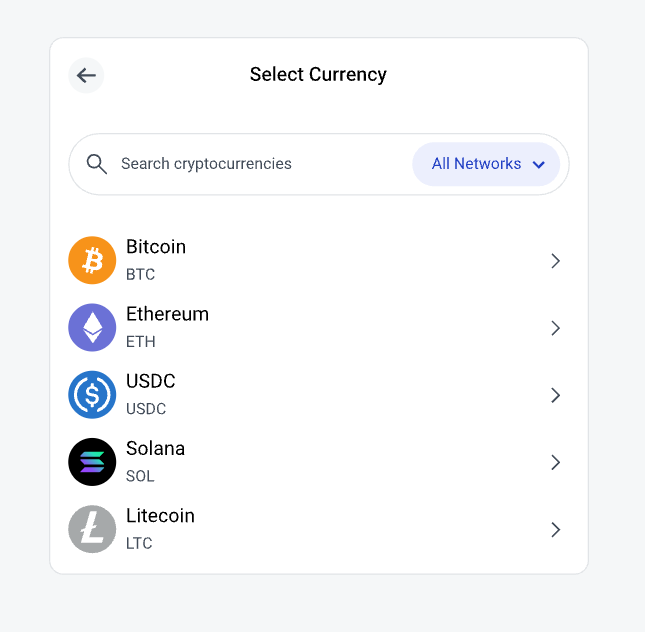
Choose a suitable crypto payment gateway that supports the exact stablecoins, altcoins, and blockchain networks you plan to accept. Confirm on-chain support, transaction fees, confirmation times, and settlement options to avoid future integration issues.
Verify regional availability
Ensure the gateway operates legally in your country and supports local banking or payout methods. This can be a hectic job, but not being completely aware of regional restrictions, licensing, and compliance requirements can affect onboarding and settlements later.
Check platform compatibility
Popular gateways offer ready-to-use plugins for Shopify, WooCommerce, Magento, and APIs for custom platforms. Execute seamless integration with your e-commerce or tech stack.
KYC and AML documentation
Submit your required identity and compliance documents. These usually include government-issued IDs, proof of address, and ownership details for directors or authorized signatories.
Business verification requirements
Provide legal business information such as registration certificates, tax details, and operating address. Verification timelines vary by provider but typically take a few business days. This depends on your country’s requirements for crypto-related business operations.
Wallet configuration
Set up settlement preferences by linking bank accounts for fiat payouts or configuring external wallets for crypto settlements. Ensure wallet addresses and permissions are correctly assigned to avoid fund loss.
Shopify integration for stablecoins Install the supported payment gateway app from the Shopify App Store. Configure accepted stablecoins, networks, and settlement settings. It’s also crucial to test checkout flows to ensure stablecoin payments process correctly.

If you have an e-commerce store, simply install the preferred or gateway-recommended WooCommerce plugins. After installation, connect your merchant account, select stablecoins and chains, and verify order status updates after blockchain confirmations.
For more technical or personalized modifications, integrate REST APIs or SDKs with your e-commerce platform, which will be provided by the chosen payment gateway. This gives you full control over stablecoin payment gateway flows, invoice generation, and webhook-based confirmation handling.
For physical stores, enable POS solutions that generate QR codes for stablecoin payments. Ensure real-time confirmation visibility and proper settlement tracking for in-store transactions.
E-commerce merchants should first process stablecoin payments in a testnet or sandbox environment to simulate real customer checkouts without using real funds. This helps validate settlement flow before enabling live payments on the website.
If you, as a merchant, are choosing multiple blockchains for support, then you must test stablecoin payments on each enabled network. This ensures that chain-specific payment works correctly across all supported networks.
Merchants should verify that webhooks are working correctly for each payment event. Proper webhook handling ensures accurate order status updates, inventory management, and customer notifications on the website.
Ethereum Mainnet gas fees
Ethereum mainnet offers the highest security and decentralization, but gas fees are variable and can range from around one dollar to over 50 dollars during network congestion.
Arbitrum fees
Arbitrum is a Layer 2 network built on Ethereum that significantly reduces transaction costs. Fees typically range between one cent and ten cents, making it suitable for frequent stablecoin payments while still inheriting Ethereum-level security.
Optimism fees
Optimism works similarly to Arbitrum and offers comparable transaction fees and speeds. It is widely supported by stablecoin issuers and payment gateways, making it a reliable option for merchant payments.
Base fees
Base is one of the popular Layer Two networks developed by Coinbase. It offers low fees, fast confirmations, and strong ecosystem support, especially for USDC-based payments.
Polygon fees
Polygon provides near-zero transaction fees (roughly $0.0063) and fast settlement times. It is popular for high-volume, low-value stablecoin payments and e-commerce use cases.
Transaction size considerations
Select networks based on average payment size. High-value transactions can tolerate higher fees like Ethereum mainnet, while low-value or frequent payments benefit from low-fee networks like Layer two or Solana.
Customer wallet compatibility
Choose networks that are widely supported by customer wallets and exchanges. For example, most wallets like MetaMask support Ethereum, Arbitrum, Optimism, Base, and Polygon by default, while some mobile wallets may only support specific networks.
Speed requirements

In the worst case scenario, the customer can cancel the order due to payment delays. Ensure a faster confirmation time that improves checkout experience and retention, especially for your e-commerce and retail payments. Layer two networks usually offer quicker finality than the mainnet.
Cost optimization
You should balance cost, and not only security and speed, by routing payments to networks with lower gas fees while maintaining reliability. This helps maximize margins and reduce customer payment friction.
Accept on multiple networks
Enable altcoin or stablecoin payments across multiple blockchains to provide preference and flexibility for the customers. Supporting both Ethereum Layer 2s and low-fee networks helps capture a wider range of users and payment sizes.
Let customers choose the network.
Allow customers to select their preferred network at checkout. This improves user experience by letting them optimize for speed, fees, or wallet compatibility.
Consolidation strategies
Use automated consolidation to move funds from multiple networks into a primary wallet or settlement network through your payment gateway platform. It reduces manual transfers and simplifies treasury management, accounting, and liquidity handling for your business.
The comparison below highlights how stablecoins differ from legacy payment rails in practical business scenarios.
Stablecoin transaction costs depend on the blockchain network, payment gateway, and conversion preferences. Network fees vary by chain, with the Ethereum mainnet being the most expensive and Layer 2 or alternative networks offering significantly lower costs.
Most crypto payment gateways charge processing fees ranging from zero to one percent, which is often lower than card networks.

If merchants convert stablecoins to fiat, additional conversion fees apply, typically based on volume and settlement method. When combined, the total cost of a stablecoin transaction is usually predictable and remains well below traditional payment methods for most use cases.
Businesses accepting stablecoins and altcoins must navigate the following regulatory and tax requirements.
Stablecoin regulations vary significantly across jurisdictions within the U.S. Depending on the state. Some require money transmitter licenses, while others focus on consumer protections.
In the case of the EU, the MiCA framework was introduced in 2024, establishing clear rules for the issuance, custody, and use of stablecoins.
For the UK, the Financial Conduct Authority (FCA) guides crypto payments and stablecoin operations.
Globally, emerging frameworks are gradually defining compliance standards, but merchants must stay aware of local updates to avoid legal issues.
In many countries, including the U.S. (IRS), stablecoins are still treated as property for tax purposes.
Merchants must record the fair market value at the time of receipt, even if the coin is held or converted immediately to fiat. Because stablecoins maintain a stable value, accounting is simpler than for volatile cryptocurrencies.
However, proper record-keeping is still required for all transactions to comply with tax reporting rules.
Merchants should implement robust KYC (Know Your Customer) and AML (Anti-Money Laundering) procedures to verify customers and monitor transactions.
Continuous transaction monitoring helps detect suspicious activity and supports regulatory reporting. It’s also of utmost importance to stay updated with regulatory changes, both locally and internationally, to ensure ongoing compliance and reduce the risk of fines, account freezes, or legal complications.
Businesses should understand key risk factors and adopt strong security practices to reduce the risk of hacks, fund loss, and fraudulent transactions.
Even when using a payment processor, merchants are indirectly exposed to smart contract risks because the stablecoins they accept rely on these contracts. If a stablecoin contract is exploited or has a bug, funds sent to the processor could be frozen, lost, or delayed, affecting merchant settlements.
Moreover, network-specific risks like congestion, chain exploits, or network upgrades on Ethereum, Layer 2s, or alternative blockchains can delay transactions, cause failed confirmations, or temporarily prevent funds from moving.
To mitigate these risks, merchants should accept only well-audited, widely used stablecoins, choose payment processors with multi-network fallback options, and actively monitor blockchain security alerts.
Hot wallets are always connected to the internet for active payments, which makes them vulnerable to attacks. On the other hand, cold wallets store assets offline for enhanced security and cut the contact from any online data breach or hacking attempts.
Merchants can also use multi-signature wallets that require multiple approvals for transactions. And, if you’re using non-custodial wallets, then implement strict key management procedures to safeguard access.
Verifying transactions helps prevent errors and fraud for a merchant’s business.
Merchants should enforce confirmation requirements appropriate to each network, double-check recipient addresses, and monitor for suspicious activity. Proper verification ensures payments are securely received and reduces the risk of lost or misdirected funds.
To accept altcoin and stablecoin payments, optimizing customer experience is essential. Even small frictions, like confusing pricing or unsupported wallets, can lead to abandoned carts.
Displaying Stablecoin Prices
Merchants should display prices in both fiat and stablecoin values in real time to help customers understand exact costs. The checkout interface should allow easy network selection and showcase any fee differences or transaction times.
The majority of the customer base pays through mobile wallets. So, ensure compatibility with popular mobile wallets, where customers can pay directly without switching apps or networks.
Checkout should be as seamless as possible. Your platform’s enabled QR codes should be clear and scannable across devices. Also, integration with WalletConnect or other wallet protocols allows customers to connect their wallets instantly, and a one-click payment option reduces steps, increasing overall conversion rates and satisfaction.
Merchants should provide online resources in the form of articles and videos that can explain what stablecoins are, how payments work, and the benefits of using them for customers who may be unfamiliar with them. FAQs can further reduce friction for first-time users, making crypto payments more approachable and reliable.
Lastly, transparency around network fees helps customers avoid surprises and builds trust for the merchant’s brand
Unlike conventional payment methods, stablecoins are well-suited for large invoice payments because network fees do not scale with transaction value. This makes high-value transactions more cost-efficient compared to percentage-based banking fees.
For cross-border B2B payments, stablecoins remove correspondent bank charges and currency conversion delays. Settlement is typically completed within minutes, improving cash flow and reducing days sales outstanding (DSO).
Businesses can use stablecoins to pay international contractors without relying on local banking infrastructure. Payments reach recipients quickly and with lower fees than wires or remittance services. Some companies also offer stablecoin-based salary options for remote teams, though compliance and tax reporting requirements must be clearly addressed based on jurisdiction.
Companies may hold stablecoins to manage operational liquidity and recurring payments. Stablecoins allow rapid deployment of funds without exposure to crypto price volatility. Some businesses even explore yield opportunities and typically get a lower annual percentage on stablecoin compared to other altcoins.
However, it is important to maintain strong risk management practices to address sudden market disturbance or technical risks, like in smart contracts, and allocate funds only as per your appetite.


 2M+ Monthly Readers
 50k+ Articles


 Claim Bonus