

Cardano vs. Ripple: Hoskinson Accuses Ripple CEO of Favoring CLARITY ACT, Calls It a “Death Trap”


Highlights
- Charles Hoskinson slams Brad Garlinghouse’s CLARITY Act stance, citing unfair market advantage risks.
- He warns CLARITY Act could classify most crypto projects as securities by default.
- Hoskinson cites past support for Ripple as XRP community backlash grows.
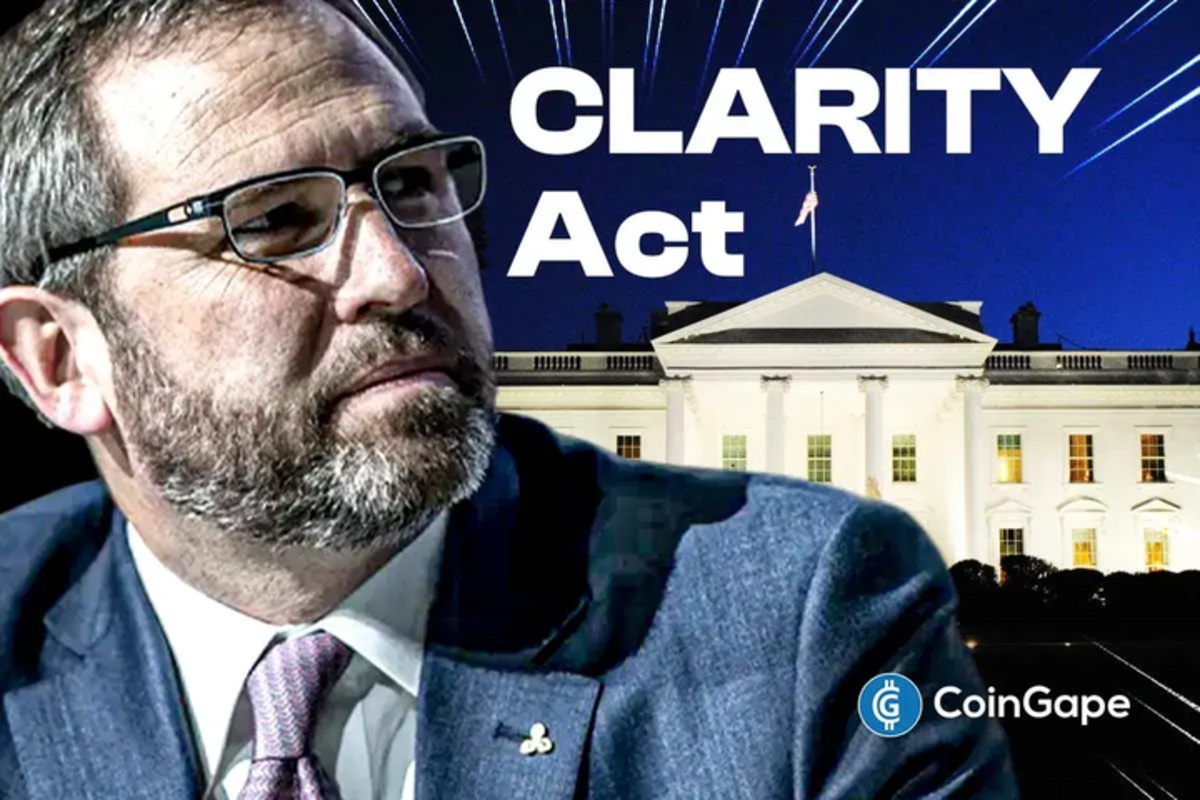
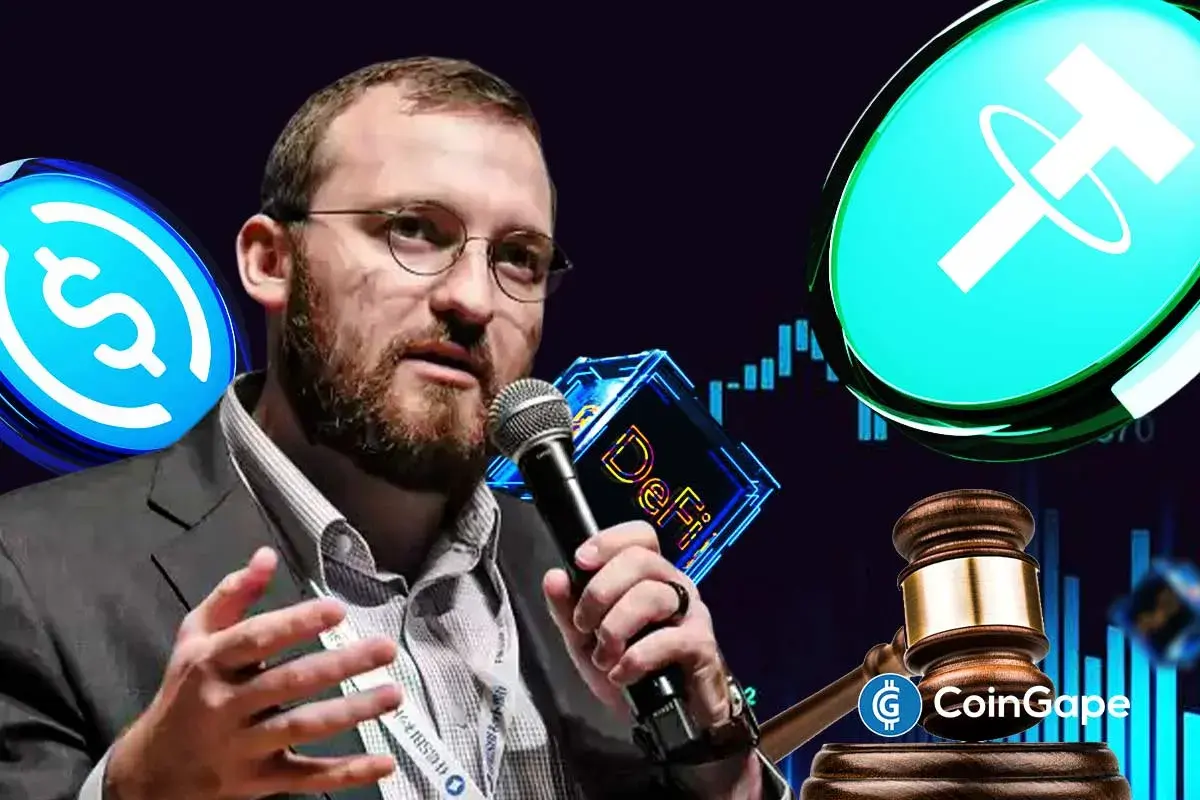
Cardano founder Charles Hoskinson criticized Ripple CEO Brad Garlinghouse during a a weekly crypto rollup video over support of the CLARITY Act, arguing the proposal could reshape crypto regulation. He accused Garlinghouse of backing a framework that could classify most projects as securities.
Charles Hoskinson CLARITY Act Criticism
In a weekly rollup youtube video, Charles Hoskinson framed his criticism around the structure of the CLARITY Act and its potential enforcement impact. According to him, the bill could treat most digital assets as securities by default.
He argued this approach resembles actions previously taken by Gary Gensler against crypto firms. This criticism comes as the CLARITY Act faces delays due to stablecoin yield disagreements. Hoskinson said the proposed framework gets support from Brad Garlinghouse since it could benefit Ripple and XRP.
He claimed this would reduce competition across the broader ecosystem. As a result, he described the bill as harmful to innovation and unfair to smaller projects. He further outlined multiple enforcement risks tied to the CLARITY Act.
According to Hoskinson, regulators could apply several legal pathways to classify new projects as securities. He warned this could limit entry for developers and startups. Notably, he also pointed to the removal of protections for DeFi developers.
Liability Concerns and Developer Protections
Hoskinson raised concerns about developer liability under the CLARITY Act which faces uncertainty as crypto czar David Sacks stepped down. He said the bill could expose developers to unlimited legal responsibility. This, he argued, would apply even when developers have no direct control over how their code is used.
He referenced cases involving open-source developers, including those linked to Tornado Cash. According to him, the absence of safeguards could discourage software development in crypto. He added that such liability would create uncertainty across the industry.
Meanwhile, Hoskinson criticized the broader reaction to his stance. He said discussions around the CLARITY Act have become difficult due to strong community responses. He argued that debates often move away from the substance of arguments toward personal reactions.
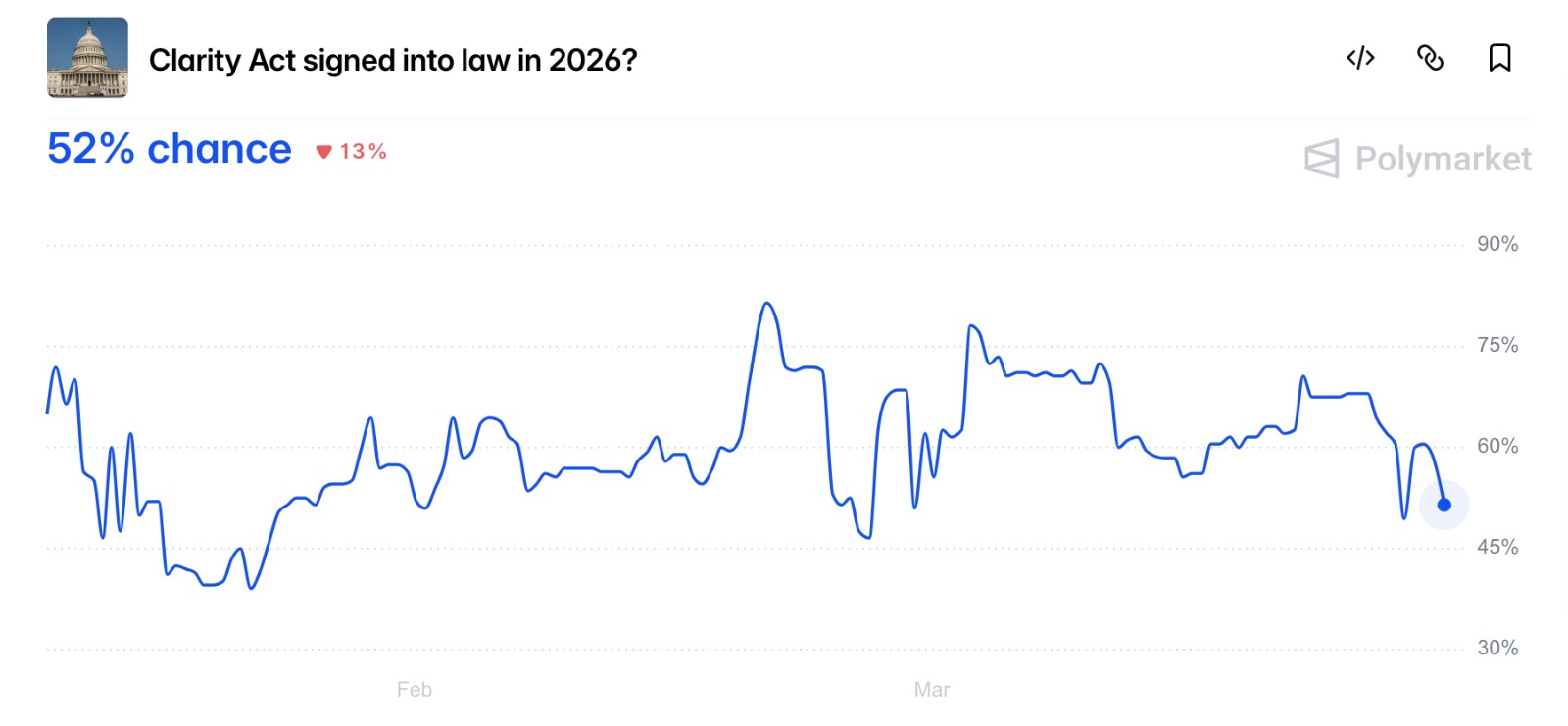
Following Coinbase’s opposition of the stablecoin yield compromise, the odds of the CLARITY Act being signed into law in 2026 have dropped. As per Polymarket data, the odds have dropped to 52%, which is a 13% drop from levels above 60% earlier in the week.
 Source: Polymarket
XRP Community Response
Charles Hoskinson also addressed backlash from the XRP community. He said critics have accused him of attacking XRP despite his past support. However, he stated that he has been publicly defending Ripple during its legal battle with regulators.
Hoskinson referenced earlier statements where he opposed regulatory action against Ripple. He said those positions remain documented and accessible. Despite this, he claimed some community members now question his intentions.

Why Trust CoinGape
CoinGape has covered the cryptocurrency industry since 2017, aiming to provide informative insights Read more… to our readers. Our journal analysts bring years of experience in market analysis and blockchain technology to ensure factual accuracy and balanced reporting. By following our Editorial Policy, our writers verify every source, fact-check each story, rely on reputable sources, and attribute quotes and media correctly. We also follow a rigorous Review Methodology when evaluating exchanges and tools. From emerging blockchain projects and coin launches to industry events and technical developments, we cover all facets of the digital asset space with unwavering commitment to timely, relevant information.


Delivered every day.
- Insights that move markets
- 100,000 active subscribers