
 Buy $GGs
China Tightens Stablecoin Rules as Bessent Urges Congress to Pass CLARITY Act to Keep Crypto Lead



Highlights
- China has barred overseas issuance of yuan-backed stablecoins without approval.
- The regulators cited risk to monetary sovereignty as the reason for this move.
- This comes as Scott Bessent urged Congress to pass the CLARITY Act for the U.S. to maintain its crypto lead.
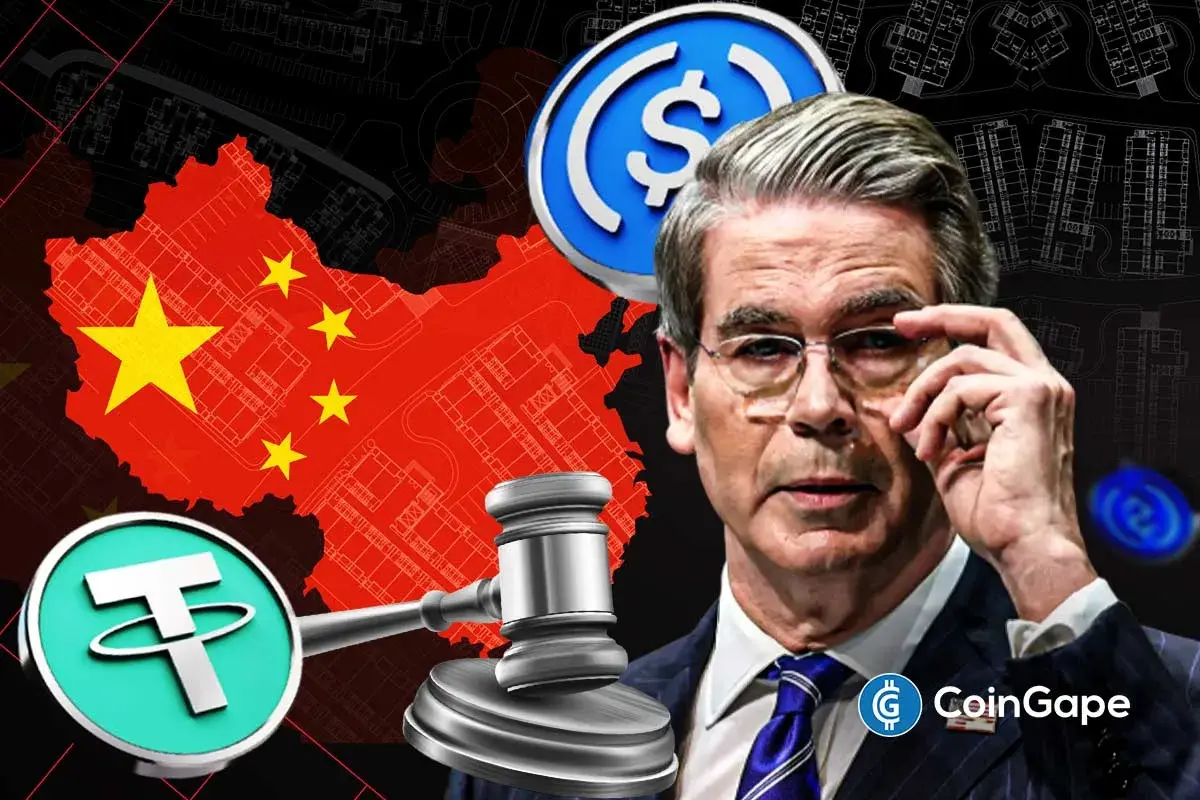
China has tightened its rules on yuan-backed stablecoin issuance, barring both domestic and offshore entities from issuing such a stablecoin without approval. This comes as U.S. Treasury Secretary Scott Bessent urged Congress to pass the CLARITY Act to enable the U.S. to maintain its crypto lead over other countries, including China.
China Tightens Crypto Rules As Besssent Urges CLARITY Act Passage
According to a Bloomberg report, China has barred domestic and offshore entities it controls from issuing digital tokens abroad without approval and has also banned the offshore issuance of yuan-backed stablecoins. The People’s Bank of China and seven other agencies cited risks to monetary sovereignty as the reason why firms and individuals may not issue these stablecoins without approval.
This comes as the country continues to crack down on crypto-related activities, even as the U.S. pushes for regulatory clarity to take the lead over China. Notably, U.S. Treasury Secretary Scott Bessent, during a Senate Banking Committee hearing, again urged Congress to pass the CLARITY Act.
He stated that it is impossible to proceed without passage of the crypto bill and that they must get it across the finish line. Notably, his statement comes just as the crypto bill’s progress continues to stall.
CoinGape reported earlier this week that crypto firms have proposed changes, including allowing community banks to hold stablecoin reserves or issue stablecoins through partnerships, to advance the bill. Meanwhile, Senator Cynthia Lummis also suggested the crypto bill remains on course, as Senate Majority Leader John Thune has pledged to schedule floor time for it later this spring.
On Whether China Is Working On Its Digital Assets
During the hearing, Bessent also addressed claims that China was developing digital assets to challenge the U.S. financial system. He noted rumors of Chinese digital assets backed by assets other than the Yuan, including gold.
The U.S. Treasury Secretary added that he wouldn’t be surprised if they are working on this, given their large sandbox in Hong Kong. Meanwhile, Bessent also noted that there are no plans to issue a Central Bank Digital Currency (CBDC), as some other countries have done, including China.
He suggested that the focus is on providing clarity through the GENIUS Act and CLARITY Act to boost crypto adoption in the private sector. “And I think the world is going to choose the US dollar and the private sector, a well-regulated choice that US stablecoins will provide,” Bessent added.
At the House hearing earlier this week, the U.S. Treasury Secretary reiterated plans to use confiscated BTC to build the Bitcoin reserve. This came amid a question about whether they could “bail out” BTC, which he said he doesn’t have the authority to compel banks to buy the leading crypto asset.
Play 10,000+ Casino Games at BC Game with Ease
- Instant Deposits And Withdrawals
- Crypto Casino And Sports Betting
- Exclusive Bonuses And Rewards



Why Trust CoinGape
CoinGape has covered the cryptocurrency industry since 2017, aiming to provide informative insights Read more… to our readers. Our journal analysts bring years of experience in market analysis and blockchain technology to ensure factual accuracy and balanced reporting. By following our Editorial Policy, our writers verify every source, fact-check each story, rely on reputable sources, and attribute quotes and media correctly. We also follow a rigorous Review Methodology when evaluating exchanges and tools. From emerging blockchain projects and coin launches to industry events and technical developments, we cover all facets of the digital asset space with unwavering commitment to timely, relevant information.

Delivered every day.
- Insights that move markets
- 100,000 active subscribers
Related Articles
- Ripple Could Gain Access to U.S. Banking System as OCC Expands Trust Bank Services
- $2T Barclays Explores Blockchain For Stablecoin Payments and Tokenized Deposits
- Breaking: U.S. PPI Inflation Rises To 2.9%, BTC Price Falls
- XRP News: Ripple-Backed Ctrl Alt Completes $280M in Diamond Tokenization on XRPL
- Bitwise CIO Calls Bitcoin Selloff ‘Classic Cycle,’ Dismisses Manipulation Rumors
- Top Analyst Predicts Pi Network Price Bottom, Flags Key Catalysts
- Will Ethereum Price Hold $1,900 Level After Five Weeks of $563M ETF Selling?
- Top 2 Price Predictions Ethereum and Solana Ahead of March 1 Clarity Act Stablecoin Deadline
- Pi Network Price Prediction Ahead of Protocol Upgrades Deadline on March 1
- XRP Price Outlook As Jane Street Lawsuit Sparks Shift in Morning Sell-Off Trend
- Dogecoin, Cardano, and Chainlink Price Prediction As Crypto Market Rebounds