

 Get €3000
CLARITY Act: Banks and Crypto Make Progress Following “Constructive” Dialogue at White House Meeting


Highlights
- Coinbase CLO Paul Grewal stated that today's talks were constructive, indicating they made progress.
- He also noted that the tone was more cooperative.
- Prediction markets lifted odds of market structure passage to 83% this year.
A closed-door meeting at the White House today was to tackle a dispute stalling the CLARITY Act. Banks want to ban yields on digital dollars like USDC to protect deposits, while crypto firms argue yields drive innovation. Senior executives from Coinbase, Ripple, and Andreessen Horowitz joined banking representatives to seek a compromise before a March 1 deadline.
CLARITY ACT Progress Reported After Third Meeting
The White House convened the third session today, focused on stablecoin yield restrictions. According to Coinbase Chief Legal Officer Paul Grewal, discussions remained constructive and cooperative. He wrote on X that participants made more progress and said there will be further updates ahead.
CoinGape had earlier reported that the Coinbase CLO was among those who would be in attendance at the White House meeting. Notably, Grewal said he met with Patrick Witt at the White House during the talks. He described the tone as collaborative as both banks and crypto firms narrowed differences. However, no final compromise emerged from the session.
Journalist Eleanor Terrett reported that attendees included Stuart Alderoty and Miles Jennings, alongside trade representatives. The meeting was on whether issuers can offer yield on dollar-backed tokens. That issue has stalled broader CLARITY Act negotiations despite bipartisan backing last year.
Market Odds and Executive Outlook Shift
As negotiations continue, prediction markets reflect rising expectations for legislative movement. On Polymarket, the odds that Bitcoin and crypto market structure legislation passes this year surged to 83%. That increase followed reports of progress at the White House session.
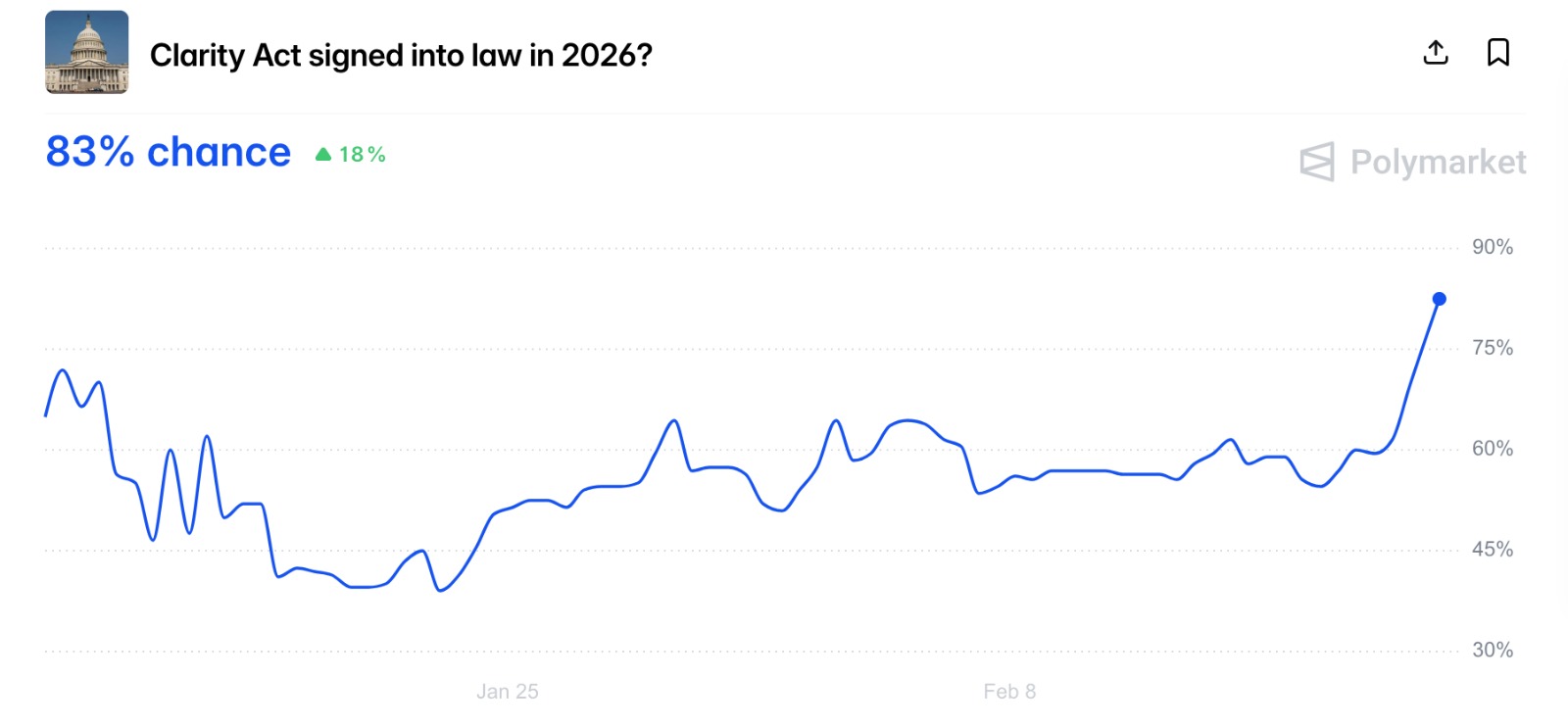 Source: Polymarket
Meanwhile, Ripple CEO Brad Garlinghouse projected strong momentum for passage. He said there is an 80% to 90% chance lawmakers advance market structure legislation on March 1 and sign it into law by April. Garlinghouse added that the White House has pushed hard to move the process forward.
Brian Armstrong expressed optimism yesterday about reaching a workable solution. Executives from both industries described the talks as aiming for a balanced outcome. However, neither side confirmed a finalized agreement.
Legislative Path and Outstanding Hurdles
Although the CLARITY Act cleared the House last year with bipartisan support, Senate approval remains uncertain. The Senate Banking Committee must hold a hearing before advancing any companion legislation. Previously, the Senate Agriculture Committee approved its own version along partisan lines.
To secure Senate passage, lawmakers must attract significant Democratic support. That coalition has not yet materialized. As a result, negotiators face pressure to resolve the stablecoin yield dispute before March 1.
The CLARITY Act is the crypto industry’s top federal policy priority. Industry participants argue that fixed U.S. rules would clarify oversight for digital asset markets. For now, banks and crypto firms continue White House talks as lawmakers weigh next steps.

Why Trust CoinGape
CoinGape has covered the cryptocurrency industry since 2017, aiming to provide informative insights Read more… to our readers. Our journal analysts bring years of experience in market analysis and blockchain technology to ensure factual accuracy and balanced reporting. By following our Editorial Policy, our writers verify every source, fact-check each story, rely on reputable sources, and attribute quotes and media correctly. We also follow a rigorous Review Methodology when evaluating exchanges and tools. From emerging blockchain projects and coin launches to industry events and technical developments, we cover all facets of the digital asset space with unwavering commitment to timely, relevant information.



Delivered every day.
- Insights that move markets
- 100,000 active subscribers