

 Buy $GGs

Quick Verdict
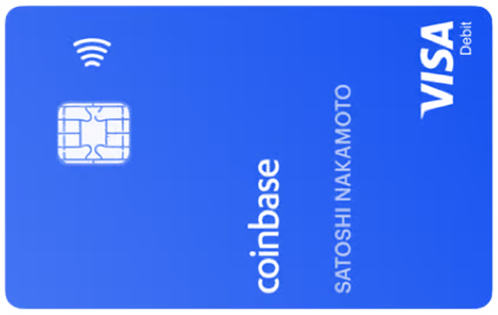
Coinbase One card stands among the top crypto credit cards in the market. It offers verified Bitcoin rewards to users. There are Amex card perks and travel insurance up to $1500 that can be redeemed on global travel. Altogether, a card with many benefits. The trust signals also suggest a reputable, scam-proof card for crypto users.
Rating
CoinGape’s Review on Coinbase Card
After reviewing the documentation of the Coinbase website such as terms and agreement, and learning more about rewards, fees, and perks. Here is our verdict:
The Coinbase One card’s Bitcoin back rewards follow a tier system. The rewards come in three tiers, ranging from 2% to 4%. The higher the tier, the more Bitcoin the user receives. The card does not charge any annual fees, foreign exchange fees, or transaction fees to the user. However, in order to receive a Coinbase one card, you must first pay $49.99 for membership.
The fees for late charges and cash advances are standard, but the APRs are high. We rate this card 8.2/10 based on rewards, overall fees, and other extra benefits.
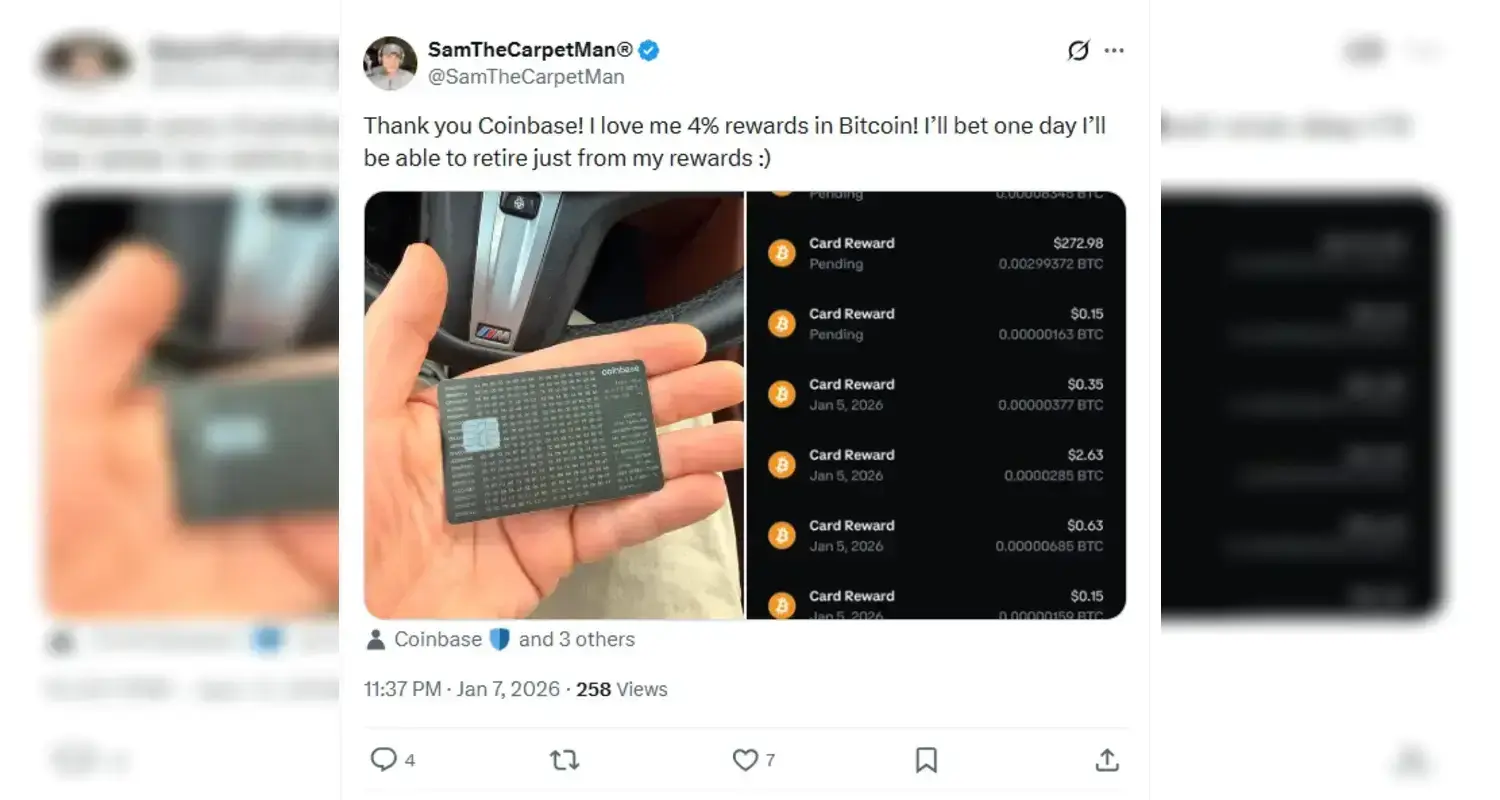
- Bitcoin Rewards : The Coinbase one card provides Bitcoin rewards for all purchases. This has been a major draw for the card. There have been verified cases of people claiming BTC as a reward for using the card.
- Travel & Purchase Protection : Among other perks and benefits, Coinbase One provides Amex card benefits on purchases, dining, and more. There is travel insurance that covers up to $1500.
- No additional fees : Apart from the charges mentioned above, there are no annual fees, no transaction costs, no foreign exchange fees.
- Market Fluctuation affects Bitcoin Rewards : As Coinbase rewards BTC on every purchase, any market fluctuation might have adverse affect on the overall ROI of the reward.
- Higher APRs : As compared to other cards, Coinbase one charges higher APRs. For annual and Cash advances, the APRs are non-negotiable. These APRs are finalized based on the user's creditworthiness and U.S. prime rate.
Security, Regulation, and Trust Signals
About the company
Coinbase Inc., was established in 2012 by Brian Armstrong and Fred Ehrsam. The Coinbase One card is made available from October 2025. The card is jointly owned by Coinbase Inc., First Electronic Bank (issuer), and Cardless (tech platform).
Regulatory compliance
It is issued by First Electronic Bank, a US-FDIC registered bank, and operates on the American Express network. Coinbase is registered as a Money Service Business in the United States. It is overseen by the the CFPB.
Insurance
There is no clear insurance reflected by Coinbase, or particularly for Coinbase one. Coinbase one account protection also covers unauthorized transactions but is not applicable to credit cards.
Past Scams or Hacks
There has been no card-related controversy or registration. Even Coinbase has a sterling reputation and has never faced any SEC charges.
Conclusion
The Coinbase One card offers a variety of lucrative rewards to its users. This card is best suited for those looking to earn BTC as rewards. Amex cardholders can also enjoy dining and shopping benefits. If you frequently travel, this card is for you. However, if you are not interested in paying the membership fee, this may appear to be a dead deal for you. Coinbase does not issue a single card without membership.
Alternatives of Coinbase


Did you find this review helpful?
Our Review Methodology
We review crypto cards using a consistent framework focused on real-world use, fees, risk, and usability. Here’s a quick look at how each card is evaluated before it’s ranked.
1. Real-World Testing
We review crypto cards based on how they behave once you actually start using them. This includes onboarding, spending, settlement speed, and how balances and rewards update in practice.
2. Fees & Terms Checked
Fees, limits, FX costs, and reward rules are verified using official issuer terms and fee schedules. Temporary promotions or targeted offers are not included in scores.
3. Risk & Reliability
We look at custody setup, issuer background, regulatory signals, and past operational issues to understand where user risk really sits.
4. Independent Scoring
All cards are scored using the same framework. Rankings are not pay-to-play, and commercial relationships do not influence ratings.


