Compare fees, rewards, supported assets, limits, and perks side-by-side.



Ratings are based on how crypto cards perform in real-world use, including fees, rewards, custody setup, issuer reliability, and usability. Scores are comparative and independent of partnerships.
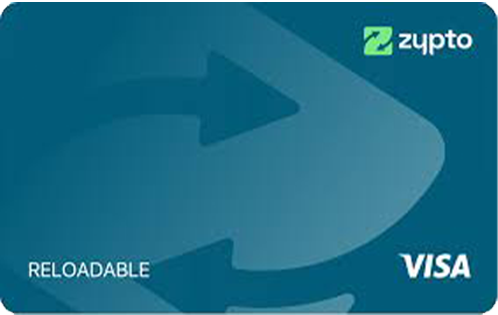
★★★★★ ★★★★★ ExcellentTransaction fees: $0.30 Fx Fees: 1.75%
ATM Withdrawal: 1%
Card Cost/ activation/ shipping: $50
Min ATM withdrawal: $10
Max ATM transactions: 90 p.m.
Max POS transactions: $175,000 Max POS spending per: $1,000,000
Crypto off-ramp fees: 3%
High Spending Limits : Zypto Premium cards have massive spending limits as opposed to most crypto debit cards. This can be convenient for businesses, traders in particular, or individuals who have the need to make huge buys, such as travel arrangements or payment for equipment.
Self-Custody Control : You can load the card into it without having to transfer funds to a centralized exchange. This will enable you to have better control over your money, and the risk of your accounts being frozen is minimized.
No Monthly Fees : Most of the Zypto card plans do not have a monthly maintenance fee. This helps in keeping the card cheap in case you do not use it frequently. The card allows users to retain it as they spend occasionally, with no concern that regular charges will build up.
Global Acceptance : Zypto cards are accepted at any place that Visa or Mastercard is accepted. Online shopping, hotel reservations, subscriptions, or store payments can be done in most countries with them.
Multiple Crypto Support : The card can be loaded with over a hundred cryptocurrencies. This provides freedom to the users who do not own Bitcoin or Ethereum but have other coins. It does not require the prior sale of assets in an exchange, which is time-consuming and makes the process uncomplicated.
Off-Ramp Fees : There can be an off-ramp fee of approximately 3% when crypto is exchanged into fiat money. This normally happens in the crypto cards, but it can decrease your total rewards or savings.
FX Charges : When you use a different currency, there might be a foreign exchange charge, which is normally around 1.75. These fees may accumulate in the process of travelling or shopping abroad.
Rewards Not Very High : Zypto has cashback or rewards, which are typically smaller than those of certain crypto credit cards. The card is more flexible and limit-based rather than providing high reward percentages.
Needs Crypto Knowledge : You should have a general knowledge of wallets, crypto transfer, and network charges. The setup can be confusing to beginners. In case the sender of crypto sends it to the wrong destination or has lost access to their wallet, it is not easily recoverable.
Visit Zypto Read ReviewThere is no single best crypto card.
What works for someone who stakes tokens and wants 4% rewards may not work for someone who just wants to spend stablecoins without worrying about spreads.
So instead of chasing the highest cashback number, it makes more sense to compare cards side by side and narrow down based on what actually matters to you.
This page is built for that.
Before comparing, you should decide what you care about. If you are unsure how to choose the right card for your needs, we have a guide that explains this in simple steps.
Most people usually fall into one of these:
Pick one or two priorities. Not everything.
Then compare 2 or 3 cards next to each other.
You can filter by:
For example:
If you travel frequently, compare cards that run on globally accepted networks and check their foreign transaction spreads.
If you mainly hold stablecoins, compare cards that allow stablecoin spending without unnecessary token conversions.
If you are comparing a high-reward staking card with a low-fee simple debit card, look beyond the reward number and check the spreads and lockup terms.
The goal is not to find the “best” card.
The goal is to remove the ones that don’t fit your usage.
Marketing pages usually highlight rewards.
In reality, rewards are just one small part of the decision.
Here are the things that matter more.
Crypto cards don’t depend on your credit score, but they do depend on your KYC level and your country. Some cards even let you spend without verification. Here is a list of no-KYC crypto cards if that matters to you.
Basic KYC usually requires ID and selfie verification. Limits are lower.
Full verification often adds proof of address and increases limits.
Some premium tiers require staking or holding platform tokens.
This part is often ignored when people compare cards, but it determines whether you can even access the features being advertised.
It helps to compare within the same type first.
There are generally four kinds of crypto cards.
Rewards-focused cards
These offer token cashback, tiered rewards, sometimes travel perks.
Higher rewards often require staking. That means lockups and token price exposure.
Low-fee spend cards
These focus on transparent spreads and minimal hidden costs.
Rewards may be lower, but costs are predictable.
For many users, especially stablecoin holders, this matters more.
On-ramp or off-ramp focused cards
These are practical tools.
They are meant to move funds between crypto and your bank quickly and reliably.
Not flashy, but useful.
Wallet-linked or non-custodial cards
These connect to on-chain balances or self-custody wallets.
More control. More complexity.
If you compare across categories without realizing it, you may misjudge value.
This is where many comparisons go wrong.
You need to break cost into parts.
Fixed costs:
Variable costs:
A card offering 3% cashback but charging 2%–2.5% effective spread is not really a 3% card.
Rewards should always be evaluated against total cost.
Otherwise the math does not work.
This is something traditional comparison pages do not have to explain.
Crypto cards differ in how they convert funds.
Some convert at the point of sale.
Others require you to pre-convert into fiat balance.
Learn more about how crypto to fiat conversion works.
Point-of-sale conversion means price volatility can affect you at the moment of purchase.
Pre-conversion reduces volatility risk, but it adds a step.
Also check what assets are supported.
Some cards are stablecoin-friendly.
Others prioritize platform tokens.
If you mainly use stablecoins, using a card that forces token conversion may increase friction.
Rewards are attractive. But structure matters more than the headline percentage.
Look at:
Then check base rewards.
Is it flat?
Are there category boosts?
Are there monthly caps?
Many high-reward tiers require staking. That introduces opportunity cost and token price risk.
This is not necessarily bad. But it should be part of your decision.
Most crypto cards are prepaid or debit-based.
If a card offers actual credit functionality, compare the APR structure carefully.
High reward cards with high APR are usually suitable only if you pay balances in full every month.
Carrying a balance can quickly cancel out any rewards benefit.
Check:
Also review app controls.
Can you freeze the card instantly?
Can you generate virtual cards?
Can you set transaction limits?
Security controls matter more in crypto, especially if balances are stored within exchange ecosystems.
This is where many comparisons stop too early.
Custody risk is often under-discussed.
Ask:
Where are your funds actually held?
Are they:
Is there any deposit protection?
Are funds segregated?
In the event of insolvency, are users treated as unsecured creditors?
These are uncomfortable questions. But they matter.
Also check:
Rewards are visible.
Custody structure is not.
But long term, custody matters more.
Different users prioritize different things.
Look for selected crypto cards marked as high rewards or tier-based benefits.
These are suitable if:
Just remember that higher rewards often come with higher complexity.
Look for:
This approach is often more practical for stablecoin users and frequent travelers.
The reward percentage may look smaller. But the effective cost may be lower.
Start simple.
Choose a card with:
Test small amounts first.
There is no need to maximize rewards in your first month.
In many countries, yes. Treatment varies. Consult a tax professional in your jurisdiction.
Recovery depends on custody structure and regulatory setup. Always review official terms before depositing significant funds.
They may operate on Visa or Mastercard rails, but dispute policies differ by issuer.
Processing time varies by region and funding method.


 2M+ Monthly Readers
 50k+ Articles


 Buy $GGs
