Crypto cards promise a simple idea: spend in crypto anywhere traditional fiat card networks are accepted. Some crypto card providers even advertise “no-KYC crypto cards,” suggesting users can have and access cards without submitting identity documents.
But the reality is more complicated. As FinHarbor CEO Ilya Podoynitsyn recently noted, many “no-KYC” card programs rely on upstream banking partners and BIN sponsors that still carry the compliance obligations. If those partners tighten controls or conduct network audits, then the entire card program can be suspended, sometimes leaving users temporarily unable to access their funds.
That pressure has made truly anonymous crypto cards increasingly rare. Most platforms today operate with limited or tiered verification, where small transactions may work without full KYC, but higher limits require identity checks.
Below, we examine several services that still allow crypto spending with minimal or no verification, along with their features, limits, and potential risks.
| Platform | Card Type | KYC Requirement | Monthly Limit | Key Fees | Availability |
|---|---|---|---|---|---|
 Bing CardRead More | Virtual crypto card | No KYC for virtual card | $100k–$200k depending on tier | $25 setup, ~$1 monthly | Global (US restricted) |
 BancusRead More | Prepaid crypto debit card | Simplified KYC | $50,000 load limit | $75 card fee, 4% top-up fee | Mainly LATAM |
 CoinsbeeRead More | Crypto gift cards | Limited KYC below €1k | €1k per order | Varies by brand | Global |
If you’re exploring other options beyond low-verification cards, see our full guide to the best crypto cards available in 2026.
CoinGape has been covering cryptocurrency and blockchain markets since 2017. Our editorial team evaluates projects and platforms using structured review frameworks focused on transparency, utility, and risk assessment. You can explore our review methodologies to see how we assess and rate different categories. We maintain clear editorial standards and disclose advertising or affiliate relationships where applicable.
Bing Card is one of the few platforms offering a virtual crypto payment card with no KYC requirement for basic usage.
The platform provides both virtual and physical cards designed for spending cryptocurrency through traditional payment networks.
The virtual card can be issued quickly after registration, allowing users to fund it with supported cryptocurrencies and make online payments.

| Card Tier | Setup Fee | Monthly Fee | Limit |
| Exclusive | $25 | $1 | $100k |
| Star | $40 | $0 | $200k |
| Platinum | $168 | $0 | 1,000,000 HKD |
The platform offers multiple card tiers with different spending limits.
Several additional fees apply:
The card is issued through entities operating under Canadian and Seychelles jurisdictions, and physical cards are issued from Hong Kong.
Bancus offers a crypto-linked prepaid debit card designed for spending digital assets through traditional payment networks.
The platform originally advertised fully anonymous onboarding, but recent documentation indicates that simplified KYC procedures may apply.

| Feature | Limit |
| Maximum card load | $50,000 |
| Daily ATM withdrawal | $500 |
| Daily spending limit | $2,500 |
The card operates as a prepaid debit card rather than a credit card, meaning users must load funds before making purchases.
Important fees include:
Other internal transfers are typically free.
While the platform has identifiable legal entities, users should still consider several factors:
Coinsbee offers a different approach to spending cryptocurrency.
Instead of issuing debit cards, the platform allows users to purchase gift cards from major retailers using cryptocurrency.
This makes it a useful alternative in regions where crypto cards are unavailable.
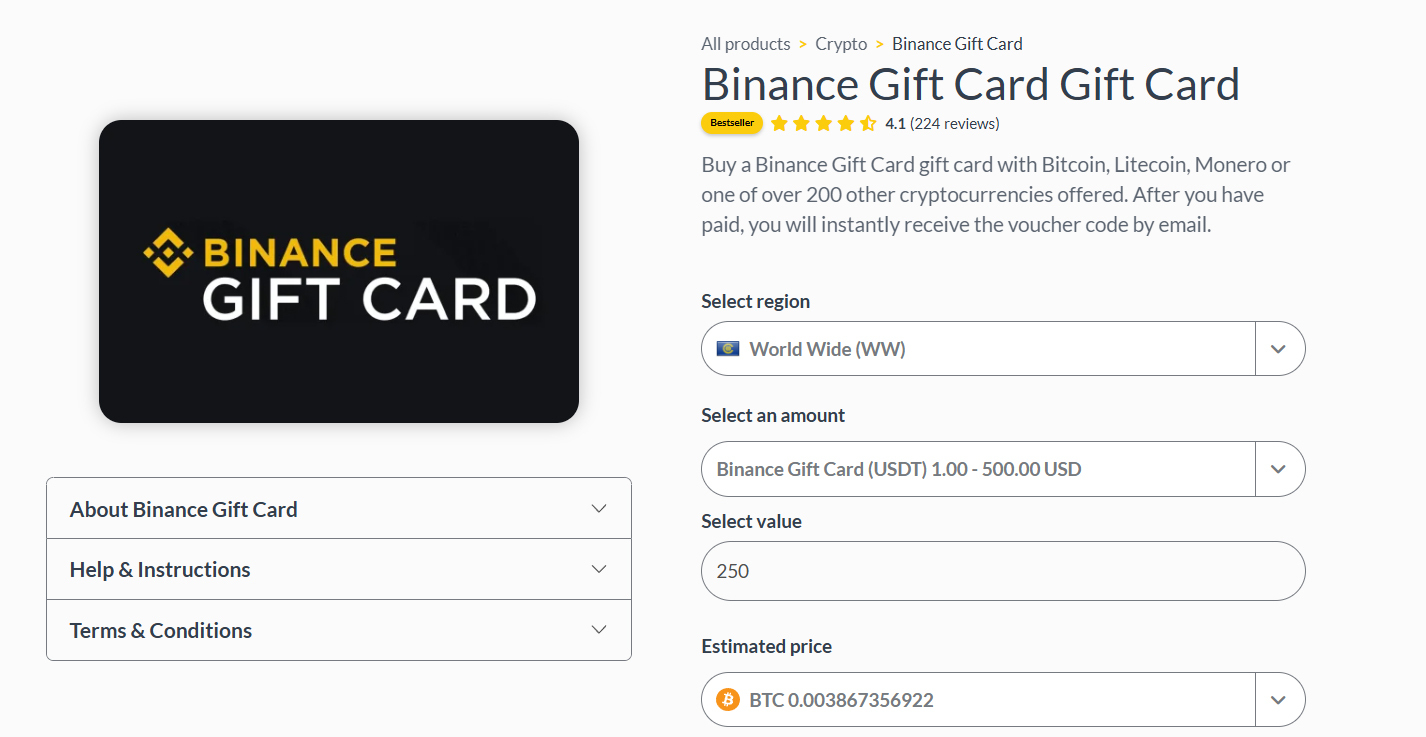
Coinsbee is operated by Coinsbee GmbH, a company registered in Stuttgart, Germany.
| Limit Type | Amount |
| Per order | €1,000 |
| Total without verification | €10,000 |
Higher limits require identity verification.
Users can purchase gift cards for services such as:
The term no-KYC crypto card is often misunderstood. In practice, most platforms use tiered verification models.
Typical structure:
| Verification Level | Requirements | Limits |
| Basic | Email registration | Low or moderate spending |
| Intermediate | ID verification | Higher limits |
| Full verification | Full KYC | unlimited usage |
This means many “no-KYC” cards actually allow limited usage without identity verification.
If you’re exploring crypto cards for the first time and don’t necessarily need a low-KYC option, you can also review our list of 6 Options for Your First Crypto Credit/Debit Card.
Over the past few years, global regulators have significantly tightened oversight of cryptocurrency payment services, especially those that allow users to spend funds without identity verification.
Several regulatory frameworks directly affect the viability of “no-KYC” crypto cards.
The Financial Action Task Force (FATF) requires virtual asset service providers (VASPs) to collect and transmit identifying information for transactions above certain thresholds.
This requirement commonly known as the Travel Rule, forces many crypto platforms to implement identity verification, especially when transactions interact with traditional financial systems.
Since crypto cards ultimately rely on fiat settlement through banking networks, providers often need at least basic identity checks to remain compliant with FATF guidelines.
In the European Union, crypto service providers are regulated under anti-money laundering frameworks such as AMLD5 and AMLD6.
These rules require platforms that provide custody, payment services, or exchange infrastructure to:
As a result, crypto card issuers operating in Europe typically enforce tiered verification systems, where low spending limits may be allowed without KYC but higher limits require full identity checks.
In the United States, the Financial Crimes Enforcement Network (FinCEN) classifies many crypto service providers as Money Services Businesses (MSBs).
MSBs must implement:
FinCEN enforcement actions over the past decade have made it difficult for card issuers and payment processors to support fully anonymous financial services.
For this reason, most crypto card providers do not serve US residents unless users complete full KYC verification.
Another major factor is compliance requirements imposed by Visa and Mastercard, the networks that process most crypto card transactions.
Card networks require issuing banks and payment partners to follow strict AML and KYC standards. If a crypto card program is perceived as facilitating anonymous financial activity, the network may terminate the partnership.
This has happened repeatedly in the crypto industry, where payment processors have withdrawn support for certain platforms following regulatory scrutiny.
Because of these regulatory pressures, most card providers advertising “no-KYC crypto cards” actually operate under tiered verification models.
This means:
Users should also be aware that accounts may be temporarily frozen for compliance reviews, especially if transactions trigger automated anti-money laundering monitoring systems.
For this reason, many experienced crypto users recommend avoiding large balances on lightly regulated card platforms.
For a deeper breakdown of the risks and protections involved, see our guide on Are Crypto Cards Safe? What Users Should Know.
The legality of crypto cards depends on the jurisdiction of both the provider and the user. Most card networks require some level of identity verification for compliance.
As a result, fully anonymous payment cards are increasingly rare.
Fully anonymous crypto payment cards are becoming increasingly rare as financial regulators and card networks tighten compliance requirements across the industry.
Today, most products marketed as “no-KYC crypto cards” fall into one of three categories: virtual cards with limited verification, prepaid cards that use simplified onboarding, or alternative spending solutions such as crypto-funded gift cards.
Platforms like Bing Card and Bancus still offer ways to spend crypto with relatively minimal verification, while services such as Coinsbee provide a workaround through crypto-funded gift cards.
As the regulatory environment continues to evolve, users should carefully review each platform’s fees, verification policies, and operational structure before relying on it for everyday spending.


 2M+ Monthly Readers
 50k+ Articles