



Crypto News: Bitcoin Sell-Off Fears Rise as War Threatens Iran’s BTC Mining Operations



Highlights
- U.S. and Israeli strikes raise fears of a broader Bitcoin sell-off.
- Iran’s mining backbone faces disruption from power grid threats.
- Oil shocks and sanctions risks add volatility across markets.
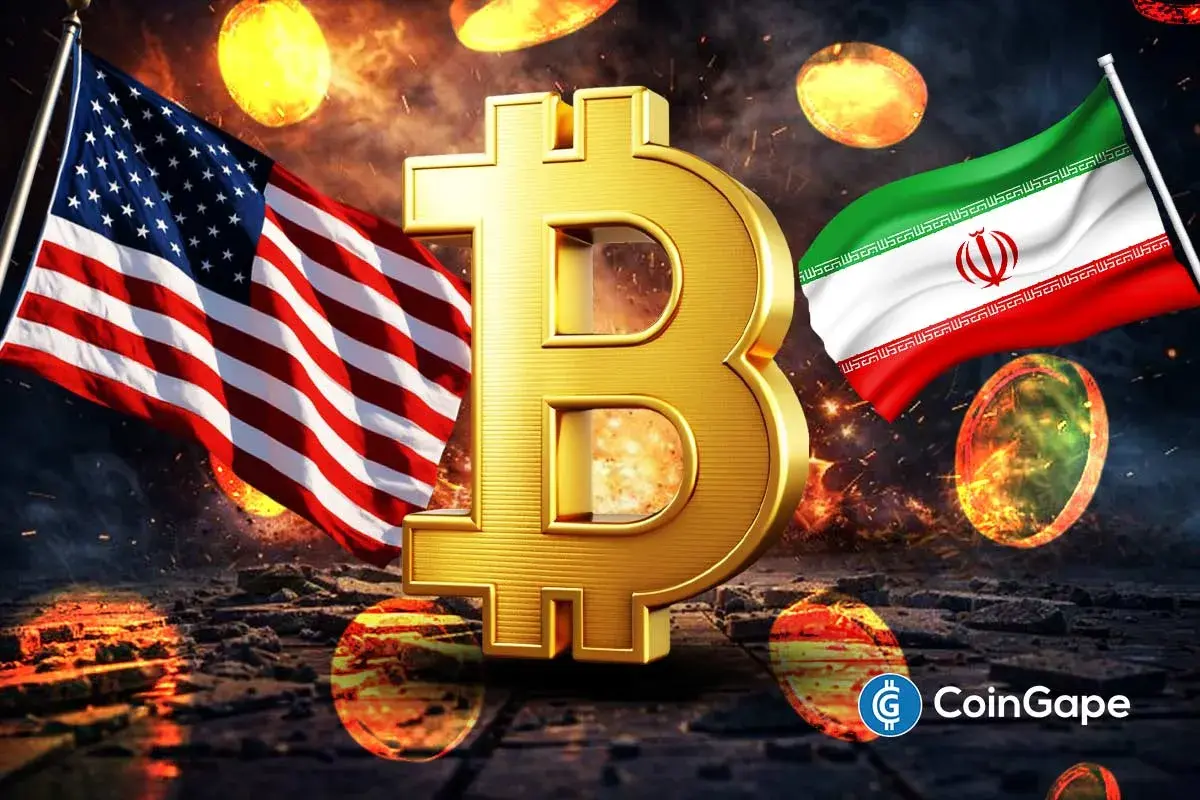
In the latest crypto news, fresh U.S. and Israeli strikes on Iranian targets over the weekend have raised fears of a Bitcoin sell-off as conflict threatens Iran’s mining network. The attacks in the Middle East come amid escalating tensions involving the United States, Israel, and Iran. Traders reacted after reports linked potential infrastructure damage to Tehran’s state-backed crypto operations.
Crypto News: Iran’s Bitcoin Mining Backbone
As per the Haaretz report, Iran legalized Bitcoin mining in 2019. Authorities allowed licensed operators to use subsidized electricity. In return, miners sold their Bitcoin to the central bank for trade settlements.
Iran built a financial channel around crypto. Bitcoin has helped pay for imports and bypass dollar restrictions. According to the report, the country generated billions in foreign currency each year through mining.
Estimates suggest Iran controls between 2% and 5% of the global Bitcoin hash rate. Some reports, however, place the figure near 15% of global production. This share makes the country a visible player in network security.
Moreover, reports link many mining operations to the Islamic Revolutionary Guard Corps. Data shows IRGC-connected wallets handled over $3 billion in inflows in 2025. That activity formed part of a wider $7.8 billion crypto ecosystem.
Power Grid Threats and Market Volatility
The latest strikes during the U.S. -Iran war has shifted attention to Iran’s power grid. Mining farms depend on a steady electricity supply. Any disruption could halt operations or damage equipment.
According to data cited in recent coverage, the Iranian state mines Bitcoin at roughly $1,300 per coin. It then sells at market prices. Therefore, shutdowns could disrupt this revenue stream.
Meanwhile, broader crypto markets reacted quickly. Bitcoin dropped as much as 7% to around $63,000 after the first strike reports. It later recovered and traded at $67,209.22, up 3.6% in 24 hours. Bitcoin’s market capitalization is at $1.34 trillion, also up by 3.6%. Trading volume reached $40.23 billion, rising 1.05%.
Sanctions, Stablecoins, and War-Driven Liquidity Fears
Iran’s crypto structure extends beyond mining. Stablecoins are key in trade flows. As Coingape reported, Iran’s central bank accumulated at least $507 million in USDT in 2025.
Authorities likely used those holdings to steady the rial and finance imports. However, data shows the rial has lost more than 96% of its value against the U.S. dollar.
As conflict intensifies, traders now assess liquidation risks. If mining output drops, operators may sell reserves to cover losses. That scenario fuels sell-off fears across exchanges.
Meanwhile, oil price rises add pressure to the market. Potential disruptions in the Strait of Hormuz raise inflation concerns. Risk-sensitive assets, including crypto, often react sharply to such developments.
Market behavior has followed a familiar pattern during conflicts. First comes a flash drop of 5% to 15%. Next, stabilization emerges over days or weeks. Finally, prices often recover after panic selling subsides.

Why Trust CoinGape
CoinGape has covered the cryptocurrency industry since 2017, aiming to provide informative insights Read more… to our readers. Our journal analysts bring years of experience in market analysis and blockchain technology to ensure factual accuracy and balanced reporting. By following our Editorial Policy, our writers verify every source, fact-check each story, rely on reputable sources, and attribute quotes and media correctly. We also follow a rigorous Review Methodology when evaluating exchanges and tools. From emerging blockchain projects and coin launches to industry events and technical developments, we cover all facets of the digital asset space with unwavering commitment to timely, relevant information.



Delivered every day.
- Insights that move markets
- 100,000 active subscribers





- Bitcoin Risks Fall as US-Israel Strikes Iran’s Energy Facilities Despite Trump’s 5-Day Pause
- Crypto Leaders Call Stablecoin Yield Text Language in CLARITY Act as “Restrictive”
- FUNToken 2026-2027 Roadmap: Gaming Launch, AI Agent Economy & Tokenized Pokémon cards Collectibles
- CLARITY Act: Passage Odds Surge to 68% With Crypto and Bank Reps Set To Review Stablecoin Yield Deal
- Crypto Market Slips as Iran Rejects Claims of U.S. Peace Talks
- Bittensor (TAO) Price Soars 80% MoM Outperforming Bitcoin- Is It A Good Time to Buy?
- Top Factors Behind Shiba Inu (SHIB) Price Surging Today
- Gold Vs BTC: Bitcoin Outperforms Gold by 23% – Is $75K Next Amid Trump’s Five Day Pause
- Crypto Stocks to Watch As Trump Issues 48-Hour Iran Ultimatum- CRCL, COIN, and MSTR Price Analysis
- XRP Price Prediction Ahead of March 27 SEC Spot ETF Decision
- Will Solana Price Recover This Week Amid New SEC/CFTC Crypto Rules?