CoinGape has been covering cryptocurrency and blockchain markets since 2017. Our editorial team evaluates projects and platforms using structured review frameworks focused on transparency, utility, and risk assessment. You can explore our review methodologies to see how we assess and rate different categories. We maintain clear editorial standards and disclose advertising or affiliate relationships where applicable.
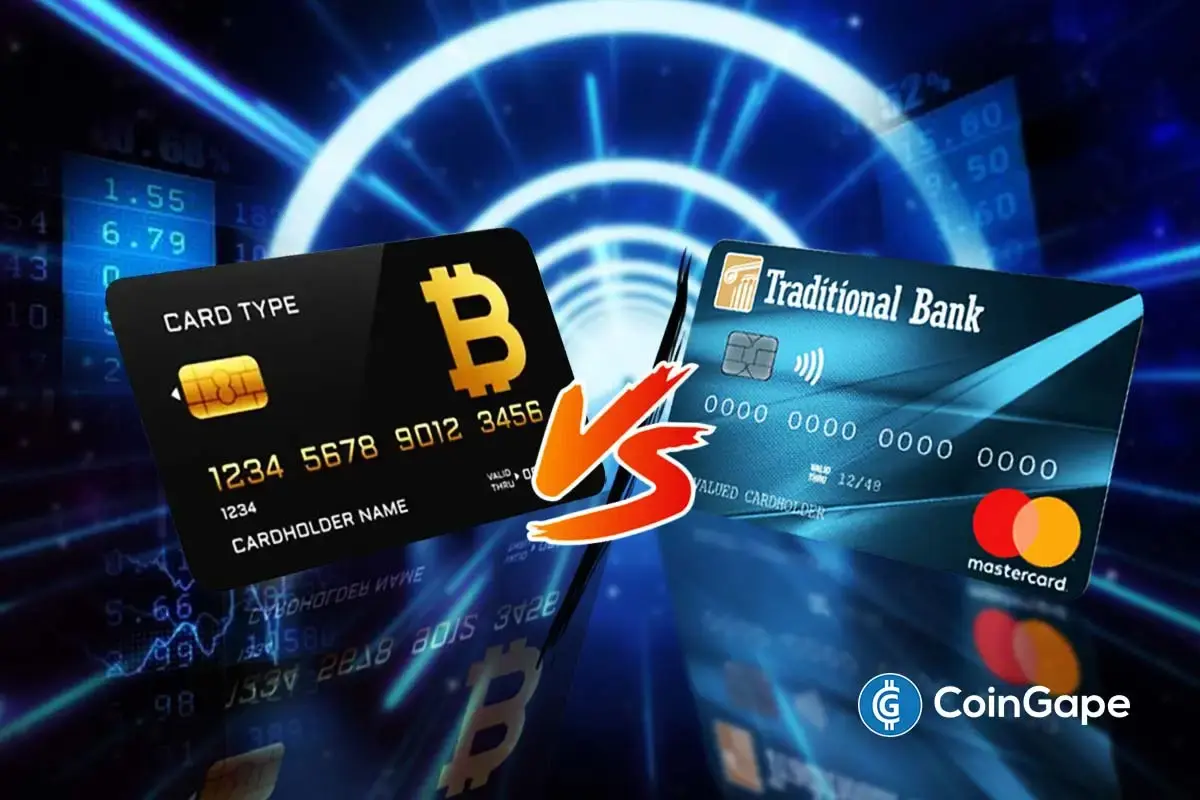
Traditional debit cards have been on the scene for decades now and have become one of the favourite payment methods for millions worldwide. However, lately, crypto debit cards have been gaining popularity, and the main difference between the two is how they work while the transaction is being processed. A traditional debit card gets money straight from your bank account to make the payment.
A crypto debit card does the same, but in a different way. It starts its processing as Bitcoin, USDT, or any other cryptocurrencies and then converts that into fiat currency when the payment is finally processed.
A traditional debit card is a simple digital or plastic card which issued by your bank and is directly linked to your bank account. Now, when you pay with it, the issuer moves real money (fiat) from your bank account to the merchant’s bank account via an established network such as Visa or MasterCard. It is fully trusted and built on banking rails and protections. A traditional debit card also allows you to withdraw cash via ATMs.
Traditional debit cards work like an easy access to your bank accounts. When you use it, they get in touch with the bank to withdraw funds from your bank account.
This process is instant as money is withdrawn from your bank immediately when you use it. One can instantly understand here how much money is spent.
Traditional debit cards use is connected to Visa, Mastercard, Rupay, etc. and works at millions of merchants and ATMs worldwide. It becomes very handy, especially if one is travelling.
Banks are giving perks to their customers for using debit cards. They come as cashbacks, points programs and partner discounts. Instead of spending with a credit card and getting the headache of paying later, you get to pay with the money you already have.
You can withdraw cash from ATMs, and the debit card also acts as a medium in online banking to initiate transfers, pay bills, and even set auto payments and view bank statements for transaction history.
Crypto debit cards are issued by a cryptocurrency exchange or a financial provider. It allows users to spend their digital assets in real-life purchases. However, instead of a bank, a crypto debit card is linked to a crypto wallet. And when one makes a purchase, the cryptocurrency is converted into fiat in real time and processed the transaction with the help of payment networks like Visa or Mastercard.
One can use crypto debit cards for multiple cryptocurrencies. Some of the most popular ones are Bitcoin, USDC, USDT, etc.
When one uses a crypto debit card, the process instantly converts the cryptocurrency to the local currency, like USD, EUR, INR, etc. They just receive standard payments via card networks.
The concept of crypto is still new, to crypto debit cards are not yet globally accepted. It depends on local regulations, partner network restrictions, the rules for Visa and Mastercard and banking restrictions. So, one needs to be updated with the local regulations of the place regarding cryptocurrencies.
Just like a traditional debit card that gives you cashback, crypto debit cards also give rewards like digital assets.
Most of the crypto debit cards have mobile-built apps for crypto wallet services. Users can manage everything from here, like their crypto balances, the currency they want to spend from their holdings, etc.
| Features | Traditional Debit Cards | Crypto Debit Cards |
| The source | Directly linked to bank accounts (fiat currency) | Linked to a crypto wallet or exchange |
| The spending process | Fiat to fiat | Crypto to fiat |
| Speed of transactions | Instant for local-based payments, international payments take longer | Also fast and instant at checkout, conversion may take sometime. |
| Accepted currency | Local and international fiat (USD, EUR, GBP, INR) | Multiple cryptocurrencies (BTC, ETH, USDC, USDT) |
| Availability | Widely accepted almost everywhere globally | Accepted where crypto is not banned or restricted |
| Fees | Low fees for domestic use. ATM charges and overdraft fees are applicable | Conversion fees, possible blockchain network fees, and tiered monthly fees |
| Rewards | Cashbacks and points | Crypto rewards, staking rewards. |
| Privacy | They are comparatively more secure due to well-formed regulations, better fraud detection techniques, consumer protection, etc. | Depends on the card. Some cards offer more privacy than others. Depends on local regulations as well. |
| Regulations | Strong and standardised banking regulation with KYC/AML | Depends from country to country. So very important where one is while using it. |
| Risks | Frauds, PIN and OTP scams | Volatility of cryptocurrencies, exchange hacks and self-custody risks. |
| Use cases | Everyday purchases, ATM access, bill payments and online banking | Spending crypto holdings and crypto rewards |
Traditional debit cards are one of the most used payment methods in the world. According to a recent study by the Federal Reserve Bank of Atlanta, around 82% of American adults had a credit card, and around 90% of them have a debit card as of 2024.
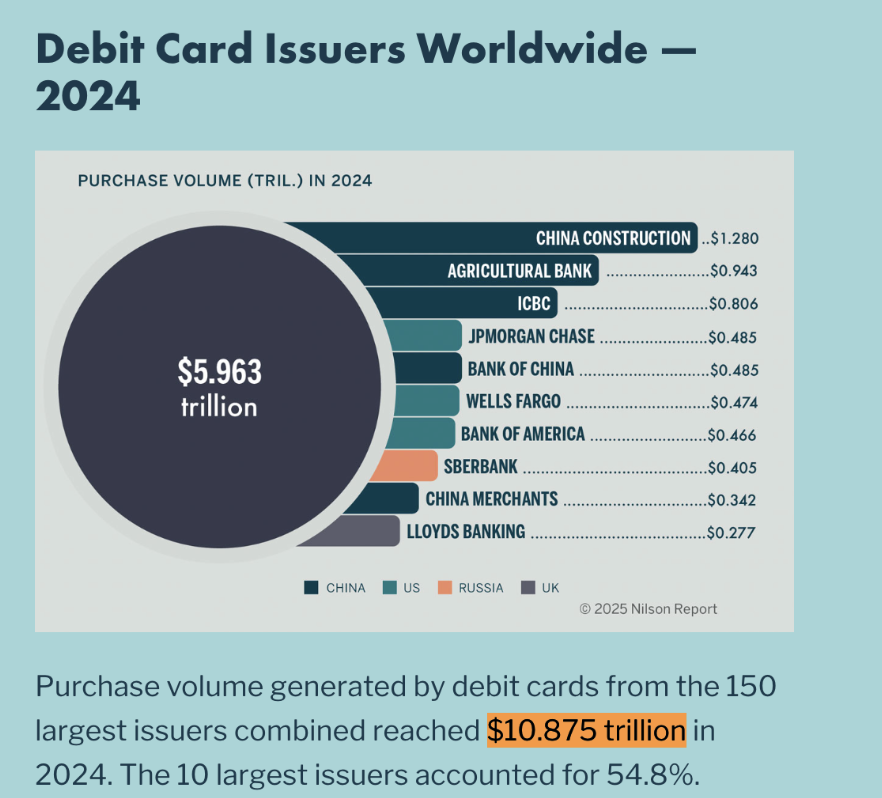
This clearly shows that people are more comfortable using the money they already have, rather than paying later with interest. The top 150 debit card issuers generated a total of $10.875 trillion in purchase volume in 2024.
According to recent reports, the market for crypto debit cards will increase very rapidly by 2033, with an estimated value of over $220 billion. Companies like Coinbase provide a sizable market for their related Visa debit card offering, with more than 100 million users overall. Also, the Crypto debit card Market size was valued at $4.5 billion in 2024.
According to other reports, in 2021, around 75% of U.S adults used digital payments, making a robust shift towards innovative payment solutions that include crypto debit cards.
The choice will depend on one’s specific needs and spending habits. It depends on the person’s risk tolerance and financial goals.
| Card Provider | Why To Choose It |
| Crypto.com | Comes with Benefits and Perks |
| Coinbase | Ideal and best suited for Coinbase users |
| Wirex | Best Rewards especially for US Investors |
| BitPay | Best for their low fees in the US region |
| Nexo | Best for both Credit & Debit Cards |
If you think crypto debit cards are new to the scene, then that is actually not the case. Many big companies in the crypto sector have already understood its importance and big and working on projects related to crypto debit cards.
For example, Bitget Wallet offers a cryptocurrency debit card that is free to use. Their customers in Europe, Latin America and even in the Asia Pacific region can use any kind of stablecoins to make payments with the help of these crypto debit cards.
Crypto exchange Kraken is teaming up with Mastercard to allow customers in the UK and Europe region to spend their crypto anywhere at over 150 million merchants in the world.
In another development, Emurgo, the business entity behind the 21 billion blockchain and digital payment service, Wirex, has come together to offer a Visa card that will allow users to make any kind of cryptocurrency purchases. This Cardano card is one of the cryptocards as part of Cardano Submit 2025 in Berlin.
When it comes to the ultimate result, both cards will solve the same problem, which is to make the payment. However, the main difference lies between as to how the payment is being processed and what benefits you are getting out of it.
Some users balance between both. When it comes to big tech purchases or international transactions, crypto debit cards are better suited. And when it comes to everyday purchases like bill payments or daily goods buying, then traditional debit cards are your best option.
It is also important to mention that volatility, conversion fees and regulatory protection are some of the things that should be considered when someone is using a crypto debit card.


 2M+ Monthly Readers
 50k+ Articles


 Buy $GGs