CoinGape has been covering cryptocurrency and blockchain markets since 2017. Our editorial team evaluates projects and platforms using structured review frameworks focused on transparency, utility, and risk assessment. You can explore our review methodologies to see how we assess and rate different categories. We maintain clear editorial standards and disclose advertising or affiliate relationships where applicable.
If you trade decentralized perpetuals, staying safe and secure should be your priority. Perps are one of the most profitable aspects of DeFi, but from my experience, they are also one of the most dangerous for traders.
In 2025, decentralized exchanges (DEXs) processed up to $1.3 trillion in monthly trading volume during peak periods, according to DefiLlama. Perpetual futures account for a large part of that activity, driven by leverage and capital-efficient trading systems that allow you to do more with less capital.
The growth potential in trading perps is real, and there’s serious demand. But so are the risks, because leverage cuts both ways. It magnifies your gains and also punishes your mistakes.
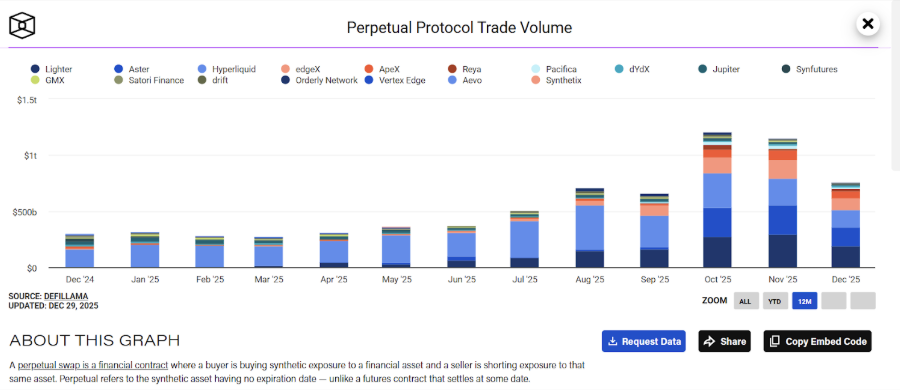
Perpetual futures trading is designed to amplify risks. So, high leverage means small price changes can cause serious losses. Liquidations are automatic and instant. Plus, prices depend on oracles, and many smart contracts are linked to each other. When one thing breaks, others can suffer too. The impact in one area is hardly isolated.
This explains why failures in decentralized perpetuals are faster and more serious than other parts of DeFi. This article explains where those risks come from and how insurance and audits fit into the picture. We also explain why you should consider safety before deploying your capital on a Perps DEX.
To understand why safety matters in perpetual trading, it helps to look at how real platforms have failed in the past. Several high-profile incidents have shown how fragile even top-performing DEXs can be.
For example, in 2025 alone, DEX platforms have lost over $3.1 billion to hacks and exploits, according to reports. Some of these losses came from derivatives and perpetual trading platforms. In some cases, these losses came from deep technical issues like smart contract bugs and oracle manipulation. Even top protocols were not spared.
In July, GMX lost over $42 million to a smart contract bug. The problem was deeply rooted in how short positions, pool pricing, and token values interacted. Although most of the funds got returned through a bounty program, the damage was already done.
In 2023, dYdX V3 also lost $9 million to a price manipulation. This shows that even the top decentralized platforms are not safe from extreme market pressure. Size, platform reputation, and volume don’t make perps trading less risky. Instead, they concentrate on it. We recently wrote about the top DEXs for perpetual futures trading. This article builds on that analysis by looking at the security and insurance framework backing those platforms, and why they matter so much in leveraged environments like decentralized perpetuals.
Perpetual protocols stand out in DeFi because they are designed around leverage. Leverage is what makes them beautiful for traders, but it’s also what makes them fragile. Perpetuals are unlike spot trading. Traders can open large positions without expiry, which means risks stay in the system indefinitely.
Perpetual trading platforms recorded serious losses this year. At peak periods, decentralized perpetual platforms collectively manage between $10 billion and $12 billion daily in open interest.
This means that small delays in pricing, liquidity, or execution affect not just individual traders. It creates a ripple effect across billions of dollars in leveraged positions.
Risks also come from how perpetual protocols depend on oracles. Prices, funding rates, liquidations, and even margin requirements rely on external data feeds. According to QuillAudits, oracle timing gaps and flash loans contribute to many DeFi exploits.
Also, liquidation mechanics create systemic pressures, especially in high-leverage environments. All of these are why losses on perpetual DEXs are amplified and show that perpetual protocols carry system-level risk and not just at the user level.
Oracles, liquidation engines, liquidity pools, and smart contracts all work together. So, when one part fails or lags, the damage cuts across different parts. This is why traders must think beyond profit and prioritize safety measures like audits, insurance mechanisms, and risk controls before deploying their funds.
Most crypto traders misunderstand the concept of insurance in decentralized trading. In reality, decentralized insurance doesn’t directly protect the trader. Instead, it is more concerned about protecting the protocol. The core focus of decentralized insurance is to handle system-level shortfalls during extreme market conditions that can create losses that trader collateral can’t cover.
For most perpetual DEXs, keeping an insurance fund acts as a buffer against bad debt. Now, this fund is often built from:
When a large position cannot be closed fast enough, or prices move too fast, that’s where the insurance fund steps in. This helps keep the operation running and prevents the loss from affecting liquidity providers or other traders.
However, insurance funds are not unlimited and can be drained. During moments of high volatility, for example, liquidity cascades can easily drain the funds. This happens more often on platforms that allow a high-leverage environment, where sudden price changes can create bad debt more than the insurance fund can handle.
Additionally, the insurance fund also has clear limits. Most decentralized insurance does not cover
Some third-party DeFi insurance protocols exist, but they offer limited coverage for perpetual trading because things move really fast and are hard to insure. So the key takeaway here is that insurance is a last line of defence and not a guarantee. It helps protect the system and not your trading decisions.
While strong insurance matters, it only works when combined with smart risk limits and solid protocol security setup.
Most traders treat security audits as the final stamp of safety on decentralized protocols. The truth is that they are not. Most of the top decentralized perpetual platforms have been audited by top security firms. But that alone doesn’t make them safe.
Perpetual platforms are more complex than spot DEXs because they combine:
All of these work together as a single system. As a result, auditing perps goes beyond checking code, but is more about understanding how the system functions when things go wrong. The regular audits are good if the focus is
These problems still matter. But audits have limits. They cannot fully predict real market behaviour, aggressive trading strategies, extreme volatility, or sudden price crashes. This is where most problems begin.
Some of the major losses in perpetual trading were not caused by hacked code. The contracts were as good as designed. Instead, the problem came from economic stress. Prices moved too fast, and liquidity disappeared. Oracles are updated too late, and all these have serious consequences in such a sensitive market.
In most of these cases, the code was good. Now, modern audits have realized that there’s a need to go beyond the normal scope of checks. Some top audit firms now review:
This approach works better because it addresses the root cause behind most failures on perp DEXs. Interestingly, most protocols now use multiple audits, constant monitoring and bug bounty programs as added security,
The point here is simple. An audited protocol is better than an unaudited one. However, an audit alone doesn’t make a project risk-free. In decentralized perpetual trading, safety depends on layers of protection.
When evaluating a decentralized perpetual exchange, look beyond its leverage, fees, and volume. Safety in perp trading is not about calm markets. Instead, it’s about what breaks when things get tough.
For better security, start with the insurance fund. Check if the protocol has one. Is it funded by real fees, and can you see the data? If the insurance fund is small compared to the daily open interest volume, it won’t matter much during liquidation cascades. It also doesn’t help if the numbers are hidden because that means you’re trading blind.
Next, check oracles and audits. Some platforms rely on multiple oracle feeds, time-weighted prices and audits. Platforms with ongoing monitoring and bounties show the team expects risks and is planning for it.
Finally, look at real history. Has the platform suffered volatile markets, and how did they react? Did they drain their insurance funds or pause withdrawals? This gives you an idea of their system strength. Also, check if the leverage limits are reasonable for the liquidity levels.
Being a top crypto trader isn’t about chasing gains. Instead, the focus is on choosing the right platform that’s designed to survive tough markets.
When it comes to perpetual trading, survival is the edge. Now, decentralized perpetuals are not unsafe. Instead, they can be unforgiving. Leverage and automation create powerful trading systems but also concentrate risks in ways most traders don’t realize. This is why security audits, insurance funds and risk control are major requirements for safety.
The best traders understand this, they don’t choose platforms based on leverage and fees alone. Instead, they trade where the system is designed to absorb failure, not ignore it.


 2M+ Monthly Readers
 50k+ Articles