CoinGape has been covering cryptocurrency and blockchain markets since 2017. Our editorial team evaluates projects and platforms using structured review frameworks focused on transparency, utility, and risk assessment. You can explore our review methodologies to see how we assess and rate different categories. We maintain clear editorial standards and disclose advertising or affiliate relationships where applicable.
If you’ve spent any time in crypto over the last few years, you’ve probably noticed one thing: privacy is no longer a niche concern. It’s front and center. Data breaches are the order of the day, governments are tightening oversight, and every new platform seems to want more personal information than the last.
After around $3.4 billion have been lost to exchange hacks and countless user databases exposed from January 2025 to date, the question isn’t whether privacy matters. But it’s how to protect it without locking yourself out of the ecosystem.
Two ideas keep coming up in this conversation: No-KYC crypto exchanges and Decentralized Identity (DID). These concepts may approach the privacy problem from very different angles, but their collective aim is to reduce how much of your personal life ends up stored on someone else’s servers. One removes identity checks entirely. The other rebuilds its identity itself.
So which one actually serves privacy better? And are they competing solutions, or pieces of the same future? Let’s break it down in plain terms.
No-KYC crypto exchanges do exactly what the name suggests. You trade without submitting identification. No passports, no selfies, no proof-of-address emails stored in a database somewhere waiting to be leaked.
These platforms have become more popular than ever. As regulations expand and compliance requirements become more demanding, many traders are increasingly choosing privacy and speed, instead of convenience features they don’t really need.
The appeal is obvious. On some platforms, there’s barely any account setup at all. You simply connect a wallet, deposit funds, and start trading. On decentralized exchanges like Uniswap, there isn’t even an account to register.
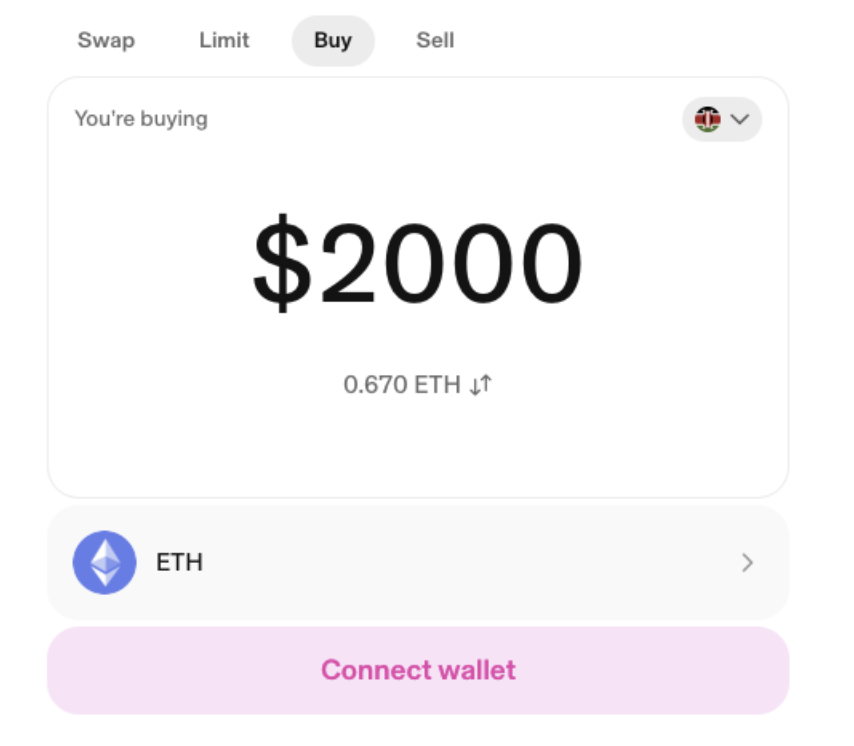
Platforms such as Apex Protocol have gained attention by offering real liquidity and advanced trading tools without mandatory identity checks. But no-KYC exchanges aren’t perfect, and anyone pretending otherwise is selling something.
For many users, however, no-KYC exchanges act as a gateway into crypto without surrendering personal data upfront. Used carefully and with realistic expectations, they still play a meaningful role in privacy-focused trading.
Decentralized Identity takes a different approach. Instead of avoiding identity checks entirely, it asks a bigger question: why does anyone else need to own your identity data at all?
With DID, your identity lives with you, not with an exchange, a government database, or a tech company. Credentials such as age, residency, or professional status are stored in a wallet under your control. Although they’re issued by trusted entities, you decide when and how they’re shared.
A core feature of DID is selective disclosure. You can identify yourself without revealing everything. All you need is to utilize cryptographic tools like zero-knowledge proofs. For example, you can prove you’re over 18 without showing your name, birthdate, or ID number.
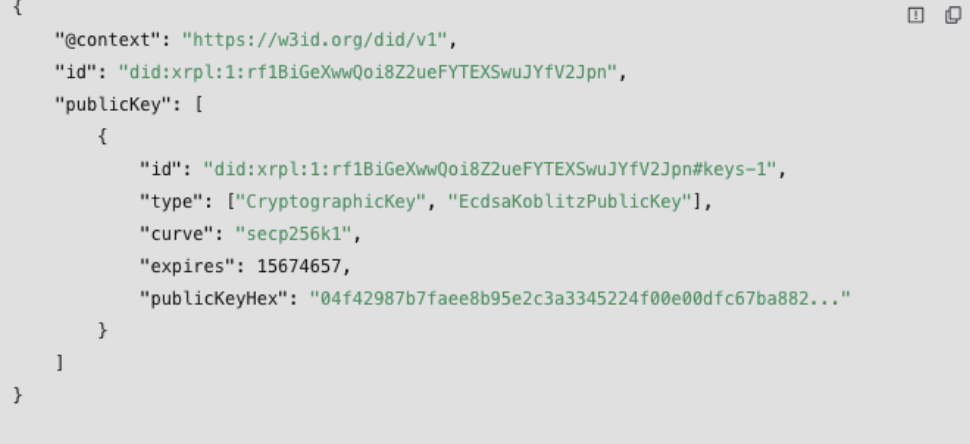
Decentralized identity isn’t a future concept anymore. Currently, W3C standards are already in use, and zero-knowledge proofs will be applied across finance, healthcare, and enterprise systems to verify information without oversharing it.
Even governments are starting to come around. In Europe, eIDAS 2.0 (Regulation (EU) 2024/1183) is pushing digital identity frameworks toward privacy-first designs that cut down on fraud while limiting unnecessary data collection.
DID isn’t about disappearing online. It’s about staying visible on your own terms.
To clearly understand how these approaches differ, it helps to compare them side by side:
| Aspect | No-KYC Crypto Exchanges | Decentralized Identity (DID) |
| Privacy model | Avoids identity collection entirely | Redesigns identity ownership and verification |
| User anonymity | High at the entry level, dependent on user behavior | Selective, cryptographic disclosure |
| Data storage | Minimal or none on the platform | Stored in user-controlled wallets |
| Regulatory alignment | Increasingly restricted or scrutinized | Actively supported by emerging frameworks |
| Security risks | Platform risk, scams, and limited legal protection | Key management and recovery challenges |
| Ease of use | Simple and fast for beginners | More complex, improving with tooling |
| Long-term viability | Uncertain under tightening regulations | Strong potential for mainstream adoption |
Simply put, no-KYC exchanges focus on staying out of the system altogether, while DID is about rebuilding privacy into the system itself.
We’re already seeing the gap close, with some platforms quietly testing DID-style verification that keeps privacy intact while avoiding the usual KYC paperwork.
Privacy in crypto is moving out of its experimental phase. Constant surveillance, repeated data breaches, and tighter rules are forcing users to look for better systems, not just fewer checks.
No-KYC exchanges aren’t going away, but they’ll have to adapt. Limits will tighten, controls will get smarter, and platforms will face more pressure to stay compliant without overreaching.
At the same time, decentralized identity is likely to gain ground as zero-knowledge tools mature and wallets become easier to use.
No-KYC exchanges and decentralized identity aren’t competing ideas. They’re different answers to the same problem, coming from opposite directions. One cuts down on how much data is collected. The other changes who controls that data in the first place.
If speed and low friction matter to you, no-KYC platforms still serve a purpose. This is especially when they’re used carefully and with clear limits. However, if you are thinking beyond trading and looking at how identity works online more broadly, DID is likely to play a much bigger role in the years ahead.
Use the right tool for the situation, understand the trade-offs, and stay informed as the landscape changes. Privacy isn’t about disappearing, it’s about having a choice.


 2M+ Monthly Readers
 50k+ Articles


 Buy $GGs