
 Claim Card
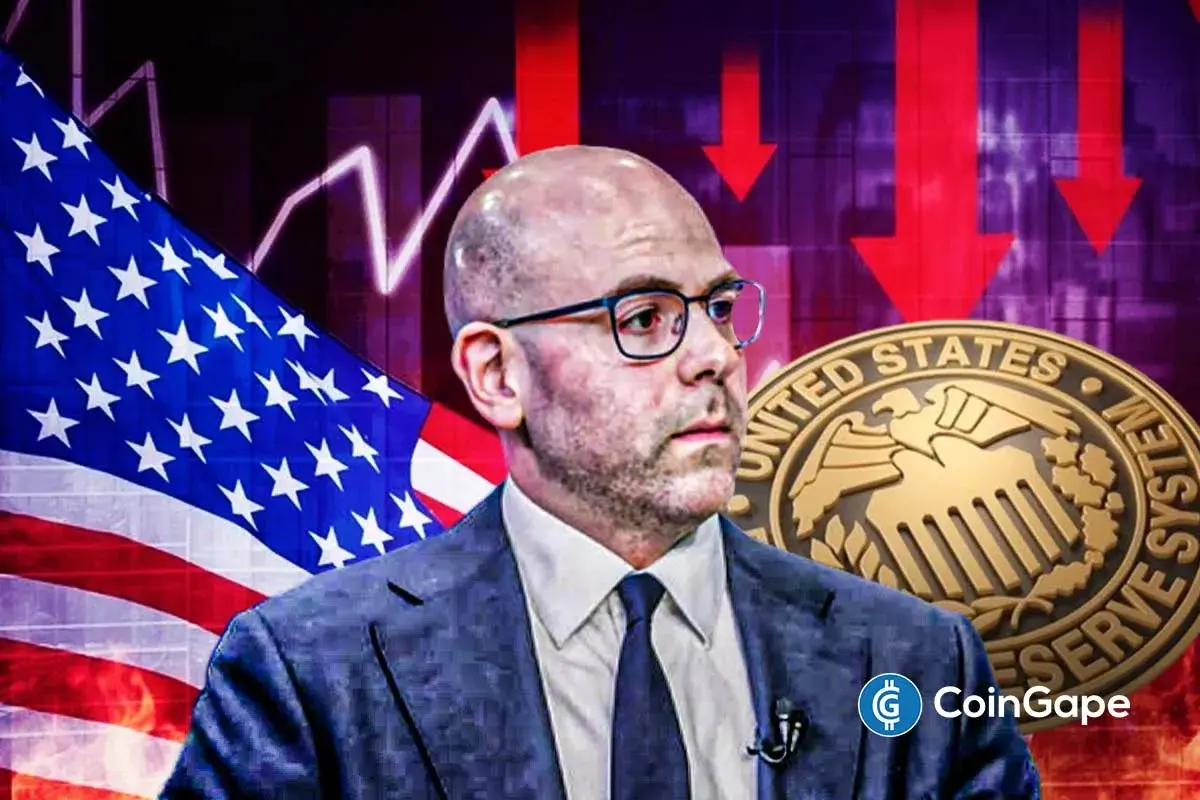
Fed’s Stephen Miran Urges More Rate Cuts In 2026 To Avoid U.S. Recession


Highlights
- Stephen Miran warns delayed rate cuts could deepen U.S. recession risks.
- Rising unemployment is now outweighing lingering inflation concerns.
- The debate centers on whether job data will decide the next move.
Federal Reserve Governor Stephen Miran warned that the U.S. risks a recession without further interest rate cuts next year. He said the central bank must keep lowering rates to prevent economic damage.
Will Rising Unemployment Force More Rate Cuts?
Speaking in a Bloomberg Television interview, Miran said policy remains restrictive. He warned that failing to adjust rates lower could create unnecessary economic risks.
Miran added that he does not foresee a recession now but emphasized that once there’s a rise in unemployment, the authorities are supposed to make moves towards further easing.
The unemployment level has increased more than expected previously and Miran stated that recent data from the labor market indicate a less optimistic outlook.
He argued that the current weakness in the job market overshadows over any concern about inflation, which in turn supported his argument of more rates cuts in 2026.
Similar views are shared by other policymakers. Fed’s Chris Waller is backing more rate cuts after flagging very soft labor market.
According to Bloomberg, the Federal Reserve has already cut rates three times since September. Those moves totaled 75 basis points, easing financial conditions modestly.
Fed Divided on Pace of Rate Cuts
Earlier this month, policymakers approved another quarter-point reduction. Still, divisions remain over how much more easing is appropriate.
Similar caution has emerged from other Fed officials. Fed’s John Williams sees no urgency for rate cuts despite easing pressures.
Fed’s Stephen Miran said there is less need for a half-point cut at the next meeting. He added that officials risk micromanaging policy with overly aggressive moves.
He said the Fed may still need a couple more cuts to reach neutral territory. Miran added that this would enable policymakers react to incoming information more accurately.
Majority of the officials are projecting only one more cut in the coming year. In contrast, the comments of the general population indicate that a large number of them would prefer a pause to appraise the economic situation.
The inflation is nearly one percentage point higher than the 2% target set by the Fed. Hence, some of the regional presidents are concerned that excessive easing might cause inflation to start rising again.
Will Jobs Data Determine the Fed’s Next Action?
Miran admitted such issues but then pointed out current risks in the labor market. He added that employment rates could worsen if the policy was too restrictive.
These labor risks are in contrast to recent warnings from other Fed officials. For instance, Fed’s Beth Hammack suggested a stop on rate cuts, even as there are fewer job openings.
Miran’s remarks follow discussions on whether the Fed is in the final stages of easing. Employment data is now the focus of investors as they aim to see any indicator of possible cuts in the future.

Why Trust CoinGape
CoinGape has covered the cryptocurrency industry since 2017, aiming to provide informative insights Read more… to our readers. Our journal analysts bring years of experience in market analysis and blockchain technology to ensure factual accuracy and balanced reporting. By following our Editorial Policy, our writers verify every source, fact-check each story, rely on reputable sources, and attribute quotes and media correctly. We also follow a rigorous Review Methodology when evaluating exchanges and tools. From emerging blockchain projects and coin launches to industry events and technical developments, we cover all facets of the digital asset space with unwavering commitment to timely, relevant information.



Delivered every day.
- Insights that move markets
- 100,000 active subscribers
Related Articles





- Expert Predicts Deeper Bitcoin Decline as JPMorgan CEO Warns of Similarities to the 2008 Financial Crisis
- Trump Won’t Pardon FTX’s Sam Bankman-Fried (SBF), White House Says
- Third Spot SUI ETF Goes Live as 21Shares Fund Launches on Nasdaq
- Mark Zuckerberg’s Meta Reportedly Eyes Stablecoin Integration This Year Amid Regulatory Clarity
- Coinbase Rivals Robinhood As It Rolls Out Stocks, ETFs Trading In ‘Everything Exchange’ Push
- Cardano Price Signals Rebound as Whales Accumulate 819M ADA
- Sui Price Eyes Recovery as Third Spot SUI ETF Debuts on Nasdaq
- Pi Network Price Eyes a 30% Jump as Migrations Jumps to 16M
- Will Ethereum Price Dip to $1,500 as Vitalik Buterin Continues Selling ETH?
- XRP Price Outlook as Clarity Act Passage Odds Plunge to 53%
- COIN Stock Risks Crashing to $100 as Odds of US Striking Iran Jump