
 Buy $GGs
From Mining Pool to Infrastructure Platform: Nine Years of EMCD


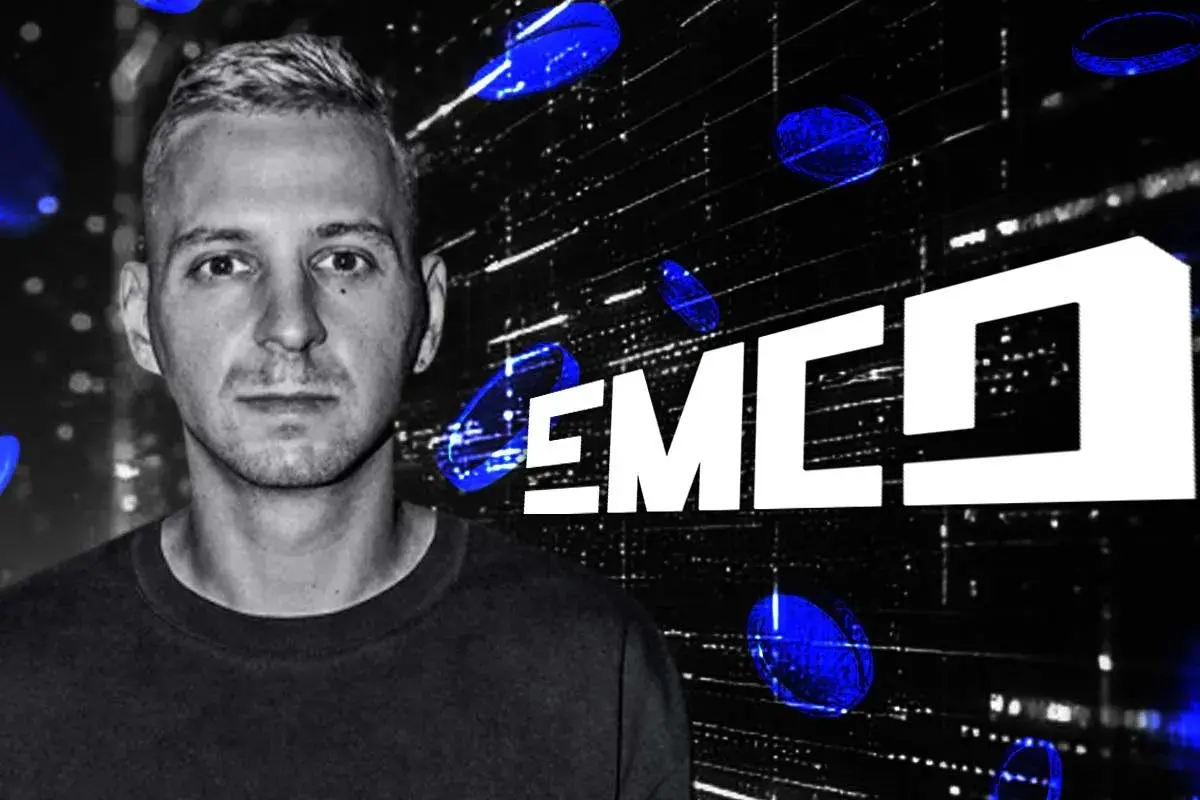
When the 2024 Bitcoin halving reshaped the economics of small-scale mining, most hobbyist pools scrambled to survive. EMCD didn’t. By the end of 2025, miners on EMCD’s pool mined 4,550 Bitcoin (BTC), while total hashrate reached an average of 34.11 EH/s.
These numbers reflect more than scale. They reflect survival — and growth — across multiple market cycles in one of the most volatile sectors of emerging technology. We sat down with the EMCD founder and CEO Michael Jerlis to find out how a 2017 mining pool transformed into a 2026 infrastructure platform.
The 2017 Foundation: Stability Over Hype
EMCD launched in 2017 as a BTC mining pool. What followed was nine years of deliberate expansion. As the market evolved, the pool added support for Litecoin (LTC), Dogecoin (DOGE), Bitcoin Cash (BCH), Ethereum Classic (ETC), and other networks, while introducing geo-distributed infrastructure to reduce latency and improve operational consistency for miners across regions.
- Looking back to 2017, what shaped EMCD’s early direction?
It’s easy to forget how fragmented the industry was back then. In some regions, such as Russia and Eastern Europe, miners didn’t even have reliable access to customer support. Most pools were focused on one goal: attract as much hashrate as possible, as fast as possible.
We focused on something else — making mining operationally sustainable.
Stable connections, transparent payouts, real support, and infrastructure users could rely on. That wasn’t fashionable in 2017, but it’s what allowed us to succeed, while many others disappeared.
- Was there a cost to building sustainably — without a token or hype?
Speed. When you don’t have a speculative token fueling your marketing, you grow at the speed of your actual revenue and user trust. It’s slower, and it’s harder to explain to a market that wants 100x gains overnight.
But the upside is trust and resilience. When the cheering stops and the bear market hits — and it always does — you’re left with a real business, not just a whitepaper.

Scaling Beyond the Pool
By early 2020s, EMCD had reached scale. The infrastructure was stable, the geography expanded, and growth was steady. The next question was where to go from there.
- What pushed you to build beyond mining?
We kept watching users mine with us and then leave to use other services — to store assets, exchange them, access additional tools. We were helping create value and then handing it off. At some point, it became impossible to ignore.
If you own the first and most technically demanding layer, mining, it’s logical to walk further with the user. Not watch their journey end at the “withdraw” button.
- Are products like Coinhold, Wallet, and P2P about user demand — or diversification?
Our users led us there. Miners wanted to store assets, optimize asset utility, and exchange crypto without jumping across multiple platforms. So we began to expand our offerings. Yes, it reduced EMCD’s dependence on mining cycles. But that was a consequence, not the original objective. The user journey came first. And it holds true today as well.
- And how did people discover your products in the early days?
Miners talk. They always have. If a pool fails during a difficulty spike, everyone knows the next morning. If payouts are consistent and support is responsive, that gets around too.
We didn’t have a marketing budget in the beginning. We had uptime and word of mouth. Turns out that’s enough if the product is solid.
- At some point, doesn’t growth itself become a risk?
Absolutely. Growth becomes dangerous when it outruns infrastructure. We’ve seen projects expand too fast — payouts slow down, support collapses, trust erodes. So we scale only when systems and processes are genuinely ready. Not before.
The EMCD team marking another company milestone
Recognition and Market Expansion
In 2025, EMCD had more than 66,500 miners and product users from across 120 countries. During the year, EMCD received recognition from several industry award programs within the digital asset and fintech sectors.
Among them were the “Best Mining Pool” awards from Crypto Awards, FinanceFeeds Awards, and The Cryptonomist. For the EMCD team, such awards represent recognition. For the market, they signal continuity.
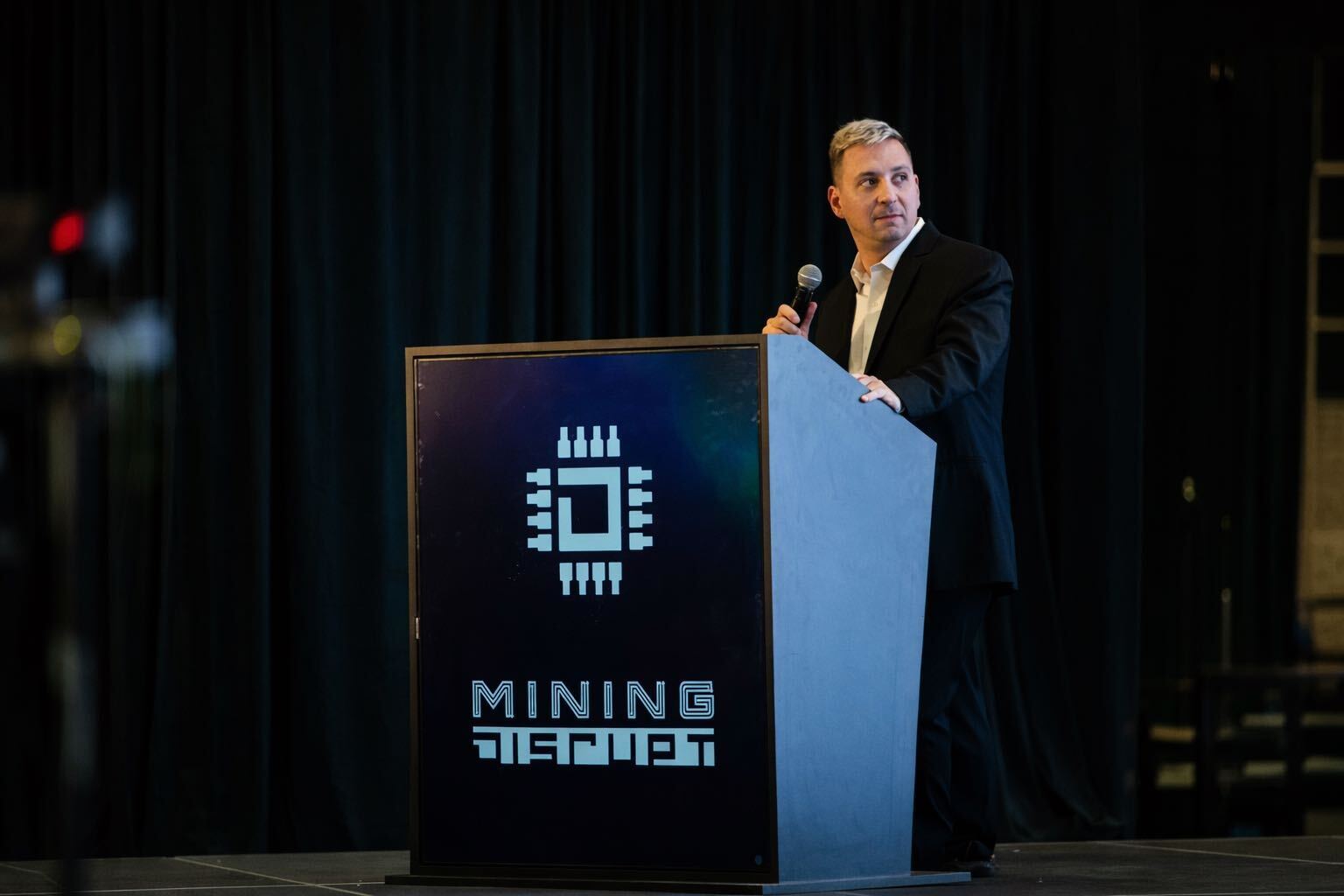
Michael Jerlis speaking on stage at Mining Disrupt 2025
- After nine years, is EMCD still a mining company at its core?
Yes, but mining-first in an infrastructure sense, not a single-product one. Mining became an entry point into crypto finance. For some users, it’s the beginning of their journey. But the entry point isn’t the destination. We’re already building for the wider crypto market beyond that.
We stopped being simply a mining pool. Today, mining is part of a broader infrastructure.
Bridging Crypto and the Real Economy
EMCD’s near-term priorities include tokenized real-world assets (RWA), expansion into Latin America, and a growing presence at global fintech and crypto events.
- Moving into RWA is a significant shift. How do you see that evolution?
Web3 can’t exist in isolation. If tokenized real-world assets are going to connect crypto with the real economy, the underlying infrastructure must be reliable.The main challenge isn’t technology. It’s regulation and user expectations. Infrastructure has to function across both worlds. That means compliance-aligned architecture, custody standards, and scalable settlement systems — and that’s what we are focused on.
- What’s the hardest part about entering new markets like Latin America?
Expectations. Teams assume the next market will look like the previous one. It never does. User habits, payment behavior, regulatory logic — everything changes. Those who struggle are often the ones who turn up assuming they already understand the market.
Infrastructure must adapt to the region, not the other way around.
Institutional Standards and Retail Impact
- Who’s harder to serve — retail users or institutions?
Institutions. They require SLAs, APIs, compliance frameworks, and operational stability. It’s demanding.
But once you’ve built to that standard, retail users automatically get a more reliable product. Institutional requirements raise the floor across the board
- You picked up three industry awards this year. Does that signify anything for you?
For the team, it’s recognition. For the market, it’s a signal that the project isn’t a one-cycle thing. But internally, we never make decisions based on awards. We build for longevity. Recognition comes as a result of that.
Beyond the Office
- How do you disconnect from work and maintain balance outside such an intense role?
I don’t try to switch off completely. What matters more is keeping my mind clear. Yoga and tennis help with that because they reset your focus. When you’re responsible for decisions at scale, mental clarity becomes essential.

Michael Jerlis at an evening gathering with friends
- Do you have interests outside of tech and finance?
Music has always been one of them. I’ve always been passionate about it — I’ve been involved in putting together small private events with friends, partly as a way to stay connected to culture outside of work. Nothing formal, just creating the right atmosphere. I’ve also been following robotics and AI for years simply out of curiosity. Embodied AI has reached a tipping point. Robots are leaving controlled environments and moving into real industries. It reminds me of Bitcoin around 2013. Most people didn’t see the scale yet, but the shift had already begun. Beyond that, I find myself drawn to contemporary art and cultural spaces where new ideas tend to surface early, whether that’s Art Basel in Miami, Burning Man, or the New York Fashion Week.
- Is there a philosophy that influences how you approach life and work?
I’ve long been interested in the Japanese idea of kaizen, the principle of continuous improvement. I apply that mindset broadly. It shapes how I work, how I structure my day, and how I experience new cultures while traveling. My interest in nutrition and biohacking grew from the same mindset and eventually led me to launch several lifestyle initiatives focused on improving everyday environments, not just personal routines.
Looking Toward 2030
The mining landscape continues to evolve. Following the 2024 Bitcoin halving and increasing computational demands, independent hobby mining has become significantly more challenging. At the same time, computing infrastructure is increasingly valuable across industries, including AI workloads.
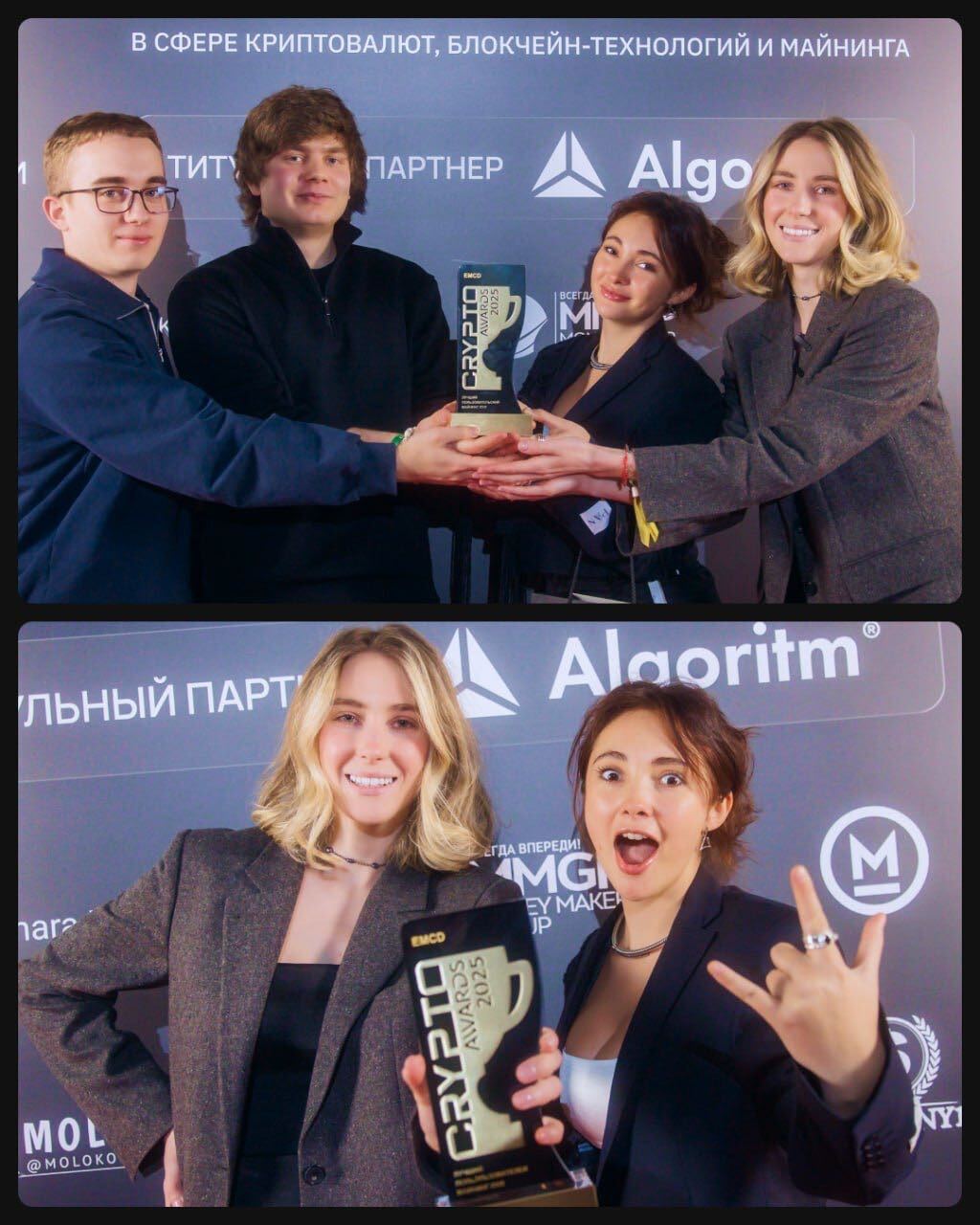
EMCD team receiving the “Best Mining Pool” award at the Crypto Awards 2025 ceremony
- What does a crypto miner look like in 2030?
Mining as it existed years ago is becoming more specialized. Operators today control two critical resources: access to large-scale power infrastructure and the ability to deploy and reconfigure hardware quickly.
Those locked into a simple buy-mine-sell cycle will struggle with volatility and narrowing margins. Infrastructure operators — flexible, diversified, disciplined — will endure.
- The ten-year mark is approaching for EMCD. What does the milestone mean to you?
It’s not just a number. It represents the point where millions of users interact with our infrastructure directly, and hundreds of companies connect through our APIs.
We’re not building a storefront. We’re building the infrastructure where digital and real-world value converge over the long-term. The road is long — and that’s exactly why it’s sustainable, productive, and real.
Play 10,000+ Casino Games at BC Game with Ease
- Instant Deposits And Withdrawals
- Crypto Casino And Sports Betting
- Exclusive Bonuses And Rewards



Why Trust CoinGape
CoinGape has covered the cryptocurrency industry since 2017, aiming to provide informative insights Read more… to our readers. Our journal analysts bring years of experience in market analysis and blockchain technology to ensure factual accuracy and balanced reporting. By following our Editorial Policy, our writers verify every source, fact-check each story, rely on reputable sources, and attribute quotes and media correctly. We also follow a rigorous Review Methodology when evaluating exchanges and tools. From emerging blockchain projects and coin launches to industry events and technical developments, we cover all facets of the digital asset space with unwavering commitment to timely, relevant information.


Delivered every day.
- Insights that move markets
- 100,000 active subscribers
Related Articles

- Institutional Re-Accumulation Signs Emerge as Bitcoin ETFs See $1.1B Net Inflows Since Iran War Began: Glassnode
- U.S.-Iran War: U.S. Oil Prices Spike To One-Year High, Bitcoin and Gold Dip
- Crypto Traders Bet Against U.S.-Iran Ceasefire This Month as Iran Denies Peace Talks
- Ripple Prime Adds Support For Bitcoin, Ethereum, XRP, Solana Derivatives on Coinbase
- Bitcoin Price Still Risks Decline If Iran War Mirrors Ukraine War Market Reaction, JPMorgan Warns
- HOOD Stock Targets $100 as Robinhood Unveils Platinum Card and Advance Dividend Feature
- Bitcoin Price Prediction if Donald Trump Signs the CLARITY Act on April 3, 2026
- Pi Network Price As BTC Rallies Above $74K: Can PI Coin Extend Gains to $0.30?
- XRP Price As Bitcoin Reclaims $74K- Is $5 Next?
- Dogecoin Price Outlook as BTC Recovers Above $73,000
- XRP Price Prediction as Iran-U.S. Peace Talks Trigger a Crypto Rally