




Understanding LTV in Crypto Lending on Clapp Finance and How to Avoid Liquidation




LTV is a common acronym in lending protocols and platforms. It forms the basis of lending mathematics and is relevant for every lending strategy. For regular and new users of crypto lending platforms, this article explains LTV, what it means for your lending strategy, and how to avoid liquidation using LTV as a context.
How LTV works in crypto using Clapp Finance as an example
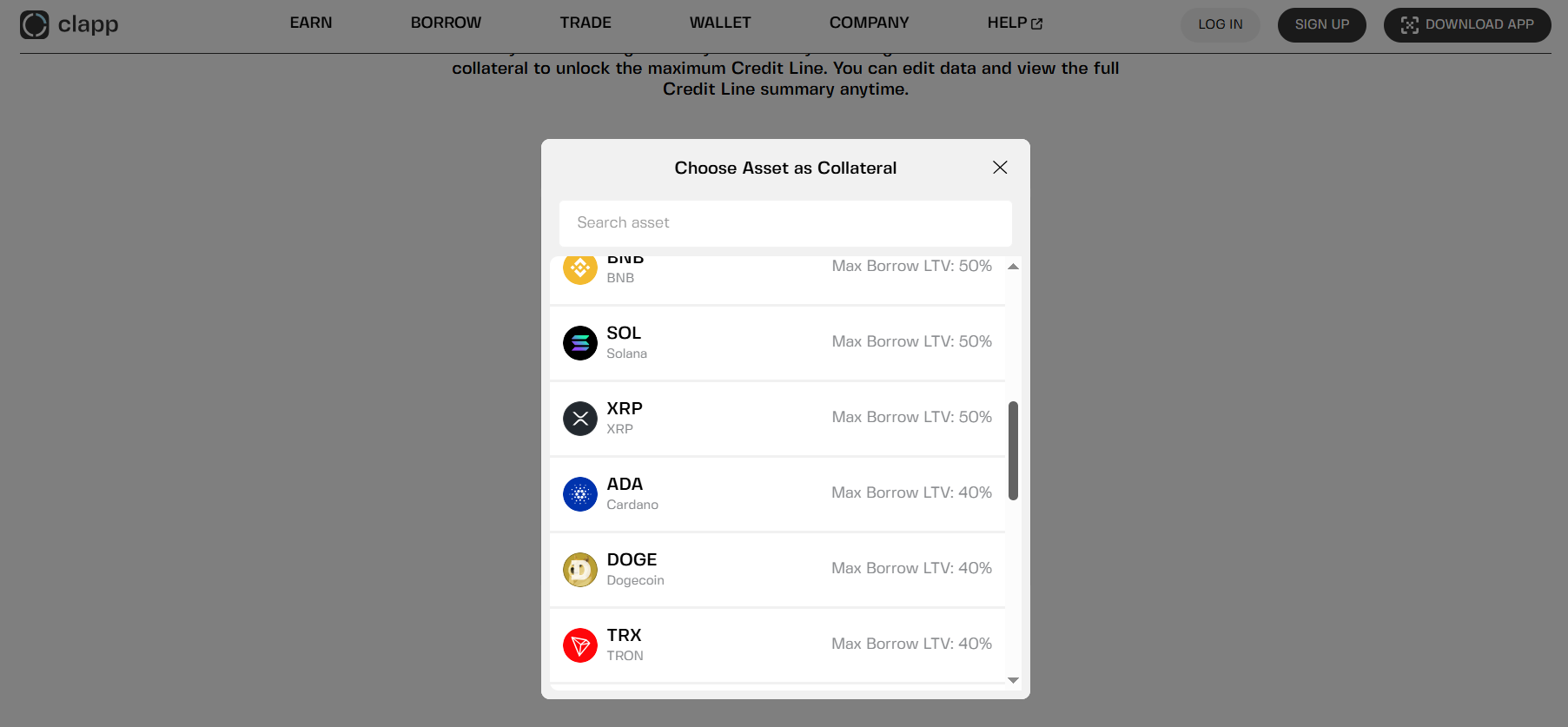
Clapp Finance specifies an LTV for each of the 19 crypto assets supported as collateral. Using Solana as an instance,
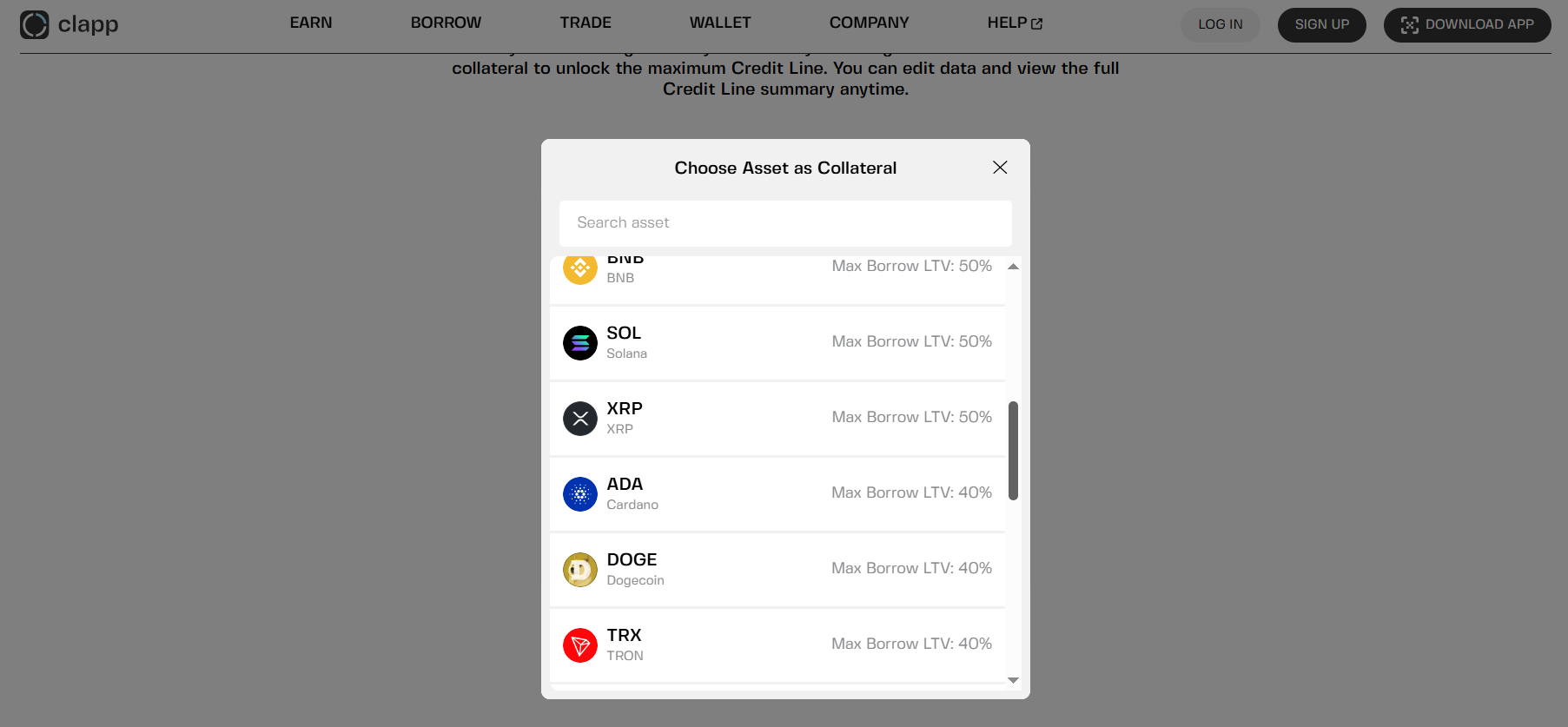
The LTV for Solana on Clapp Finance is 50%. Therefore, if you provide $1,000 worth of Solana as collateral, you will receive a $500 USDT Credit line. That is
- Collateral value= $1000
- LTV = 50%
Using the formula above, the loan amount is calculated as
In other words, if you wish to borrow USDT with Solana on Clapp Finance, you are required to provide twice the value of the USDT you wish to borrow.
On the Clapp Finance platform, you can use the credit line calculator to estimate how much you will receive on your collateral.
For 10 SOL ($836), you receive a 410 USDT credit line.
What LTV means for your crypto loans
LTV is the fundamental math for both crypto and traditional loans. Here’s why you should keep an eye on LTV while applying for a crypto loan;
Determinant for credit limit
LTV determines how much loan you receive for your collateral. This applies to revolving credit lines and fixed crypto loans. Using the provided percentage, you can estimate how much you will receive upon depositing your collateral. With the LTV estimation, you can make an informed decision on the best asset to use as collateral in order to maximize your lending benefits.
Risk Factor for liquidation
LTV varies with the collateral asset’s market performance. For instance, if you provided 0.143 Bitcoin to borrow EUR on Clapp Finance;
- The LTV may be 70% with Bitcoin valued at $70,000 at the time of the loan application.
- If the value of Bitcoin declines to $65,000, the LTV rises to 75%
- As Bitcoin’s value declines, the LTV ratio approaches the Liquidation threshold, increasing your loan’s risk.
On Clapp Finance, the liquidation threshold for Bitcoin-backed loans is 90%. When the LTV exceeds this threshold, your collateral will be liquidated.
How to Avoid Liquidation ?
With a good knowledge of LTV arithmetic, you can avoid getting liquidated on your crypto loans. Here is how to avoid liquidation;
Monitor and manage your LTV
Most lending platforms and protocols provide an LTV counter that shows LTV variations and how close your loan is to the LTV threshold. Where available, we recommend closely monitoring these statistics and managing your loan accordingly. You can keep your LTV lower by adding more collateral or repaying your loans. For revolving credit lines, you may decide to repay a part of the amount withdrawn to keep the LTV lower or provide more collateral. For Fixed loans, increasing your collateral is the best way to avoid liquidation if you cannot repay the full amount borrowed at once.
Monitor the Liquidation Price
Calculate the specific asset price at which your LTV would hit the threshold and set alerts for when the market approaches that level. On some platform, this price level are usually stated, monitor the market price of your collateral asset and manage your loan accordingly. You can increase your collateral or repay your loan when the value approaches this level.
Use stable assets as collateral
Assets like stablecoins usually have higher LTVs but are less likely to decline in value; therefore, the LTV remains almost the same over the long term. This also applies to other collateral with a stable value. In general, we recommend avoiding volatile assets while applying for a crypto loan. Use stablecoins where possible or assets with stable value. When borrowing against a volatile asset, we recommend borrowing an amount significantly lower than the approved amount.
Consider using diversified collateral
Some lending protocols allow multiple collateral assets. Where available, you can use a combination of stable and volatile assets to achieve a relatively stabilized LTV. Stable assets in the collateral basket cushion volatile assets and reduce the risk that the LTV will rise dramatically above the LTV threshold.
Borrow below the maximum limits
Borrowing below the maximum loan limits also protects you from liquidation. For credit lines, we recommend keeping the total usage below your maximum credit line, especially when borrowing against a volatile asset. For instance, you can maintain an 80% maximum withdrawal from your approved credit line. This can also be applied to fixed loans.
Conclusion
Liquidation protects a lending platform from bad loans, but for users, it poses the risk of losing their collateral. In some cases, the liquidated collateral may be valued higher than the loan amount, given that most crypto loans are significantly overcollateralized. Therefore, it is important to closely monitor your collateral risks and adjust where possible.


- Toobit Launches 3-Day Exclusive 28.88% APR on USDT
- Demand for Stability Grows as ConfluxCapital Expands Automated Trading Offering
- Clapp Finance Guide: How Crypto-Backed Credit Lines Work and Why They’re a Smart Move
- Understanding the Differences Between Fixed and Flexible Crypto Savings Options With Clapp.Finance
- Bitunix Exchange Joins Blockchain Forum 2026 in Moscow as Official Sponsor
For PR & Sponsored Content Reach us :
 @Coingapeofficials


