

 Get €3000
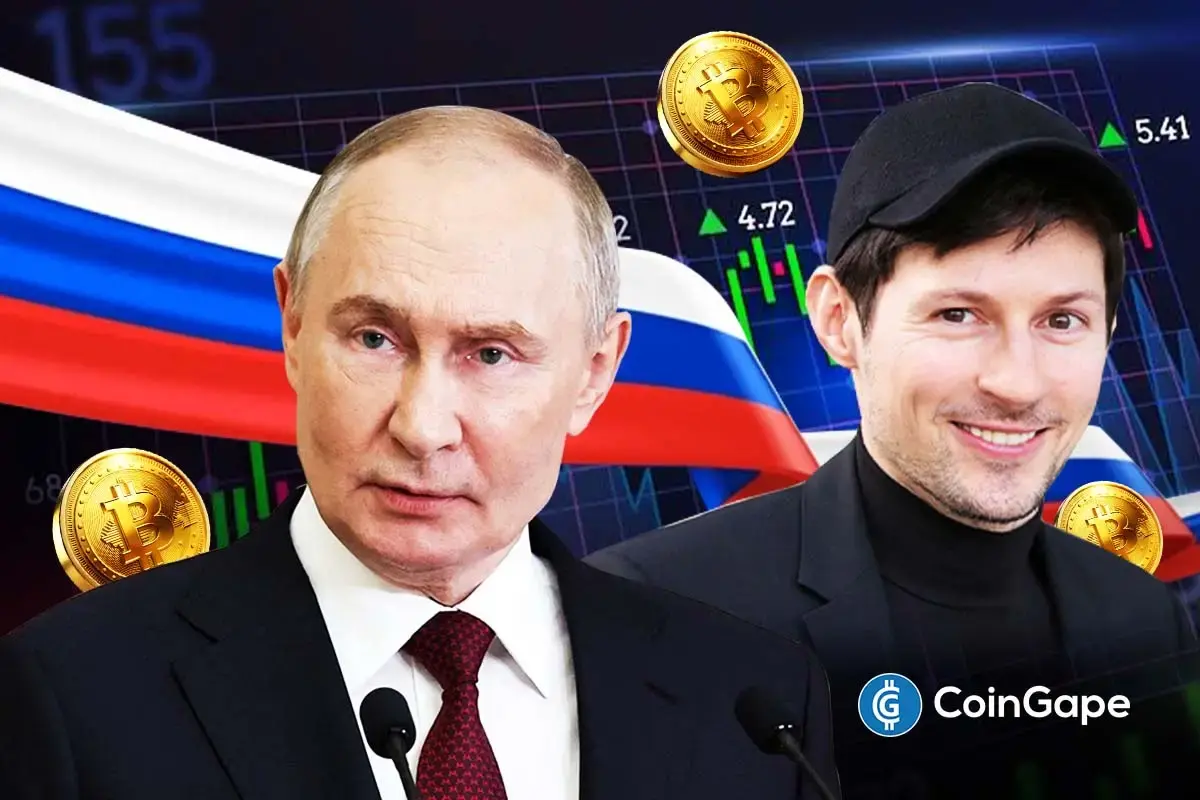
Putin Signs Law to Confiscate Bitcoin Amid Russia’s Crypto Crackdown, Pavel Durov Probe


Highlights
- Russia's President Vladimir Putin signs a law to allow police and courts seize Bitcoin and crypto.
- This comes as Russia looks to begin blocking citizens’ access to foreign crypto exchanges.
- Russia is also near to ban Telegram amid criminal investigation against founder Pavel Durov.
President Vladimir Putin has signed a new law granting Russian courts the power to seize or confiscate crypto assets such as Bitcoin. It comes as Russia pushes for crypto regulations and crackdown foreign crypto exchanges. Also, Telegram founder Pavel Durov is facing criminal investigations in the country.
Russian President Putin Signs Law to Confiscate Crypto and Bitcoin
President Vladimir Putin signed a new law that will amend Russia’s Criminal Code and Criminal Procedure Code, recognizing crypto assets as intangible property, Kommersant reported.
The law grants courts the power to seize or confiscate digital assets, including Bitcoin, in criminal cases. The law stipulates that police or prosecutors’ requests to confiscate crypto must include details on the type and quantity of crypto assets, along with the wallet addresses.
In some cases, funds may be transferred to a special address. The government must determine the procedures for transfers and storage.
Deputy Justice Minister Elena Ardabyeva said the law codifies the existing practice of seizing digital assets. The law also provides legal grounds for cooperation with foreign crypto exchanges.
Russia is working on new crypto regulations this year and wants traders to use domestic platforms or crypto exchanges that have a physical presence in Russia.
Russia’s Crackdown on Crypto and Telegram Founder Pavel Durov
Experts say the Kremlin could begin blocking citizens’ access to foreign crypto exchanges this year. The government claims that citizens spend a collective $650 million a day on crypto trading.
Recent U.S and EU developments focus on banning crypto transactions with Russian entities to tighten sanctions. Blockchain analytics firm Elliptic reported that Bitpapa, Garantex, and ABCeX were among the crypto exchanges linked to Russian-tied transactions evading Western sanctions.
It coincides with the government’s plans to introduce new crypto market regulatory laws by July 1. Russia might draw from Belarus’ model, which restricts unlicensed foreign platforms but doesn’t fully eliminate access.
Some believe the US could drop behind Russia in crypto regulation due to the Clarity Act politicization. As talks on stablecoin yields advance following the White House’s March 1 deadline proposal, the odds of passing dropped to 48% on Polymarket.
Meanwhile, Telegram founder Pavel Durov confirmed that Russia has opened a criminal case against him for “aiding terrorism.” He claims Russia is restricting access to Telegram as they seek to suppress the right to privacy and free speech.
Russia has opened a criminal case against me for “aiding terrorism.” Each day, the authorities fabricate new pretexts to restrict Russians’ access to Telegram as they seek to suppress the right to privacy and free speech. A sad spectacle of a state afraid of its own people.
— Pavel Durov (@durov) February 24, 2026

Why Trust CoinGape
CoinGape has covered the cryptocurrency industry since 2017, aiming to provide informative insights Read more… to our readers. Our journal analysts bring years of experience in market analysis and blockchain technology to ensure factual accuracy and balanced reporting. By following our Editorial Policy, our writers verify every source, fact-check each story, rely on reputable sources, and attribute quotes and media correctly. We also follow a rigorous Review Methodology when evaluating exchanges and tools. From emerging blockchain projects and coin launches to industry events and technical developments, we cover all facets of the digital asset space with unwavering commitment to timely, relevant information.



Delivered every day.
- Insights that move markets
- 100,000 active subscribers