

Crypto Card vs. Bank Card: Which Is Better in 2026?




As you open your Apple Pay or Google Pay, you may find more than a few cards in your virtual stack. One could be a salary card, the other could be a credit card. There may also be a travel card from Revolut or Monobank. They look and feel the same because of how people interact with them: the smartphone screen.
But the similarity on the surface hides the difference underneath. One feels like sending a physical letter through the post office while the other feels like a Telegram message.
It’s 2026, and the “crypto vs. banks” debate is over. Regulations are knocking on crypto’s doors. Presidents are talking about it. No one is calling to end traditional finance anymore. People have gone full pragmatic, choosing the best tool depending on the job.
So, without going fanatic about one, let us go into where the classic plastic still holds its ground, where the crypto card outperforms traditional banks, and why modern crypto-neobanks (like Trustee Plus) are trying to hit that sweet spot: giving users a familiar bank-like feel while still having crypto architecture underneath.
Round 1: Transferring Money Globally
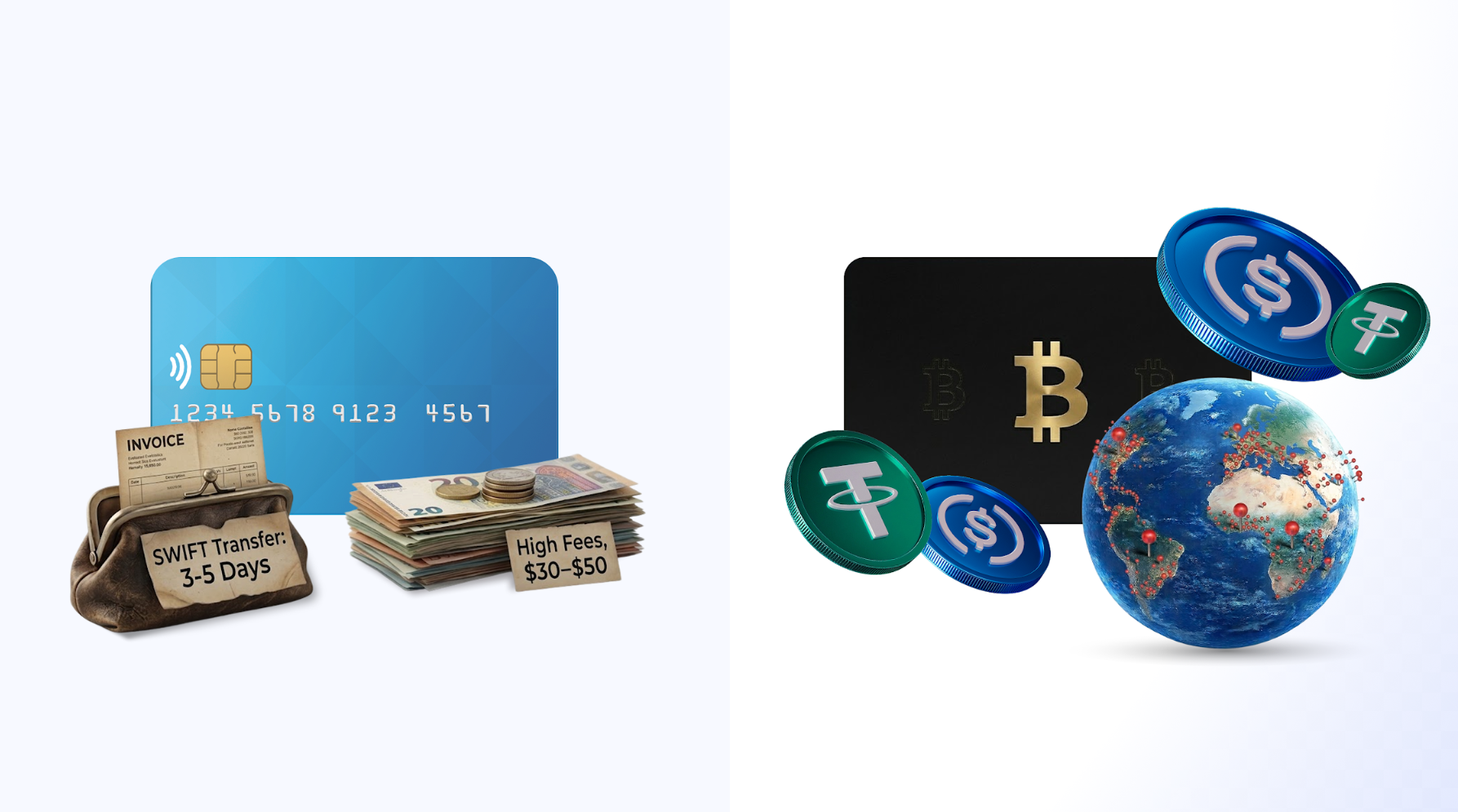
The Bank Card: Standard bank accounts are perfect when you are working in an office in Berlin and getting paid in local currency (Euros). Stepping outside the country, however, is when the pain begins. SWIFT payment transfer can take 3 to 5 days and banks will take a big bite of your salary as commission (generally $30-$50).
The Crypto Card: International money transfer finds its champion in the crypto card. It takes exactly three seconds to transfer a crypto asset from one location to the next, regardless of the distance. So, if you’re an IT specialist or a freelancer handling international clients, a crypto card is the better option.
The Score: 1:0 in favor of crypto for the modern remote worker. (But 1:1 if you live and work 100% locally).
Round 2: Travel and Currency Conversion

The Bank Card: Everything is fine at home. But the second you cross a border, your bank starts making money off you. When you pay with your local currency in Poland, the UK, or Switzerland, hidden exchange spreads hit you. Then there are cross-border transaction fees, and the infamous “weekend markups” that cut down the income.
The Crypto Card: You hold your capital in stable digital dollars (USDT/USDC). You tap your phone at a terminal in any country in the world, and in one millisecond, the system automatically converts exactly the amount needed for the purchase into the local currency at the perfect market rate. No weekend markups. No hidden fees.
The Score: 2:1. The crypto card takes the point for the ultimate international lifestyle.
Round 3: Mortgages, Credit, and Local Bureaucracy
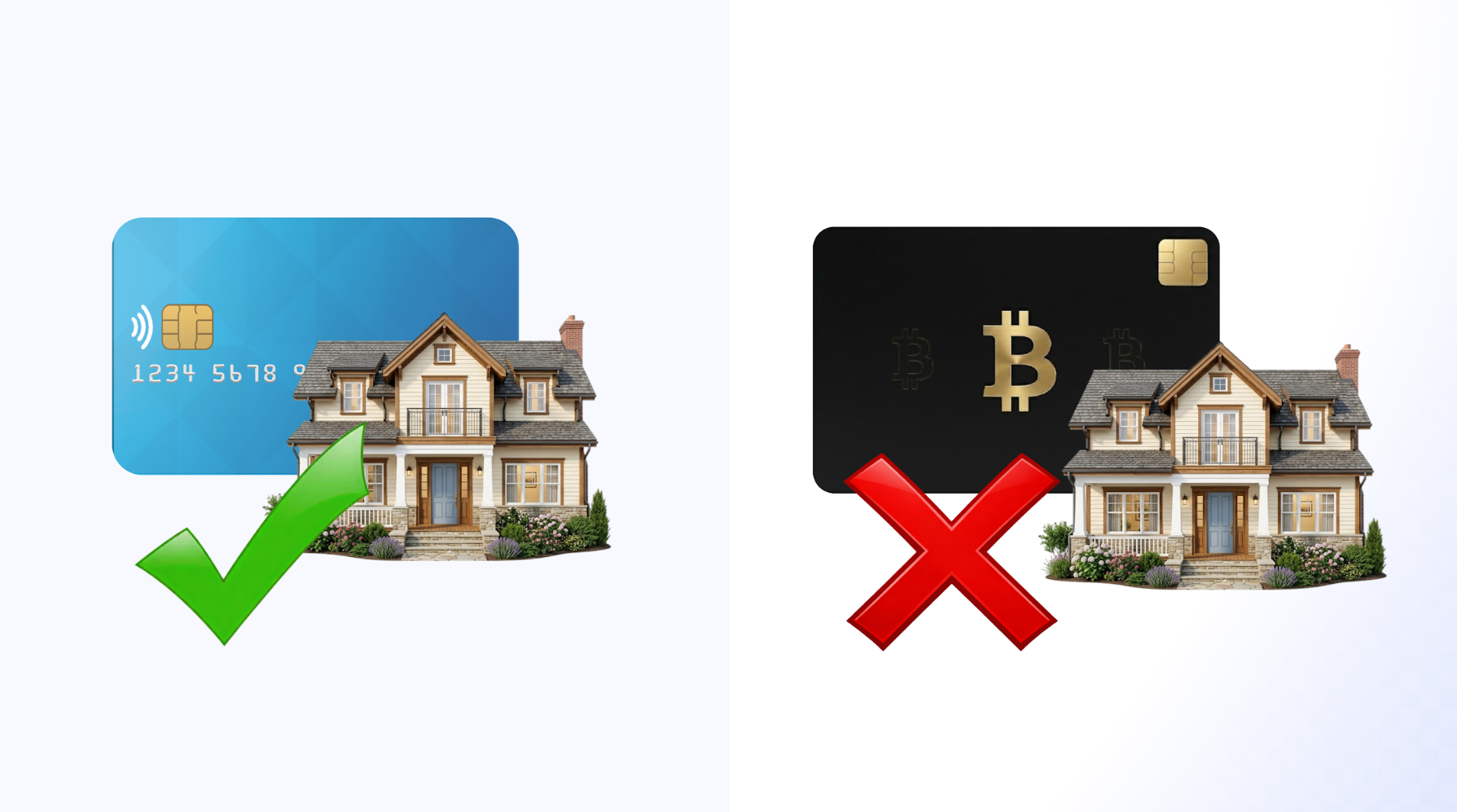
The Bank Card: Here, traditional plastic strikes back hard. If you need to take out a 30-year mortgage on an apartment, get a low-interest auto loan, or pay specific local taxes through conservative government portals, you cannot survive without a classic bank and a traditional credit history.
The Crypto Card: Currently, crypto-neobanks are heavily focused on your personal, debit funds. You spend what you earn. They aren’t handing out 30-year mortgages just yet.
The Score: 2:2. Banks successfully defend their territory of credit and government services.
Round 4: User Experience (UX) and Interface
Not too long ago, using crypto was considered a job for programmers. You had to copy terrifying alphanumeric addresses, calculate “gas” fees, and pray you didn’t press the wrong button.
The Bank Card: Banks trained us to expect comfort. Your balance is on the main screen, there is a beautiful transaction history with store logos, and you can send money to friends just by using their phone number.
The Crypto Card: Crypto cards have also embraced comfort. Take Trustee Plus, for instance. The moment the app opens, you may feel like you’re still using Revolut or N26. Same sleek minimalism. Same focus on large fonts. A one-click “Issue Virtual Card” button, and zero-fee transfers to friends using just the contacts in your phone book.
The Score: A tie in comfort. 3:3.
The Hybrid Reality: Why You No Longer Have to Choose
So, what should you choose? The ultimate secret of 2026 is that you don’t have to choose anymore. The era of “either/or” has been replaced by hybrid solutions.
Leading crypto-neobanks realized that people need both systems. When you download a modern app, you get the best of both worlds.
Trustee Plus: Complete Crypto-Style Financial Hub
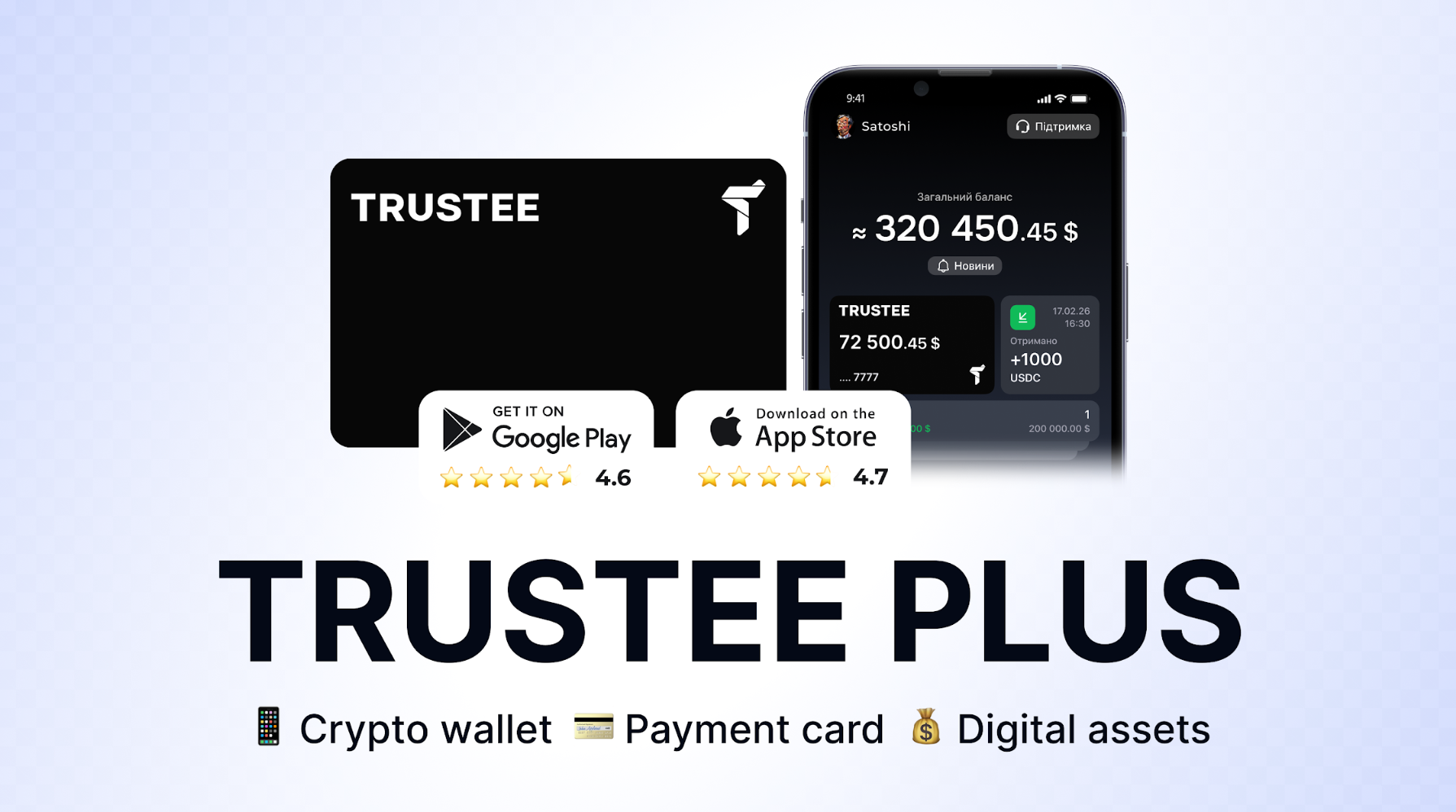
Trustee Plus is a licensed European crypto-neobank. Through the simplicity of traditional finance and tech prowess of Web3, it bridges the gap between the two ecosystems.
The app has an all-in-one design. You will:
- Receive global payments in digital dollars (USDC/USDT) instantly, regardless of where in the world the money is coming from.
- Get a personal Euro bank account if you have a conservative client who would rather pay only in fiat.
- Send stablecoins to friends or contractors globally just by picking their name from your phone book.
- Get a virtual card that lets you spend your crypto balance at any terminal in the world via Apple Pay or Google Pay.
Start Using Trustee in 3 Minutes
- Step 1: Download. Visit the App store or Google Play first before searching for and downloading the official Trustee Plus app.
- Step 2: Verify (KYC). Use your mobile number to log in first. Next, complete the KYC checks. The approval takes a minute.
- Step 3: Top Up. Add some cryptos like USDT or USDC, or transfer fiat Euros.
- Step 4: Issue the Card. Tap the “Card” section, issue your virtual crypto card, and add it to your Apple/Google Wallet. You are ready to pay!
Trustee Plus stands out as a highly recommended option in the latest assessment of the best crypto cards conducted by Incrypted.
The Final Verdict
Traditional bank cards are still essential for your mortgage and local bureaucracy. But for daily spending, traveling the world, receiving global income, and shielding yourself from inflation, the hybrid crypto card from Trustee Plus has become the absolute monopoly in your smartphone.
Don’t cling to the past. Get the best of both worlds and feel the difference at the very next checkout counter.


- GTA 6 Crypto Scams Are Draining Wallets: Why Web3 Gaming Needs Clearer Boundaries
- XRP Holders Turn to XRPPower to Explore AI-Powered Automated Trading Solutions
- CreatorFi Just Raised $45 Million to Finance Creators Like Businesses — The Creator Economy Is Getting Its Own Capital Markets
- X Replaced Creator Revenue Sharing. Crypto’s Creator Economy Should Pay Attention
- Canopy (CNPY) Lists on Binance, OKX, Bitget, Gate, MEXC, and Bitvavo
For PR & Sponsored Content Reach us :
 @Coingapeofficials