CoinGape has been covering cryptocurrency and blockchain markets since 2017. Our editorial team evaluates projects and platforms using structured review frameworks focused on transparency, utility, and risk assessment. You can explore our review methodologies to see how we assess and rate different categories. We maintain clear editorial standards and disclose advertising or affiliate relationships where applicable.
Real-world asset (RWA) tokenization is just a fancy way to turn things like real estate, private credit, funds, and treasuries into digital tokens you can trade on the blockchain.
Everything is still in its early stages, but there’s been serious adoption. Institutions like banks are moving fast into tokenized funds and bonds. But, RWAs still have one major problem, and that’s compliance. RWAs are treated like securities, stocks, and all. This means securities laws, cross-border regulations, investor protection, and custody rules all apply the moment real assets go on-chain.
So, it’s important to find and use platforms that offer tokenization compliance services. In this guide, we break down the top RWA compliance companies, how their technology works, and how you can choose the right compliance partner.
| Wallet Name | Core Services | Regulatory Coverage | Key Asset Focus | Supported Chains | Supported Regions | Rating |
|---|---|---|---|---|---|---|
 1. SecuritizeRead More | Issuance + trading | SEC, CNMV | Funds, securities | ETH, SOL, POL, & more | US, EU, Asia | 4.8 |
 2. Ondo FinanceRead More | Yield-bearing tokens | SEC ( filed), MiCA | Treasury, credit | ETH, SOL, BNB | EU, Asia, Africa | 4.7 |
 3. TokenyRead More | Compliance management | Luxemborg | Bonds, equity, and funds share | Ethereum+ others | EU | 4.6 |
 4. PolymathRead More | Tokenization management and regulated transfer | Compliance-enabling tech ( not a regulated entity) | Private equity, funds, debt, | Polymesh | Global | 4.5 |
 5. CentrifugeRead More | Loan pools | Not a regulated financial entity | Private credit, loan pools, structured RWA funds | Centriuge Chain, Polkadot, Ethereum | Global | 4.5 |
 6. BlackRockRead More | Tokenized funds | SEC | Treasuries MMFs | Ethereum, BNB Chain | US, global | 4.8 |
 7. R3Read More | Trade finance | Indirect/institution-level regulation | Banking assets | Corda, Solana | Global | 4.6 |
 8. tZERORead More | ATS trading | SEC | Digital securities | Eterehum Tezos, and other | US | 4.5 |
We reviewed over 15 platforms using CoinGape review methodology. At the end, we selected the top 8 RWA compliance solution providers. Our selection ultimately came down to their compliance focus and institutional adoption. Below is a list of the platforms we reviewed in detail.

Best for institutions looking for compliant tokenization
Securitize is one of the names in RWA compliance solutions. It offers Tokenization-as-a-service, integrated fund administration, and a compliance-forward platform that a lot of institutional clients trust.
Banks and other serious clients already use Securitize. I checked its ecosystem, and it was really impressive. Securitize has a broad ecosystem that spreads across DeFi, blockchains, exchanges, custodians, oracles, and some of the best market makers. Everything was straightforward.
One notable feature of Securitize is a tech known as the TSSO Oracle model. TSSO Oracle is really important to how Securitize works. It uses it for secure, verifiable NAV data in private funds. Securitize currently supports assets like private funds, public stocks, and real estate tokens. Recently, the platform announced a partnership with Uniwap X to bring tokenized assets to DeFi. That’s a serious move
| Key Factors | Details |
| Tokenization Infrastructure Offered | Tokenization-as-a-service, fund administration |
| Fee Structure | 1% trade commission (ATS) |
| Supported Chains | Ethereum, Avalanche, Polygon + others |
| Focused Asset Type | Private funds, public stock |
| Tech Standard/Infrastructure | DS Protocol |
| Institutional Adoption | BlackRock, Apollo Global Management |
| AUM/TVM | $2.84 billion |
| Key Partners | Binance, BitGo, Chainalysis, Crypto.com, Midas |
| Supported Regions | US, EU, Japan |
| Security and Audits | Halborn |
From the overview, it’s easy to tell that I like Securitize and, here at CoinGape, we highlighted it as one of the platforms enabling RLUSD support for BlackRock’s and VanEck’s tokenized funds.
I also checked across X and Reddit for public views on Securitize as a top RWA compliance solution, and it was really positive. The Uniswap X integration will unlock BUIDL trading, and their onboarding feels more like Stripe for securities, really easy.

Best for institutional-grade tokenized treasuries with DeFi yield for non-US investors
Ondo Finance is one of the most popular names in RWA tokenization. It has over $2.6 billion in TVL as of February 2026. Why is Ondo special in RWA compliance? Ondo focuses on offering a compliance-first approach. This means everything is tailored to ensure there are no issues with regulators.
Ondo tokenizes treasuries into products like OUSG for institutions and USDY for DeFi users. It does all these while maintaining regulatory guardrails. Separating these products allows Ondo to balance on-chain access with real-world compliance, which is what matters today. 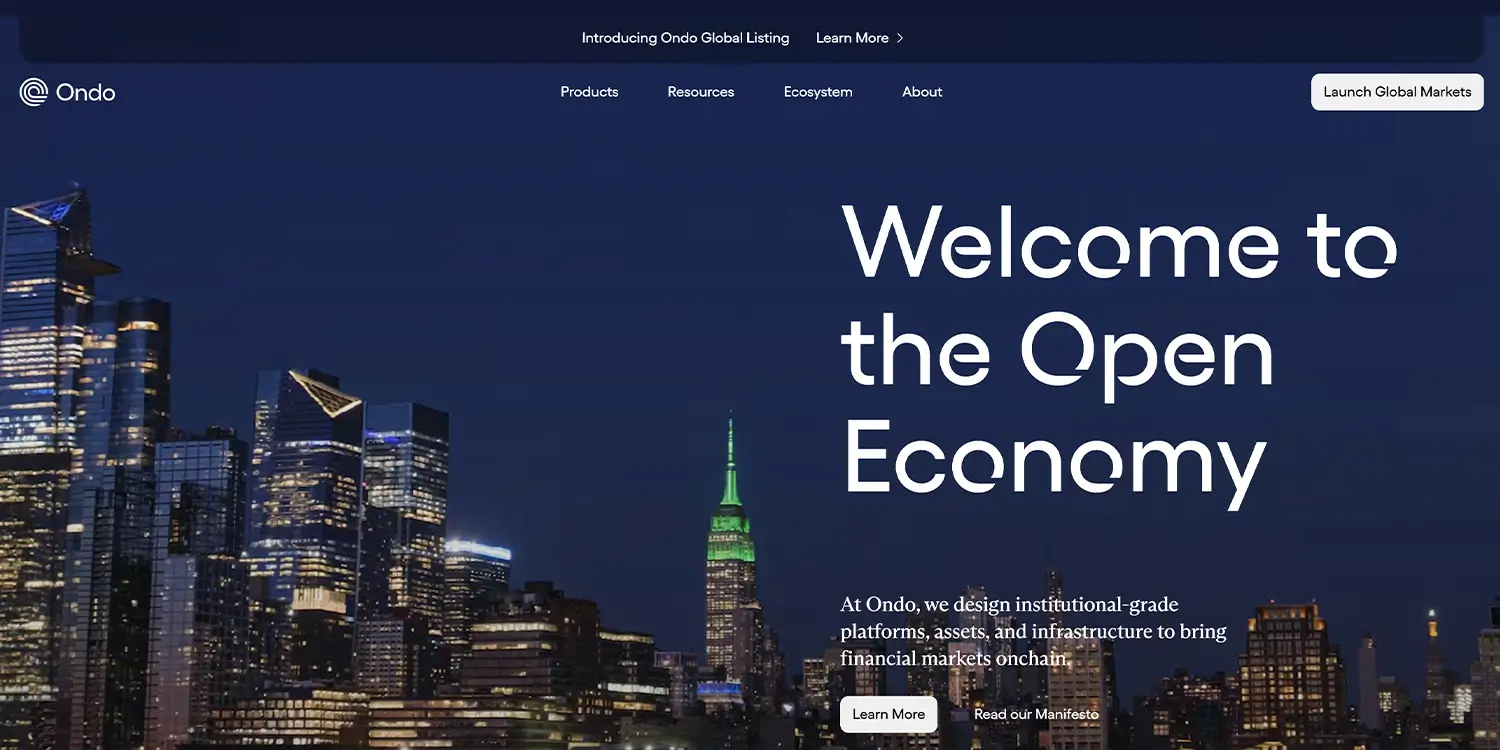
Ondo Chain is where Ondo takes compliance to another level. Ondo Chain is an institutional layer 1 blockchain designed with authorized validators. With this setup, Ondo Chain can control participation, enforce rules, and align with regulations.
| Key Factors | Details |
| Tokenization Infrastructure Offered | Tokenized treasuries, Ondo Chain |
| Fee Structure | 0.15% management fees |
| Supported Chains | Ethereum, Solana, BNB Chain + others |
| Focused Asset Type | US treasuries, tokenized stock |
| Tech Standard/Infrastructure | Authorized validators, KYC+ AML rails |
| Institutional Partners | BlackRock, BitGo, and others |
| AUM/ TVL | $2.6 billion |
| Key Partners | Alchemy Pay, Bybit, Chainlink |
| Supported Regions | Global (Non-US focus) |
| Security and Audits | Zellic |
Looking at Ondo’s products and approach, Ondo stands out as one of my top 3 platforms for RWA compliance. I like that Ondo blends TradFi discipline with DeFi accessibility. Its structured treasury products, permission-aware design, and institutional focus are reasons I rank it highly.
Recent news also supports my stance on Ondo. The SEC recently closed its investigation into Ondo without enforcement action, as reported by CoinGape. This adds serious confidence to Ondo’s compliance stance. Recent news shows that Ondo has filed registeration statement with the US SEC, which provides an extra boost.

Best for institutions issuing compliant security tokens at scale
Tokeny has been around since 2017. Since then, they’ve built a strong reputation in RWA compliance solutions. Everything about compliance is embedded in its design. Tokeny is built around the ERC-3643 (T-REX) standard. It embeds KYC, AML, investor eligibility, and transfer restrictions directly into tokens at the protocol level. This means everything is automated.
Token also offers a full asset lifecycle, including issuance, custody, distribution, and corporate actions. As of 2026, Tokeny enforces compliance across 180+ jurisdictions, with over $32 billion in asset tokenized. These are the stats of a top compliance platform.
| Key Factors | Details |
| Tokenization Infrastructure Offered | T-REX platform, T-REX engine, ERC-3643 |
| Fee Structure | Subscription-based |
| Supported Chains | Ethereum and EVM chains |
| Focused Asset Type | Funds, private equity, debt |
| Tech Standard/Infrastructure | ERC-3643 compliant security tokens |
| Institutional Partners | Amina Bank, Skybridge Capital |
| AUM/TVL | $1 billion+ |
| Key Partners | Genesis, Digift, DTC |
| Supported Regions | EU and 180+ jurisdictions |
| Security and Audits | Hacken |
It’s obvious that Tokeny easily stands out as a top RWA tech and compliant firm. I like that it solves regulation at the token layer rather than relying on off-chain controls. Tokeny is behind the ERC-3643 standard. This alone gives it a structural advantage in regulated markets where enforcement is a huge challenge.
Best for institutional-grade RWA tokenization on purpose-built chain
Polymath is one of the leaders in compliant digital securities. It offers Polymesh, a layer-1 blockchain that’s all about regulated RWAs. Then, there’s also Polymath Capital for end-to-end tokenization. 
Polymath is one of the most flexible options out there today. It supports a wide range of assets, including real estate, private equity, debt, and funds. Polymath uses standards like ST20 and ERC-1400 to ensure jurisdictional compliance, investor identity verification, and on-chain regulatory enforcement. Polymath’s ecosystem includes KYC/AML providers, custody, escrow, and advisors. All of these guys work together for institutional-ready workflows.
| Key Factors | Details |
| Tokenization Infrastructure Offered | Polymesh Blockchain, Polymath Capital |
| Fee Structure | SaaS licensing |
| Supported Chains | Polymesh |
| Focused Asset Type | Real estate, private equity, funds |
| Tech Standard/Infrastructure | ERC-1400, identity governance |
| Institutional Partners | tZero, Galaxy (GK8) |
| AUM/TVL | N/A |
| Key Partners | BitGo, PaySafe |
| Supported Regions | Global |
| Security and Audits | OpenZepplin |
Polymath combines deep regulatory focus with enterprise-grade tech. I checked community feedback on Reddit and Twitter, and it was quite impressive. Polymath stands out for having a blockchain that’s dedicated to compliance and embedding regulatory controls to keep things simple.
Best for DeFi-native RWA tokenization and on-chain credit markets
Centrifuge has a different approach and appeals more to DeFi native RWA tokenization. It offers an infrastructure that brings real-world assets and connects them directly to DeFi liquidity. That’s a completely different approach from most platforms on this list, which is why it stands out. With Centrifuge, asset managers can tokenize credit, funds, and treasuries while automating reporting, lifecycle management, and on-chain-transparency. 
Centrifuge’s model emphasizes legal structuring and data integrity. This way, RWAs can safely serve as collateral across major DeFi protocols. The stats prove why Centrifuge should be on any serious list of top RWA compliance platforms. It has over $1.3 billion in TVL, according to its website. This figure shows that Centrifuge is a key bridge between traditional asset managers and decentralized markets.
| Key Factors | Details |
| Tokenization Infrastructure Offered | On-chain funds, credit pools |
| Fee Structure | 0.4% protocol fee |
| Supported Chains | Ethereum, Polkadot, and multichain pools |
| Focused Asset Type | Credit, funds, treasuries |
| Tech Standard/Infrastructure | Automated compliance oracles |
| Institutional Partners | Janus Henderson Investors, Apollo |
| AUM/TVL | $1.3 billion |
| Key Partners | S & P Global, Coinbase, Sky |
| Supported Regions | Global |
| Security and Audits | Code4rena |
For companies seeking RWA compliance solutions, Centrifuge has one of the best designs and offerings. It focuses on complaint asset structuring and transparent on-chain data, rather than acting as a regulated intermediary. With this approach, institutions can meet legal and reporting requirements and access DeFi liquidity and scale.
Best for institutional-grade RWA tokenization at a global scale
Everyone knows BlackRock, the global asset manager. Well, they stepped into RWA tokenization through a partnership with Securitize. Now, Securitize provides the compliance, issuance, and on-chain transfer framework. 
BlackRock leaves all the compliance jargon to Securitize. It just provides credibility, which fewer platforms can claim to have. This model has been successful so far. With over $2.4 billion in tokenized funds, BlackRock is one of the top names to note. So, Securitize handles AML/KYC, transfer restrictions, and lifecycle management. BlackRock, on the other hand, contributes fund structuring, risk management, and brand trust.
| Key Factors | Details |
| Tokenization Infrastructure Offered | BUIDL tokenized MMF via Securitize |
| Fee Structure | Securitize issuance |
| Supported Chains | Ethereum |
| Focused Asset Type | Treasuries |
| Tech Standard/Infrastructure | Programmable APIs |
| Institutional Partners | Central banks, sovereign funds |
| AUM/TVL | $2.4 billion |
| Key Partners | Securitize |
| Supported Regions | US |
| Security and Audits | PWC |
BlackRock’s goal isn’t to be flashy but to be trusted. So far, that approach is working pretty well. BlackRock may move more slowly than a crypto-native platform, but it’s far more likely to survive regulation and dominate the market.
Best for bank-grade RWA tokenization and privacy-first compliance
R3 sits at the top of the food chain in RWA compliance solutions. Everything is built around Corda, its flagship platform. Corda ensures permissioned, regulatory, and privacy-preserving transactions. It also provides governance structures that meet bank-grade regulatory standards. Corda also aligns strongly with global financial standards like ISO 20022. It supports regulatory reporting, identity controls, and data segregation. 
| Key Factors | Details |
| Tokenization Infrastructure Offered | Corda + R3 Labs tokenization |
| Fee Structure | Enterprise licensing |
| Supported Chains | Corda |
| Focused Asset Type | Trade finance, banking assets |
| Tech Standard/Infrastructure | ISO 20022, privacy partitions |
| Institutional Partners | HSBC, HQLA |
| AUM/TVL | $10 billion |
| Key Partners | Bank of America, UK Finance |
| Supported Regions | Global |
| Security and Audits | Bank-grade security |
R3 isn’t focused on DeFi narratives. Instead, its goal is to make tokenization acceptable to regulators. I like that banks like the Central Bank of America, HSBC, and companies like UK Finance already trust R3. It tells you all there is to know about their role in RWA compliance.
Best for US investors and regulated institutions
tZERO offers a fully regulated platform for tokenizing, trading, and custodied real-world assets. The platform is anchored by SEC and FINRA-regulated entities, which it uses to offer issuance, trading, custody, and secondary market access for digital securities. 
| Key Factors | Details |
| Tokenization Infrastructure Offered | ATS + tokenize/trade APIs |
| Fee Structure | 1% fee |
| Supported Chains | Eth, Stellar, and others |
| Focused Asset Type | Securities, RWAs |
| Tech Standard/Infrastructure | Regulated multi-chain settlement |
| Institutional Partners | Archax |
| AUM/TVL | N/A |
| Key Partners | Uphold, LYNQ |
| Supported Regions | US |
| Security and Audits | Institutional-grade security |
tZERO’s ATS feels more like “NASDAQ for tokens.” Its SEC and FINRA-regulated broker-dealer, ATS, and custody framework provides a sense of safety for institutional participants.
Real-world Asset tokenization simply means turning real assets into digital tokens on a blockchain. The process is simple if you understand how it works. These tokens on the blockchain simply represent your rights to the underlying assets. With tokenization, anyone can buy or sell, or trade assets in smaller pieces. It opens up a new market, which explains why it has billions in assets already.
What kind of assets can be tokenized? Several assets:
Tokenizing real estate or treasuries sounds exciting until regulators like the SEC say your token crossed a line. We’ve seen this play out in recent years. Remember the SEC vs Ripple case? It made it clear that regulators are not going to sit with folded arms if they think you’ve crossed a line. We saw the same thing when the SEC sued Binance.
RWAs require even more caution because they operate in a grey area. Getting it wrong could mean inviting lawsuits, frozen funds, or even getting your project shut down. No one wants that.
Securities laws are usually the first challenge most projects face. They apply whether an asset is issued on-chain or not, and the reason is clear. Most tokenized RWAs fall under current securities laws. Blockchain or not, the rules stay the same. You need to comply with eligibility, reporting, and disclosure rules. This is exactly where most RWA projects hit a wall.
Another compliance problem has to do with cross-border exposure. For example, an RWA issued in the US can be accessed by someone in France. These countries have different rules, which can overlap. If there’s no careful structure, a single jurisdiction can restrict liquidity.
There are a lot of complexities with RWA tokenization. That’s why it is important to use the top RWA tokenization compliance solutions, and most banks and institutions know this.
Tokenized assets could be complex because they are right in the middle of blockchain and financial laws. We know that the rules are different for both worlds. Now, different countries have their ways of governing tokenized assets in a way that aligns with their local laws. We’ll highlight the rules across some of the major markets below:
United States – The US treats tokenized assets like securities. This means federal laws apply, and you have to play nice with regulators like the SEC and FINRA. Broker-dealers need FINRA licensing, while ATS platforms like tZERO need to register with the SEC.
European Union – The EU has clear rules for digital assets, and MiCA is the governing body of rules. EU laws treat tokenized assets as e-money tokens (EMT). Issuers need a CASP license for custody. Overall, tokenized assets that qualify as securities must follow EU securities laws.
Singapore and the UAE – Both Singapore and the UAE have clear rules on tokenized assets. Singapore requires digital assets service providers to register under its regulators and adhere to strict AML/KYC rules.
The UAE has regulatory structures in free zones like the Dubai International Financial Center (DIFC) that support compliant issuance, custody, and trading. The exact license needed generally depends on the type of tokenized asset and how it is marketed.
We rated each platform in this guide using the criteria in the table below. This helps you compare real-world asset tokenization solutions across what truly matters: compliance, technology, and usage.
| Factors | What It Means | Weightage Score |
| Regulatory licensing or compliance partnerships. | This factor looksat the company’s licenses and who it partners with. Working with regulated partners shows credibility. | 20% |
| Institutional adoption and clients | Here, we looked at who is using the platform. When institutions like banks use a platform, it means they trust it. | 15% |
| Supported asset class | We looked at whether the platform tokenizes treasuries, real estate, funds, and commodities. More assets mean more flexibility | 15% |
| Blockchain infrastructure supported | Here, we checked if the platform supports regulated chains, public blockchain, or enterprise networks. | 10% |
| Compliance automation capabilities | Does the platform automate KYC/AML, whitelisting, and compliance checks? Doing this reduces human errors. | 15% |
| Security audits and custody integrations | We checked for independent audits done. We also examined whether the platform integrates with regulated custody partners. | 15% |
| Operational track record | We analyzed how long the platform has been operating. Track record matters a lot for our review. | 10% |
Tokenization platforms are not magic. Instead, they are smart contracts designed to follow rules. Here’s how top platforms automate compliance and keep things usable
| Features | How It Works | Examples |
| Smart contracts block bad transfers | The smart contracts automatically check if the buyer is accredited or allowed to transact in that country before each transaction. | Securitize ERC-1400 pauses non-compliant wallets. |
| Compliance-aware token standards | Embed rules from multiple jurisdictions into the token. So, transfers automatically follow local laws. | Tokeny ERC-3643 |
| Identity verification at scale | Investors verify once, token remembers. This setup reduces repeated KYC headaches | tZERO auto-whitelist |
| On-chain and off-chain rule enforcement | Smart contracts reject invalid transactions, custodians and/or oracles verify asset | Securitize and Ondo |
When choosing a tokenization platform, compliance should be your first goal. Flashy features don’t guarantee protection from regulatory failures. There are core things that matter. One of them is infrastructural reliability. You need platforms with proven smart contract setup, secure custody, and automated compliance.
Jurisdiction is another core factor. Make sure the platform’s licenses and partnerships cover your region’s financial regulations. Scalability and future-proofing matter too. The best RWA compliance platforms are flexible. They support multiple chains and have potential for growth.
These factors ensure you select a platform that balances security, compliance, and long-term usability.
These are services that ensure that tokenized assets don’t break financial rules like KYC/AML.
Yes, tokenized assets are subject to securities laws. The platforms have to register with regulators like the SEC (US), which keeps them regulated.
Several companies like Ondo, Securitize, Tokeny, Centrifuge, and tZERO provide compliance solutions.
Yes, when platforms comply with local laws, investor compliance rules, and licensing requirements.
They automate regulatory checks and enforce transfer restrictions using smart contracts. They also provide investor verification.
Real estate, treasuries, corporate bonds, commodities, and other financial instruments.
Purpose-built chains like Polymehs and Ondo chain rank highly for RWA tokenization as they are equipped with compliance-aware standards.
Yes, if issued through regulated platforms and structured legally.


 2M+ Monthly Readers
 50k+ Articles
 Claim Bonus