


 Get €3000
Bex500 vs. BitMEX? Why is “Insurance Fund” unfair to crypto traders?


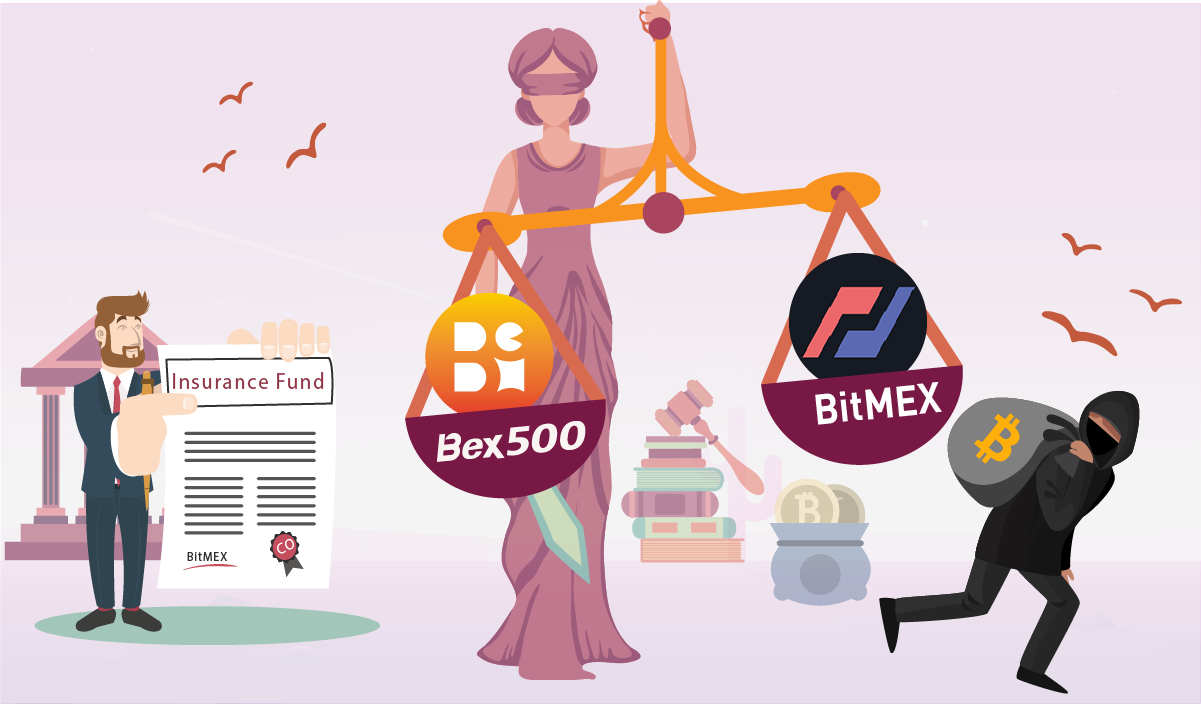
Both BitMEX and Bex500 exchanges are market-leading crypto futures platforms, with 100x leverage.
However, one of the major differences lies in the application of “insurance fund”. BitMEX creates the concept to protect against negative balances, while Bex500 goes against it, and is one of the few exchanges not charging any insurance funds.
With the fund growing to be over 200 million US dollars, it is increasingly controversial and labeled “unfair” by many traders.
Let’s unveil the secret “Insurance Fund” rule, and see if your trading is better off without it.
What is “insurance fund”?
Here is an example of “insurance fund” from BitMEX:
“A trader goes long 1 contract at $100.00, with a liquidation price of $99.50 and a bankruptcy price of $99.00. The trader is liquidated and the trading engine places a limit sell order with a limit price of $99.00 (the bankruptcy price). The liquidation order is filled at $99.25. The Insurance Fund now has $0.25.”
“Insurance Fund” is a liquidation “fine” charged by BitMEX to protect the exchange against negative balance. BitMEX takes the difference between the Liquidation and Bankruptcy Prices and transfers it to the Insurance Fund.
In other words, if your order is liquidated, you will lose more than you should have.
By December 2019, the insurance fund in BitMEX has surpassed $232 million. Some users teased about BitMEX-

“Insurance Fund” is controversial
The insurance fund can protect the trades from possible Auto-Deleveraging, but why is it so controversial that many traders are against it?
-It comes at the cost of traders’ interests
In the case above, your order should have been filled at $99.25, but BitMEX forced you to give an extra $0.25 because they set up their bankruptcy price at $99. Therefore, the difference goes to their insurance fund.
Insurance Fund increases losses of highly-leveraged users. Traders have been complaining that too much was taken away by BitMEX.

-It is not transparent
BitMEX elaborates on all algorithms but bankruptcy prices, which remain secret until the liquidation. You will learn your bankruptcy prices only in an email after your order is liquidated.
The fund now accounts for over 0.15% of all bitcoins in circulation. However, you can get no detailed statement, no audited report of where the money goes.
How does it work in Bex500?
Bex500 is the first crypto futures exchange with no insurance fund. When the position is taken over by the Bex500 liquidation engine, it is liquidated at the best price for traders rather than the bankruptcy price.
In the case above, your position can be liquidated at $99.25 or even $99.5, and there will be no differences “confiscated” by the exchange.
If the effective Liquidation Price is less favorable in extreme volatility, Bex500initiates its automatic deleveraging procedure.
To protect users’ interests, Bex500 avoids negative balances with its lightning-fast TPS (transaction per second), which is over 10,000 orders, almost doubled that of other exchanges.
BitMEXhas more trading pairs, and more liquidity, however, Bex500 gives a more transparent system to ensure trading with fair returns you deserve.

Why Trust CoinGape
CoinGape has covered the cryptocurrency industry since 2017, aiming to provide informative insights Read more… to our readers. Our journal analysts bring years of experience in market analysis and blockchain technology to ensure factual accuracy and balanced reporting. By following our Editorial Policy, our writers verify every source, fact-check each story, rely on reputable sources, and attribute quotes and media correctly. We also follow a rigorous Review Methodology when evaluating exchanges and tools. From emerging blockchain projects and coin launches to industry events and technical developments, we cover all facets of the digital asset space with unwavering commitment to timely, relevant information.



Delivered every day.
- Insights that move markets
- 100,000 active subscribers