


BlackRock Bitcoin ETF Ranks Among Top ETFs In 2025 Despite Crypto Downturn




Highlights
- The BlackRock Bitcoin ETF has attracted huge inflows despite its negative price so far this year.
- This shows that investors are embracing long-term Bitcoin position and ignoring the short-term fluctuation in its price.
- New large investors are changing the cost basis of Bitcoin with fresh capital.
The BlackRock Bitcoin ETF (IBIT) has emerged as one of the top exchange-traded funds (ETF) of 2025 despite negative price returns. IBIT attracted more than $25 billion in net inflows this year even as Bitcoin struggled.
Why IBIT is Attracting Inflows Despite Losses
The fund ranked sixth on the annual ETF flow leaderboard, according to data highlighted by Bloomberg ETF analyst, Eric Balchunas. However, it was the only ETF in the top rankings that posted a negative return for the year.
The contrast between flows and price suggests that the way investors view Bitcoin is changing. According to Balchunas, most investors are paying excessive attention to short-term performance.
He believes that continuous inflows should be the real focus. This explains recent accumulations like the one implemented by Michael Saylor’s Strategy, which purchased additional Bitcoin this week.
Despite gold registering returns of more than 60% in the year, the Bitcoin ETF still raised more capital compared to gold-backed funds such as GLD. The change in investor behavior is indicated by this contrast.
Have Bitcoin ETFs become Long-term Holdings?
Bitcoin exposure is no longer considered a momentum trade. This movement can be noticed even as some conventional firms are becoming cautions. For instance, Vanguard referred to Bitcoin as a toy even though it has authorized the trading of ETF on its platform.
Still, many investors appear willing to hold through volatility. BlackRock’s role also matters. Its brand and distribution power lower barriers for traditional investors entering crypto markets. Furthermore, the flows suggest Bitcoin ETFs are entering a new phase.
Demand now appears less sensitive to short-term price swings. Sustained ETF inflows provide structural support independent of daily market sentiment. Balchunas summed it up simply. If IBIT can draw $25 billion in a bad year, good years could be far stronger.
Why Are New Whales Buying Bitcoin Now?
This ETF resilience aligns with deeper structural changes inside the Bitcoin market itself.
Onchain data shows that new large investors are now shaping Bitcoin’s cost base. According to CryptoQuant data, “new whales” now account for nearly 50% of Bitcoin’s realized capital.
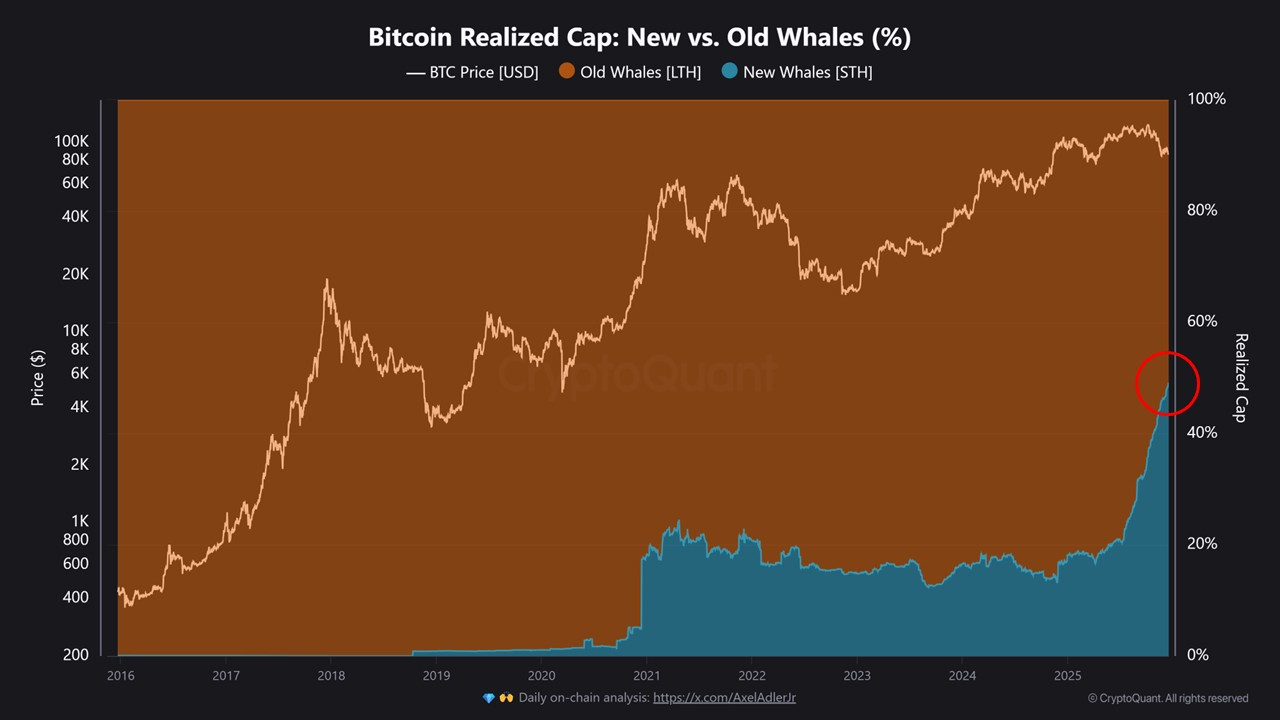
This is a drastic change from previous cycles when long term holders took control of capital deployment. Realized capital chart follows money entering into the system, not only the coin owners.
The data shows that new capital is being added to Bitcoin at a higher price even when there are pullbacks. In the last period when BTC price dropped, the portion of realized funds among new whales only grew.
This suggests a re-anchoring phase and not a panic selling. Investors are now focusing longer time frames and are not pursuing short-term rallies.
Play 10,000+ Casino Games at BC Game with Ease
- Instant Deposits And Withdrawals
- Crypto Casino And Sports Betting
- Exclusive Bonuses And Rewards



Why Trust CoinGape
CoinGape has covered the cryptocurrency industry since 2017, aiming to provide informative insights Read more… to our readers. Our journal analysts bring years of experience in market analysis and blockchain technology to ensure factual accuracy and balanced reporting. By following our Editorial Policy, our writers verify every source, fact-check each story, rely on reputable sources, and attribute quotes and media correctly. We also follow a rigorous Review Methodology when evaluating exchanges and tools. From emerging blockchain projects and coin launches to industry events and technical developments, we cover all facets of the digital asset space with unwavering commitment to timely, relevant information.

Delivered every day.
- Insights that move markets
- 100,000 active subscribers




- Oil Prices Rise as Trump Fails to Provide Timeline for When Iran War Will End
- Bybit Unveils ‘AI Trading Skill’ to Enable Agentic Trading as AI Gains Traction in Crypto
- Breaking: U.S. PCE Inflation Cools to 2.8%, Lower Than Expected
- Bitcoin Price Hits $72K, Top Reasons Why It’s Skyrocketing Today
- Playnance Plans March 18 Launch of G Coin as Activity Grows Across Its Blockchain Gaming Ecosystem
- Solana vs XRP Price Forecast: Can SOL Reclaim Its All-Time High Before XRP Hits $2?
- Top Analyst Predicts Cardano Price Could Surge 100% As Bitcoin Breaks $72k
- What’s Keeping Shiba Inu Below $0.0000065- Analyst Predicts 30% Rise Ahead
- BTC Price to $100K by 2026? Kalshi and Polymarket Odds Climb to 42%
- Why Pi Network Price Surged 30% Today?
- What Happens to XRP Price If US Wins War Against Iran?