
 Claim Bonus
Senator Warren Warns Fed Against Bitcoin Crash Rescue Amid Liquidity Pump Claims


Highlights
- Warren has warned the Fed and Treasury against injecting liquidity to cushion the ongoing Bitcoin crash.
- The senator argued that any bailout would be politically unpopular and could disproportionately benefit World Liberty.
- She warned against direct purchases that could transfer public funds into the crypto market.
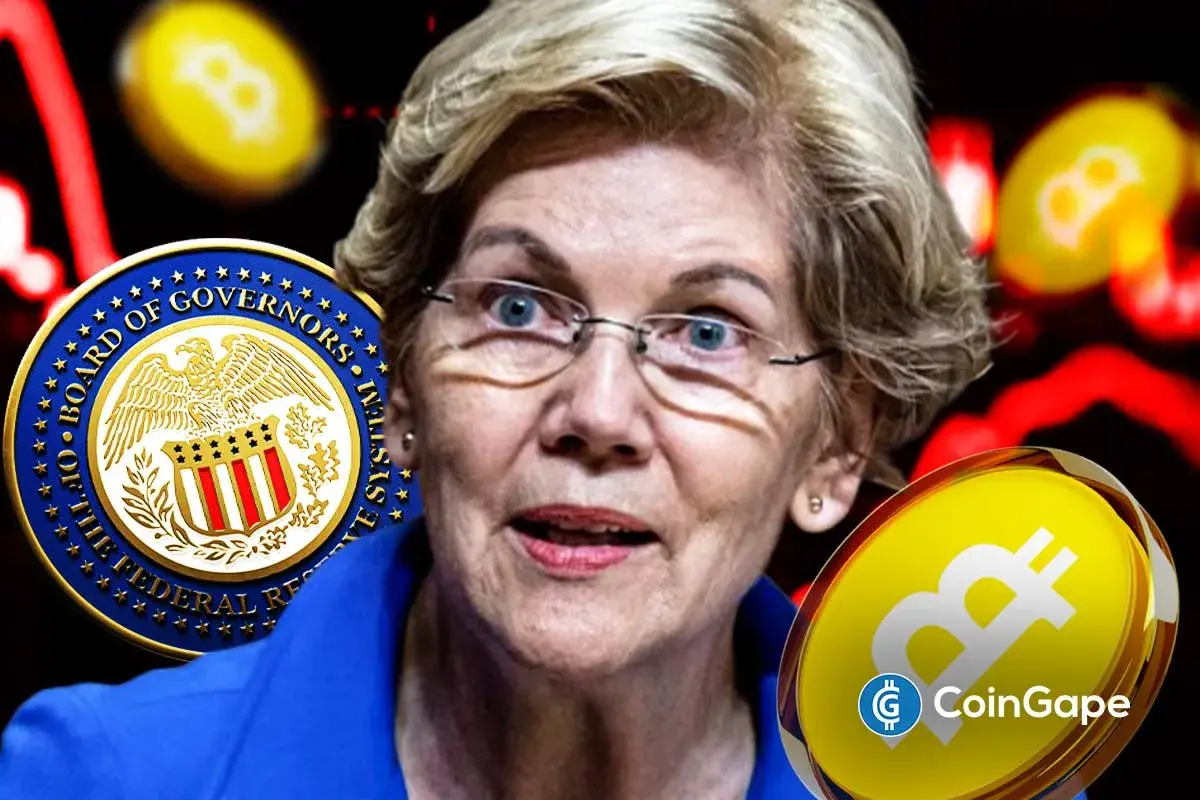
U.S Senator Elizabeth Warren has come out to warn the Federal Reserve, in conjunction with the Treasury, not to pump in liquidity to save the current Bitcoin crash. She said this could only make crypto billionaires richer at the expense of taxpayers.
Warren Calls for Hands-Off Approach as Bitcoin Crash Continues
As reported by CNBC, Elizabeth Warren sent a letter to Treasury Secretary Scott Bessent and Federal Reserve Chairman Jerome Powell urging them not to bail out “cryptocurrency billionaires” with taxpayer funds.
The letter is in the wake of Bitcoin crashing over 50% from its record high in October. It fell to as low as $60,000 on February 6. She pointed out that both the Treasury Department and the Fed have powers that enable them to provide financial assistance to banks and other institutions during a financial crisis.
What is alarming to her is that during a recent hearing, in a discussion about his power to bail out the crypto market downturn, Secretary Bessent was asked if the funds of our taxpayers would be used to fund the crypto market. Warren quoted the secretary’s testimony in the letter.
“Rather than giving a simple ‘no,’ he deflected, stating that ‘we are retaining seized Bitcoin,’” Warren said. “It’s deeply unclear what, if any, plans the U.S. government currently has to intervene in the current Bitcoin selloff.”
She also said that the agencies should not attempt to rescue the Bitcoin crash. She also said that they should not use direct purchases or guarantees to move funds from taxpayers to crypto billionaires.
Senator Continues Attacks on Trump-Linked Businesses
Warren said that the bailout “would be deeply unpopular to transfer wealth from American taxpayers to cryptocurrency billionaires.” It would also directly enrich President Trump and his family’s cryptocurrency company, World Liberty Financial.
In the letter, Warren said that the sell-off in BTC has been fueled by a cascading liquidation of leveraged positions. She also said that Trump’s crypto company, World Liberty Financial, has sold about 173 wrapped Bitcoin.
“This transaction was made to repay $11.75 million in USDC stablecoin debt, thus avoiding liquidation as the price of Bitcoin crashed below $63,000,” she wrote.
The U.S Senator has been a voice against Trump-tied companies. The latest target was the World Liberty Bank application, which she asked the OCC to stop the review process.
In addition, Warren has been leading an investigation to look into the 49% ownership of the UAE in the WLFI company. She specifically mentioned the timing of the investment and its relation to the President’s election victory in 2024.

Why Trust CoinGape
CoinGape has covered the cryptocurrency industry since 2017, aiming to provide informative insights Read more… to our readers. Our journal analysts bring years of experience in market analysis and blockchain technology to ensure factual accuracy and balanced reporting. By following our Editorial Policy, our writers verify every source, fact-check each story, rely on reputable sources, and attribute quotes and media correctly. We also follow a rigorous Review Methodology when evaluating exchanges and tools. From emerging blockchain projects and coin launches to industry events and technical developments, we cover all facets of the digital asset space with unwavering commitment to timely, relevant information.



Delivered every day.
- Insights that move markets
- 100,000 active subscribers
Related Articles





- Top 5 Reasons Ethereum Price Is Down Today
- Crypto Market Slides as Hawkish FOMC Minutes Trigger BTC, ETH, XRP Sell-Off
- XRP News: French Banking Giant Launches Euro Stablecoin On XRPL With Ripple Support
- Kalshi Better at Predicting FOMC Rate Decisions, US CPI Than Fed Funds Futures: FED Research
- Congress to Revisit Crypto Market Structure Bill in Key Meeting Tomorrow
- Cardano Price Prediction Feb 2026 as Coinbase Accepts ADA as Loan Collateral
- Ripple Prediction: Will Arizona XRP Reserve Boost Price?
- Dogecoin Price Eyes Recovery Above $0.15 as Coinbase Expands Crypto-Backed Loans
- BMNR Stock Outlook: BitMine Price Eyes Rebound Amid ARK Invest, BlackRock, Morgan Stanley Buying
- Why Shiba Inu Price Is Not Rising?
- How XRP Price Will React as Franklin Templeton’s XRPZ ETF Gains Momentum