

 Get €3000
Breaking: U.S. CPI Inflation Rises To 3.3% Amid Iran War Pressures



Highlights
- U.S. CPI inflation surged 3.3% in March, below expectations of 3.4%.
- This marks the biggest jump since 2024.
- Core CPI came in at 2.6%, lower than expectations of 2.7%.
- Bitcoin remained largely muted following the data release.
The U.S. CPI inflation surged significantly in March to 3.3% as the U.S.-Iran war pressured energy prices. Bitcoin reacted to this inflation data as traders continue to price in the possibility that the Fed will hold rates steady throughout this year.
U.S. CPI Inflation Jumps 3.3% In March
The Bureau of Labor Statistics’ latest release shows that CPI rose by 3.3% year-over-year (YoY), below expectations of 3.4% but marking a massive leap from the 2.4% increase in February. Month-over-month (MoM), CPI increased 0.9%, in line with expectations.
The core CPI inflation rose 2.6% in March, below expectations of 2.7% but up from 2.5% in February. The core index increased 0.2% MoM, below expectations of 0.3%, remaining unchanged from February.
This marks the first inflation data point covering the period since the U.S.-Iran war began at the end of February. Market commentator, The Kobeissi Letter, noted that U.S. energy inflation surged by almost 11%, marking the largest monthly jump since 2005.
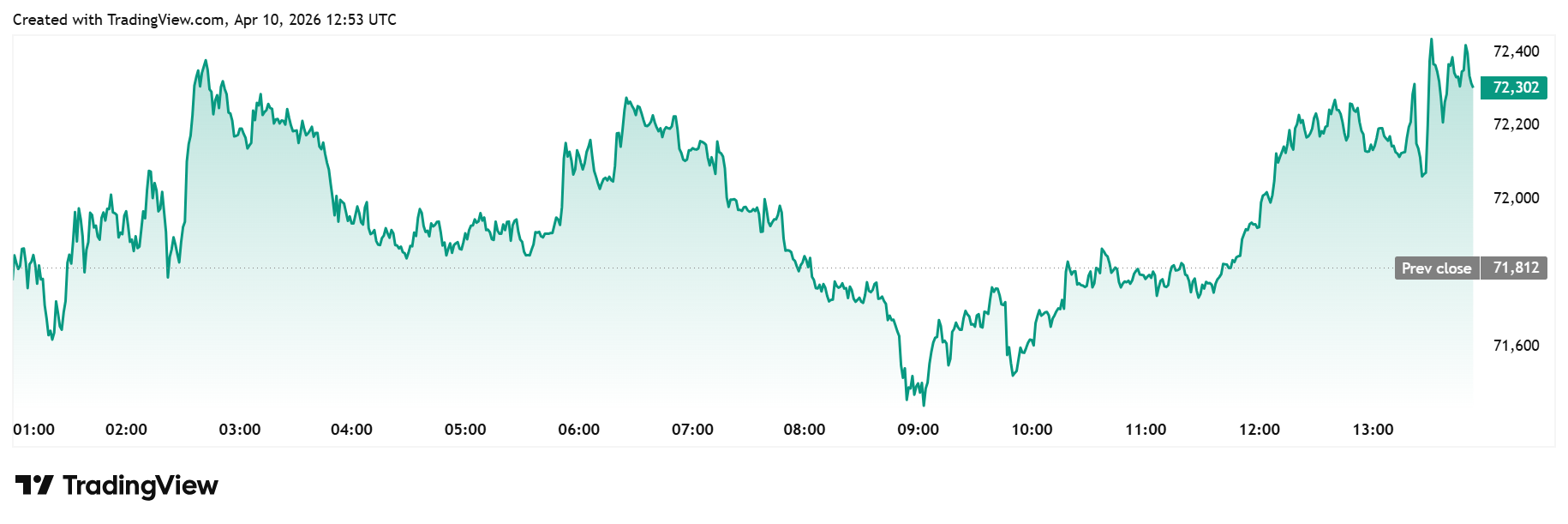
Bitcoin reacted mildly following the hot CPI inflation data, as it came in below expectations. The leading crypto is currently trading at around $72,300, up on the day, according to TradingView data.
However, with inflation trending upward, the Fed is less likely to cut rates anytime soon. CME FedWatch data show that traders are currently betting the Fed will hold rates steady throughout the year, as inflation remains well above its 2% target.
However, it is worth noting that the FOMC minutes signaled that a rate cut may still be on the cards even as the impact of the U.S.-Iran remains uncertain. Most Fed officials noted that the war poses dual risks to inflation and the labor market. As such, a weakness in the labor market may warrant additional cuts.
“One Month Doesn’t Settle Too Much”
Commenting on the CPI inflation data, market expert Nick Timiraos noted that one month doesn’t tell the whole story and that the Fed will want to see energy prices coming down. They will also have more confidence that the inflationary pressures from the Trump tariffs are over.
Timiraos also mentioned that more of the energy echo may be ahead and will be evident in upcoming inflation reports. Amid such uncertainty, the Fed is expected to hold rates steady at the April FOMC meeting on the 29th.
Meanwhile, Bank of America’s Aditya Bhave maintains that rate cuts are still on the cards, predicting the Fed will lower rates twice this year. The economist argues that the Fed will look past supply-driven inflation, weak wage pressure, and rising political influence.
Bhave acknowledged that recent data show higher inflation, but that this is not enough to change the outlook. Instead, he expects the incoming Fed chair to see enough evidence of cooling inflation by September, prompting these cuts.

Why Trust CoinGape
CoinGape has covered the cryptocurrency industry since 2017, aiming to provide informative insights Read more… to our readers. Our journal analysts bring years of experience in market analysis and blockchain technology to ensure factual accuracy and balanced reporting. By following our Editorial Policy, our writers verify every source, fact-check each story, rely on reputable sources, and attribute quotes and media correctly. We also follow a rigorous Review Methodology when evaluating exchanges and tools. From emerging blockchain projects and coin launches to industry events and technical developments, we cover all facets of the digital asset space with unwavering commitment to timely, relevant information.



Delivered every day.
- Insights that move markets
- 100,000 active subscribers