CoinGape has been covering cryptocurrency and blockchain markets since 2017. Our editorial team evaluates projects and platforms using structured review frameworks focused on transparency, utility, and risk assessment. You can explore our review methodologies to see how we assess and rate different categories. We maintain clear editorial standards and disclose advertising or affiliate relationships where applicable.
The Real-World Asset (RWA) tokenization market is growing remarkably in 2026, and RWA issuers are largely behind this growth. These issuers handle everything from token origination, compliance, and on-chain management, making it easier for institutions like BlackRock and Franklin Templeton to launch financial products on-chain.
Right now, RWA has a $15 billion market cap, and with the rules getting clear across key markets like the US and EU, we expect RWA to possibly exceed its current market cap by the end of the year. More institutions will enter the market, and they’ll need RWA issuers for compliance and token management.
We’ve researched the top RWA issuers and compared them across their compliance model, regulatory strength, and custody. At the end, institutions will find the top RWA issuer for their market needs.
| Issuer | Best For | Asset Issued | AUM/TVL ( Approx.) | Compliance and Licenses | Custody Model | Ratings |
|---|---|---|---|---|---|---|
 1. Ondo FinanceRead More | Tokenized treasuries | Treasury funds, ETFs, private credit | $2.5B | SEC, and EU-compliant | Third-party custodians, segregated accounts | 4.8 |
 2. SecuritizeRead More | Tokenized funds and securities | Equities, funds, ETFs | $2.9B | SEC-registered, MiCA-aligned | Regulated custodian partner | 4.8 |
 3. Maple FinanceRead More | Private credit | Corporate loans, private credit, and cash pools | $2B | On-chain smart contract-backed, audits | Off-chain credit assessment, on-chain loan enforcement | 4.7 |
 4. PaxosRead More | Commodities and stablecoins | Gold, tokenized commodities | $2.5B | NYDFS licensed, SEC, CFTC compliant | Secure custodian vaults, regular proof-of-reserves | 4.5 |
 5. RealTRead More | Tokenized real estate | Real estate properties, rental tokens | $156M | SEC, AMF | Tokenized property ownership, third-party custodians | 4.5 |
 6. Franklin TempletonRead More | Institutional tokenized funds | Tokenized money market and funds | $245.9M | SEC, MiCA-aware | Fund-level custodian, partner-powered on-chain token representation | 4.6 |
Best for Tokenized US treasuries and on-chain equities
New York-based Ondo Finance was launched in 2021 and is one of the major real-world assets (RWA) issuers in 2026. The platform brings products like tokenized US treasuries, equities, and ETFs on-chain as ERC-20 tokens.
Ondo’s TVL recently surpassed $2 billion, showing that lots of institutions trust it as an RWA issuer. Ondo has a strong regulatory presence in both the US and EU. The SEC recently closed a two-year investigation into Ondo with no charges. Overall, Ondo is one of the best RWA tokenization platforms to consider.
| Key Factors | Details |
| Tokenized assets issued | Tokenized US treasuries, tokenized stocks, and ETFs |
| Regulatory and legal structure | US-focused structures, EU-aligned (MiCA) |
| Fund structure | SPV-backed funds |
| Securities compliance | SEC-aligned, MiCA-aware |
| Custody model | Reputable custodians, segregated accounts |
| Proof-of-reserves/ audit | On-chain NAV reporting, third-party audits |
| Supported blockchains | Ethereum, Solana and select EVM chains |
| Token standard | ERC-20, ERC-3643 |
| Cross-chain compatibility | Yes. Ondo bridge via Layerzero |
| Institutional integrations | Exchanges, prime brokers, asset managers |
Best for Institutional tokenized funds and regulated securities issuance
Securitize is the best RWA issuer for institutions dealing with tokenized funds and regulated securities. It offers a great combination of strong compliance, institutional adoption and reputable history. Securitize has over $4B in AUM and partnerships with major institutions like BlackRock, BNY, Apollo, Hamilton Lane, and Van Eck. Institutional presence always means one thing: trust. Securitize is the tokenization issuer behind BlackRock’s BUIDL.

In terms of compliance, Securitize operates in the US as an SEC-registered broker-dealer, transfer agent, and regulated Alternative Trading System (ATS). It also operates in the EU under the DLT Pilot Regime.
| Key Factors | Details |
| Tokenized assets issued | Tokenized US treasuries, private credit, private equity, tokenized equity, |
| Regulatory and legal structure | SEC-registered, EU-aligned |
| Fund structure | Fund, SPV |
| Securities compliance | SEC-registered, MiCA-aligned |
| Custody model | Segregated client accounts, regulated custodians |
| Proof-of-reserves/ audit | Issuer-level audits, regular fund reporting |
| Supported blockchains | Ethereum and EVM chains |
| Token standard | ERC-3643, ERC-20 |
| Cross-chain compatibility | Yes, via Wormhole |
| Institutional integrations | Asset managers, custodians, broker-dealers, and exchanges |
Best for Tokenized private credit and on-chain lending
Maple Finance isn’t trying to compete with Ondo or Franklin Templeton; it is doing something completely different. While most RWA issuers are racing after tokenized treasurires, Maple went after corporate credit, which is the messier, higher-yield, higher-risk part of fixed income that traditional finance has always kept behind closed doors. Trading firms. Market leaders. Fintech firms. These are all Maple’s borrowers.
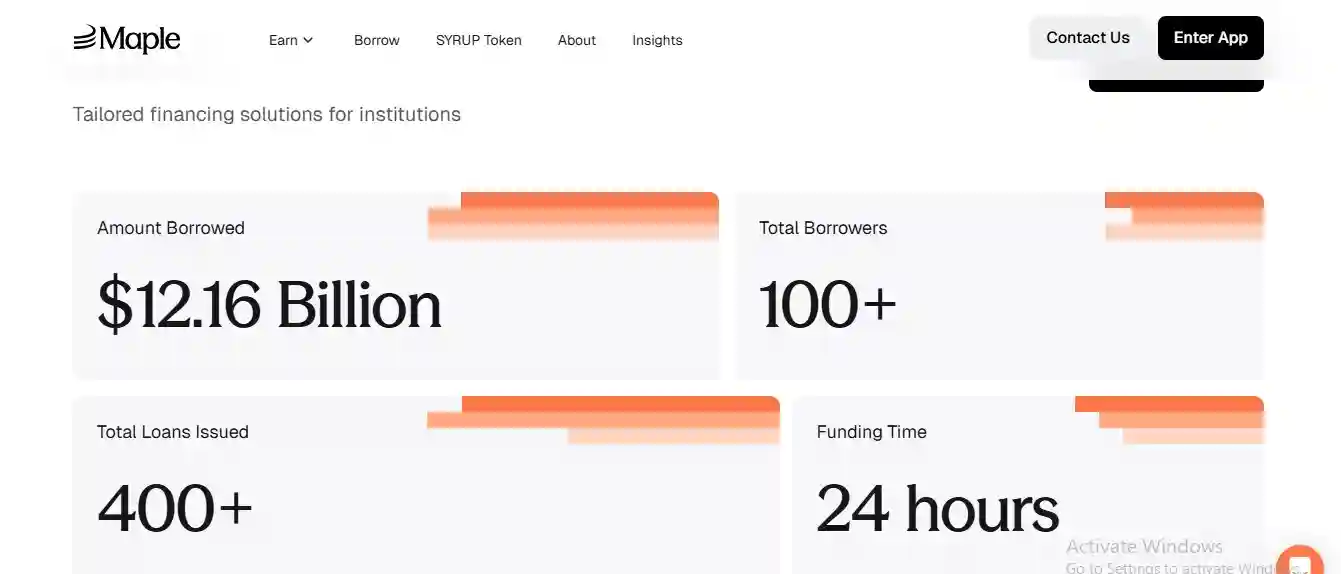
The people funding them are institutional lenders sitting on the other side of smart-contract-powered lending pools. Maple was launched in 2021, and by 2026, it is sitting on over $3 billion in AUM.
| Key Factors | Details |
| Tokenized assets issued | Corporate loans, private credit, cash pools |
| Regulatory and legal structure | KYC/AML- compliant, Institution-focused, corporate-backed |
| Fund structure | Lending pools |
| Securities compliance | On-chain-governed, jusrisdiction-specific |
| Custody model | Smart contracts with legal enforcement |
| Proof-of-reserves/ audit | On-chain transparency audit |
| Supported blockchains | Ethereum |
| Token standard | ERC-20 |
| Cross-chain compatibility | Yes, via Chainlink-powered deposits |
| Institutional integrations | Hedge funds, family offices, prime brokers, and large DeFi liquidity providers |
Best for Tokenized gold and compliant custody tokens
Paxos was founded in 2012, before most of the platforms on this list even launched. It spent years building something most crypto projects skip entirely: a regulatory foundation. NYDFS oversight from the start. Then, in December 2025, Paxos converted its state trust charter into a national trust charter under the OCC. This single move made Paxos the only gold-backed token operating under federal oversight.

Nobody else in the tokenized commodities is even close to that. Right now, the market cap sits at over $2 billion. Is Paxos going to make you rich overnight? No. That’s not what it’s for. Paxos is for institutional investors who want gold exposure on-chain without any custody risk.
| Key Factors | Details |
| Tokenized assets issued | Gold, tokenized commodities |
| Regulatory and legal structure | NY-chartered trust company, US-focused regulation |
| Fund structure | Trust-backed issuance |
| Securities compliance | OCC, NYDFS, MSA, FSRA |
| Custody model | Secure vault custody |
| Proof-of-reserves/ audit | Regular attestations |
| Supported blockchains | Ethereum and select EVM-compatible chains |
| Token standard | ERC-20 |
| Cross-chain compatibility | Limited |
| Institutional integrations | Exchanges, custodians |
Best for Tokenized US residential real estate
Launched in 2019, RealT focuses largely on bringing rental real estate on-chain through tokenized property ownership. Each token represents a share in a real-world property, with rental income distributed to holders.
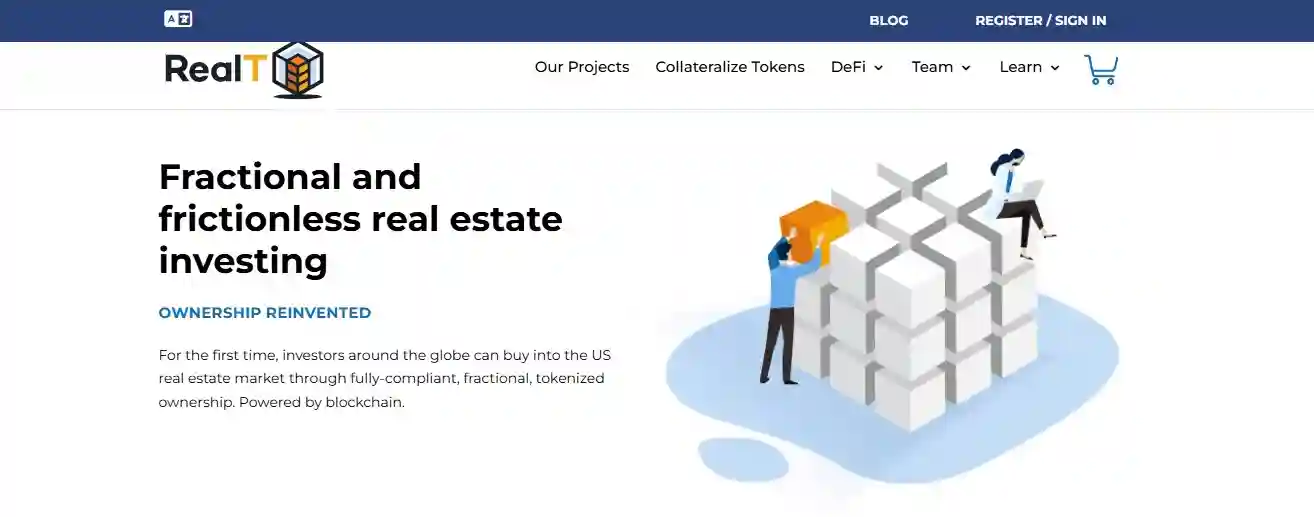
RealT has a strong emphasis on compliance. It uses compliant legal wrappers and works with third-party custodians to manage assets and cash flows. Although RealT is smaller than treasury issuers, it offers direct exposure to real estate, which many RWA platforms ignore. RealT complies with both the US SEC and the AMF in France.
| Key Factors | Details |
| Tokenized assets issued | Real estate, rental tokens |
| Regulatory and legal structure | EU and US compliant-entities |
| Fund structure | Property-level SPVs |
| Securities compliance | SEC, AMF |
| Custody model | Third-party custodians |
| Proof-of-reserves/ audit | Property disclosures |
| Supported blockchains | Ethereum, Gnosis |
| Token standard | ERC-20 |
| Cross-chain compatibility | Limited |
| Institutional integrations | Property managers |
Best for institutional tokenized money-market and fund exposure
Franklin Templeton is one of the oldest traditional asset managers, founded in 1947 and headquartered in the U.S. The company is part of a list of a few asset managers issuing tokenized funds on-chain.

Its BENJI token represents shares in a U.S. government money market fund, making it a true real-world asset issuer, not just infrastructure. The fund is SEC-registered and designed for institutional and regulated investor access. Franklin Templeton brings deep compliance experience, conservative risk management, and real TradFi credibility to RWAs.
| Key Factors | Details |
| Tokenized assets issued | Tokenized money market |
| Regulatory and legal structure | SEC-registered fund |
| Fund structure | Registered investment fund |
| Securities compliance | SEC, MiCA-aware |
| Custody model | Fund-level institutional custodians |
| Proof-of-reserves/ audit | Standard fund audits, NAV reporting |
| Supported blockchains | Ethereum, others |
| Token standard | ERC-20 |
| Cross-chain compatibility | Limited |
| Institutional integrations | Bank, custodians, allocators |
A real-world asset (RWA) isser is a platform that handles everything from originating a token to issuing it. In simple terms, they create the infrastructure for companies like BlackRock to launch their tokens.
As I explained earlier, RWA tokenization has strong momentum right now. Most of the institutions entering the market feel comfortable doing so because they are not breaking any laws, and they do not need to deeply understand blockchain technicalities. That’s the job of RWA issuers. They handle compliance, custody, and reporting.
Different assets can be issued on the blockchain. Tokenization is not limited to real estate. Here are some assets that can be issued on-chain:
Nobody just puts assets on the blockchain. That’s not how it works. There’s a whole logical process. There’s legal, technical, and financial, and the whole thing has to be done in order, or it falls apart.
Everything starts with the asset itself. The issuer decides what asset it wants to tokenize. It could be a gold bar, corporate, loan, or property. The asset actually has to exist before anything else happens.
The next is the legal structuring, and this is where most projects get it wrong. The asset can’t just sit on the issuer’s balance sheet. That’s a serious risk. There has to be a separate legal wrapper built around it. The wrapper is usually a Special Purpose Vehicle (SPV), or sometimes a regulated trust, or a fund structure. The goal is to isolate the asset from the issuer’s balance sheet so investors are protected if anything goes wrong.
Next, the asset moves to a custodian. This is the company that physically holds the asset. BNY holds the treasuries, and Brink’s holds the gold in accredited vaults. The custodian is usually separate from the issuer. That separation matters a lot in RWA tokenization.
Next, we move to the token minting. The issuer puts the token on a blockchain. It could be Ethereum, or Solana, or any chain that fits the goal. ERC-20 is the most common token standard. Some use ERC-3643, especially when there’s a need for built-in compliance to restrict who can access the token.
Pricing is a constant thing. The Net Asset Value (NAV) is calculated daily for most treasury asset products, and pushed on-chain through Oracles like Chainlink. So, at anytime, you can see what your token is worth in real time.
The final step is the investor access and redemption. You must go through KYC/AML checks. After that, you buy the token through the issuer’s platform and hold it until you want out. Some products support same-day redemption. But, private credit has longer windows. It’s important to check this before investing.
Institutions like BlackRock and J.P. Morgan are comfortable entering the RWA tokenization market because the laws support their participation. These guys do not want to risk any legal fight with the SEC or local regulators. The thing is, there is no blanket policy for RWA tokenization.
It varies from region to region. The US has what works, same as the EU. To stay on the safe side, institutions must know what works where and who oversees what. Here’s how RWA regulation looks across major markets:
Another important framework is the EU DLT Pilot Regime. It also runs alongside MiCA. It allows regulated testing of tokenized securities settlement. Securitize is one of the few firms operating under both US and EU structures.
We used the CoinGape methodology to review the best RW issuers. Although we looked at factors like TVL/AUM, they were not a priority. Instead, we prioritized what really matters for RWA issuers. Here are the areas we scored each platform on:
Right now, RWA tokenization is no longer an experiment; it is real. The presence of names like BlackRock shows that this market has serious momentum.
If you’re thinking of the best RWA issuer, here’s a simple way to decide: different reasons:
Every issuer meets a different need. The best RWA platform depends on your needs.
Ondo Finance and Franklin Templeton are two of the leading issuers, with strong institutional adoption and regulatory backing.
Yes. Most tokenized RWAs are governed by securities and funds laws. They are also overseen by regulators such as the SEC in the US.
Most people consider Paxos as the safest due to its monthly third-party gold audits and accredited vaults.
They are backed through custodians, trusts, SPVs, or regulated funds.
Securitize and Ondo lead in terms of issued value. Both have strong institutional adoption, including companies like BlackRock.
Yes. Most products are built specifically for institutions. All issuers in this guide partner with banks and major institutions.
Most are. In the US, tokenized treasuries and private credit are treated as securities under the Howey Test.


 2M+ Monthly Readers
 50k+ Articles
 Buy $GGs