
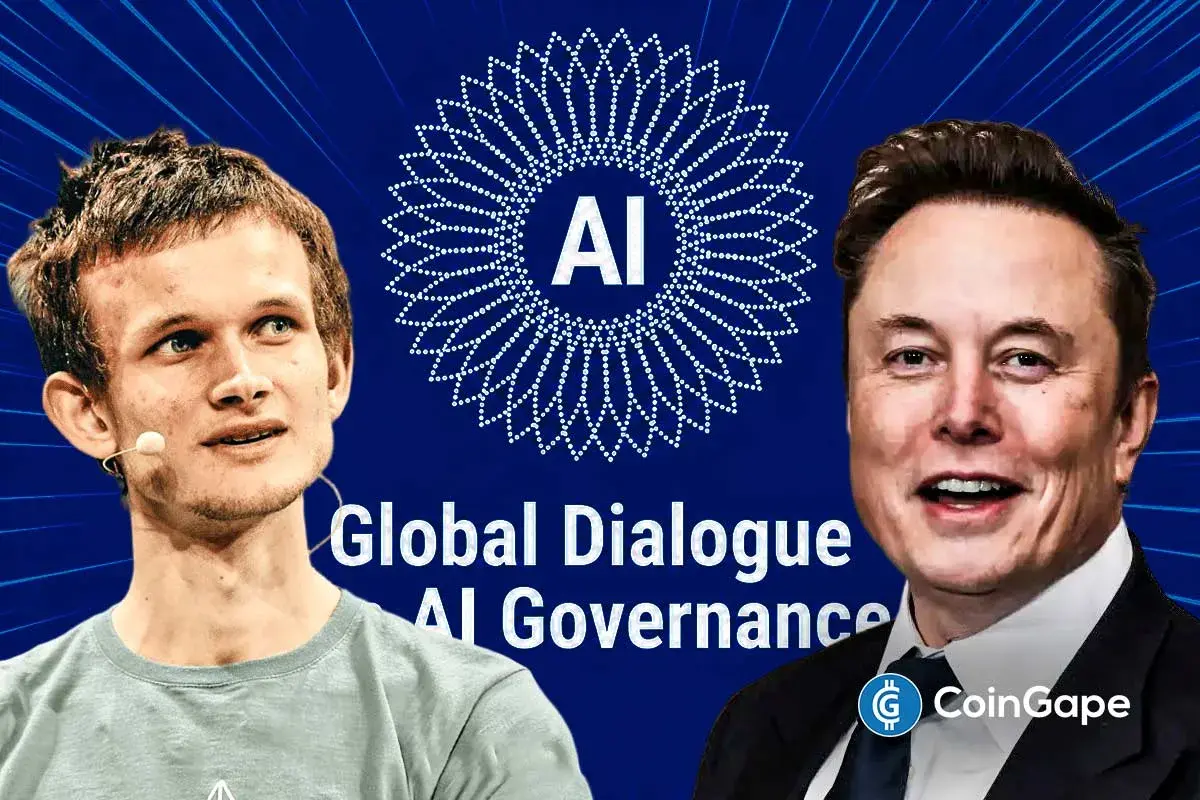
Vitalik Buterin Calls on Elon Musk to Position “X” as Global AI Governance Hub


Highlights
- Vitalik Buterin urged Elon Musk on July 11 to retool X into a platform for global AI governance coordination.
- Buterin backs pre-agreed AI pause triggers like super-pandemics, 25%+ unemployment, or lethal autonomous drones at scale.
- His d/acc framework could boost crypto infrastructure like prediction markets, on-chain governance, and ZK epistemic tools.
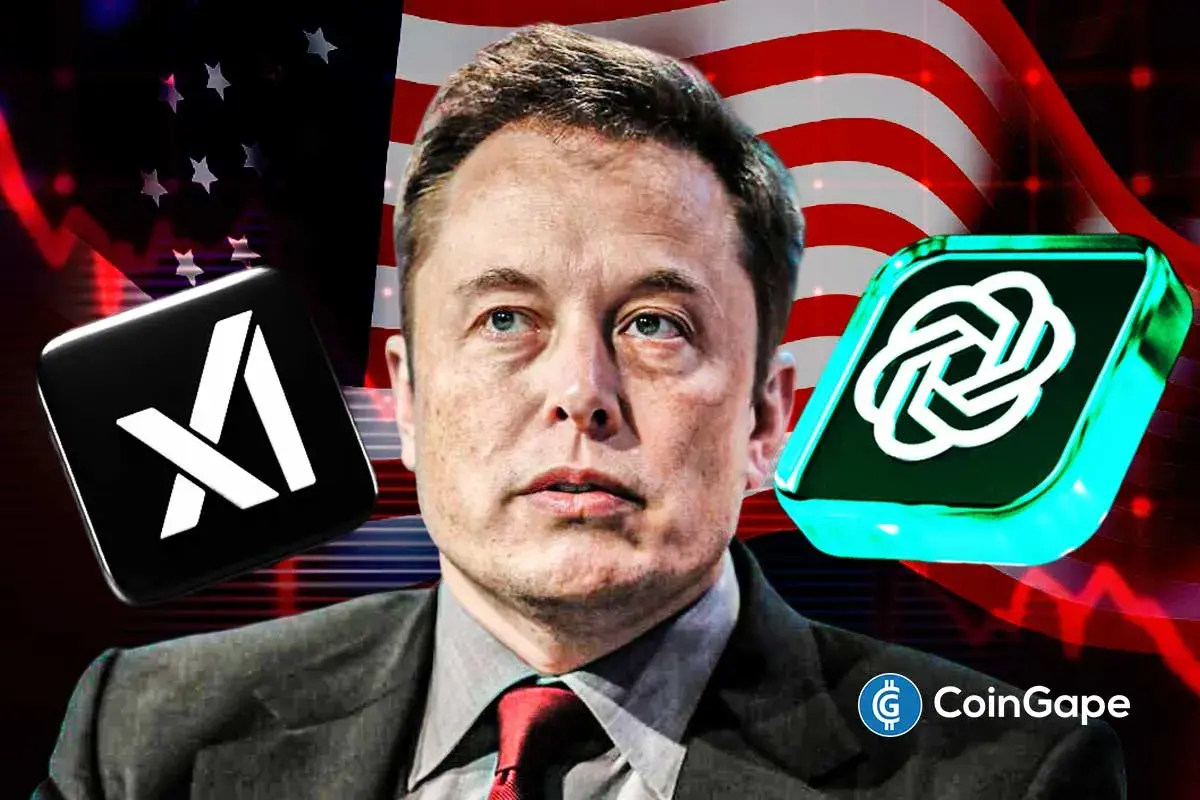
Ethereum co-founder Vitalik Buterin is urging Elon Musk to transform X into a platform for global AI governance coordination. On July 11, 2026, Buterin made a detailed post on this thread, stating that X could be the best place for ordinary people to influence more important decisions regarding AI, instead of relying on governments, big AI research institutes, or top-tier institutions.


The AI Worldview Divide Buterin Is Trying to Bridge
The post, published on X by Vitalik Buterin, has quickly gained traction in crypto and AI circles and is trending under discussions about d/acc, AI pauses, and platform governance.
One thing I find striking in the discourse between AI 2040 and its detractors is that the two seem to be locked in to totally incompatible worldviews of how fast and how much of a big deal AI progress is:
* In AI 2040, every scenario sees superintelligence of some kind emerging…
— vitalik.eth (@VitalikButerin) July 11, 2026
This isn’t the first time Buterin has communicated with Musk about his presence in the public discourse. In the past, he has singled out and stated his admiration for its Community Notes feature, along with prediction markets, as “the two flagship social epistemic technologies” of the decade.
At the same time, however, he has been rattled by the possibility of X turning into a “death star laser for coordinated hate sessions,” which is the reason for his most recent and positive suggestion.
The central issue in Buterin’s thread is a profound disagreement he feels exists in the debate around AI. On one end are the “AI 2040” accelerationists, who think that by 2040, we’re almost guaranteed to become superintelligent unless we do something drastic to stop us.
Then there is the other side of the debate in which pundits view AI as technology at large and dismiss warnings of existential threats and centralization of power.
Buterin admits he is personally uncertain about AI timelines. But he is not neutral. He advocates for pre-agreed triggers that could activate AI slowdowns or pauses, scenarios like super-pandemics, unemployment exceeding 25%, or the emergence of autonomous lethal drones at scale.
His overall approach, defensive acceleration (d/acc), suggests that investment priorities include pandemic preparedness, public epistemics, secure open hardware, formal verification, and cryptography. These are technologies that are still useful despite the rapid progress of AI.
Buterin has consistently used this approach when it comes to Ethereum’s own development path. His push for Ethereum privacy as a core protocol goal reflects the same d/acc logic, building verifiable, decentralized infrastructure that protects users even under adversarial AI conditions.
That roadmap, now known as the Lean Ethereum vision, was already pushing for privacy-first scaling long before AI governance became a mainstream debate.


Why Buterin Sees X as the Key to AI Governance, and What It Means for Crypto
Buterin’s most eye-catching aspect of his thread is his direct message to Musk. If he were running X, “we need to re-tool [it] much more heavily into being a platform that helps to identify and make these kinds of grand win-win deals so that we can bypass big-country governments and big-company CEOs and big nonprofit intellectuals and give more people a voice.
This is a great indicator. It presents a straightforward story for crypto investors, who might see an increase in interest in related crypto infrastructure if X develops into a decentralized-in-spirit coordination platform for AI policy.
Verifiable forecasts for AI trigger events could be conducted on prediction markets, such as Polymarket, which Buterin has praised. If X goes in this direction, on-chain governance experiments and zero-knowledge-related epistemic tools might receive new institutional interest.
Transparency, open participation, and distributed power are core principles of Vitalik’s Buterin AI governance framework, echoing the principles of Ethereum.
The post is also likely to be a positive boost for xAI and Grok. As Buterin imagines it will serve as a truth-seeking, governance-enabling platform, it would dovetail well with a narrative Musk has constructed of Grok as a misinformation-busting tool.
Vitalik Buterin’s stance on AI governance is, however, intentionally non-partisan. He is not saying that there should be regulation. He is requesting coordination, a subtle but important difference that will ensure that the crypto libertarians remain onboard while meeting safety-minded AI researchers’ concerns.
Learn how to earn passive income with crypto through staking, lending, and more.
Instant Currency Exchange at BestChange with Ease
- Compare Rates Across 1000+ Exchanges
- Access 250+ Cryptocurrencies & Pairs
- Save Time with Real-Time Price Tracking
- Trusted & Verified Exchange Listings

Why Trust CoinGape
CoinGape has covered the cryptocurrency industry since 2017, aiming to provide informative insights Read more… to our readers. Our journal analysts bring years of experience in market analysis and blockchain technology to ensure factual accuracy and balanced reporting. By following our Editorial Policy, our writers verify every source, fact-check each story, rely on reputable sources, and attribute quotes and media correctly. We also follow a rigorous Review Methodology when evaluating exchanges and tools. From emerging blockchain projects and coin launches to industry events and technical developments, we cover all facets of the digital asset space with unwavering commitment to timely, relevant information.



Delivered every day.
- Insights that move markets
- 100,000 active subscribers

CRYPTO IMPACT AWARDS 2026