

How to Swap BTC to XMR In 2026: Full Step-by-Step Guide


It is 2026, and people are gravitating towards the BTC to XMR swap. Their rationale consists of everything from Monero’s privacy-centric nature to XMR’s fungibility and resistance to regulatory tightening.
XMR’s power of privacy becomes clear when you look at how different it is from Bitcoin.
For one, Bitcoin is immensely transparent, and XMR isn’t. Bitcoin reveals all transactions. With XMR, there is no transaction history.Bitcoin’s history being public means if a particular bitcoin is part of any illicit activity, it becomes marked, tainted. XMR, however, keeps the value of every coin the same, regardless of how it is used. In other words, it remains fungible.
And because of those two factors: privacy and fungibility, XMR is also resistant to regulatory tightening. At best, centralized exchanges delist Monero in response to restrictions. But since privacy-based coins are in demand, the asset is available in many decentralized, no-KYC platforms.
This guide explores how to swap BTC to XMR in 2026. It will reveal the best platforms that provide that, what steps you should take, and what mistakes you should avoid during the swap.
What you’ll need before Swapping Bitcoin to Monero
Here is a list of things to keep in mind when making the Bitcoin-Monero swap:
Pick a Bitcoin Wallet With BTC Ready To Send
Have a suitable Bitcoin wallet ready with BTC to make the transaction. If you seek a strong desktop wallet, then Sparrow is a good option thanks to its advanced coin control. Electrum is also highly recommended, being battle-tested and equipped with direct fee customization. Trezor is a strong hardware wallet option with a private offline key and Ledger is another cold wallet pick for its broad asset support.
Select a Strong Monero Wallet to Receive XMR Tokens
A powerful Monero wallet to receive the tokens is a must-have. Cake Wallet is the most obvious option thanks to its mobile-first nature and the ability to instantly generate Monero addresses. Feather, a desktop wallet with built-in subaddress management, is also a good pick. Monero GUI is the official wallet equipped with blockchain verification. Those looking to hide their main address during the transaction can also get Edge. MyMonero is also a good option, especially if you want to receive XMR without syncing with the full blockchain.
Keep in Mind that the Settling Swap takes Time
Settling the BTC to XMR swap takes anywhere between 25 to 45 minutes. The reason is the network’s reliance on Bitcoin’s natural speed. Bitcoin confirmation alone takes anywhere from 10 to 30 minutes. And then you should also factor in mempool delays, and swap processing. The final 2 to 10 minutes is spent on Monero delivery, which is because XMR operates with 2-minute block time.
Be Mindful of the BTC Network Fee
Bitcoin network fee is dynamic. It spikes when there is network congestion, which causes the network fee to cut into the swap amount before it reaches the receiving wallet. Therefore, you must always be intentional about how much BTC to swap. Set the fee assuming that it is possible that the network will be congested. It will prevent any surprises when XMR reaches the wallet.
Bitcoin to Monero Swap Services Compared
Here is the clear view of swap services that allow users to swap BTC to XMR.
| Service | KYC Required | Min BTC | Fee | Time | Refund Policy | Best For |
| GhostSwap | No KYC for most swaps | 0.00038838 BTC | Included in quoted rate | 5 to 30 minutes | Automatic refunds when possible; may pause flagged swaps | Privacy-focused BTC to XMR swaps |
| ChangeHero | Not by default; risk-based transactions can trigger KYC | 0.0001084 BTC | 0.5% for Best rate. 0.7% for Fixed Rate | Under 5 Minutes on Average | Refunds issued on failed transactions, paused orders, and incorrect deposit amounts | Low-to-medium volume swappers |
| Exolix | No by default, but risk-based KYC can trigger | ~0.001 BTC (varies by pair) | 0.5% floating / 1% fixed + network fee | 5 to 30 mins | Refunds possible, but community reports on delays/disputes exist | Casual no-account swaps |
| FixedFloat | No by default; flagged transactions may require | $1 equivalent | $0.5% floating rate and 1% fixed rate | 5 to 30 mins | Refunds possible, but users have reported frozen funds in KYC cases | Cheap swaps and Lightning support |
| SideShift | No routine KYC, but flagged deposits can require verification | Depends on the pair | Included in the quote and network fees | In minutes | Automatic refunds if there is refund address | Fast wallet-to-wallet swaps |
| SimpleSwap | No by default; suspicious transactions can trigger KYC | No hard limit, but pair minimums apply | Spread-based | 5 to 30 minutes | Handles refunds case-by-case. Users have reported long holding periods | Broad coin support |
| StealthEX | No mandatory KYC for normal swaps; AML checks possible | Depends on the pair | Included in rate | 5 to 30 minutes | Refunds available after review | Non-custodial swaps |
| Swapuz | No KYC required for standard swaps | Depends on the pair | Spread-based | 5 to 30 minutes | Refunds depend on transaction status | Simple anonymous swaps |
| Trocador | No KYC | Depends on the provider | Aggregator spread | Depends on the provider | Depends on exchange selected | Comparing rates across no-KYC platforms |
Given below is a brief insight into each platform and why users gravitate towards their offerings:
GhostSwap
GhostSwap does not require any email verification or account registration and supports direct BTC to XMR swaps. The platform’s main focus is privacy-oriented crypto conversion, which its atomic-swap-style on-chain settlement process supports. There is no heavy reliance on custodial handling here, and users get a dedicated route for Monero to Bitcoin exchange and vice versa.
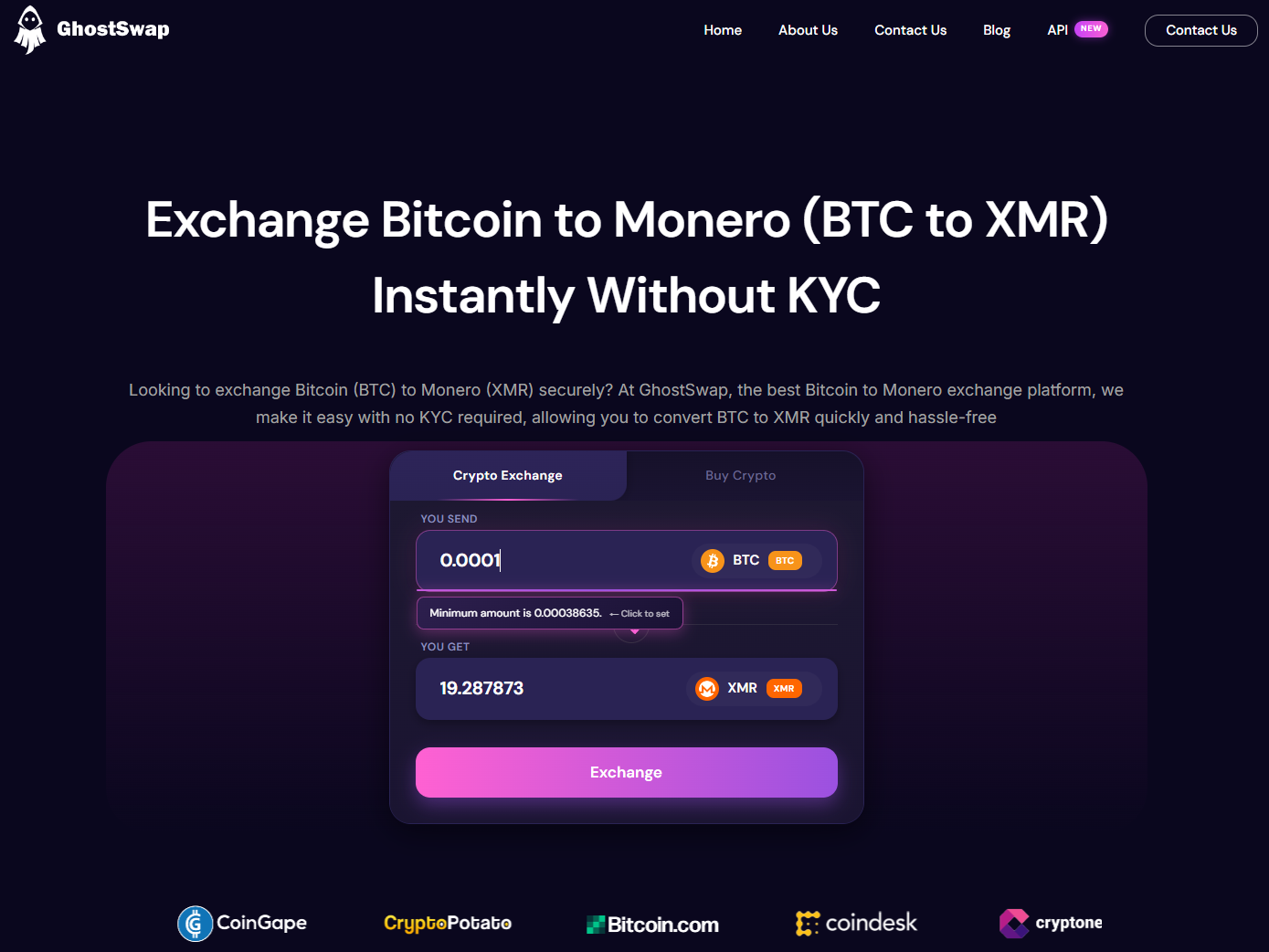
Minimizing user-friction is the core ethic of the platform, which means transactions complete in a simple fashion. They start directly through wallet addresses and end through simple non-custodial swap mechanics.
ChangeHero
ChangeHero refers to itself as an instant cryptocurrency exchange. The platform has historically supported BTC to XMR swap without asking an account from users.
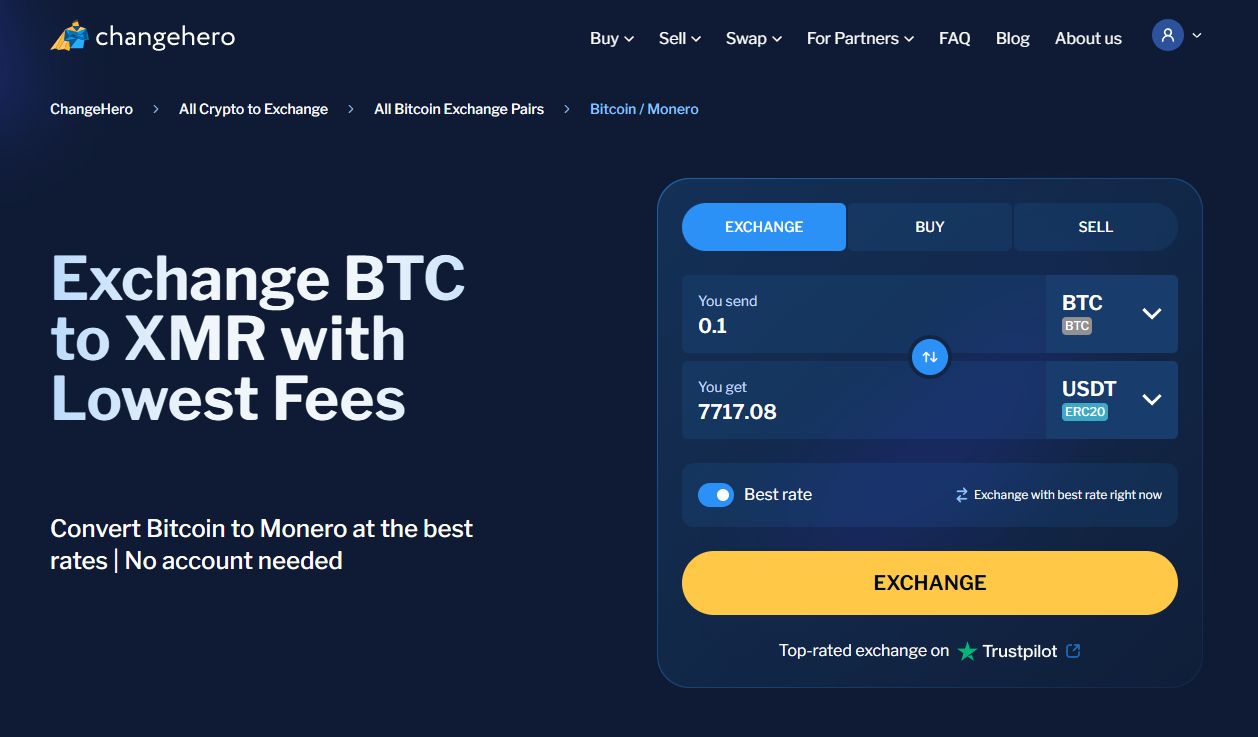
Like most service providers, it lets you pick between floating rate and fixed rate, which is suitable if you can trade off between speed and price. Swaps happen in minutes on the platform, and ChangeHero does show a confirmation window detailing the rates and network costs.
KYC is not essential for standard exchanges. But if transactions are flagged, it becomes mandatory.
Exolix
Exolix is a fast and privacy-oriented provider of BTC to XMR swap and does not require any account creation if the transaction is standard. You can pick between fixed or floating rate depending on what you want and what the market condition is.

The exchange model Exolix implements is non-custodial, which means funds aren’t held for long term, supporting fast transactions by design. The minimum BTC required for swap is dynamic and depends on market conditions.
KYC isn’t mandatory, but it comes into play when a less-than legitimate transaction gets flagged by the platform’s automatic compliance system.
FixedFloat
FixedFloat markets itself as a lightning cryptocurrency exchange. Like the name suggests, it offers exchange between BTC and XMR at fixed or floating rate. The platform selects the floating rate by default.
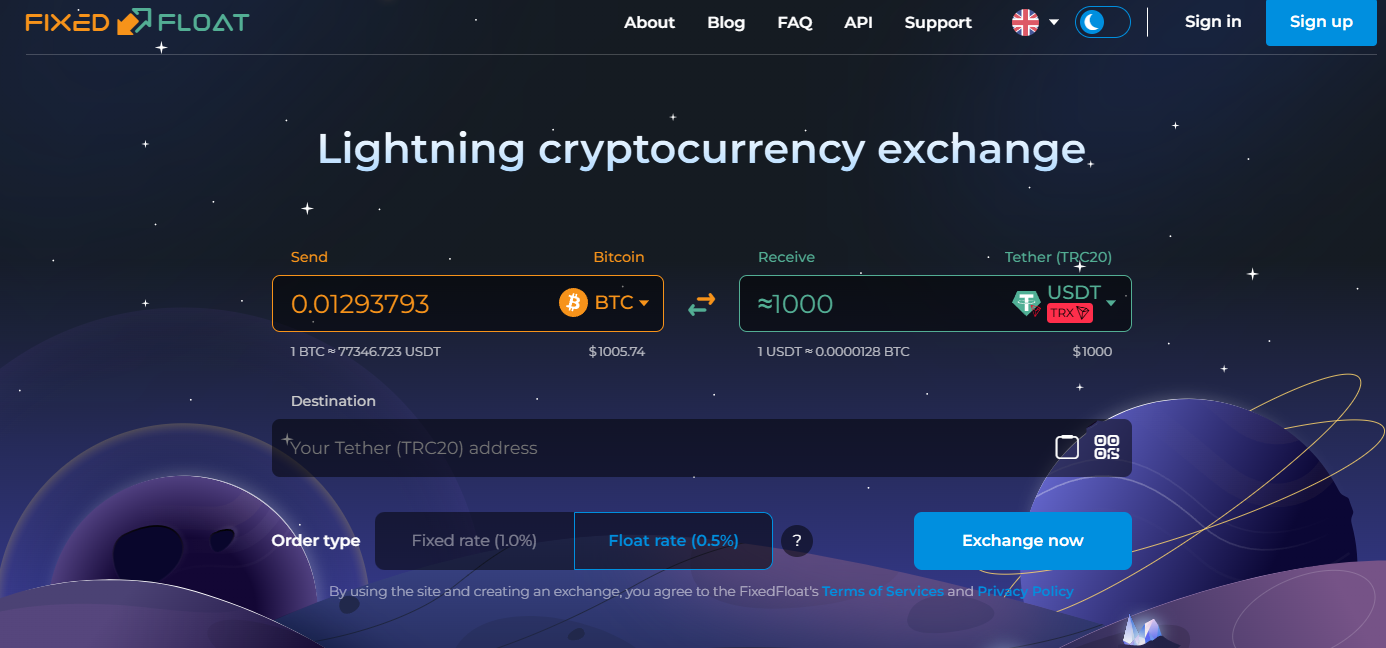
Swaps can happen directly since there is no account required. With its lightning network integration, FixedFloat speeds up the transaction process. Fees are transparent. KYC requirements are none. However, if the internal monitoring systems detect any malicious activity, verifications become essential.
SideShift
If you are looking for BTC to XMR swap through a wallet-to-wallet exchange model, you would prefer what SideShift offers. It does not impose any account registration requirements if you want to conduct standard transactions.

The service provider will quote you the conversion rate before you start the transaction. These quotes factor in network costs.
Blockchain confirmation and liquidity availability dictate the processing time, and the platform does not enforce KYC. Only when SideShift’s risk management system detects a suspicious transaction does it ask for verification.
SimpleSwap
SimpleSwap is another service provider that allows you to convert BTC to XMR without creating any account or entering any verification details. This service provider aggregates liquidity from multiple platforms, which lets it offer both fixed and floating rate.
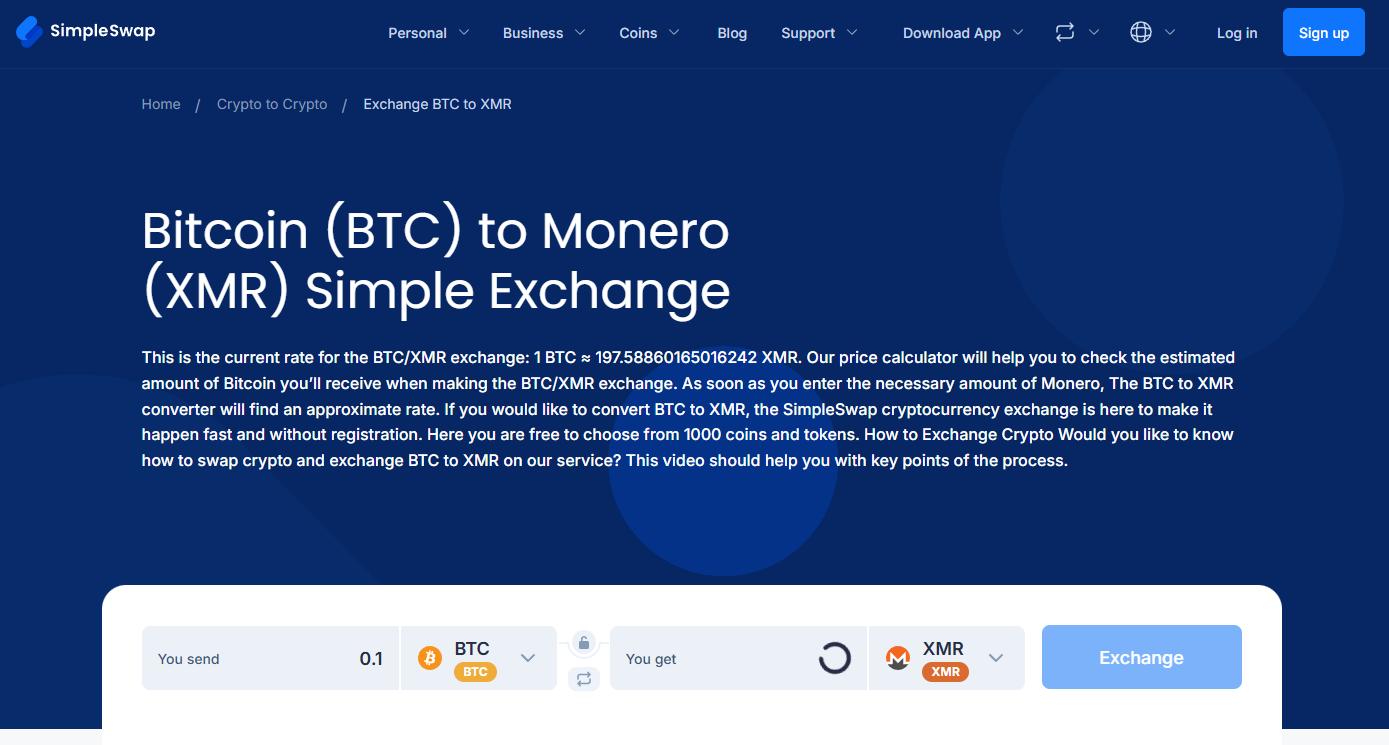
To initiate the transaction, you only need to enter the destination address. The exchange rate, both minimum and final, varies depending on what the market condition is.
The key factor to keep in mind is that although SimpleSwap does not require any registration or verification, things change if the internal AML monitoring systems detect something suspicious.
StealthEX
StealthEX offers a non-custodial exchange system to support BTC to XMR swaps. Generally, you won’t need to register and you can simply opt for wallet to wallet conversion, which is more streamlined.
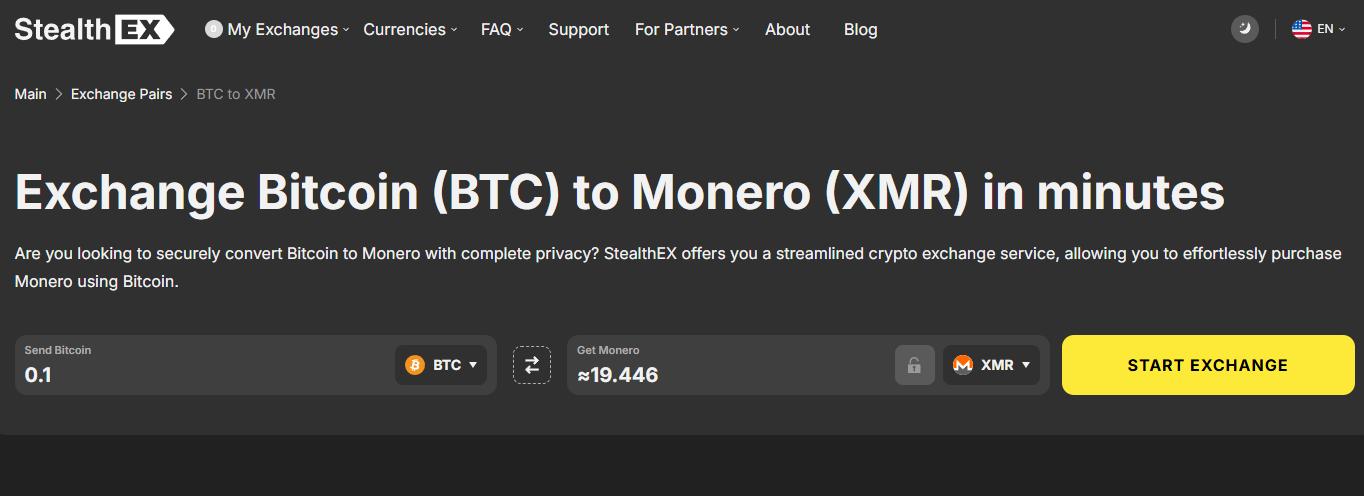
However, StealthEX has compliance monitoring systems in place that, if suspicious activity is detected, may pause the transaction.
Beyond that, the exchange rates are standard. You can choose between a fixed or floating rate. The time it takes for the transaction to complete will factor in Bitcoin’s confirmation and Monero’s settlement speed.
Swapuz
Swapuz supports BTC to XMR swaps but it keeps things simple. It has a simple interface that does not ask for any details for standard transactions. Like the majority of the providers on this list, it also supports wallet to wallet transfer.
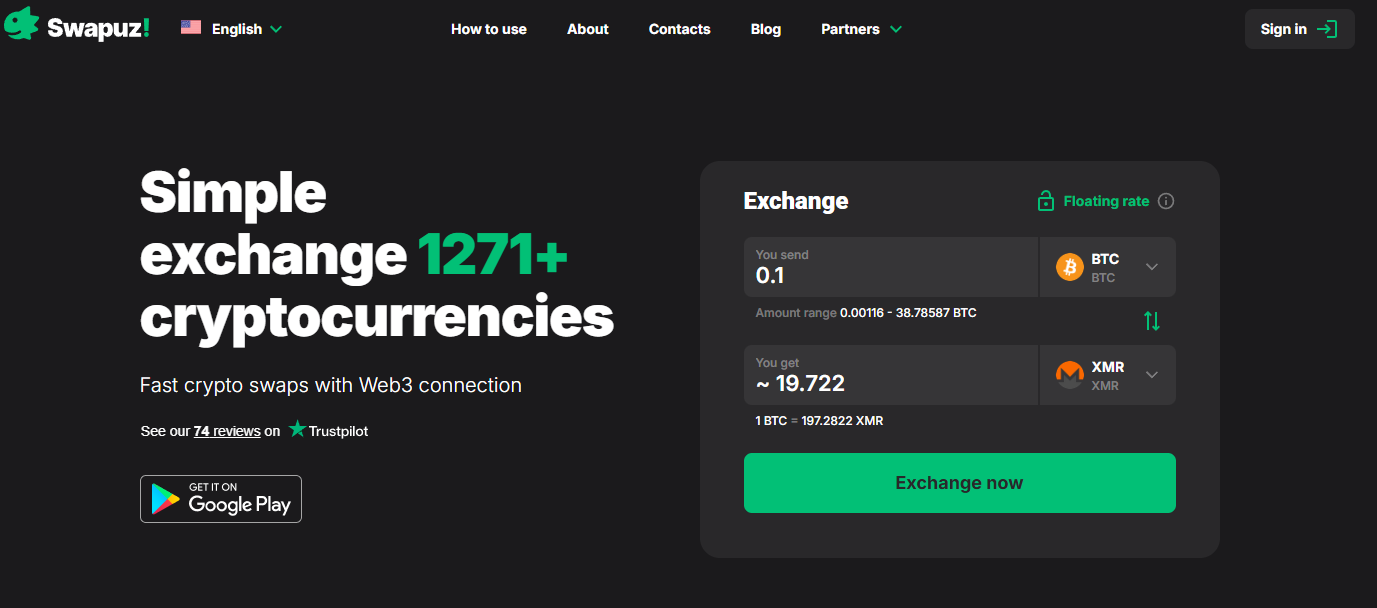
The platform does not let users select a rate, but features a dynamic system that shifts rate depending on the market condition. When it comes to processing time, the platform claims to take 2 to 10 minutes.
Interface-wise, the platform is straightforward. There are no advanced trading systems or any account management tool. Use it to make quick swaps.
Trocador
Trocador is not a simple provider, but an aggregator of exchanges that offer BTC to XMR conversion services.
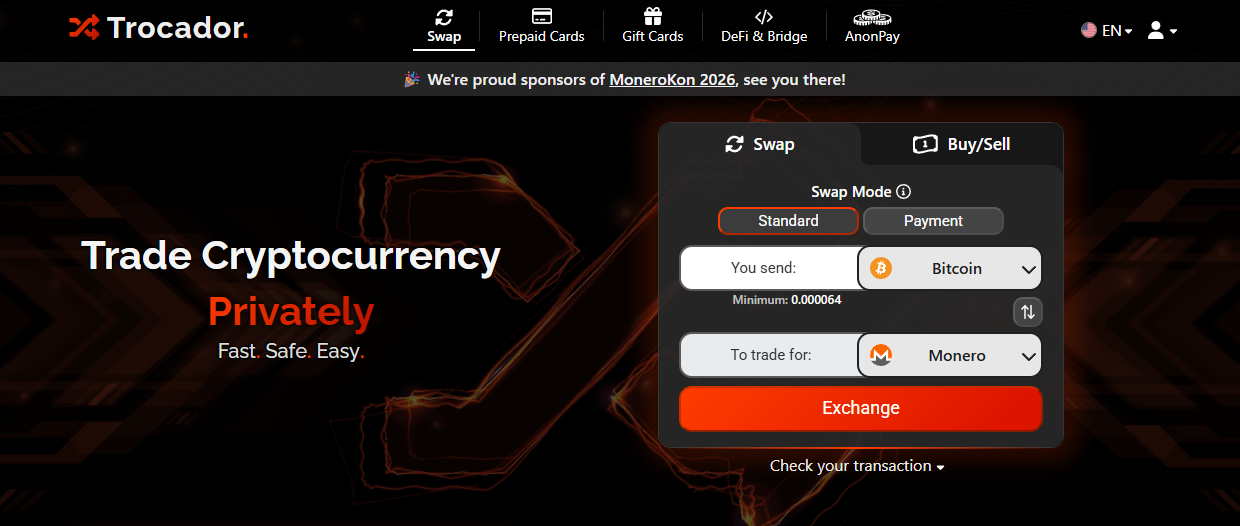
You can use it to compare rates, review fees and payout rates, and select routing options across multiple exchange providers. Like most platforms, it does not impose the KYC requirement. However, the decision to activate it depends on the third-party exchanger you have chosen for swapping services.
That’s why the platform is mostly chosen as a comparative tool rather than a direct swapping system.
Step-by-step: How to convert BTC to XMR
Get your Monero Receiving Address
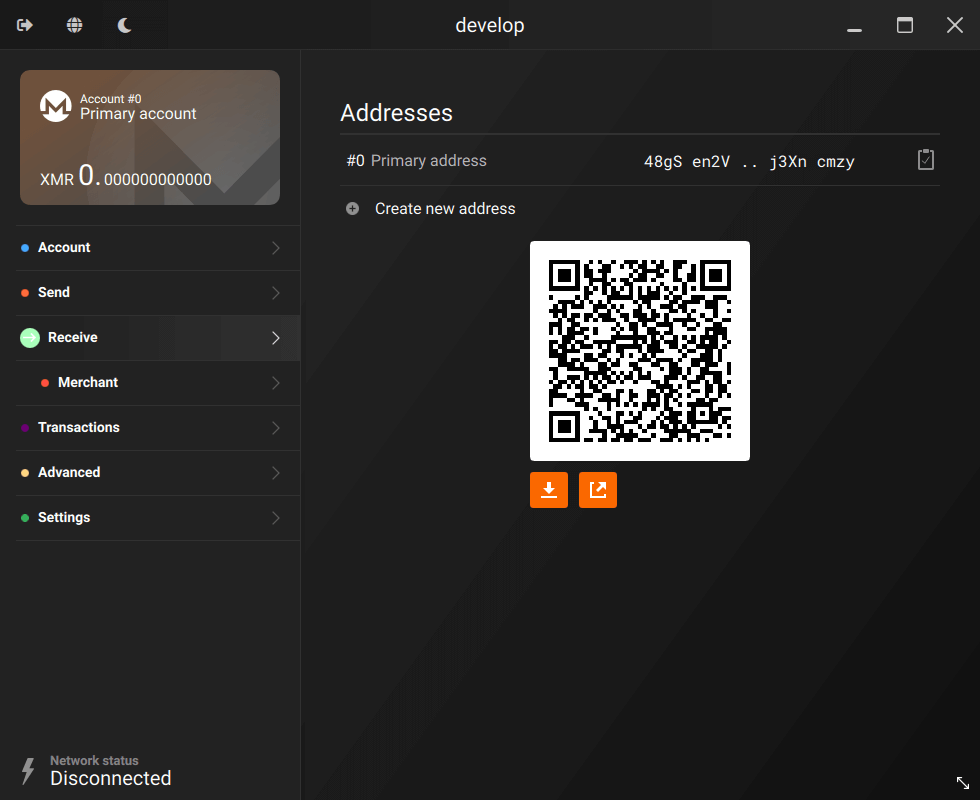
The first task is to get the Monero receiving address, which you get upon opening the Monero wallet of your choice and clicking the receive button. Monero GUI is recommended since it features a simple mode if you want quick swaps and advanced mode if you want extra tools.
When you click the receive button, the wallet will show you an address under the Primary Address tag. Creating a new address is also an option, but it is meant for merchants, and the method is advanced.
Pick a Swap Service From the Table Above
Once you have the Monero receiving address, pick the swap service from the options provided in the above table.
Make your pick based on the priority. Do you need speed, or do you want higher rates? Floating rates are fast. Fixed rates are slow. The next decisive factor should be liquidity. Check the reserve of the exchange service provider, if the detail is available. The rule of thumb is that if you can enter the details such as the amount of BTC you want to exchange, there is liquidity.
Enter swap details: amount BTC and your XMR address
After picking the appropriate exchanger, enter the swap details, which include the amount of BTC you want to convert into XMR. The moment you click on the exchange button, the payout address section becomes visible.
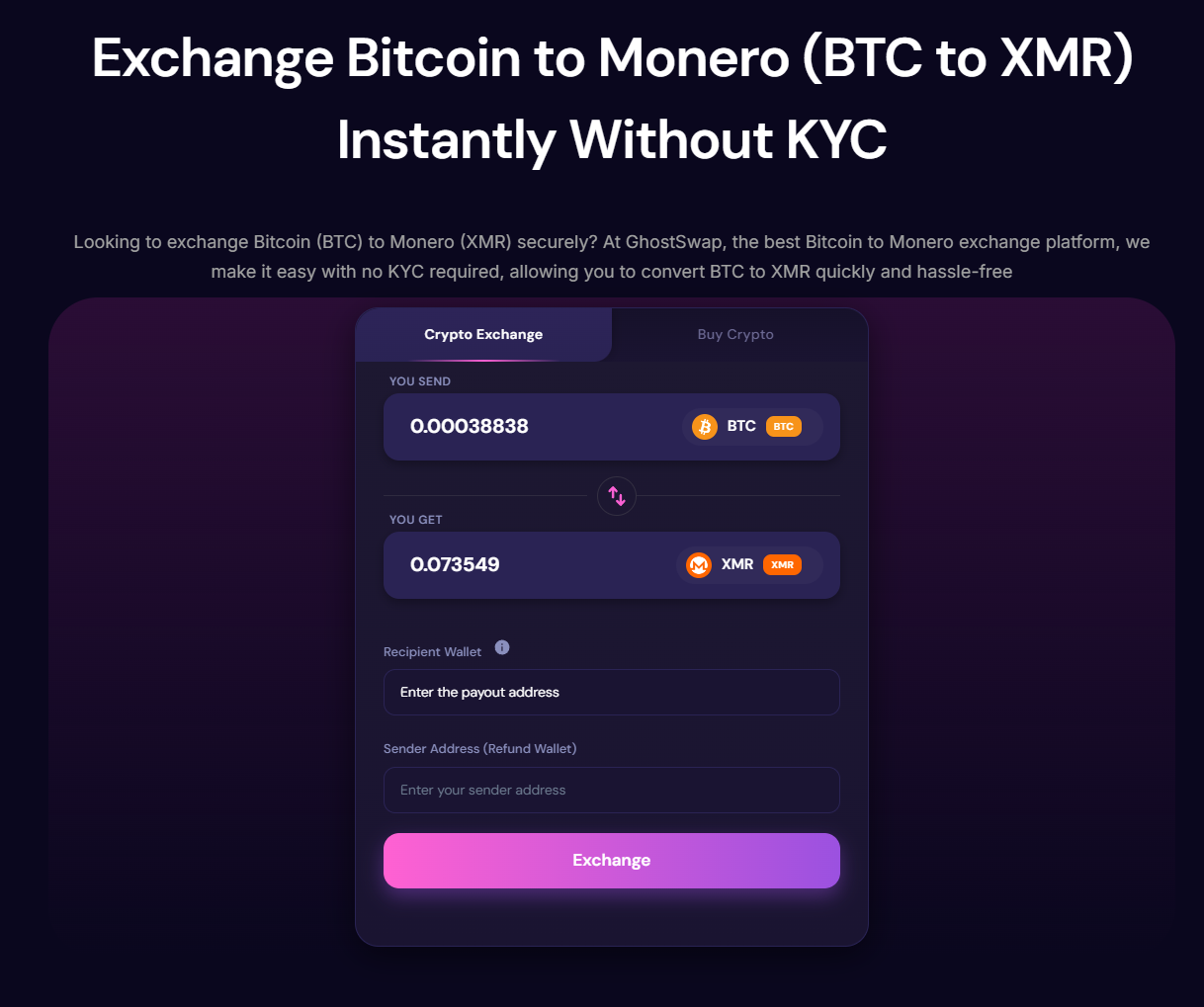
Another critical section is the refund wallet. On GhostSwap, if the transaction fails, or the deposit amount is incorrect, refunds are possible.
Get the deposit address
Keep that exchange tab open and open the Bitcoin wallet from where the BTC has to be sent. Get the deposit address from there immediately. If the wallet is mobile-based, and you are making the swap through desktop, copy the address to the clipboard before placing it on a private doc that you can copy it from.
Send your BTC from your wallet to the deposit address
Confirm the exchange and send your BTC from the wallet to the deposit address.
Keep in mind that the deposit address should only be a single-use. Never repeat it especially when it comes to privacy-swaps. If the transaction fails and the money is refunded, generate a fresh deposit address.
Wait for confirmations
Now wait for the transaction to be fully confirmed. It may take 10 minutes for Bitcoin to confirm the transactions. However, that depends on the network congestion. Don’t panic if it takes a couple of minutes longer.
After those 10 minutes are finished, the XMR side starts the confirmation process, which may take another 10 to 15 minutes.
Confirm Receipt in your Monero wallet
After the time period within which the transaction was supposed to be complete is over, visit your Monero wallet and check whether you’ve received the amount. Provided you’ve entered all the details correctly, you will see XMR in your account.
If there is no amount, wait for a bit, and look at the Bitcoin wallet. Exchangers often refund if the deposit amount was wrong or the transaction has failed.
Verify the TxID on a Monero block explorer
Once the transaction is complete, get the transaction ID and verify it using the Monero block explorer.

This step is important since Monero transactions are private by their very design. They are harder to audit in a public setting.
So, when you’re verifying the transactions, you are essentially checking the following:
- Was the transaction broadcast successful?
- Did you receive confirmation?
- Does the XMR transfer exist on-chain?
- What was the blockheight and timestamp?
How long does a BTC to XMR swap take?
A typical BTC to XMR swap takes 25 to 45 minutes, regardless of what most exchange service providers say. Much of that deviation is because of things beyond the control of exchanges, including Bitcoin network congestion, and the speed of confirmation.
The process begins with sending transactions to the mempool, which completes instantly. However, because most, if not all, swap services only start processing after there is at least one Bitcoin confirmation, which takes 10 minutes per block, the wait times are the longest at this stage.
After the first confirmation, the exchange platform gets into action, detecting the deposit and starting the conversion, which can take anywhere from 1 to 5 minutes. Then comes the turn for the Monero transaction to broadcast to the network, which takes around 2 minutes.
To get a full privacy lock, it is recommended that you get 10 Monero confirmations (at least.) That makes 2 × 10 = 20 minutes.
Combining all the steps, and taking into account the delay due to network congestion (because it’s nearly always there), it takes roughly 45 minutes for the total swapping process to finish.
Fees: What You’ll Actually Pay
Converting Bitcoin to Monero means going through three different zones starting with the Bitcoin Network and ending with the Monero Network. So, even if a platform advertises the lack of any hidden charges, these factors should not be ignored.
Bitcoin Network Fee
The Bitcoin network fee is the first cost you’ll face. You pay it as a sender when you broadcast BTC to the swap service. The amount you pay depends on how congested the mempool is and the fee that you chose in your wallet. During times of low activity, the fee may stay well below $1. Often it is $0.5. However, when there is heavy activity, the fee may climb to $10 or $15 if you need faster confirmation speeds.
Service Spread
Service spread is the second cost. This is the fee that exchange providers charge. It ranges from 0.5% to 2% and is integrated into the quoted rate. The best way to find it is to compare exchange payout against the BTC/XMR value on CoinGecko.
For instance, if $0.1 is around $1,050 and XMR trades at around $300, then $3.5 XMR will be a rough conversion rate. So, when you see a swap service quoting only $3.4 for the same $0.1 BTC, it suggests that the platform’s built-in spread and execution costs are at play.
Monero Network Fee
Monero Network fee is the final cost that you bear. The good thing is that it is extremely small and usually ranges from only $0.001 to $0.01, and you don’t have to account for them manually. The amount is often deducted automatically even before the XMR payout reaches your wallet.
How private is a BTC to XMR swap?
There are three layers upon which the privacy of a BTC to XMR swap depends: the Bitcoin side, the Monero side, and the service side.
Bitcoin Side
The Bitcoin side is the fully traceable and fully visible side. Everything from wallet address to transaction amount to even movement history can be tracked through blockchain explorers.
As a result, when a BTC is sent directly from an account that has KYC turned on, the transaction becomes traceable, and it traces directly to the user’s identity. To enforce privacy here, users make use of CoinJoin tools or intermediary wallets before committing to the final swap.
Monero Side
After the conversion is complete, and settled into Monero, the transaction becomes opaque. It is thanks to Monero’s ring signatures, RingCT (Ring Confidential Transactions) and stealth addresses. They hide the transaction amount, the addresses, and the sender identity.
On Monero, the transaction is not traceable, at least not in a straightforward way. So, when BTC is converted into Monero and reaches the wallet, there is generally no way to follow the funds across the chain.
Service-Side
While Monero offers a robust privacy-centric system, the service provider that facilitates the conversion is the biggest privacy variable to consider.
When the swaps are done through services that employ the No-KYC strategy, and require no account, there is no straightforward way to link the identity of the user to the transaction. The only possible “information leak” comes from IP records, temporary logs, or transaction metadata.
To think of the entire chain in practical terms, the chain breaks once XMR reaches the personal wallet. The only source of exposure comes from whoever has retained the transaction records off-chain: the service provider.
Common Mistakes to Avoid
Ignoring even small details can derail simple BTC to XMR swaps. Here are some of the mistakes that you can avoid to prevent such things from happening.
- Sending BTC to the wrong address: There are some wallets that handle SegWit and non-SegWit formats in a different way, which means if you copy the wrong deposit address, the transaction will delay, or fail.
- Sending less than the platform minimum: If you go to instant exchangers, they specify how low you can go when it comes to the amount of BTC you can swap. If you make a deposit below the minimum requirement and don’t factor in the network fees and other cost layers, the transaction will fail and you will get a refund.
- Sending more than stated maximum: If you send more than what’s allowed by the exchange, two things can happen. You’ll either get a refund automatically, or the exchange will only process the allowed portion of the transaction, and the rest will be refunded.
- Closing the tab before saving the order ID: Order ID is the main support reference for most exchanges. If you don’t copy it and there is something wrong with the transaction, recovering the funds becomes very difficult.
- Using an exchange deposit address as the XMR receiving address: This becomes an issue if the exchange does not properly support Monero deposits and you will also lose all the key privacy benefits.
- Not saving the transaction ID: In case of delays, Bitcoin transaction hash is the first thing that support executives ask for. If you don’t have it, the best option is to wait for the transaction to finish.
Frequently Asked Questions
Is it legal to swap BTC for XMR?
In most jurisdictions, yes, swapping BTC for XMR is legal. However, regulations around privacy-focused cryptocurrencies differ depending on where you live. Some countries restrict Monero trading on regulated exchanges, while others allow it normally. Before making a swap, you should always check your local cryptocurrency and tax regulations.
Do you need to verify your identity for a BTC to XMR swap?
Not always. Several instant swap services let you convert BTC to XMR without creating an account or completing KYC verification for standard transactions. However, if a transaction is flagged by the platform’s internal AML or risk-monitoring systems, identity verification may still become necessary.
What is the minimum BTC you can swap?
The minimum amount usually starts around 0.001 BTC, although it depends on the platform you choose and current network conditions. Some providers support even smaller swaps, while others raise the minimum during periods of high Bitcoin fees or low liquidity.
Can you reverse a BTC to XMR swap?
No. Once the Monero transaction is completed and the XMR reaches your wallet, the transfer becomes irreversible. Blockchain transactions do not work like bank transfers, which is why checking wallet addresses and swap details carefully before confirming is important.
Will you receive the exact quoted XMR amount?
That depends on whether you selected a fixed-rate or floating-rate swap. Fixed-rate swaps lock the quoted amount at the moment you confirm the order. Floating-rate swaps settle based on the market price when the exchange actually processes the transaction, so the received XMR amount may change slightly.
What happens if the swap fails?
If the transaction fails, most services issue a refund to the refund address you provided during the order setup. However, network fees and processing deductions are usually not returned. Refund timing also depends on the platform’s internal review process.
Why convert BTC to Monero instead of using Bitcoin directly?
The biggest reason is privacy. Bitcoin transactions remain publicly traceable on-chain, while Monero obscures transaction amounts, sender details, and wallet addresses. Monero is also fungible, meaning every coin carries the same value regardless of transaction history or prior usage.
H2: Swap vs exchange: Which Fits your Situation
You can do BTC to XMR conversion through either instant swap services or full cryptocurrency exchanges. The best option, however, depends on what you want.
How large is your transaction? How much privacy are you expecting? Do you care about long-term trading access? These are the questions that determine whether you need a swap or an exchange.
Instant Swap Services
For medium-sized conversions, swap platforms are generally better. Advanced tools don’t matter as much as speed and simplicity in this case. Plus, since most swap platforms don’t require account creation for standard transactions, they are automatically attractive if you’re someone who wants the transaction private and quick.
And the process is usually straightforward. You send BTC, enter an XMR address, and wait for settlement. For one-time conversions, these services work well. If you don’t want to maintain an exchange account or store balances on platforms that take control away from you, these services work well.
Traditional exchanges
If you are dealing with very large BTC to XMR trades, centralized exchanges are usually the better choice, especially since with large trades, liquidity depth and execution stability matter.
While most major exchanges require KYC verification, they offer deeper perks in return. From deeper order books to sleek trading interfaces, portfolio tools, and access to multiple cryptocurrency markets, exchanges provide much.
So, if you are an active trader and want to switch between several assets, an exchange is a much better option.
Conclusion
Swapping BTC to XMR in 2026 is no longer a complicated process. Pick a reliable no-KYC swap provider, enter your Monero receiving address, send the BTC, and wait for confirmations to complete. In most cases, the entire process takes around 30 to 45 minutes depending on Bitcoin congestion and the exchange service handling the conversion.
The biggest things to keep in mind are operational rather than technical. Always double-check wallet addresses, save the order URL, and keep the Bitcoin transaction ID stored somewhere accessible in case support intervention becomes necessary.
Platforms such as GhostSwap and similar wallet-to-wallet services continue to make BTC to XMR swaps accessible without forcing users through lengthy onboarding procedures. The important part is choosing the service that best matches your priorities regarding privacy, fees, liquidity, and speed.


- Bitget Launches Open Custody Network, Giving Institutions Choice in Custody and Access to Markets
- ETHSpain 2026 Puts Infrastructure at the Center of Ethereum’s Next Chapter
- Compounding vs Drawdown: The Math Active Traders Often Underestimate
- A 1960s-Style Evening Is Coming to TOKEN2049 Singapore, Courtesy of ChangeNOW
- Smart Money Signals vs Whale Tracking: What Solana Traders Should Actually Follow in 2026