
Can Cross-Chain Technology Be the Future of Crypto Ecosystems?



The 21st century has been an exciting time for the world’s financial markets and technology space. It started as a promising century following the debut of the internet and web 2.0 solutions. Barely two decades in, we have a cryptocurrency market whose market capitalization has grown to over a trillion dollars since the inception of Bitcoin; the first crypto asset to be launched on a blockchain network.
The crypto ecosystem now features as one of the most evolving financial market ecosystems, although traditional finance die-hards are yet to embrace its potential. Nonetheless, the rate at which crypto projects are popping up has increased significantly within the past year. Innovators in this niche have since embarked on building solutions that integrate blockchain networks to scale the opportunities within the crypto market.
Notably, the very first crypto assets such as Bitcoin and Ethereum are built on different blockchain networks. This means that each operates within its environment, at least until recently when cross-chain solutions started to launch. Crypto projects are building cross-chain bridges to enable users to interact with multiple blockchain ecosystems. This is especially common with upcoming Decentralized Finance (DeFi) projects.


Cross-Chain Technology Fueling the Growth of DeFi protocols
Before jumping into the value proposition of cross-chain technology, it is important to note that these solutions emerged following the rise of DeFi. This nascent crypto niche challenges the centralized nature of traditional finance by introducing an ecosystem where users can access decentralized financial services. Ideally, DeFi eliminates the need to interact with traditional banks and asset managers.
So far, DeFi innovations that have been launched feature products such as decentralized exchanges (DEXs). These DeFi platforms function in a similar way to centralized exchanges with the only difference being DEXs rely on smart contracts for execution while their traditional counterparts rely on third parties to settle transactions. Today, DEXs such as Uniswap and Pancakeswap are competing with long-standing centralized crypto exchanges.
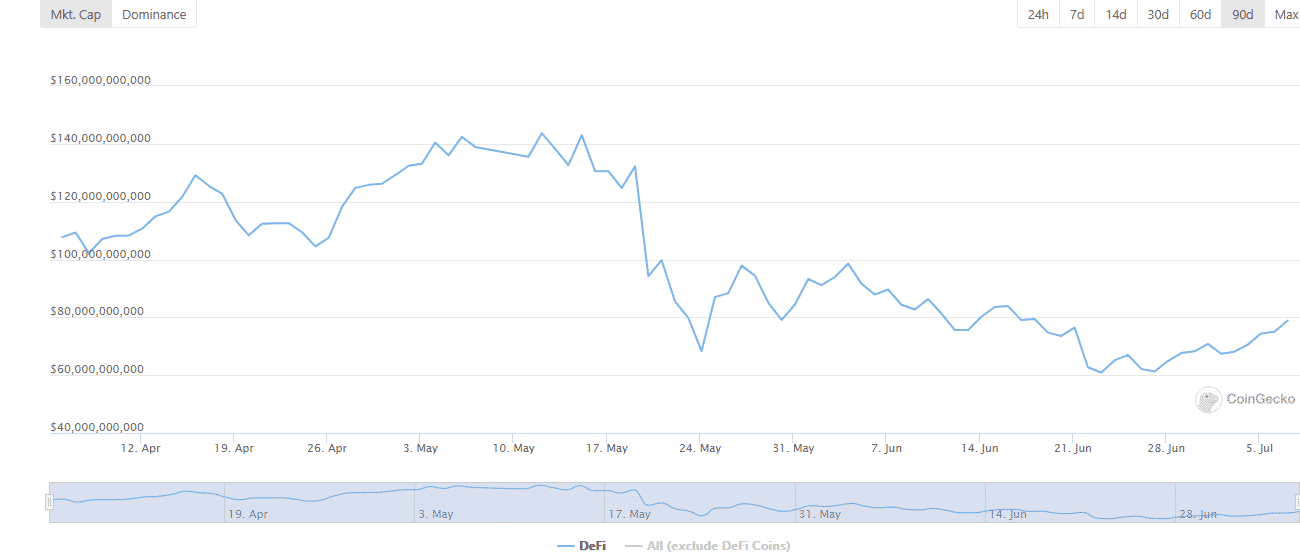
Image Source: Coingecko
Following this massive adoption, it became apparent that cross-chain solutions will further spur the growth of DeFi protocols. Initially, most DeFi protocols were launched on the Ethereum blockchain which meant that users were limited to this ecosystem. Cross-chain solutions change this narrative by enabling DeFi projects to interact with multiple blockchain ecosystems through bridges.
In essence, a project built on Ethereum can leverage a cross-chain bridge to offer its services on other blockchains such as Binance Smart Chain (BSC) or Layer-2 networks. These solutions are now enabling DeFi protocols to operate on several blockchains, lowering the cost of entry and increasing the options for DeFi users.


Cross-Chain DeFi Protocols
As mentioned earlier, blockchain environments operated in isolation before the debut of cross-chain solutions. However, the rise of DeFi sparked the need for innovation – a paradigm shift that both veteran and new DeFi projects seem to be embracing.
Some of the upcoming cross-chain DeFi protocols include YeFi.one, a non-custodial protocol stack built on the YottaChain public blockchain. This project combines DeFi and decentralized data solutions to build a decentralized ecosystem that adds value to its users. In addition, YeFi.one features a cross-chain solution that integrates the platform with all Binance Smart Chain (BSC) compatible wallets.
It is also noteworthy that the YeFi.one DeFi protocol is set to evolve into a fully functioning DeFi ecosystem. The platform will feature DeFi services ranging from a DEX to staking initiatives on multiple chains including BSC. With all these services under one roof, YeFi.one users will not only enjoy the utility of its cross-chain solution but a wide range of DeFi services within its blockchain network. This protocol is just one of the many potential DeFi cross-chain solutions with innovators still on a building spree.
Wrap Up
While it may be only a decade old, the crypto market has evolved significantly in recent years. The industry has grown from building crypto assets for transactional purposes to building for financial services. Even more interesting, the rate at which innovators are coming up with new projects has been on the rise, attracting VC money from across the globe.
DeFi is one of the main beneficiaries of this increased funding with the sector growing by over 50X over the past two years. Currently, the total DeFi market capitalization stands at $79 billion which is roughly 5.3% of the total crypto market cap. Stakeholders believe that this growth will continue as more retail and institutional investors realize the value of DeFi.
That said, the growth of this ecosystem can only be guaranteed by integrating various blockchain networks. Cross-chain bridges offer a perfect solution towards this shortcoming and will likely be a major topic of discussion in the next crypto era. However, in crypto, only time can tell how things play out as most of the development is still experimental.
Instant Currency Exchange at BestChange with Ease
- Compare Rates Across 1000+ Exchanges
- Access 250+ Cryptocurrencies & Pairs
- Save Time with Real-Time Price Tracking
- Trusted & Verified Exchange Listings

Why Trust CoinGape
CoinGape has covered the cryptocurrency industry since 2017, aiming to provide informative insights Read more… to our readers. Our journal analysts bring years of experience in market analysis and blockchain technology to ensure factual accuracy and balanced reporting. By following our Editorial Policy, our writers verify every source, fact-check each story, rely on reputable sources, and attribute quotes and media correctly. We also follow a rigorous Review Methodology when evaluating exchanges and tools. From emerging blockchain projects and coin launches to industry events and technical developments, we cover all facets of the digital asset space with unwavering commitment to timely, relevant information.



Delivered every day.
- Insights that move markets
- 100,000 active subscribers

Global Onchain Awards 2026