


US-Iran Update: Oil Prices Surge By 4% as Iran Escalates Fresh Attacks on Gulf Allies


Highlights
- Iran's July 17 strikes on Kuwait's power and desalination plants triggered an oil prices surge, with Brent nearing $79.
- Bitcoin held near $64,000 despite the escalation, showing resilience after earlier dips toward $60,000–$61,000.
- Analysts warn Hormuz supply risk is turning structural, and a sustained oil spike could delay Fed rate cuts and pressure crypto.
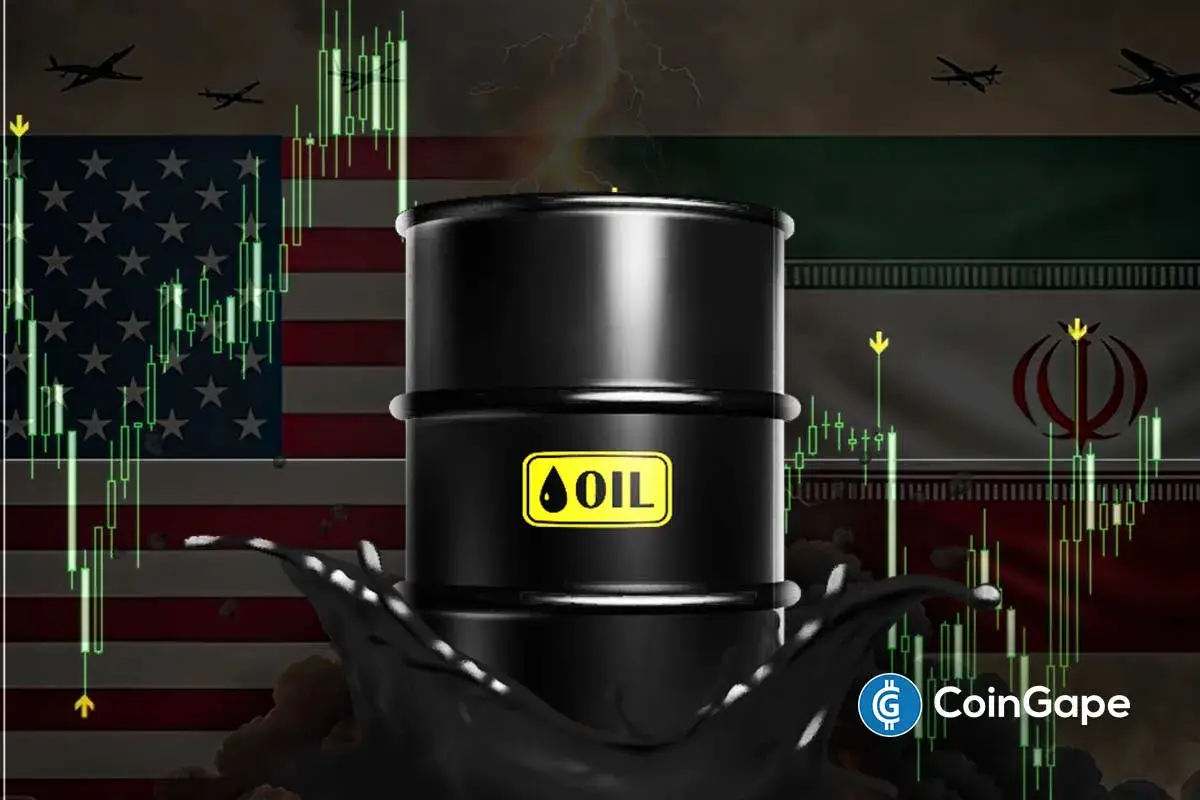
Iran launched fresh missile and drone strikes on Kuwait’s power-generation and desalination plants on July 17, deepening the US-Iran confrontation that has rattled global energy markets since early July. The oil prices surge of over 4%, pushing Brent crude toward $79 and WTI to similar highs, is now stoking inflation fears and rattling risk assets worldwide. Bitcoin, sitting near $64,000, is watching the U.S.-Iran war escalation closely as traders assess whether the digital asset can hold its ground as a geopolitical hedge.


Kuwait Strikes Add a Dangerous New Layer to US-Iran War Standoff
Iran’s July 17 targeting of civilian infrastructure in Kuwait, a key US ally, marks a significant escalation. Kuwait’s government confirmed the incident, and fires broke out at the affected facilities.
The strikes follow US airstrikes on Iranian energy sites and came after President Trump warned Tehran that power plants and bridges would be targeted unless Iran returned to peace talks. Iran’s rejection of ceasefire talks has been a consistent thread through this entire conflict cycle.
The current flare-up builds on a volatile stretch that started in early July. US forces hit Iranian targets near the Strait of Hormuz after Iran was accused of attacking commercial vessels.
Iran responded by targeting US-linked facilities in Bahrain, Kuwait, Qatar, and Jordan. By July 12–13, Brent and WTI had already climbed 4%+ on those fears.
The July 17 Kuwait plant strikes pushed the conflict to a new threshold: direct damage to the civilian energy infrastructure of a neutral Gulf state. Iran also struck a ship in the Strait of Hormuz today, further escalating the U.S.-Iran war.
Ship traffic through the Strait of Hormuz, which handles roughly 20% of global oil trade, has slowed sharply after Iran reasserted claims over the waterway.
ANZ and ING analysts warned that hopes for a quick de-escalation are fading. The oil price surge now reflects more than a temporary spike; it signals that supply risk is becoming structural heading into Q3.



Bitcoin Holds Near $63K as Oil Shock Revives Safe-Haven Narrative
Despite the oil prices surge, Bitcoin has shown relative resilience, holding close to $64,000 as of July 17. Earlier rounds of escalation saw BTC dip toward $60,000–$61,000 before recovering on de-escalation hopes.
When a June ceasefire briefly pushed oil lower, Bitcoin rebounded on falling inflation data, suggesting the market views BTC as sensitive to macro signals, not just crypto ones.
The broader pattern is familiar. Geopolitical shocks tend to trigger short-term crypto volatility but can drive safe-haven flows into Bitcoin if dollar strength and inflation fears don’t dominate.
With oil now rising alongside continued Hormuz threats, that tension is live. Bitcoin’s price outlook after oil surged to $85 showed how quickly sentiment can shift when energy markets move hard.
Altcoins have followed BTC’s lead, though with sharper beta on the downside during risk-off sessions. Institutional ETF flows remain a wildcard.
Any sustained oil price surge that stokes CPI prints could delay Fed rate cuts and tighten liquidity, historically a headwind for crypto.
Bitcoin and XRP price predictions ahead of Clarity Act talks suggest traders are already pricing in multiple macro scenarios simultaneously.
Earlier in the conflict, Bitcoin fell sharply after Trump’s speech and new US strikes on Iran, demonstrating how quickly war headlines can move crypto prices. For now, bulls are counting on BTC’s track record as a macro hedge to absorb the pressure. However, it is worth noting that the U.S.-Iran war is at risk of further escalation as the U.S. has said refueling planes to Israel ahead of a possible escalation.
Track active ICOs and upcoming token sales in one place.
Instant Currency Exchange at BestChange with Ease
- Compare Rates Across 1000+ Exchanges
- Access 250+ Cryptocurrencies & Pairs
- Save Time with Real-Time Price Tracking
- Trusted & Verified Exchange Listings

Why Trust CoinGape
CoinGape has covered the cryptocurrency industry since 2017, aiming to provide informative insights Read more… to our readers. Our journal analysts bring years of experience in market analysis and blockchain technology to ensure factual accuracy and balanced reporting. By following our Editorial Policy, our writers verify every source, fact-check each story, rely on reputable sources, and attribute quotes and media correctly. We also follow a rigorous Review Methodology when evaluating exchanges and tools. From emerging blockchain projects and coin launches to industry events and technical developments, we cover all facets of the digital asset space with unwavering commitment to timely, relevant information.



Delivered every day.
- Insights that move markets
- 100,000 active subscribers

Global ONCHAIN AWARDS 2026