Russia Delays AML Crypto Bill to Sept 1 as U.S. CLARITY Act Gains Steam



Highlights
- Russia pushed its Rosfinmonitoring crypto AML law from July 1 to September 1, 2026, mandating full ID reporting on transactions above 60,000 RUB.
- A new version of the CLARITY Act is expected in Congress next week, with Senator Lummis calling it crypto's last chance before 2030.
- Tim Scott says CLARITY Act approval could unlock a $30 trillion crypto market as Ripple and Treasury Secretary Bessent push for passage.
Russia has delayed its sweeping anti-money laundering (AML) crypto legislation to September 1, 2026, while the United States is showing renewed momentum on the CLARITY Act, creating one of the sharpest regulatory contrasts between the two powers in the crypto space.


Russia Pushes Back Crypto AML Bill to September 1
Russia’s long-awaited legislation granting Rosfinmonitoring, the Russian Federal Financial Monitoring Service, sweeping authority over all digital asset activity has been delayed.
According to Wu Blockchain, citing Bits.media, the bill was originally slated for July 1 implementation but is now expected to take effect on September 1.
The law will impose comprehensive monitoring of all crypto transactions in Russia. For transactions of more than 60,000 RUB (~$760), the names of the payer and payee, wallet addresses, entity details, dates of birth, and tax IDs must be included.
If you are doing a deal that crosses the border that’s bigger than 1 million RUB (~$12,700), then you have enhanced reporting. Simple transfers, even if they are smaller, will still require simple name and wallet information.
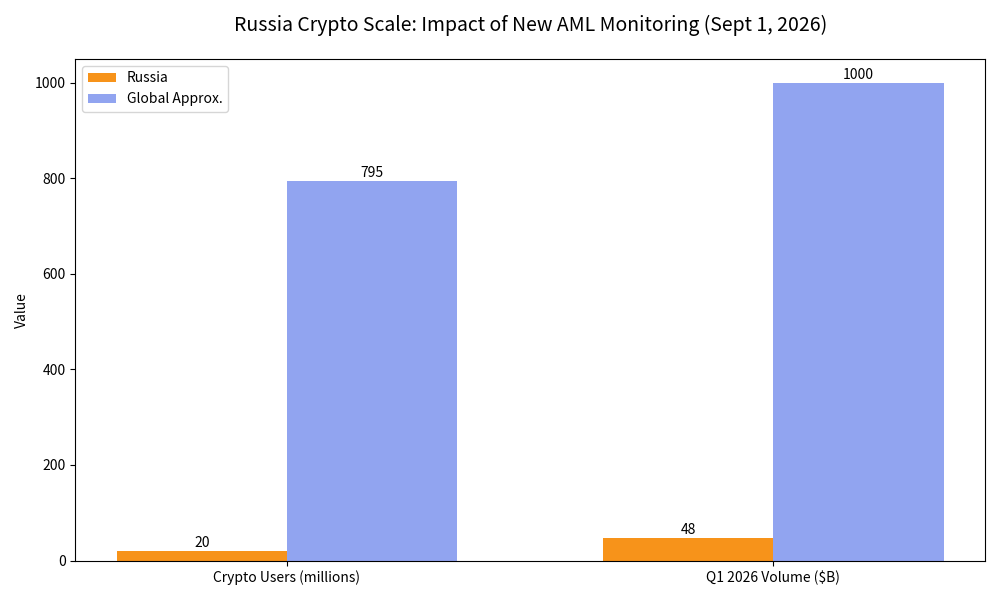
Banks are also impacted. Russia’s Central Bank will limit the share of digital assets in the capital of banking groups to 1% and will acquire new functions to limit or ban crypto transactions.
The delay implies that the information is still being worked out within the Russian authorities, but it certainly means that the authorities will take more control.


CLARITY Act Finds New Legs in Washington
But Capitol Hill is going the opposite way. The Digital Asset Market Clarity Act (CLARITY Act) is gaining a second lease on life, with sources indicating a new version will be submitted as soon as next week.
The bill is crypto’s last chance before 2030, according to Senator Cynthia Lummis, who cautioned that with its failure this Congress, developers will be legally exposed and bad actors won’t be stopped.
That sense of urgency is echoed by Galaxy CEO Novogratz, who stated in May that the CLARITY Act was “literally now or never.”
Despite the continuing debate over the ethics rules and DeFi regulations, bipartisan momentum is growing. The Senate Banking Committee voted to approve the bill earlier this year with a 15-9 margin, and Treasury Secretary Scott Bessent has been pressing both houses of Congress to move quickly on the measure.
Senator Tim Scott has made his stakes as well. He said CLARITY Act approval could open up a $30 trillion crypto market, a stark reminder of how important regulatory clarity is for institutional capital at the moment.
In fact, even Ripple has started a road campaign to move the CLARITY Act forward, and it’s showing that this is a moment for the big guys.
The difference is notable to the investors. Russia is creating a system of state control.
The U.S. is slowly making its way toward a full-scale law governing the market structure that would distinguish securities from commodities and offer a safe harbor for DeFi developers. Capital flows to clarity, and the CLARITY Act is more clearly providing that than ever today.
If you’re hunting for early-stage opportunities, check out our list of the best crypto presales.
Instant Currency Exchange at BestChange with Ease
- Compare Rates Across 1000+ Exchanges
- Access 250+ Cryptocurrencies & Pairs
- Save Time with Real-Time Price Tracking
- Trusted & Verified Exchange Listings

Why Trust CoinGape
CoinGape has covered the cryptocurrency industry since 2017, aiming to provide informative insights Read more… to our readers. Our journal analysts bring years of experience in market analysis and blockchain technology to ensure factual accuracy and balanced reporting. By following our Editorial Policy, our writers verify every source, fact-check each story, rely on reputable sources, and attribute quotes and media correctly. We also follow a rigorous Review Methodology when evaluating exchanges and tools. From emerging blockchain projects and coin launches to industry events and technical developments, we cover all facets of the digital asset space with unwavering commitment to timely, relevant information.



Delivered every day.
- Insights that move markets
- 100,000 active subscribers

Global ONCHAIN AWARDS 2026