
How Crypto Privacy Is Evolving Beyond Hyperliquid vs Zcash


Highlights
- Hyperliquid vs Zcash demonstrates the fact that the privacy is now market purpose.
- Hyperliquid surged 70% in May as trading volume hit $1.82B.
- Zcash price rose 274% in response to shielded demand, up to $185.
Hyperliquid vs Zcash has become a key privacy debate as crypto markets shift in 2026. Hyperliquid is transparent, high-speed, decentralized trading, whereas Zcash is confidential settlement using shielded transactions. Their new rallies demonstrate the investors are rewarding other ideas.
One of them is market structure which is visible. The other is aimed at ensuring that the transactions are not analyzed to a public blockchain today to users worldwide.


Hyperliquid vs Zcash Shows Separate Market Roles
Hyperliquid has shifted to price discovery following a record high of about $73.73 on June 1. The token has performed well in the large-cap sector with a gain of over 70% in May.
The rally was remarkable when Bitcoin price traded lower than $72,000 and Ethereum was at around $2,000. Under persistent bearish pressure, XRP price also held below the level of $1.33.
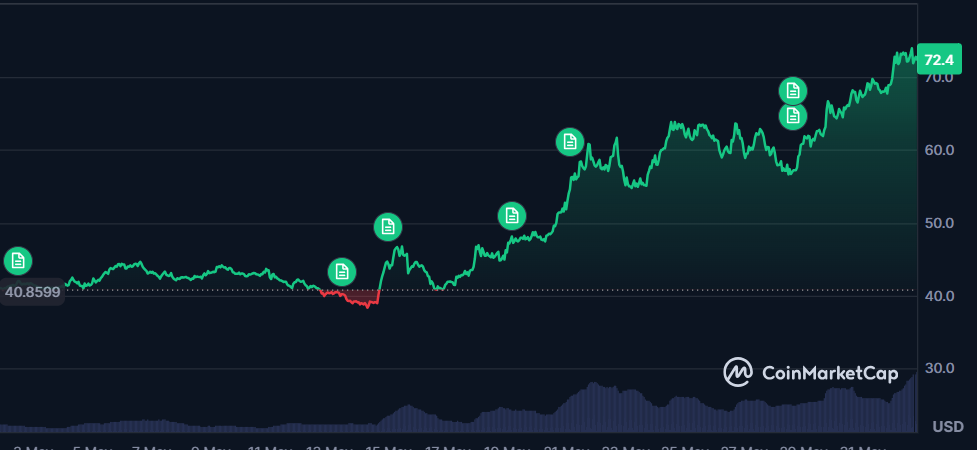
Hyperliquid’s 24-hour trading volume jumped nearly 79% to about $1.82 billion. That growth indicated greater platform usage and demand in the area of HYPE. Grayscale Filed an S-1 For Hyperliquid Staking ETF on over the weekend eyeing more bulls ahead
Zcash passed by another narrative in the market. ZEC climbed to $688 in May, its highest level since November 2025. It had also increased over 274 per cent at that level since its annual low of about 185.


Hyperliquid Builds Transparent Trading Infrastructure
Hyperliquid is not a privacy coin. It is a performance-oriented Layer-1 network that is constructed on on-chain trading and decentralized execution.
Its HyperCore platform allows balances, spot markets and perpetual order books. HyperEVM supports the same security model with the addition of smart contract functionality.
This format provides Hyperliquid with a definite trading position. It will implement a centralized-exchange-like speed in decentralized markets.
Users retain self- custody but trade using transparent settlement. The latter model enhances verification and minimizes centralization of accounts.
But transparency is a constraint of privacy. Activity of wallets, deposit, withdrawals, positions and liquidation behavior can still be made visible to blockchain observers.
Zcash Strengthens Shielded Transaction Demand
Zcash takes a more direct approach to privacy. It was designed as encrypted digital cash for confidential transfers.
Its shielded pools can hide senders, recipients, balances, and transaction amounts. That makes Zcash different from transparent trading networks.
ZEC’s rally in 2026 followed a stronger interest in shielded supply. Shielded supply means tokens stored inside privacy-preserving cryptographic pools.
This growth suggests more users are choosing confidential settlement. It also shows privacy remains relevant despite tighter regulatory scrutiny.
ZEC price traded near $529.88 after surging 2.99% in 24 hours. If ZEC holds above $500, consolidation may continue. A break below that level could expose $480.
Hyperliquid and Zcash are now catering to various crypto audiences. Hyperliquid is aimed at traders that desire speed, liquidity, and verifiable execution.
Zcash is attractive to those users who want to use confidential payments and transfer values privately. It continues to be involved in financial privacy.
Recently, Bloomberg ETF analyst Eric Balchunas brought attention to the performance of the 21Shares Hyperliquid ETF, THYP, saying that the fund had already increased by approximately 50% in two weeks since it was launched.
The quick rise has attracted further interest among more conservative investors looking to have exposure to one of the most rapidly rising assets in the crypto sector.
$THYP is now up 50% since launching only 2wks ago. That may be a record for an unleveraged ETF. $DRAM was a total phenomenon and it took 5 weeks to hit 50%. $IBIT took 2mo. pic.twitter.com/bZFrVPGuuj
— Eric Balchunas (@EricBalchunas) May 26, 2026
Overall, Hyperliquid represents a transparent market infrastructure. Zcash represents private digital cash. Their contrast shows crypto privacy now depends on user needs.
Frequently Asked Questions (FAQs)
1. What is the main difference between Hyperliquid and Zcash?
2. Which is better for crypto privacy, Hyperliquid or Zcash?
Why Trust CoinGape
CoinGape has covered the cryptocurrency industry since 2017, aiming to provide informative insights Read more…to our readers. Our journal analysts bring years of experience in market analysis and blockchain technology to ensure factual accuracy and balanced reporting. By following our Editorial Policy, our writers verify every source, fact-check each story, rely on reputable sources, and attribute quotes and media correctly. We also follow a rigorous Review Methodology when evaluating exchanges and tools. From emerging blockchain projects and coin launches to industry events and technical developments, we cover all facets of the digital asset space with unwavering commitment to timely, relevant information.



Delivered every day.
- Insights that move markets
- 100,000 active subscribers

Global ONCHAIN AWARDS 2026





- XRP News: SEC Approves Ripple-Backed Evernorth to Raise Funds to Buy More XRP
- MEXC Halts Services in Russia and Belarus Citing Global Compliance
- Binance US, Blockchain com Enters Race to Offer Prediction Markets
- Solana’s Alpenglow Goes Live, Aiming for 40x Faster Finality as Votes Move Off-Chain
- Injective Signs MOU With BDACS to Make KRW1 Exclusive Won Settlement
- Ethereum Price Prediction: Will October 26 Glamsterdam Upgrade on Hoodi Spark a $3K Rally?
- XRP Price Jumps Even as 6.05 Billion Coins Enter Exchanges – Will the $1.28 Support Hold?
- CRCL Stock Prediction Ahead of Tomorrow’s U.S. Jobless Claims Report
- SpaceX Stock Outlook as Elon Musk Announces Special Committees to Explore Tesla Merger
- Solana Price Prediction Ahead of Tomorrow’s Alpenglow Launch: Is $90 or $110 Next?
- XRP and Bitcoin Price Outlook Ahead of October 28 FOMC Meeting