

US Stablecoins Face a Shift as FDIC Advances GENIUS Act Framework



Highlights
- FDIC proposes rules for U.S. stablecoins covering reserves redemption and risk standards.
- AML certification required while capital rules remain open for public feedback.
- Tokenized deposits gain equal treatment under federal deposit insurance framework.
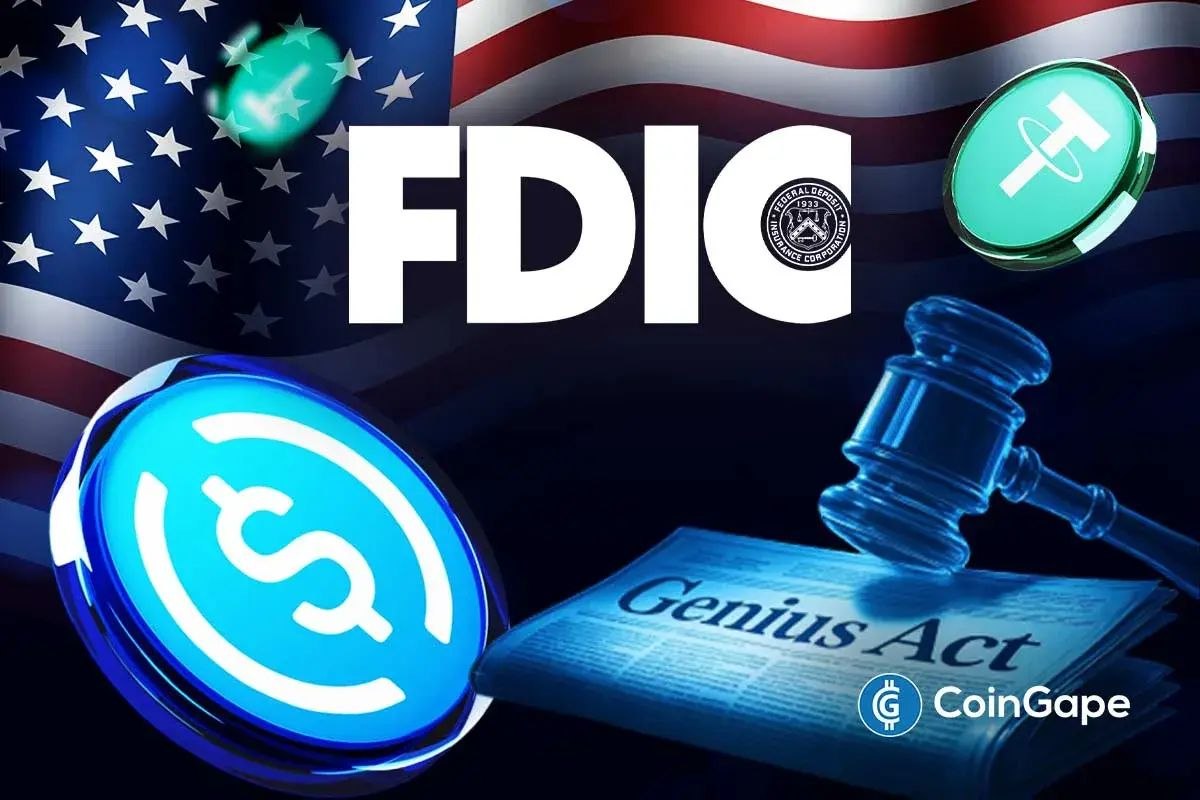
U.S. stablecoins are moving into a new regulatory phase after the Federal Deposit Insurance Corporation (FDIC) approved a notice of proposed rulemaking tied to the GENIUS Act. The proposal sets out a prudential structure for FDIC-supervised issuers and outlines how payment stablecoins will operate under federal oversight.


U.S. Stablecoins Framework Expands Under FDIC Proposal
The FDIC’s proposal focuses on entities under its supervision, including subsidiaries of insured state nonmember banks and state savings associations. These institutions must receive approval before issuing payment stablecoins through subsidiaries. The structure defines operational expectations and sets standards for how issuers manage reserves and meet redemption obligations.
In addition, the rule outlines requirements for insured depository institutions that provide custodial and storage services for payment stablecoins. These rules are intended to lay out how banks engage with stablecoin facilities while operating within the current regulatory boundaries. This follows a previous report where crypto and banking leaders expressed optimism over a CLARITY Act deal after reviewing updated stablecoin yield text.


AML Rules and Capital Questions Remain Open
The draft proposes adherence to anti-money laundering requirements. Each authorized payment stablecoin issuer must attest that it has enacted programs intended to prevent money laundering and the financing of terrorism. These norms align with broader federal regulation expectations for financial institutions that manage digital assets.
However, the FDIC has not defined a minimum capital requirement. Instead, the agency is looking for public input on whether to impose a formal capital foundation in future rules. This strategy leaves key testing decisions open while allowing feedback during the rulemaking process.
Comments on the proposal will remain open for 60 days after publication in the Federal Register. The draft document also addresses technical and supervisory questions raised by market participants, while deferring more complex issues such as capital thresholds.
Coordination With GENIUS Act and CLARITY Act Developments
The ruling amounts to the FDIC’s second step under the GENIUS Act. In December 2025, the agency released a separate proposal outlining application procedures for institutions seeking approval to issue U.S. stablecoins.
The GENIUS Act directs the FDIC, other federal regulators, and the Department of the Treasury to impose prudential standards on entities that issue or support payment stablecoins. As a result, the current proposal advances that mandate while aligning with ongoing legislative discussions.
At the same time, stablecoin provisions continue to draw attention within the CLARITY Act, as SEC crypto fundraising rules advance crypto fundraising rules. Legislators and industry stakeholders have discussed a draft of language on stablecoin yield, which has been a focal point of negotiations.
Instant Currency Exchange at BestChange with Ease
- Compare Rates Across 1000+ Exchanges
- Access 250+ Cryptocurrencies & Pairs
- Save Time with Real-Time Price Tracking
- Trusted & Verified Exchange Listings

Why Trust CoinGape
CoinGape has covered the cryptocurrency industry since 2017, aiming to provide informative insights Read more… to our readers. Our journal analysts bring years of experience in market analysis and blockchain technology to ensure factual accuracy and balanced reporting. By following our Editorial Policy, our writers verify every source, fact-check each story, rely on reputable sources, and attribute quotes and media correctly. We also follow a rigorous Review Methodology when evaluating exchanges and tools. From emerging blockchain projects and coin launches to industry events and technical developments, we cover all facets of the digital asset space with unwavering commitment to timely, relevant information.



Delivered every day.
- Insights that move markets
- 100,000 active subscribers

CRYPTO IMPACT AWARDS 2026