


Oil Price Hits 5-Week High As Iran Imposes Naval Blockade On Saudi Arabia


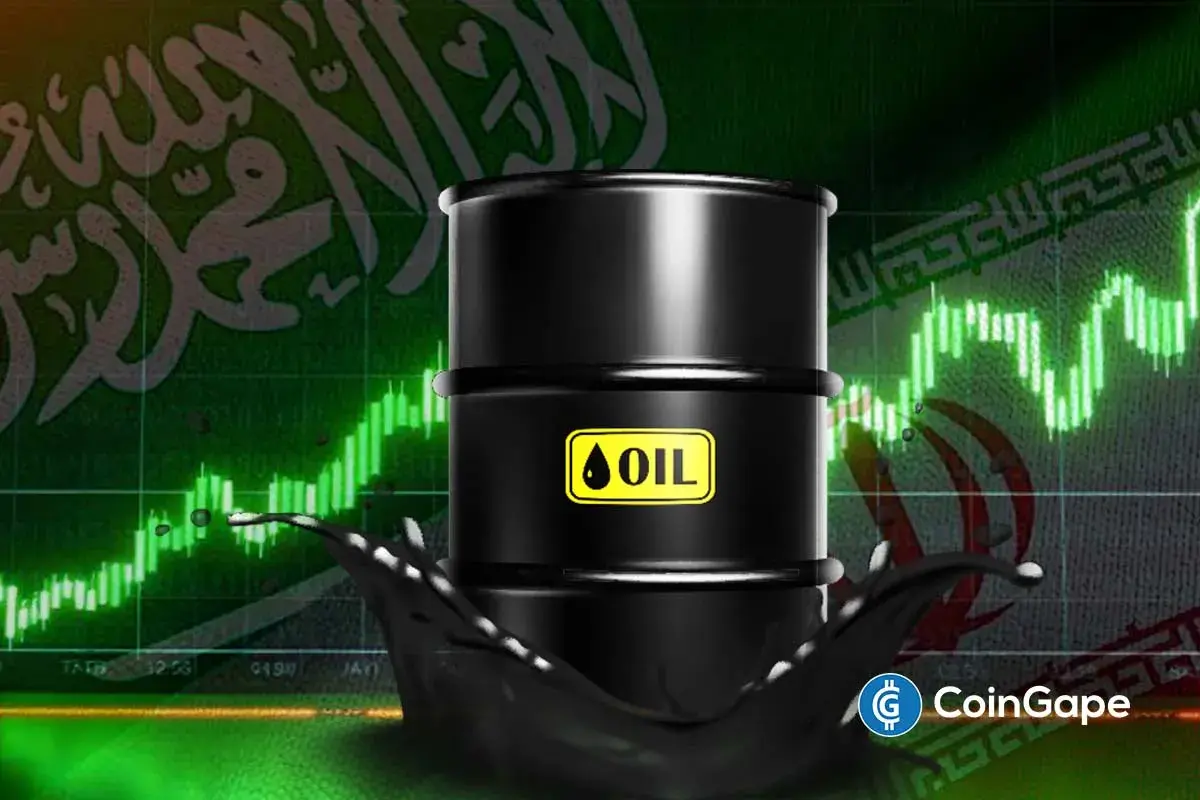
Iran-backed Houthis have imposed a naval blockade Saudi Arabia. It has also warned that they will attack ships carrying Saudi crude oil through the Bab el-Mandeb strait. This has further raised fears about oil supplies, which pushed the brent crude oil price above $95 at a five-week high.


Saudi Arabia Blockade Spurs Oil Price Surge
The naval blockade announcement has provoked a new flashpoint in energy markets, in addition to the Strait of Hormuz, where tensions have been mounting.
Moreover, the effects on oil shipping are beginning to become apparent. Three tankers bound for China and India with Saudi crude instead of continuing along Yemen’s coast turned around in the Red Sea on Tuesday.
Meanwhile, Asian oil refiners are looking to load cargoes from Saudi Arabia’s Yanbu terminal through the Suez Canal and around the African continent. The EU’s naval mission Aspides has also issued a warning that vessels connected to Israel, the United States or Saudi Arabia are at increased risk of Houthis attacks and have advised ship operators not to cross the Red Sea and the Gulf of Aden.
In addition, tensions escalated between the U.S. and Iran. It is the 11th night in a row that the U.S. military is attacking Iran this time, it confirmed. The strikes came shortly after Kuwait’s army reported intercepting Iranian drones with its air defence systems.
The developments had caused a massive increase in oil price. Brent crude futures were up $3.30, or 3.63%, to $94.31 a barrel after hitting an intraday high of $95.47. U.S. West Texas Intermediate (WTI) crude gained $2.80, or 3.32%, to $87.14 per barrel. Both indexes hit five-week highs, as they had done on June 11.


What Do Experts Say?
The current limited supply situation was also evident in the physical market. Brent’s three-month timespread reached its highest level since May 22 at $10.89 per barrel. Hence, current prices for crude oil futures trade higher than prices of later-dated contracts.
Experts have expressed concerns over the unprecedented surge in oil price lately. “The energy market now has the dual-strait worry, with the Bab el-Mandeb Strait looking like it could join the Strait of Hormuz as a hot spot, as traders closely watch shipping numbers in the Red Sea,” remarked Tim Waterer, the chief market analyst at KCM Trade, per Reuters report.
In addition, Frank Walbaum, a market analyst at Naga.com, opined: “The (Houthi) threat has led tankers to divert which could further pressure the physical market and Saudi exports, contributing to push prices to the upside.”
For decentralized futures trading, visit our page on Perp DEXs.
Instant Currency Exchange at BestChange with Ease
- Compare Rates Across 1000+ Exchanges
- Access 250+ Cryptocurrencies & Pairs
- Save Time with Real-Time Price Tracking
- Trusted & Verified Exchange Listings

Why Trust CoinGape
CoinGape has covered the cryptocurrency industry since 2017, aiming to provide informative insights Read more… to our readers. Our journal analysts bring years of experience in market analysis and blockchain technology to ensure factual accuracy and balanced reporting. By following our Editorial Policy, our writers verify every source, fact-check each story, rely on reputable sources, and attribute quotes and media correctly. We also follow a rigorous Review Methodology when evaluating exchanges and tools. From emerging blockchain projects and coin launches to industry events and technical developments, we cover all facets of the digital asset space with unwavering commitment to timely, relevant information.



Delivered every day.
- Insights that move markets
- 100,000 active subscribers

Global ONCHAIN AWARDS 2026