Home / Top / Best Crypto Exchanges of September 2026: 12 Platforms Tested and Scored
Best Crypto Exchanges of September 2026: 12 Platforms Tested and Scored
We scored 15 platforms out of 5 using only published data. Every figure comes from a page that anyone can verify even without holding an account with the exchange.
Three platforms share the top score of 4.1. Of these, Bitstamp provides the most detailed pricing for every trade, including spread. The other two publish flat fees but do not disclose spread, making it hard to determine the true cost of a trade.
Expertise :
Scriptwriting, SEO, AI Prompting, Technical Writing
Lawrence Mike is a cryptocurrency analyst, writer, and storyteller with over 4 years of experience in blockchain and crypto markets. He has written more than 3,000 articles and scripts, covering news, SEO content, market insights, technical analysis, and alpha-generating strategies. Lawrence has contributed to Altcoin Buzz, Punch Newspapers, and BitcoinWisdom, and collaborated with leading exchanges like Binance and BYDFi. Holding a Master’s in Corporate Communications from Rome Business School, he specializes in breaking down complex crypto topics into clear, actionable insights for readers and traders alike.
This content was reviewed for factual accuracy, data reliability, and up-to-date information. Claims, statistics, and product details are verified using official sources, publicly available documentation, and primary research where applicable. More on our editorial policy
Azman Nabi
Azman is responsible for SEO/GEO and content strategy behind high-impact crypto and fintech pages, including cards, banks, exchanges, and wallets. He works at the intersection of research, structure, and organic distribution to ensure content is accurate, discoverable, and built for long-term performance. His background spans B2B growth marketing and SEO, with prior experience across SaaS and digital-first platforms.
CoinGape has been covering cryptocurrency and blockchain markets since 2017. Our editorial team evaluates projects and platforms using structured review frameworks focused on transparency, utility, and risk assessment. You can explore our review methodologies to see how we assess and rate different categories. We maintain clear editorial standards and disclose advertising or affiliate relationships where applicable.
Investment disclaimer
The content reflects the author's personal views and current market conditions.
Please conduct your own research before investing in cryptocurrencies,
as neither the author nor the publication is responsible for any financial losses.
Ad Disclosure
This site may feature sponsored content and affiliate links, To get more information on the partner link placements visit our affiliate policy page . All advertisements are clearly labeled, and ad partners have no influence over our editorial content.
Featured Partners
3.7
Bitget
Best for: Active Traders Who Need More Than a Spot Exchange
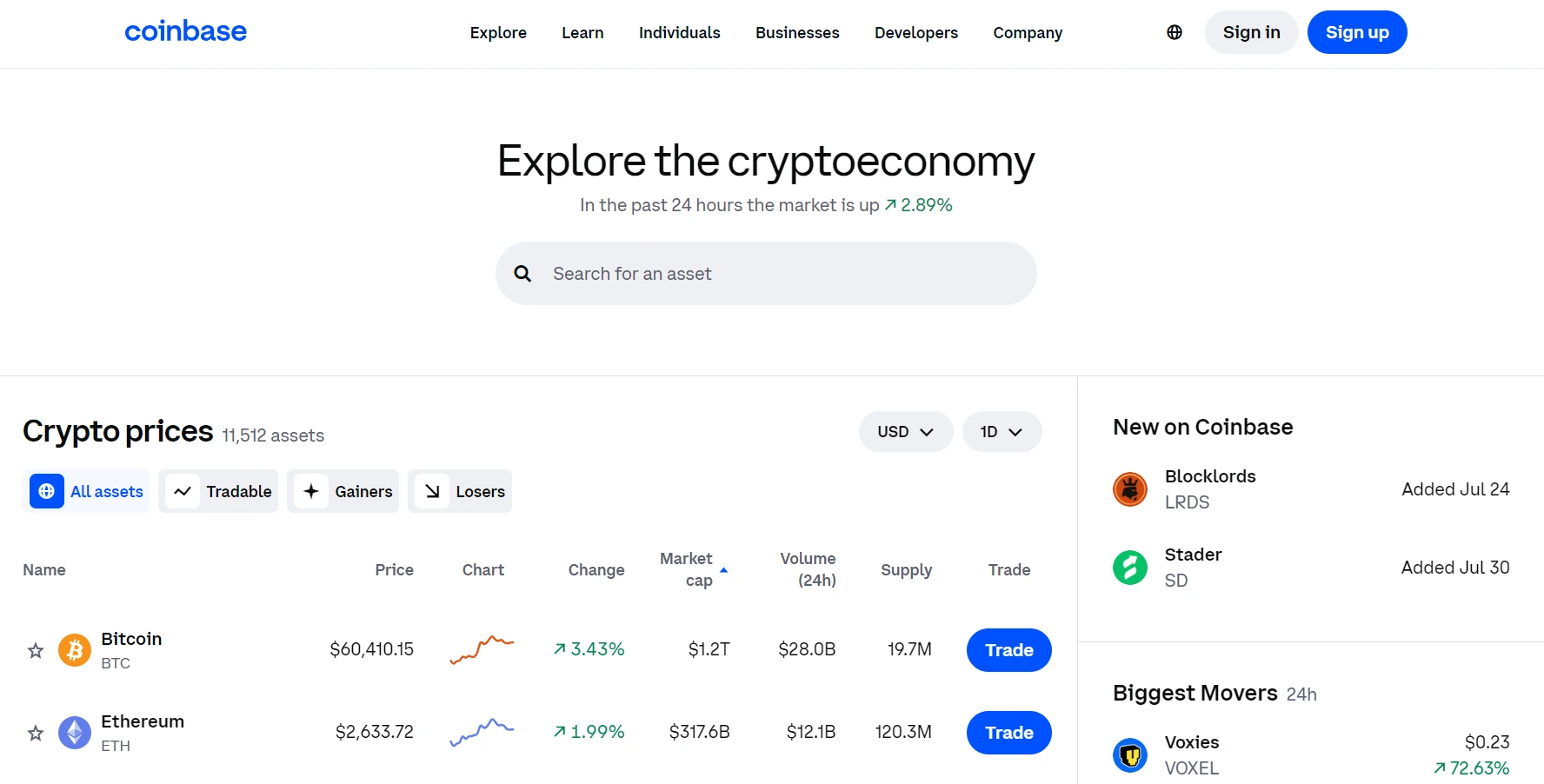
Coinbase works best for first-time crypto buyers, especially traders in the US. It’s one of the most regulated crypto exchanges US traders can access. Its custody arm received conditional approval in April 2026 from the OCC. The interface is clean, and the fees are clear. Coinbase has also made a return toHawaii after discontinuing its service there. Check the license page for regions it supports.
How We Built This Score
7.0Security & Custody
25%
Deloitte-audited custody (Source), 2025 breach (Source), no named insurance figure (Source)
6.5Fees & Published Costs
20%
Clear rates, no spread shown, varying withdrawal rates
Built-in Tax Center with downloadable Form 1099-DA (for 2025+ disposals), 1099-MISC (for rewards), gain/loss summaries, and full CSV transaction history exports for reconciliation with tax software (Source)
API access for developers/ algo traders
Yes
Audited (Yes/No)
Yes
Incidents (last 24 months)
Major data breach (2025, source), 8-hour AWS outage (2026, source)
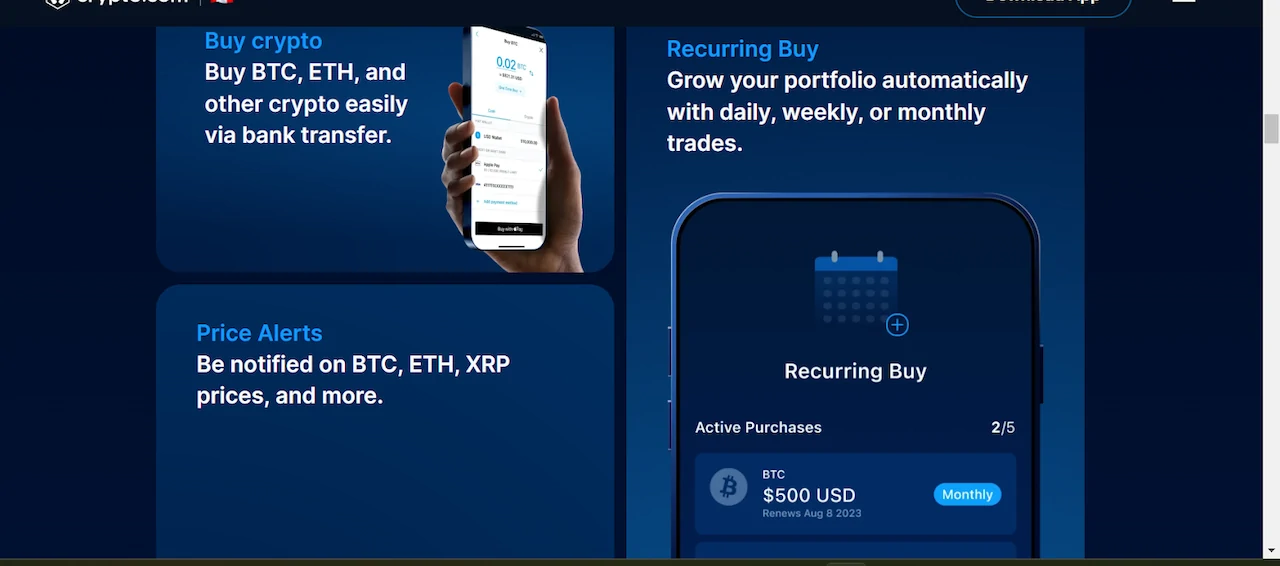
If security matters to you as a trader, Crypto.com has more of it than most platforms on this list. It is the first crypto company to hold ISO/IEC 27701 and PCI DSS Level 1 compliance together. Crypto.com also offers a variety of crypto assets, listing 400+ cryptocurrencies. Crypto.com has coverage in 49 US states except New York, which is a massive catch if you stay in New York. Another drawback is that most cashback tiers and lower fees only kick in once you’ve locked up CRO tokens. The app’s basic screen also hides its spread.
Bitstamp is a good fit for traders who value an established exchange with a strong regulatory and custody track record. Its MTL/MSB registrations help support its place on this list. The catch for using Bitstamp is that its crypto selection is smaller than newer exchanges, while instant and low-volume trades can come with higher spreads. Staking is also unavailable in US states, including New York, Texas, and Ohio.
Kraken suits an active trader more than a first-time buyer because it offers strong regulatory footing and a wide catalogue of crypto products that includes spot and futures trading, margin, stocks and ETFs, and Kraken Pro. Kraken holds a Wyoming SPDI charter, the first US bank charter granted to a crypto company. The catch: Kraken excludes residents of New York and Maine entirely, so a meaningful portion of US buyers can't open an account here at all.
US traders can see OKX(US) as an alternative to Binance, especially if you find the Binance.US platform restrictive. OKX has low fees, with takers at just 0.35% at the entry tier. Check your zip code because
OKX won't serve you if you're in New York
,
Texas, American Samoa, Guam, the Northern Mariana Islands, or the U.S. Virgin Islands.
17-month live US track record, hacken-verified
(Source)
Specification
Advanced trading tools
Spot trading, derivatives (futures and options)
Order types supported
Limit, Market, Stop-Loss, Take-Profit,
Trigger/Conditional orders, TWAP (advanced),
plus IOC, FOK, and Post-Only on the Exchange;
App supports limit, market, stop-loss/take-profit,
and TWAP
Binance (global platform) is for experienced traders who want access to a wide range of cryptocurrencies and advanced trading tools. Binance earns a place here for its deep market coverage, but US residents cannot use the global platform. In November 2023, Binance pleaded guilty and agreed to pay about $4.3 billion in a DOJ settlement, alongside separate FinCEN and OFAC settlements. US traders should consider Binance.US or a licensed alternative such as Bitstamp. For global traders, the drawback with Binance is that it has a shaky regulatory history and is not beginner-friendly.
BTCC is designed for US traders who want access to spot and futures markets and prefer doing so on an exchange that publishes monthly Proof-of-Reserves. US traders can open accounts and trade on the platform, but the only drawback is that it does not support fiat withdrawals, meaning you can only take out your profits as crypto. The drawback is that this is a limitation for anyone who wants to cash out directly to their bank accounts.
Why pay one of the highest taker fees (1.200%) on this page? Gemini offers strong compliance, especially for US traders. Very few exchanges have a license in all 50 US states, but Gemini claims to. Gemini's regulatory structure makes it a crypto exchange for compliance-focused traders. The catch is that this comes with a narrower value proposition. Gemini is expensive for active traders. Beyond the US, Gemini pulled back from international markets in the UK, EU, and Australia. Gemini works if you are a US-based trader but is not the best if you trade actively.
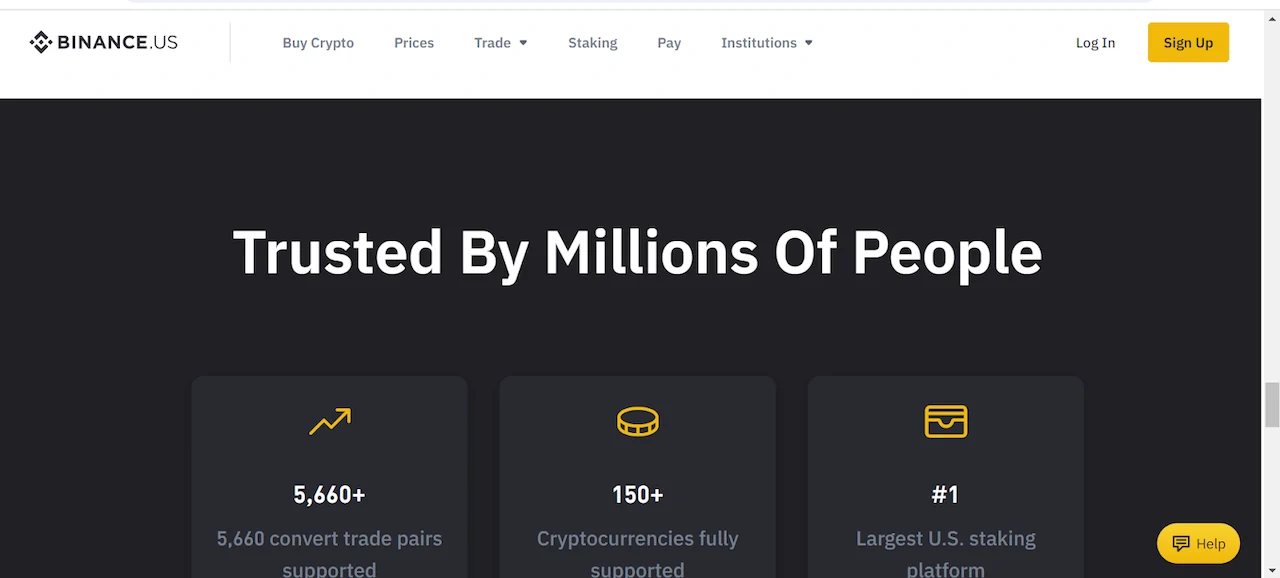
Binance.US offers a decent entry price for US traders, with a taker fee running as low as 0.019%, which is among the cheapest on this list. If you use the global Binance platform, Binance.US offers the same feel and is targeted for US traders. But there are several drawbacks. The Binance.US platform lists fewer cryptocurrencies, does not offer margin or futures trading. Residents of sixteen states, including New York, Texas, and Washington, can't open an account. Wisconsin and Kansas residents can trade crypto but can't touch USD.
How We Built This Score
7.0Security & Custody
25%
SOC 2 audited, no disclosed insurance
7.5Fees & Published Costs
20%
Cheap taker and maker fees, clearly published fees (source), does not publish hidden spread
Bitget is for experienced traders looking for advanced trading tools and derivatives. We added Bitget to this list for its large protection fund and regular Proof of Reserves reporting. Bitget does not allow US residents to create accounts, complete KYC, or trade directly on the platform. The drawback to using Bitget beyond its unavailability in key markets is that the features may be too complex for beginners.
eToro offers stock and crypto under one roof, which is what most modern traders are looking for. It charges a 1% flat crypto fee with no confusing tiers. The drawback of using eToro, especially for US traders, is that you won't get margin, futures, or short selling on crypto. There's also no API access, which is limiting for traders who want to automate trades. A $10 minimum to start is low, but a $10 BTC withdrawal fee and a 2% platform fee on top eat into small balances fast. eToro is also not available in Nevada, Hawaii, and some US territories.
How We Built This Score
7.0Security & Custody
25%
Segregated wallets, crypto excluded from insurance
Bybit offers advanced features and a wide range of crypto assets, which are what experienced traders need. Although it has deep trading offerings, residents of the US and Canada cannot use the platform under its terms. US users should consider a licensed alternative like eToro.
How We Built This Score
6.0Security & Custody
25%
Safe multisig custody, largest hack on record
6.0Fees & Published Costs
20%
Low fees, BTC fee unverified
9.5Regulatory Standing
15%
VARA, CASP, MiCA licensed
6.0Liquidity & Execution
10%
9/10 trust score, no status page
8.0Asset & Product Coverage
10%
Derivatives-first, broad coverage
8.0Ease of Use & Onboarding
10%
Advanced tools, complex for beginners
5.5Customer Support
5%
24/7 chat, fast hack communication
8.5Transparency & Track Record
5%
PoR published, hack disclosed
Specification
Advanced trading tools
Spot, margin, derivatives, copy trading, bots
Order types supported
Market, limit, conditional/stop orders
Tax reporting tools
No native US tax forms (not available to US residents); transaction export only
API access for developers/ algo traders
Yes
Audited (Yes/No)
Yes
Incidents (last 24 months)
February 2025: $1.46B stolen from a cold wallet; fully covered by Bybit (Source)
Uphold is not the right exchange for you if you need futures, options, or margin trading. Instead, Uphold earns its spot on this list for US traders who want to manage crypto along with other assets on a single platform rather than using separate accounts. The drawback is that Uphold offers limited advanced trading options. US users cannot trade futures, options, or margin products, and the Uphold Debit Card is unavailable in Louisiana, New York, and US territories.
If you want optional KYC and higher withdrawal limits before verification, Zoomex was designed for that. Zoomex earns a place for its flexible verification setup, but it is not available to US residents. Its MSB/FINTRAC registration does not mean it's available to US users.
How We Built This Score
9.0Security & Custody
25%
Hacken-audited (Source), transparent vault, live ADL fund (no fixed figure) (source)
6.0Fees & Published Costs
20%
Low headline, spread undisclosed
8.0Regulatory Standing
15%
MSB license in Canada and the US. Not available in the US
BYDFI is best used by eligible traders who want crypto-only trading with optional KYC. BYDFI's appeal is its 800 BTC protection fund. But the major drawback is that its terms of service exclude over 40 countries and territories from its service, including major markets like the US, UK, Canada, and India. The exchange's regulatory strength is thin compared to most newer exchanges.
We score each platform on this page using the CoinGape review methodology, which evaluates platforms based on metrics that crypto traders look out for. We scored every exchange on the same eight factors.
We assigned a score of 0-10 to each factor based on information we independently verified from official sources like websites and official documentation. We broke each factor into 3–5 sub-factors, and the number next to each one (1, 2, 3, or 4) is the maximum points it can contribute. They add up to 10 per factor, weighted by how much that specific criteria matters to a reader.
If an exchange does not provide any information on a factor, it scores zero for that factor. If an exchange does not offer a product, we removed the score and redistributed the weight within the same factor.
FactorShare of the scoreWeight
01Security & Custody:
25%
3PoR / audit statusClear reserve proof or third-party audit
2Spread disclosureWhether the spread is stated as a number or explicitly marked as undisclosed
2Withdrawal costWhether the BTC Withdrawal Fee is a fixed published number or varies
03Regulatory Standing:
15%
4Named licencesWhat's named in the Licenses field, any jurisdiction, US or international
3Market availability disclosureWhether Available in the US? and any named exclusions are stated plainly
3Enforcement record, 24 monthsLegal/enforcement actions in the last 24 months
04Liquidity & Execution:
10%
4Public volume rankWhether the platform has a strong stance on sites like CoinGecko and Trust Score rankings
3Market data without an accountWhether the exchange runs a public, no-auth order-book/market-data API
3Status pageDoes it have a real, monitored public status/incident page
05Asset & Product Coverage:
10%
3Countable asset listWhether it publishes a clear number of listed coins
2Range bandBreadth of supported assets
2Product breadthWhich trading tools are available beyond spot (margin, futures, options, bots, OTC)
2Fiat currenciesHow many currencies are named in Deposit Methods
1Recurring/DCA featureWhether Advanced trading tools name a recurring-buy or DCA feature
06Ease of Use & Onboarding:
10%
3Fee legibilityThe clarity of the cost of a $1,000 Buy
3Published first-buy minimumWhether Minimum to Start is a fixed, stated number
2Stated beginner-friendlinessDoes it publish beginner guides? Is the interface easy to navigate?
2Onboarding path notedIs the platform KYC / no-KYC?
07Customer Support:
5%
3Channels without an accountAvailable channels to unregistered users
2Published phone lineIs there a published phone line in available jurisdictions
2Stated response targetIs there an official response time, in hours or days
2Escalation routeWhether the platform has a clear complaints process
1Incident communicationsIs there public, verifiable evidence the exchange communicates during live incidents
08Transparency & Track Record:
5%
3Audited status statedIs the platform verifiably audited?
3Ownership/operating history mentionedHow long has the platform operated?
2Incident disclosure clarityIs there a notable incident in the last 24 months?
2Licence-linked identityWhether the exchange has verified licences from named regulators.
Best Crypto Exchange in the USA
Coinbase leads in regulatory coverage, audited custody, and liquidity, and most US traders consider it the best crypto exchange in the USA. No single platform secures a perfect 10 on our review. Other top exchanges for US traders are Kraken and Bitstamp, with competitive fees and long-standing licensing.
Biggest vs Best: Why Volume Rankings Mislead
An exchange can have high volume, but that doesn't make it the best crypto exchange. Deciding the best is a combination of the exchange's regulatory strength and compliance, product coverage and tools, customer support, security features, and overall track record. A high-volume exchange can lack audited custody, a named insurance fund, and a clean 24-month incident record. Binance leads globally on volume but fares poorly on regulation and compliance.
How to Choose a Crypto Exchange
The best way to choose a crypto exchange is to start by identifying your trading needs. Some platforms, like Binance, offer high volume and low fees and are best designed for active traders. Others are for derivatives and not for spot trading. Start by understanding which exchange does what. If you're a first-time buyer, go for an exchange with a simple interface, beginner guides, clear pricing, and multiple deposit methods. Verify that the exchange is licensed to operate in your region. You can find out from their licensing or terms and conditions page. Always verify exchanges to get the best rate.
Kraken at 4.1 out of 5, Bitstamp at 3.8 and OKX US at 3.7, scored on 26 August 2026. That order is a sort of the score column and nothing else; the arithmetic behind each number is printed under its verdict in the table above.
2.
Which exchange is cheapest for a $1,000 Bitcoin buy?
Kraken, at $10.00 on its published simple-buy rate of 1.00%. Bybit is cheaper on its one-click fiat path at $2.00 but excludes US residents. Two of the eight publish no simple-buy rate at all.
3.
Is Binance available in the US?
No. Binance stopped accepting US residents after its 2023 settlement with US authorities, and Binance.US operates as a separate entity with a shorter asset list and thinner books.
4.
What is the safest crypto exchange?
Kraken holds the highest security component here, at 8.5 out of 10 on 26 August 2026. Safety in our rubric means custody disclosure, proof of reserves and incident record, not deposit insurance. Our safest-exchanges guide scores it on its own scale.
5.
Which exchange lists the most coins?
No venue publishes a verifiable count, so we counted the public lists ourselves: Bitget and Bybit came out highest, both in the 700 to 900 band. Neither accepts US customers.
6.
Do I have to complete KYC to buy crypto?
On every platform in this table, yes. Requirements are published in each spec box. Venues that skip identity checks either cap withdrawals hard or route around licensing, and both have consequences when you try to cash out.
7.
Can an exchange pay to rank higher?
No. Rank is a descending sort of the score column, and the score is built from the eight-factor rubric before commercial terms are visible. Paid placement appears only in the labelled Premium Partners slot, which carries no score.
8.
How often are these figures re-checked?
Fees, licences and availability are re-read on a monthly sweep, and the date at the top of the page is the oldest verified value on it. Anything a venue stops publishing becomes a Not published cell rather than a stale number.
Lawrence Mike is a cryptocurrency analyst, writer, and storyteller with over 4 years of experience in blockchain and crypto markets. He has written more than 3,000 articles and scripts, covering news, SEO content, market insights, technical analysis, and alpha-generating strategies. Lawrence has contributed to Altcoin Buzz, Punch Newspapers, and BitcoinWisdom, and collaborated with leading exchanges like Binance and BYDFi. Holding a Master’s in Corporate Communications from Rome Business School, he specializes in breaking down complex crypto topics into clear, actionable insights for readers and traders alike.
Disclaimer: The presented content may include the personal opinion of the author and is subject to market condition. Do your market research before investing in cryptocurrencies. The author or the publication does not hold any responsibility for your personal financial loss.







 United States
 United Kingdom
 Canada
 Germany
 Ireland
 Netherlands
 UAE
UAE
 Australia
 Thailand
 Norway
 Finland
 Vietnam