
What MiCA Actually Is, and Why It Will Change Where You Put Your Money


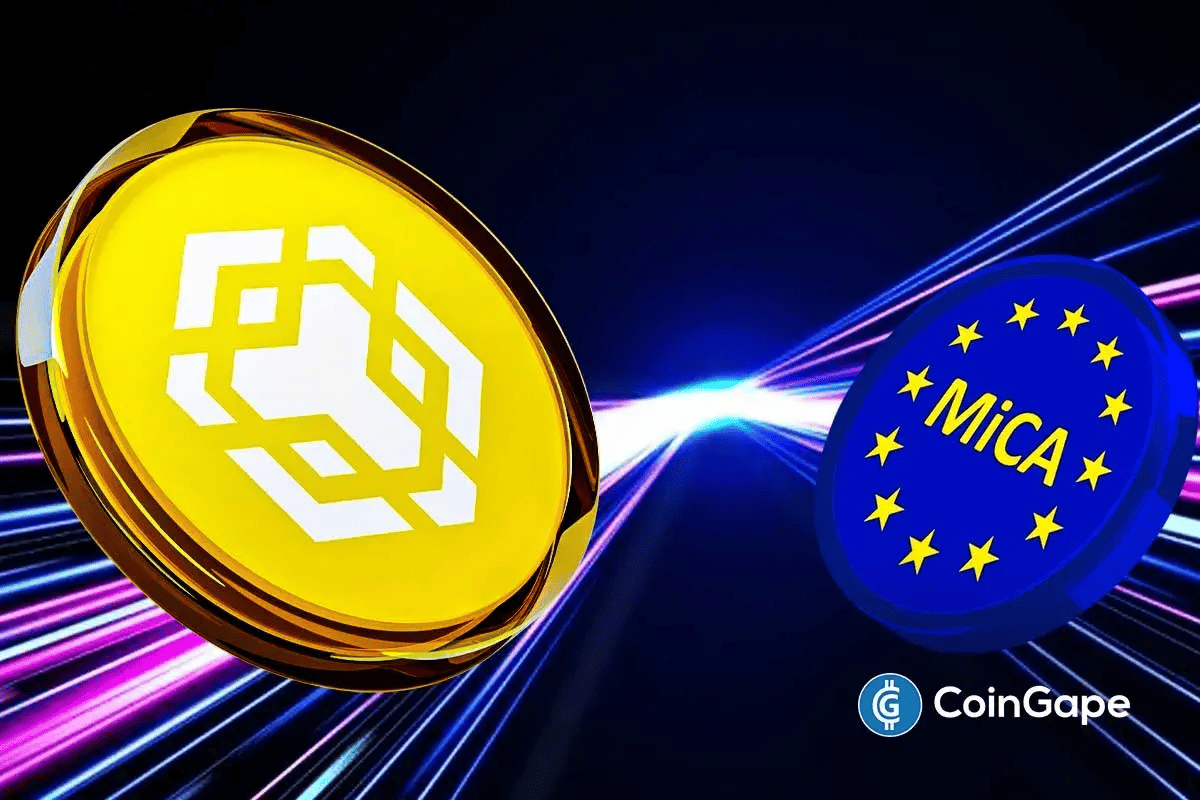
According to the news coming out of the cryptosphere, Binance is about to lose access to the European market as new EU rules may cause its licensing application to be rejected. As the world’s largest cryptocurrency exchange has said that it will stop serving EU users from July 1st, millions of users in the region now fear where to move their money before the deadline passes.
Many believe that the smart move is to transfer it to another platform. But that may not be the case. What if the regulatory authority of the other platform is weak? Will it have the same customer-centric nature as before?
Therefore, before taking any action, what is more important is to understand the reason there are so many platforms that stay open while others don’t. It means understanding the nuances of MiCA and how much it has an impact on where users put their money.
What is MiCA?
MiCA, or Markets in Crypto-Assets, is essentially the EU’s rulebook for crypto companies. It sets the first standards that any crypto platform has to follow when running its services for people across Europe.
There was a time when it did not take much to set up a crypto platform, which opened doors for many malicious elements to enter, causing high profile failures that continue to haunt the crypto world to this day.
Mt. Gox’s collapse led to hundreds of thousands of people losing access to Bitcoin. The implosion of FTX froze billions in customer funds overnight. Those cases show that lawlessness prevails when there are no regulatory safeguards. MiCA emerged to provide that.
In order to get a MiCA licence, a platform has to prove that it:
- Keeps a user’s money separate from the company’s funds.
- Offers proper security to safeguard users’ assets.
- Employs experienced professionals to lead the team.
Currently, among the thousands of companies operating across Europe, only a very small percentage have made it through this legal scrutiny.
The part people miss
While the term “MiCA licensed” makes the exchange feel legitimate, that narrative does not hold up across Europe.
Brussels was where the rules were written. However, how these are enforced by each country depends on that country’s regulators. Not all are equally strict.
In simple terms, even getting access to a MiCA license in a country does not automatically mean users’ assets will be protected at the same level.
A license is only as strong as the regulators who enforce it. And these regulators vary in their approach. That is the reason many leading exchanges purposely get the MiCA license in a country where the regulations are less tight. Lack of regulatory tightening means less transparency, and less transparency means users’ assets may not be as well protected as advertised.
It creates a confusing space where regulations can’t put their leash on the bad actors. And that’s the space where users need regulatory assurance that they will remain protected, a type of assurance that makes enforcement stricter, and makes exchanges more compliant.
Since MiCA won’t always provide users the assurance that users need, which regulatory body should they look to?
The simple answer is: one that sits above MiCA in terms of regulatory hierarchy: France’s AMF.
Exchanges consider it the toughest financial regulator in Europe. Why?
The scrutiny it exercises takes longer to complete. Exchanges receive harder questions and are held to a higher standard of operations. AMF demands real management on the ground, full-time compliance staff, and tangible claims of operational efficiency.
Therefore, exchanges that have gone through the tough regulatory gauntlet put forth by AMF have a higher chance of being actually compliant.
SwissBorg, another one of the leading European exchanges, is licensed under MiCA through AMF. It has strong foundations already. The platform is created to exist in the European region in the long-term, and has continued to stand even after many crypto platforms have left the region.
And on the other side of the regulatory spectrum, where regulatory hands get a bit relaxed, are OKX and Crypto.com. Although both were authorized in Malta, and have a real license, Malta’s reputation when it comes to scrutinizing exchanges hasn’t been very good.
It was once considered a “crypto island,” with the regulatory points existing as guidelines rather than actual rules. And although under MiCA, the ecosystem has matured, it is still far below what France’s AMF does. France’s regulator has even stated that it will challenge existing exchanges if it deems the conditions they got their license under were too relaxed.
Simply put, merely being “licensed” isn’t enough for the AMF. Rules that dictated the licensing conditions matter to it too.
What Does this Mean for the Users?
When users decide that they have to move their crypto to another exchange, they must look at more than just the “MiCA license.” They should focus more on other, more critical questions, such as:
- Which regulatory body has licensed the exchange?
- Is the regulatory body doing its job correctly?
Now that the July 1st deadline is approaching for Binance users in the EU, doing nothing is not an option. But doing something desperate isn’t an option either. Users should take some time to do more research and look beyond the license and into the licensing body and its conduct, for that decides in the end how secure they can engage with crypto through that “licensed” platform.


- Bitcoin Performance Report For H1 2026: What Does This Mean For Investors ?
- An Early Look Into Binance’s TradFi Stack: The Future of Finance is Tokenized
- Crypto License Demand Continues to Rise as Digital Asset Regulation Matures
- 93% of Funded Prop Traders Never See a Payout. A New Report Explains Why
- Why Are Crypto Exchanges Pushing Into Stocks, Forex, and Commodities?